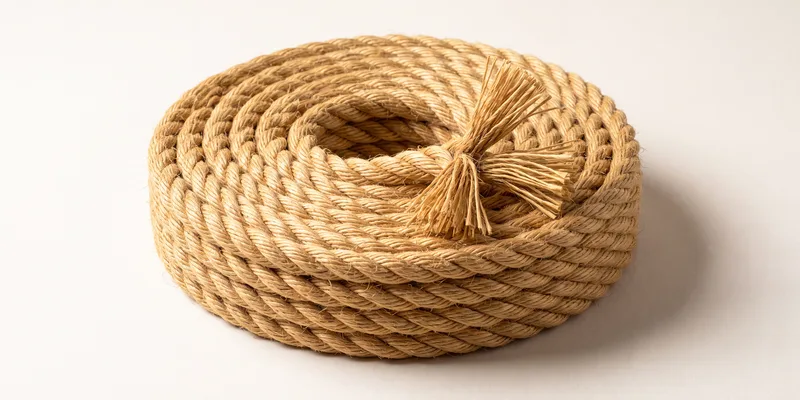
Jute rope is one of those materials people pick up for a single job and then keep using for a dozen more. It is spun from the long fibres of the jute plant, twisted into strands, and finished with the warm golden-brown colour and slightly hairy texture that reads as honestly natural. As a manufacturer that has been twisting cordage since 1991, we get asked the same question constantly: what is jute rope actually used for? Here is the practical answer, sorted by how buyers really use it.
We twist jute rope in 2-ply and 3-ply, from 2 mm to 32 mm, at our Jaipur factory; the jute rope page has sizes, colours and order minimums.
What is jute rope used for? The short version
Jute rope sits in the sweet spot between decorative and functional. It is strong enough for real tying tasks, soft enough to handle comfortably, and cheap enough to use in volume without worrying about waste. Because it is a plant fibre, it is fully biodegradable and compostable at end of life, which is why it has replaced plastic twine in so many craft, garden and packaging jobs. The four big use areas are crafts, gardening, home decoration and packaging.
| Use area | Typical jobs | Why jute works |
|---|---|---|
| Crafts | Macramé, wrapping, coasters, jewellery, wall hangings | Holds knots, natural look, easy to cut and fray |
| Garden | Plant ties, trellis lines, staking, bundling | Breathable, biodegradable, gentle on stems |
| Decor | Rustic weddings, mason-jar wraps, signage, lighting | Warm texture, pairs with wood and linen |
| Packaging | Gift tying, hampers, parcel bundling, tags | Plastic-free, compostable, premium feel |
Jute rope crafts
Craft use is where jute rope earns its reputation. It is a favourite for macramé because the twist holds a knot without slipping, and the fibre takes a clean fray when you want tassels or a soft finish. Makers wrap it around bottles, jars and picture frames for a rustic look, coil and glue it into coasters, trivets and baskets, and use finer diameters for jewellery, keychains and cord pulls. Because it cuts with ordinary scissors and glues easily, it is beginner-friendly — you do not need special tools to get a good result. For most craft work a 2mm to 6mm rope covers everything from delicate detailing to chunky wall hangings.
Jute rope for the garden
Gardeners like jute because it does its job and then quietly disappears. As a plant tie it is soft enough not to cut into stems, and because it breathes and eventually breaks down, it will not strangle a growing plant the way plastic can. Common garden uses include tying climbers to canes and trellises, staking young trees and tomatoes, bundling cut flowers and herbs, and running string lines for straight sowing. At the end of the season you can compost it along with the plant waste, which removes a fiddly clean-up step. For heavier staking, choose a thicker diameter and double it over rather than relying on a single thin strand.
Jute rope for decoration
Decorators reach for jute whenever a space needs warmth and texture rather than polish. Its natural colour pairs beautifully with wood, linen, kraft paper and dried flowers, which is why it turns up so often at rustic and boho weddings, in farmhouse-style interiors and in retail and café displays. Typical decorative jobs include wrapping vases and mason jars, edging mirrors and boards, hanging signage and bunting, and adding a natural detail to lighting and shelving. Because it looks intentional rather than cheap, brands also use it to lift the perceived value of a product without adding plastic.
Jute rope for packaging
The shift away from plastic has made jute rope a genuine workhorse in packaging. It ties gift boxes and hampers, bundles parcels, secures kraft wrapping and holds swing tags — all with a premium, hand-finished feel that a plastic ribbon cannot match. For e-commerce and artisan brands it doubles as a sustainability signal: customers can see and feel that the packaging is natural and compostable. If you are packing at volume, jute keeps unit costs low while still looking considered. You can see the full range of diameters and finishes on our jute rope product page, and if you need a specific spec we can match it — just request a quote.
Natural jute rope strength — an honest note
Jute is strong for its weight and price, but it is a natural fibre, so it is best matched to light and medium-duty work rather than critical load-bearing or safety applications. Strength rises with diameter and with the number of plies twisted together, so if a job feels marginal, size up or double the rope rather than pushing a thin cord to its limit. A few practical points worth knowing:
- Moisture: jute absorbs water and weakens when wet, so it suits dry or short-term outdoor use rather than permanent exposure.
- Abrasion: it can shed fibre against sharp edges — round off contact points where you can.
- UV and time: like all natural fibres it ages outdoors, which is exactly why it is ideal for seasonal garden and event use.
- Handling: the slight hairiness that gives jute its look means gloves help on long tying sessions.
Used within its comfort zone, jute rope is dependable, attractive and kind to the planet — a rare combination in cordage.
Choosing the right jute rope
Match diameter to the job: thin for jewellery and fine craft, medium for tying and decor, thick for staking and statement pieces. Consider the twist and finish too — a tighter twist frays less, while a softer twist is easier to knot and shape. For repeat or wholesale needs our standard minimum order is 1,000 m per SKU, and we can supply on cones, coils or spools to suit your line. Tell us the use case and we will point you to the right build.
Frequently asked questions
What is jute rope used for?
Jute rope is used for crafts like macramé and wrapping, garden tasks such as plant ties and staking, rustic decoration for weddings and interiors, and eco-friendly packaging like gift tying and hampers. It suits light to medium-duty work where a natural, biodegradable material is wanted. Its warm colour and texture also make it popular for lifting the look of products.
Is jute rope strong enough for outdoor and garden use?
Yes, for typical garden jobs like tying climbers, staking tomatoes and bundling. Jute is strong for its weight but absorbs moisture and ages outdoors, so it is best for dry or seasonal use rather than permanent load-bearing tasks. For heavier work, choose a thicker diameter or double the rope over.
What thickness of jute rope should I use for crafts?
For fine work like jewellery and detailing, a 2mm to 3mm rope works well. For general macramé, decor and tying, 4mm to 6mm is the everyday choice, and thicker sizes suit chunky wall hangings and statement pieces. Sizing up slightly is safer if a knot needs to hold weight.
Is there a minimum order for jute rope?
Our standard minimum is 1,000 m per SKU, and we can supply on cones, coils or spools to match your production line. If you need a specific diameter, twist or finish, tell us the use case and request a quote and we will recommend the right build.