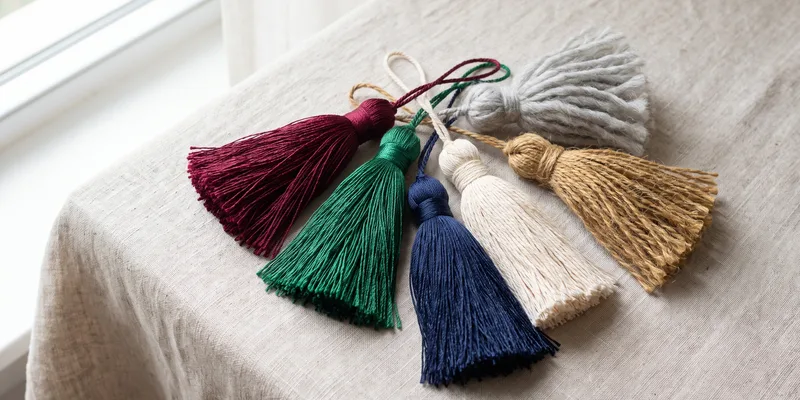
A tassel is one of the simplest trims to make and one of the most useful. The same three moves — wind, tie, bind — produce a fine cotton tassel for a saree pallu or a thick, layered tassel for a bridal dupatta or a curtain tie-back. As a cordage and trim manufacturer, we make tassels at scale every day, and the hand method below is the exact logic our production runs on, just done one at a time.
We make tassels to order in Jaipur from thread we twist and dye ourselves; fibres, head styles and the 5,000-piece minimum are on the wholesale tassels page.
What you need
You do not need special tools to start. Gather:
- Yarn or thread — cotton for soft, matte saree and blouse tassels; polyester or viscose for a shinier, stronger bridal finish.
- A card or a book the height you want the tassel to be.
- Scissors and a tapestry needle (for hiding the tie ends).
The rule of thumb: the card height sets the tassel length, and the number of wraps sets the thickness. More wraps means a fuller head.
How to make a basic tassel, step by step
- Wind the yarn. Wrap the yarn around the card. For a slim saree tassel, 30–40 wraps of fine cotton is enough; for a bridal or decor tassel, 80–150 wraps of a heavier yarn gives real body.
- Tie the head. Slide a separate length of yarn under the wraps at the top of the card, pull it to one edge, and knot it tightly twice. This becomes the loop you hang or stitch the tassel by.
- Cut the loop. Slip the wraps off the card and cut cleanly through the yarn at the bottom edge. You now have a bundle folded over the top tie.
- Bind the neck. About 1–1.5 cm below the top tie, wrap a new length of yarn around the whole bundle several times to form the neck, then knot it. Thread the ends onto a needle and pull them down inside the skirt to hide them.
- Trim. Comb the strands straight and cut the bottom flat. A sharp, level cut is what separates a neat tassel from a homemade-looking one.
How to make tassels with yarn (and which yarn to pick)
Yarn choice changes the whole character of the tassel. Cotton yarn is forgiving, sits soft, and takes dye beautifully — ideal for saree tassels design work where you want the tassel to move and drape. Silk-like viscose adds sheen for festive and bridal wear. Polyester holds a crisp shape and resists fraying, which is why heavier decor and upholstery tassels often use it. If you want a two-tone or ombre look, simply combine two yarns while winding, or wind one colour for the head and another for the skirt.
For any tassel that will be handled or washed a lot — blouse latkans, potli-bag pulls — a plied or twisted yarn holds together far better than a loose single. This is where a manufactured, evenly twisted cord earns its place over craft-store yarn.
Saree, blouse and bridal tassels
The base method stays the same; the styling is where tassels design comes in.
| Use | Typical length | Yarn | Finishing touch |
|---|---|---|---|
| Saree pallu | 6–10 cm | Fine cotton / silk | Small bead at the neck |
| Blouse latkan (cloth tassels for blouse) | 5–8 cm | Cotton, twisted | Wrapped bead head + hanging loop |
| Bridal dupatta / lehenga | 10–15 cm | Viscose, heavy | Layered skirt, metallic thread accent |
| Home decor / curtain | 12–20 cm | Polyester, thick | Corded neck and looped top |
For bridal tassels, the trick is layering: make two or three skirts of slightly different lengths and bind them under one neck so the tassel reads full and luxurious. For cloth tassels for blouse (latkans), thread a decorative bead over the head before binding the neck — the bead hides the tie and gives a jewellery-like finish. Saree tassels usually stay lighter so they do not drag on the fabric.
DIY tassels: quick tips that make them look professional
- Wind under light, even tension — loose wraps make a floppy head.
- Steam or lightly press the finished skirt so the strands hang straight before the final trim.
- For a rounded, plump head, wrap the neck higher and tighter; for a slim head, keep it low.
- Cut the bottom in one confident pass with sharp scissors — sawing frays the ends.
- Make a card jig at your set length so every tassel in a batch matches.
When you need tassels in volume
Hand-making is perfect for samples and one-off pieces. But if you are producing garments, packaging, or decor lines, consistency and yarn strength matter more than any single technique. That is what a factory setup delivers: matched length, even heads and colour-fast, twisted yarn across thousands of pieces. If you want ready-made or custom trims instead of winding each one by hand, see our tassels range, or request a quote with your length, colour and yarn preference. Our standard minimum is 1,000 m per SKU, and we can match a specific shade or two-tone combination to your fabric.
Master the basic wind-tie-bind sequence once and every variation above becomes a matter of changing the yarn, the length and the number of wraps. Start with a scrap of cotton and a piece of card — your first tassel will take under five minutes.
Frequently asked questions
How do you make a simple tassel with yarn?
Wind yarn around a card the height you want the tassel, tie the top of the wraps tightly with a separate length of yarn, then cut the loop at the bottom. Bind a neck about 1 cm below the top tie, hide the ends inside the skirt and trim the bottom flat. The whole thing takes only a few minutes.
What yarn is best for saree and bridal tassels?
Fine cotton or silk-like yarn suits saree and blouse tassels because it drapes softly and takes dye well. For bridal wear, a heavier viscose or polyester gives more sheen and body, and layering two or three skirts under one neck makes the tassel look full and rich.
How do I stop my tassel from looking messy?
Wind under even tension, steam or press the strands straight before cutting, and trim the bottom in one clean pass with sharp scissors. Using a plied or twisted yarn instead of a loose single also stops the skirt fraying with handling.
Can I order ready-made tassels instead of making them by hand?
Yes. Hand-making is ideal for samples, but for garment, packaging or decor production we supply ready-made and custom tassels with matched length, even heads and colour-fast yarn. Our standard minimum is 1,000 m per SKU — send your length, colour and yarn preference through the quote page for pricing.