Home › Laces & Trims › Lace Trim by the Roll — Cotton Lace, Crochet Lace and Embroidered Edging, 1-25cm
Lace Trim by the Roll — Cotton Lace, Crochet Lace and Embroidered Edging, 1-25cm
✓ Specs last checked: 2026-09-02
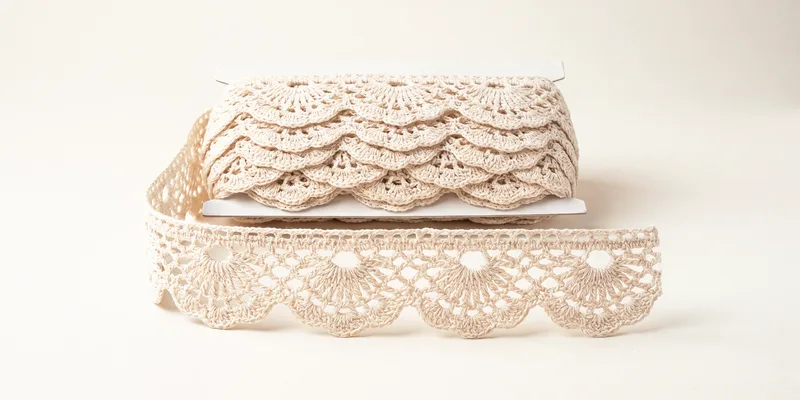
We make lace trim by the roll in our Jaipur factory: crochet edging and open guipure, 1 to 25 cm across the range, in white, natural or dyed to your shade, plus a separate line in nylon for lingerie and light sewing. Fibre follows the shade — the natural undyed lace is cotton, and every dyed shade is spun polyester finished matte to look and feel like cotton. MOQ is 1,000 metres (about 1,094 yards) per SKU, and each design, width and shade counts as its own SKU. Rolls go out labelled per SKU in moisture-protected export cartons, and every quote is answered within one working day.
We have made cords, braids and lace in our own factory in Jaipur, Rajasthan since 1991. Twisting, braiding and dyeing are all done under one roof, and we ship to more than 60 countries.
Lace is bought by the metre and judged by the centimetre. The width decides where it can sit on a garment or a soft furnishing, and the design decides whether it reads as delicate or as heavy.
Crochet Edging, Guipure and the Nylon Line
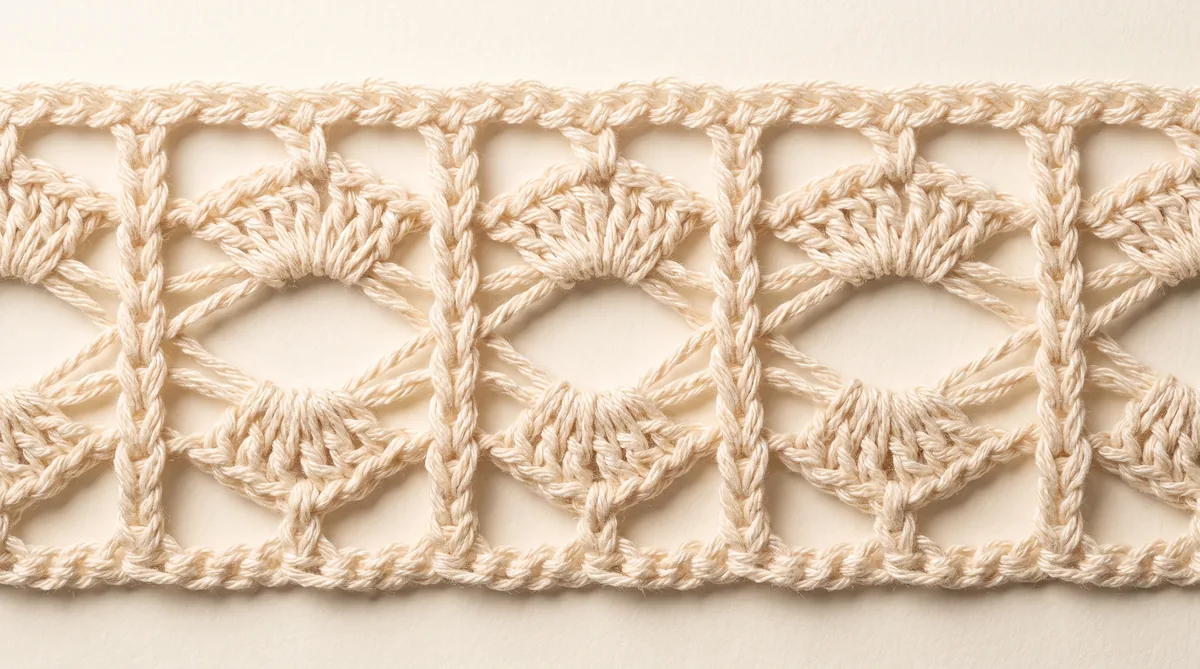
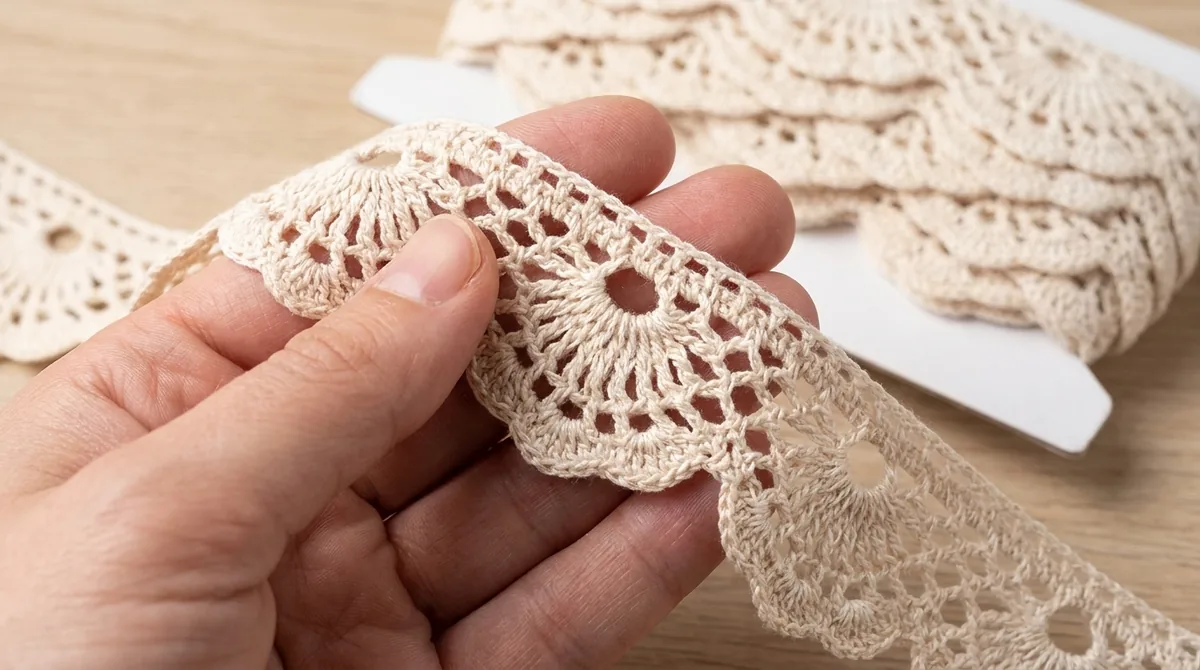
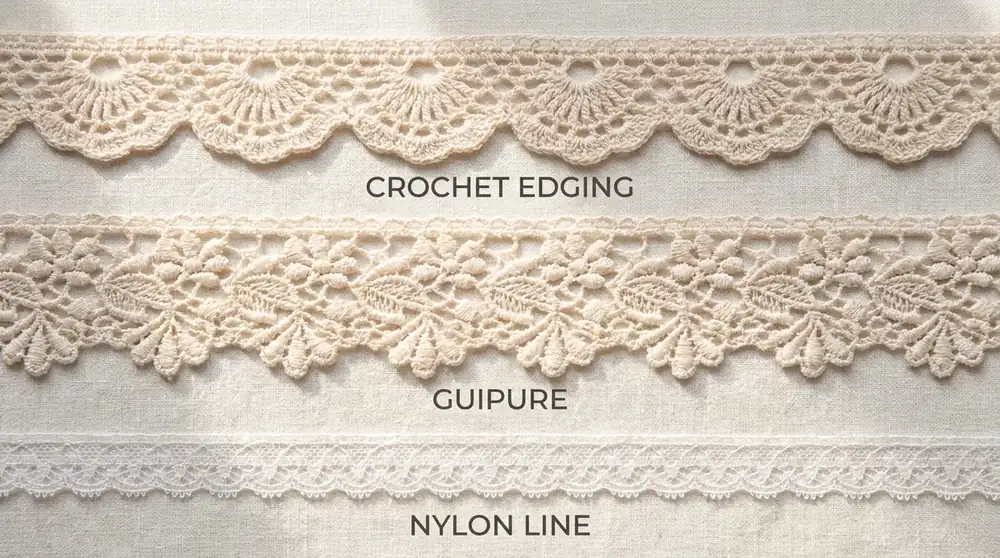
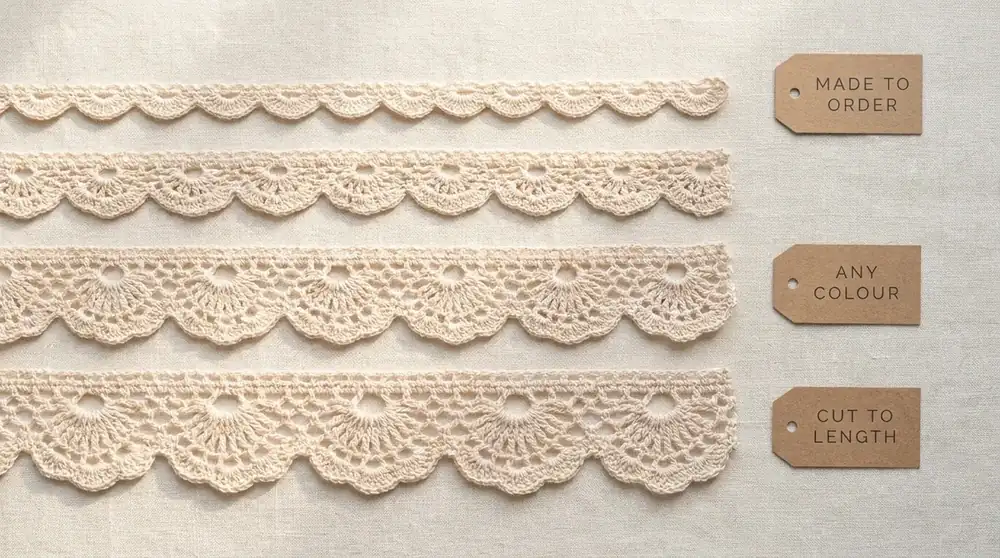
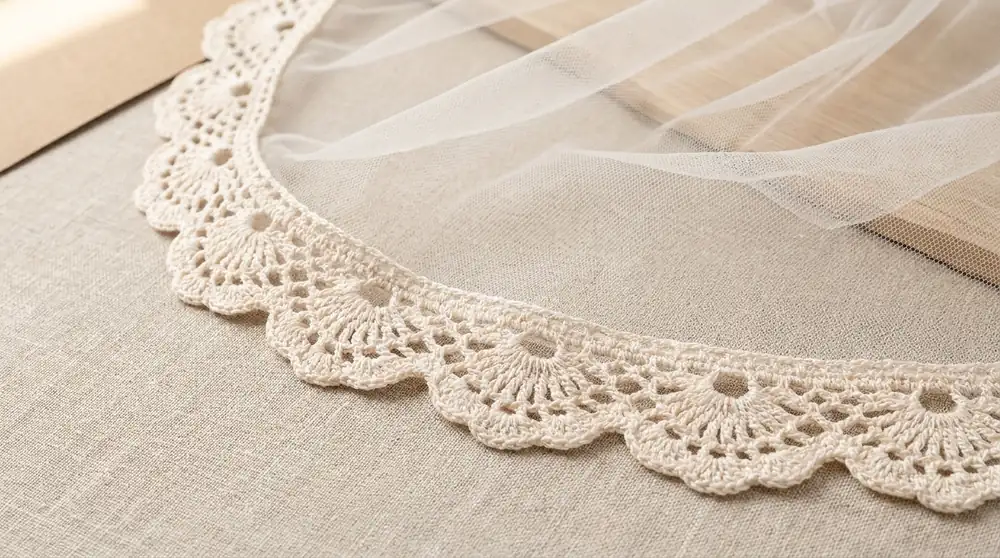
We run two families of lace, plus a separate line in nylon. Crochet edging is the narrow one: patterned along a single edge and sewn onto a fabric edge as a finish. Guipure has body of its own — there is no tulle ground behind it and the motifs are joined by bars, which gives it relief and hold. Guipure is sold by design.
Type
Material
Widths
Typical use
Crochet edging
Natural in cotton; dyed shades in spun polyester
1-8 cm
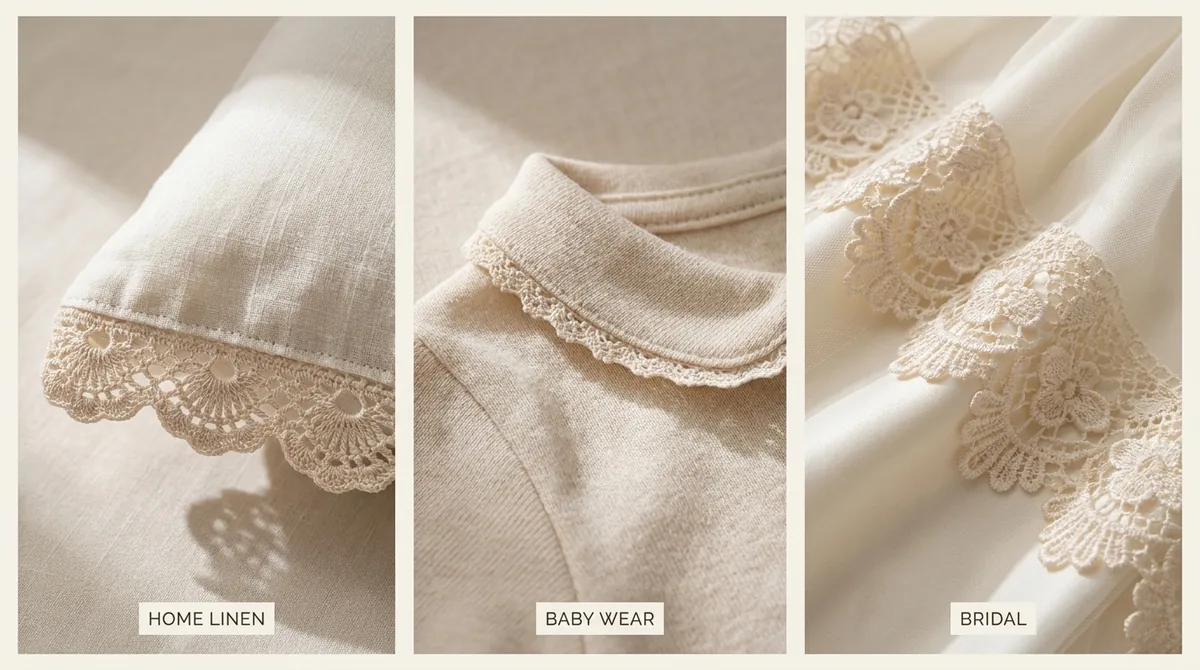
Household linen, children's wear
Crochet edging
Nylon
1-10 cm
Lingerie, light sewing
Guipure
Natural in cotton; dyed shades in spun polyester
5-25 cm
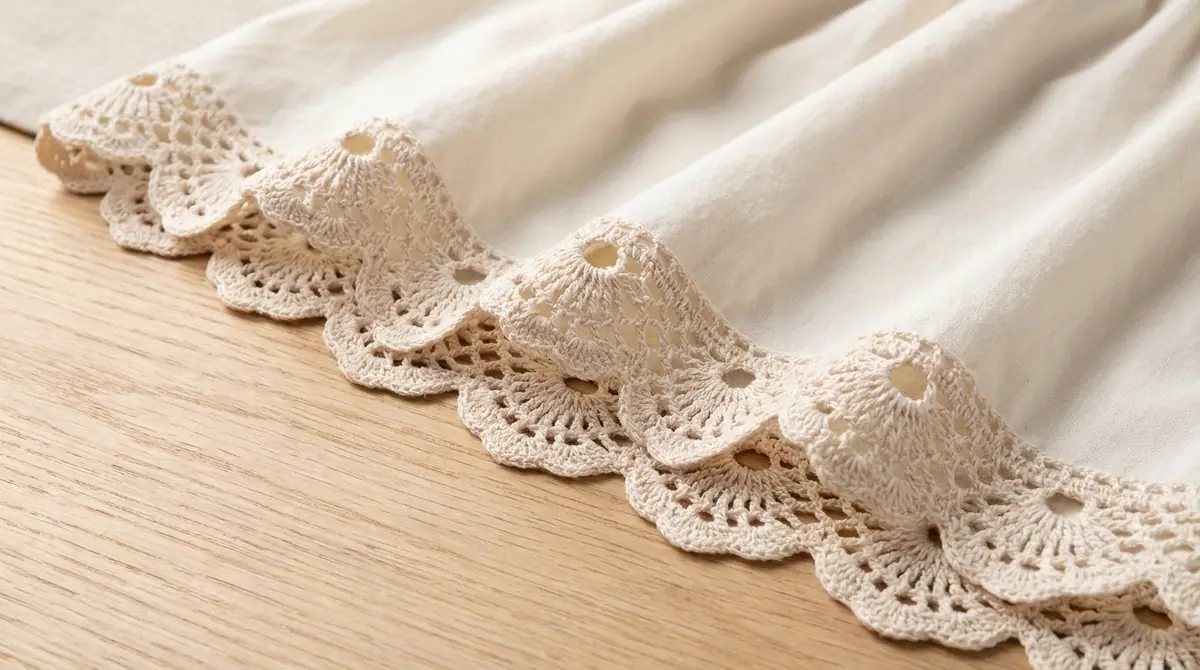
Garments, furnishing, bridal
Across the range that is 1 to 25 cm: fine edgings for lingerie, mid widths for clothing, and the wide widths for furnishing and bridal gowns. White and natural are held as standard, and we dye to order from 1,000 metres per colour.
Fibre Follows the Shade
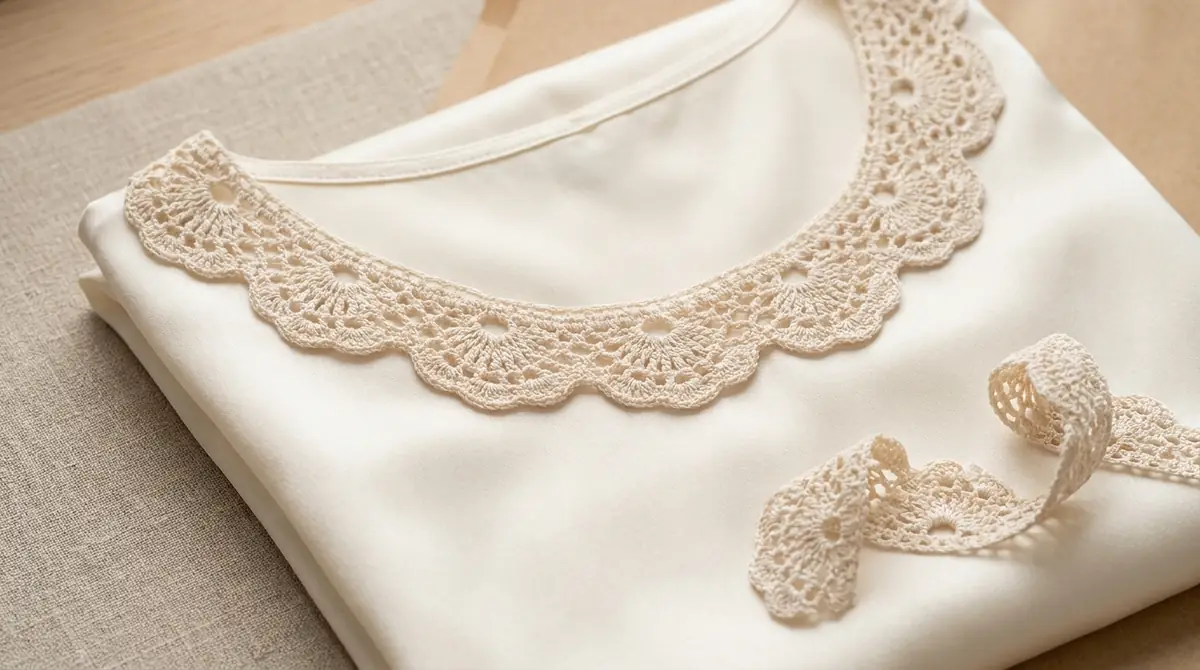
The natural, undyed lace is cotton. It never goes through the dye bath, so cotton is what we run, and its natural texture is what bridal, baby-product and home-textile buyers ask for, along with vintage and crochet-look work.
Every dyed shade is spun polyester, finished matte so it looks and feels like cotton without the synthetic shine. Polyester holds the shade and repeats it identically from one lot to the next, and it brings the colour fastness and strength that production garment work needs: it stands up to washing and holds its shape.
The nylon line runs separately. It is more even and stands up better to repeated washing, which is why it suits lingerie and light sewing.
At bulk volumes we can make the lace in the fibre you specify — tell us when you ask for the quote.
Colour Fastness and Batch-to-Batch Consistency
Two complaints come up again and again with lace: whites that yellow, and shades that drift from one batch to the next.
Dyeing is done in our own dye house, batch by batch. We keep the colour record for every batch and dye a repeat order to the same recipe, and optical whites are checked batch by batch against yellowing. Before a bulk run we dye a sample and send it for your approval; the bath goes ahead once you have approved the colour.
Ordering: Minimums, Samples and Mixed Assortments
Send us the widths, designs and shades you are after, with a physical swatch or a Pantone reference for any colour.
Minimum — 1,000 metres per SKU, where a SKU is one design at one width in one shade. It applies to each SKU rather than to the order total, so three shades of the same edging is three SKUs and 3,000 metres.
Samples — the way to see a width or a design in your own product is a sample, not an order. We send a sample card or a short length, and you commit the order quantity once you have approved it.
Colour — custom shades are dyed batch by batch in our own dye house, and the dyed sample goes to you for approval before the bulk run.
Mixed assortments — you choose the widths, materials and designs, and we consolidate them into one shipment with every roll labelled by its own SKU. Several SKUs in one shipment is fine; each is quoted at the minimum.
Put-up — individual rolls, labelled by width and shade, packed in moisture-protected export cartons.
Quote — every enquiry answered within one working day, priced by the roll ex-works Jaipur.
Dispatch and freight
Ex-works Jaipur — about 2 to 6 days by surface across India. Freight is to your account, by your transporter or ours. Export orders are quoted separately with air and sea options.
Lace Trim by the Roll — Specifications
Material — natural / undyed
Cotton
Material — dyed shades
Spun polyester, finished matte to look and feel like cotton
Material — nylon line
Separate line in nylon, for lingerie and light sewing
Construction
Crochet edging and open guipure, supplied by the roll
White and natural held as standard; dyed to your shade from 1,000 m per colour
MOQ
1,000 m (about 1,094 yards) per SKU — one design, one width, one shade
Customisation
Width, design and shade to order; at bulk volumes the lace is made in the fibre you specify
Put-up
Individual rolls labelled per SKU in moisture-protected export cartons; mixed assortments on request
Lead time
Quote within one working day; air 7-14 days, sea 25-40 days
Origin
Jaipur, India — twisting, braiding and dyeing in-house since 1991
Frequently asked questions
What is the minimum order for wholesale lace trim?
1,000 metres — about 1,094 yards — per SKU, where a SKU is one design at one width in one shade. The minimum applies to each SKU rather than to the order total, so three shades of the same edging is three SKUs and 3,000 metres. It is a production batch size: to see a width or a design in your own product, ask for a sample first and commit the order quantity after you have approved it.
What does lace trim cost by the roll?
₹8-40 per metre ex-works Jaipur. Width and design density set the spread — narrow crochet edging sits at the bottom, wide guipure at the top because there is simply more work in every metre. The nylon line prices separately from cotton and dyed polyester.
What is the difference between crochet edging and guipure?
Crochet edging is the narrow one, patterned along a single edge and sewn onto a fabric edge as a finish. It runs 1 to 8 cm and does most of the work in household linen and children's wear. Guipure has body of its own: there is no tulle ground behind it and the motifs are joined by bars, which gives it relief and hold. It runs 5 to 25 cm, is sold by design, and goes into garments, furnishing and bridal.
Is the lace cotton?
It depends on the finish. The natural, undyed lace is cotton — it never goes through the dye bath, so cotton is what we run. Every dyed shade is spun polyester, finished matte so it looks and feels like cotton without the synthetic shine, because polyester holds the shade, repeats it identically from lot to lot and stands up to washing in production garment work. We also run a separate line in nylon, mainly for lingerie and light sewing. At bulk volumes we can make the lace in the fibre you specify.
Can you dye lace to a specific colour?
Yes, from 1,000 metres per colour. Dyeing is done in our own dye house in Jaipur, batch by batch, working from a physical swatch or a Pantone reference you send us. We dye a sample and send it for your approval before the bulk run, and we keep the colour record for every batch so a repeat order is dyed to the same recipe instead of drifting between lots. White and natural are held as standard.
Can I order several widths and designs in one shipment?
Yes. You choose the widths, materials and designs, and we consolidate them into one shipment with every roll labelled by its own SKU. Each roll still carries its own 1,000 metre minimum — several SKUs in one shipment is fine, and each is quoted at the minimum.
Can I see the lace before I order?
Yes. We send a sample card or a short length so you can settle the design and the material, and you commit the order quantity once you have approved it. If the run works for you, the same SKU repeats at larger metreage.