Home › Laces & Trims › Gota Patti Lace and Gota Lace Borders, Braided in Jaipur
Gota Patti Lace and Gota Lace Borders, Braided in Jaipur
✓ Specs last checked: 2026-09-02
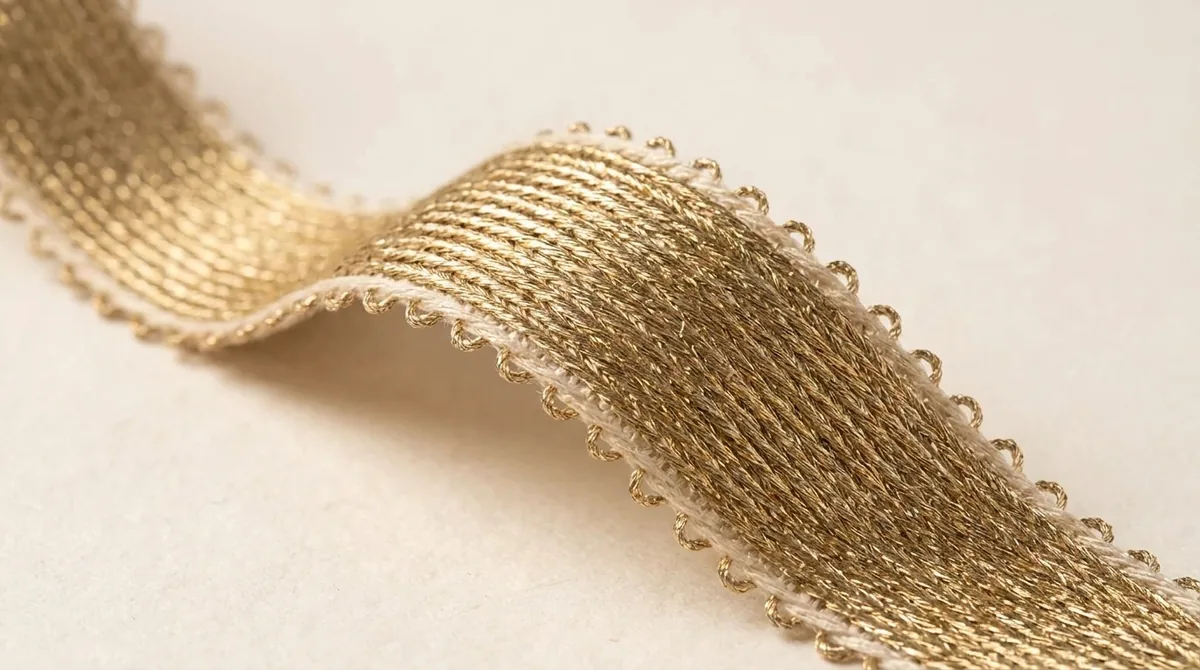
We braid gota lace in our own Jaipur unit: metallic zari and viscose yarns run through the narrow-trim braiding machines, and the base tape they sit on is dyed to shade in our dye house before braiding. Width, zari-to-viscose ratio and metallic tone are set-up choices, so the trim is made to your spec rather than picked from a stock list. MOQ is 1,000 metres per SKU — one ground shade at one width — put up on cards, reels or bulk rolls, and we export worldwide.
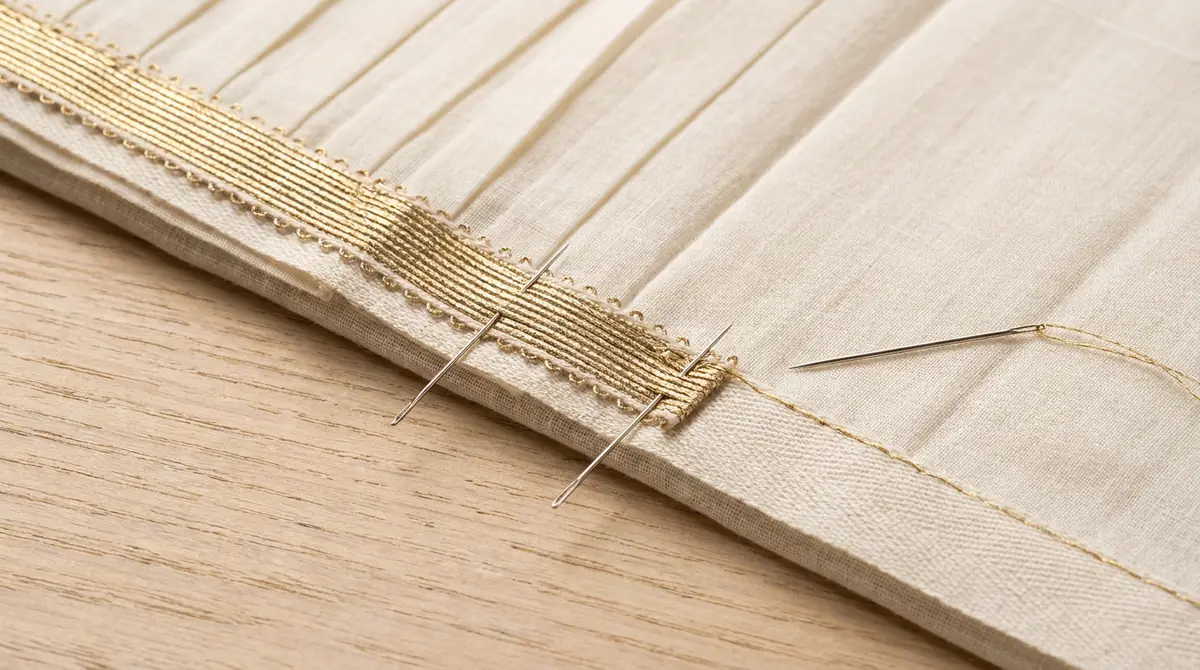
A single narrow band of zari along a hem or a neckline reads as ornament, and the trim sews down in one straight pass — no hand embroidery step, no applique, no separate finishing.
We have run narrow fabrics in Jaipur since 1991, with twisting, braiding and dyeing under our own roof. Because we dye the base tape ourselves, ground colour is something you choose rather than accept. A first order is 1,000 metres per SKU — one ground shade at one width — run through your own line before you commit a season.
What Is Gota Lace Made Of, and How Do We Braid It?
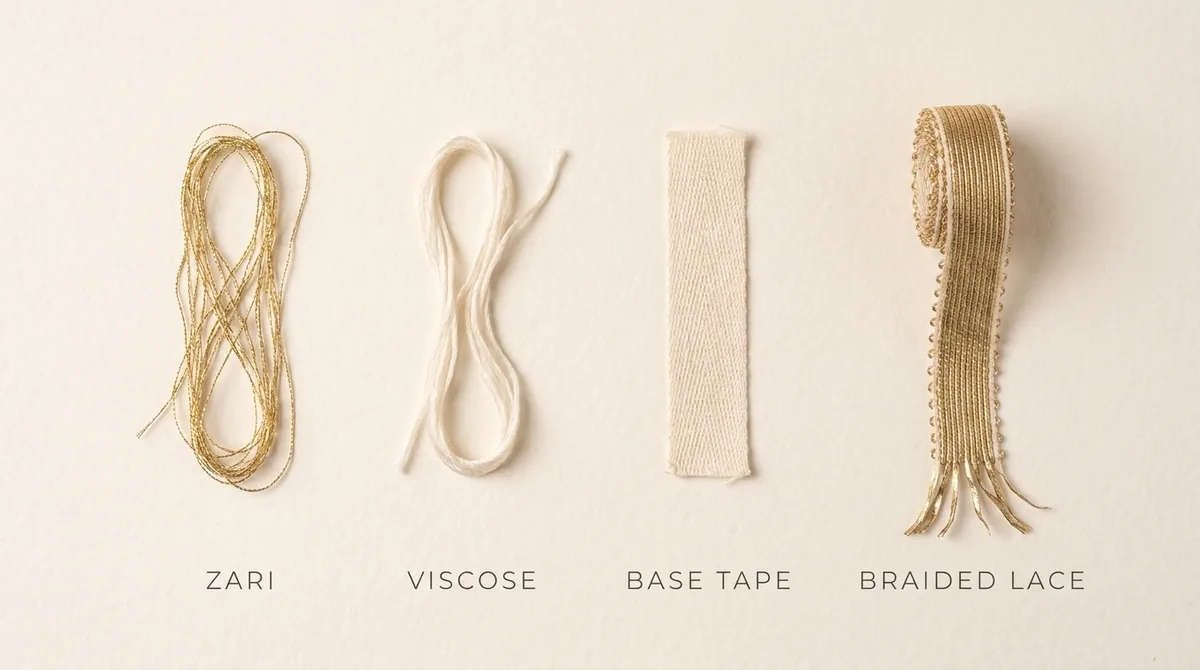
Gota lace is a narrow braided trim carrying metallic yarn. The shine that defines it comes from zari — a fine metallic yarn, in our case a polyester-core metallised yarn rather than the drawn silver of historical gota — and the body around it comes from viscose, which gives gota its characteristic soft sheen and its willingness to sit flat against fabric instead of standing up like a stiff braid.
Both run through our narrow-trim braiding machines together. Carrier count sets the width, and the ratio of zari carriers to viscose carriers sets how bright the finished trim reads. A zari-heavy set-up gives the hard sparkle wanted on bridal and heavy wedding wear; a viscose-heavy set-up gives a quieter, more textile-looking trim that suits daywear and lighter garments. That ratio is a genuine variable, not a fixed catalogue choice.
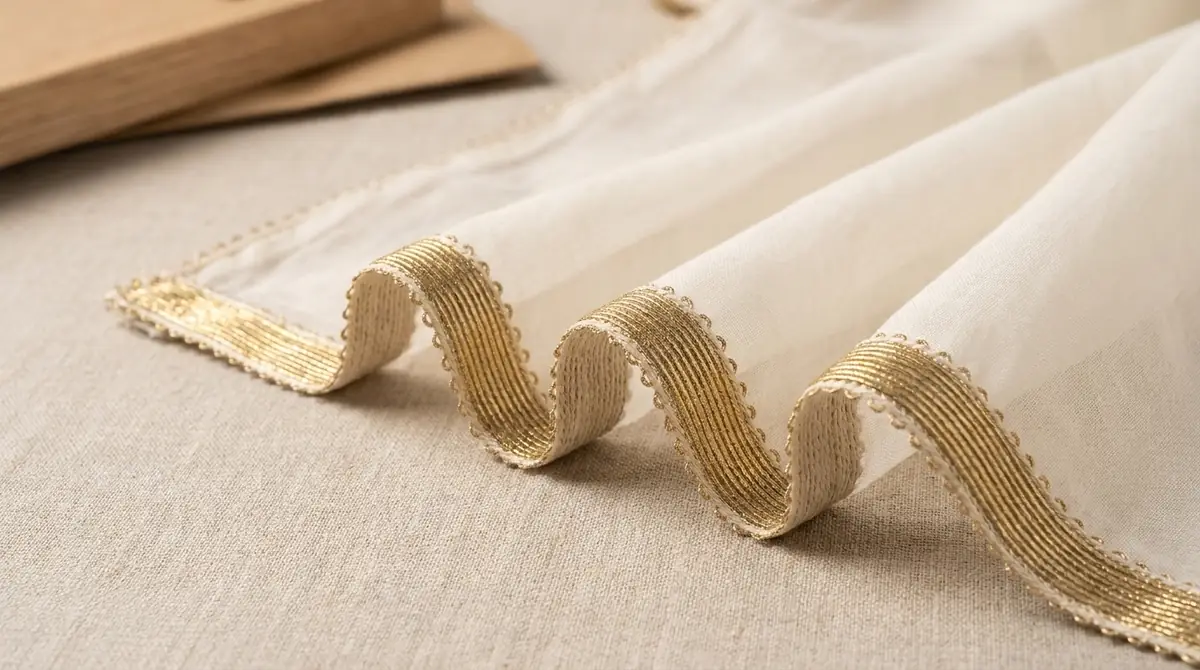
The base tape — the ground the metallic yarn is braided over — is dyed to shade in our own dye house before it goes onto the machine. A gold gota on a red ground and the same gold gota on an ivory ground are visually different products, and matching that ground to the garment fabric is what makes the trim look applied rather than stuck on.
One honest limitation: this is a braided trim, not gota patti work. We supply the lace by the metre; the cut-and-stitch petal and motif work that some buyers also call gota is a hand craft done downstream, usually by the garment unit itself.
How Does Wholesale Buying Work From Our Factory?
You send width, metallic tone, zari-to-viscose ratio and the ground shades you want; we quote within one working day. Dyeing and braiding both happen in the same Jaipur unit.
MOQ of 1,000 metres per SKU, and a SKU is one ground shade at one width — several shades in one shipment is fine and carries the minimum for each
Base tape dyed in-house against your physical fabric swatch
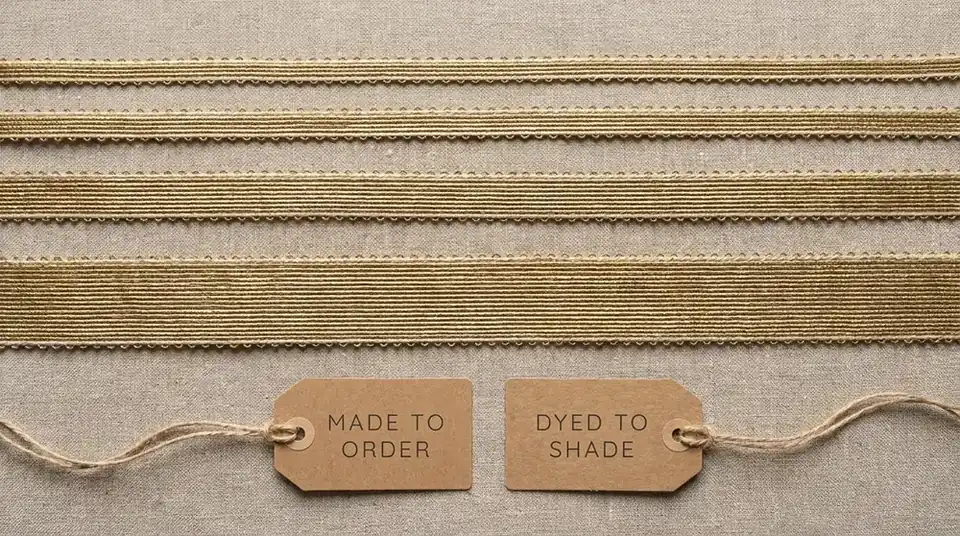
Width set at machine set-up by carrier count — narrow edging bands through to broader borders
Metallic tone specified with the order; gold and silver are the volume shades, other tones on request
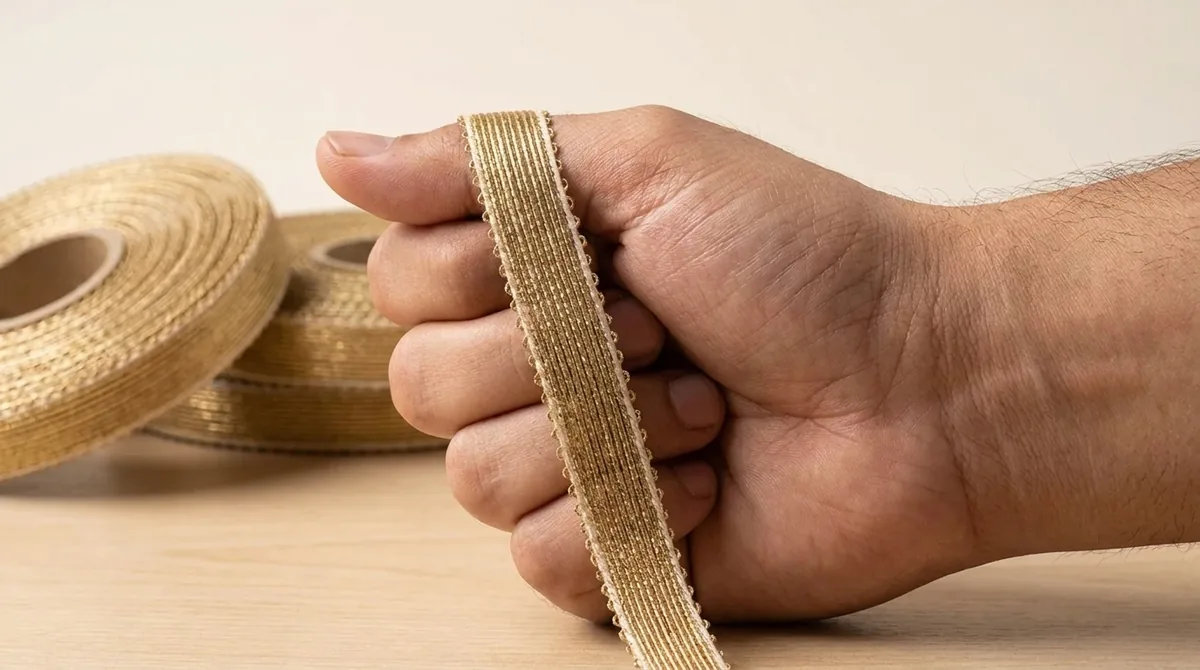
Put-up to suit your line: retail cards, reels, or continuous bulk rolls for cut-and-repack
Repeat orders run against your saved spec, so width and shade stay consistent batch to batch
Export packing — polybagged and carton-packed for sea or air freight
Metallic trim photographs very differently from how it looks in the hand, and zari brightness shifts under showroom lighting. Ask for sample lengths with your quote, stitch them onto your actual fabric, and confirm the ground shade and the zari ratio before committing to volume.
What Do Businesses Actually Use Gota Lace For?
Gota sells into several trades and each one leans on a different part of the spec:
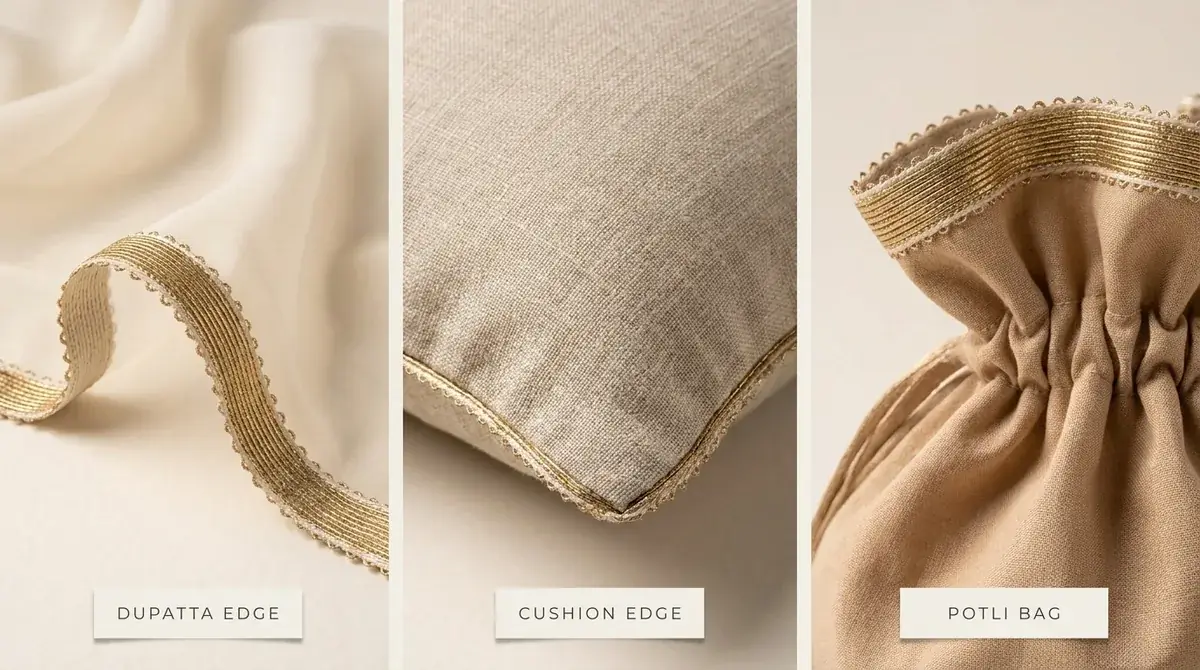
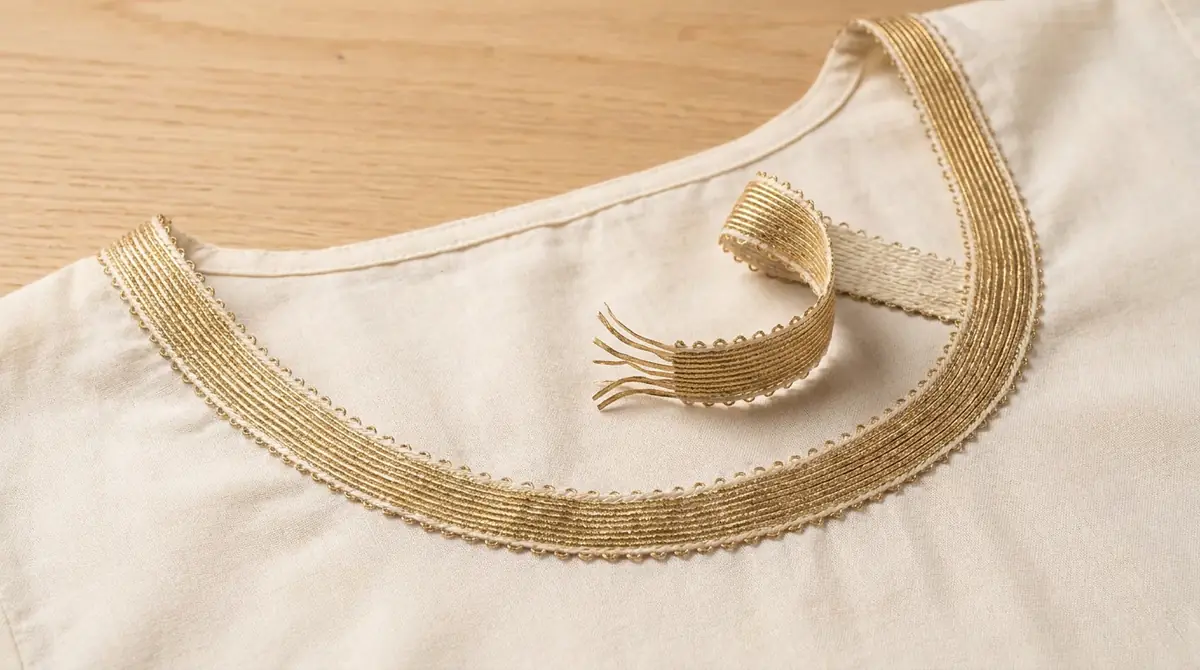
Ethnic and wedding wear — lehenga borders, dupatta edges, saree falls, kurta plackets and sleeve bands, usually zari-heavy for maximum shine under event lighting
Boutique and made-to-measure tailoring — small quantities across many ground shades, matched to the customer's own fabric
Home furnishings — cushion edges, table runners, curtain leading edges and festive throws, generally on a broader width
Craft and haberdashery brands — cut and rewound onto branded cards for notions walls and online craft stores
Festive and event decor — pooja items, gift packaging, torans, mandap and stage detailing, where cost per metre matters more than hand feel
Accessory makers — potli bags, clutches, juttis and hair accessories, often ordered in short runs
Dispatch and freight
Ex-works Jaipur — about 2 to 6 days by surface across India. Freight is to your account, by your transporter or ours. Export orders are quoted separately with air and sea options.
Gota Patti Lace and Gota Lace Borders, Braided in Jaipur — Specifications
Material
Metallic zari yarn with viscose; base tape dyed in-house before braiding
Construction
Braided on narrow-trim braiding machines; carrier count sets width and zari-to-viscose ratio
Widths
Set at machine set-up — narrow edging bands through to broader border widths; confirm your exact width with the inquiry
Metallic tone
Gold and silver are the volume shades; other metallic tones on request
Colours
Ground tape dyed in-house to your fabric swatch and held on reorders
MOQ
1,000 m per SKU, shade and size
Put-up
Retail cards, reels, or continuous bulk rolls; polybagged and carton-packed for export
Lead time
Quote within one working day; production depends on shade count and set-up
Origin
Jaipur, India — dyeing and braiding in-house
Gota patti in the catalogue
The catalogue lists these gota patti products as ready products, alongside the made-to-order laces on this page.
What is the minimum order for wholesale gota lace?
1,000 metres per SKU — and a SKU is one ground shade at one width, so a second shade or a second width carries its own 1,000 metres. A first order is normally one shade at one width, stitched onto real garment fabric and proven before you scale; several shades in one shipment is fine and costs the minimum for each. Below that a custom dye lot plus a machine set-up stops making sense for either side.
How is gota patti lace priced?
₹4-15 per metre ex-works Jaipur. Width and the metallic content set the spread: narrow plain kinari sits at the bottom and wide, dense-work borders at the top. Wedding-season orders book ahead — the dye house fills up from September.
Is your zari real silver or metallised yarn?
Metallised yarn on a polyester core, which is what almost all commercial gota uses today. Drawn silver and gilt zari are a separate, far more expensive craft product used in heritage and restoration work. Metallised zari is what gives consistent shade across batches, survives normal garment handling, and keeps the trim at a price that works in production.
Can I choose the ground colour under the zari?
Yes, and it is the single change that makes the most difference. We dye the base tape in-house before braiding, so send a physical swatch of your garment fabric and we match to it. The same gold zari on an ivory ground and on a deep red ground look like two different trims once they are stitched down.
How do I specify the width?
Give us the finished width in millimetres, or send a sample of the trim you are currently buying. Width is set by carrier count at machine set-up, so it is chosen per order rather than picked from a fixed list. If you are unsure, tell us what the trim is going on — a dupatta edge and a lehenga border usually want quite different widths.
Do you also supply gota patti motifs and cut work?
No. We supply gota lace by the metre as a braided trim. Gota patti — the cut, folded and hand-stitched petal and motif work — is a downstream hand craft, normally done by the garment unit or by specialist karigars using lace like ours as the raw material. Many of our buyers do exactly that.
Do you supply gota patti and gota kinari lace by the roll?
Gota patti, gota kinari and gota lace are the same festive metallic edging this page carries — woven in our own Jaipur factory in narrow bands through to broader borders, on rolls at 1,000 metres per SKU. Ethnic-wear and dupatta makers order several widths together, each its own SKU.