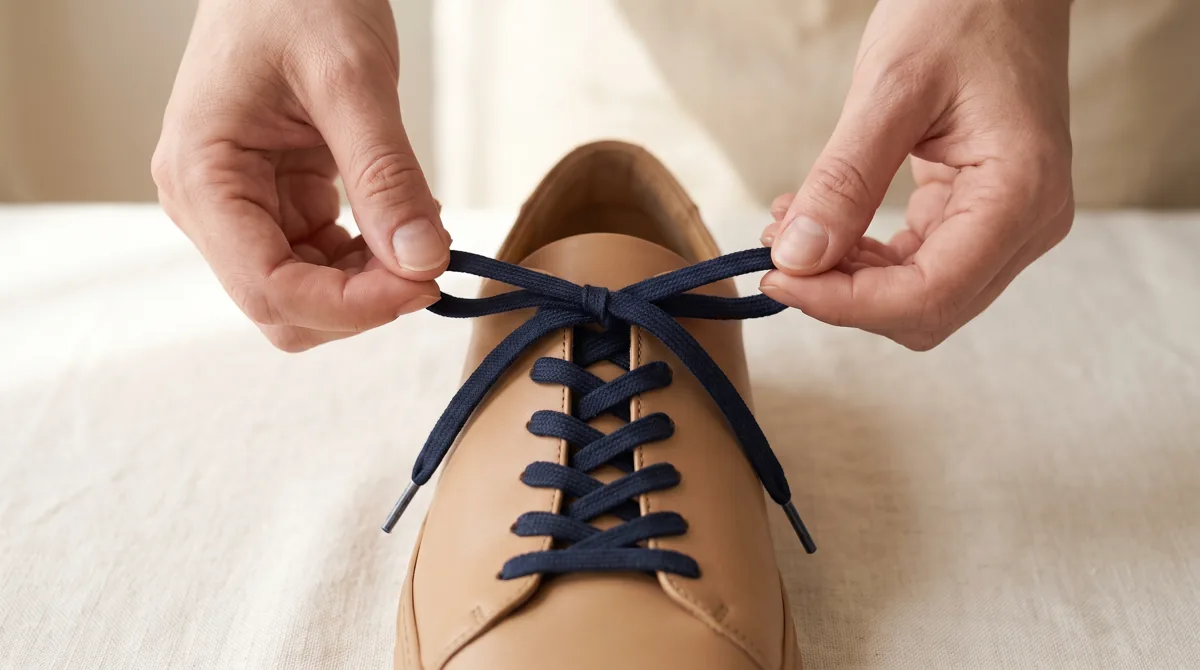
We braid, dye and tip shoelaces at our factory in Jaipur, and buyers regularly ask us a question that has nothing to do with wholesale: why do some laces stay tied all day while others need re-tying every hour? The honest answer is that it is usually not the lace. It is the knot. The same flat polyester lace that holds firm under one bow slips loose under another — because one of them is a square knot and the other is a granny knot, and almost nobody is taught the difference.
The laces themselves — flat, round and oval, cut from 45 to 200 cm and tipped in-house — are on our shoelaces page.
Why shoelaces come untied: granny knot vs square bow
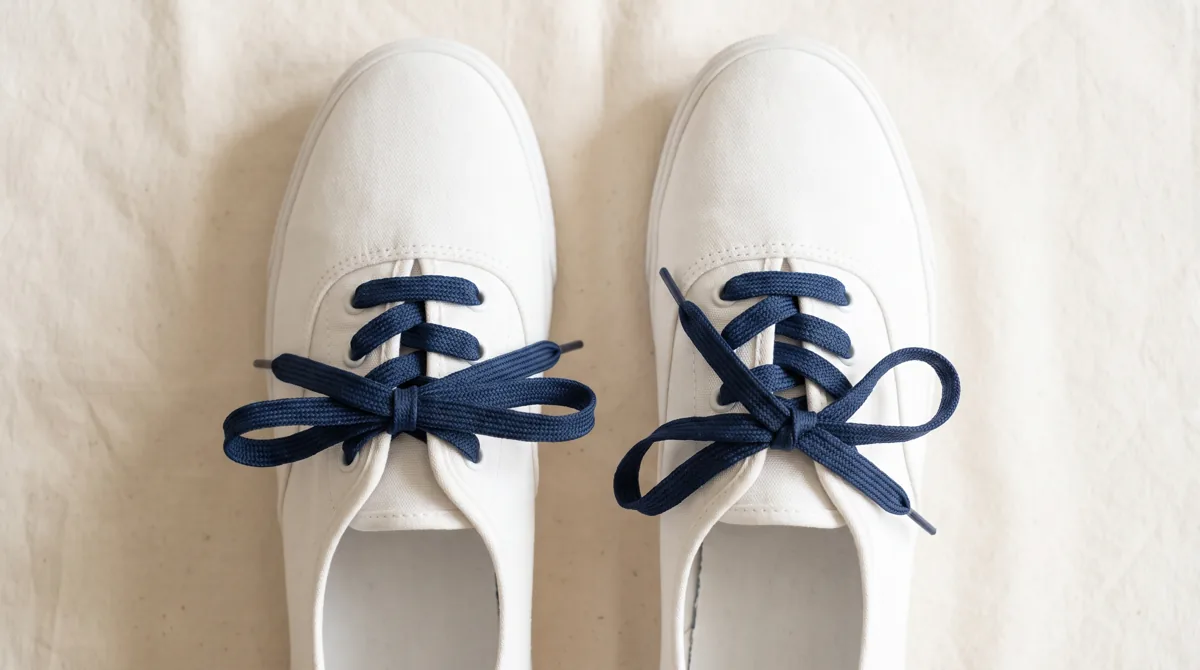
Every shoelace bow is two knots stacked: a starting knot (the first cross-and-tuck) and the bow on top. If both are tied in the same rotational direction, the result is a granny knot — you can spot it instantly because the finished bow twists and sits along the shoe, pointing toe-to-heel. Each step flexes the knot and feeds a little slack through it, and within an hour it is undone.
Tie the two halves in opposite directions and you get a square bow: it sits straight across the shoe, perpendicular to your foot, and every step pulls it tighter instead of looser. The test takes two seconds — look down. Bow lies across the shoe: correct. Bow twists along the shoe: swap the direction of your starting knot (left over right instead of right over left, or vice versa) and keep your usual bow. That single change fixes the problem for most people permanently.
The standard bow, step by step
For everyday sneakers and casual shoes:
- Starting knot. Cross the left lace over the right, tuck it under, and pull both ends snug against the shoe. The knot should sit flat, not ride up.
- Make one loop. Fold one lace into a loop close to the starting knot — a short, tight loop holds better than a long floppy one.
- Wrap in the opposite direction. Take the other lace around the loop the opposite way to how you tied the starting knot. This is the step that makes it a square bow.
- Push through and pull the loops. Push the wrapping lace through the gap to form the second loop, then pull both loops — not the free ends — until the knot is tight.
- Check the lie. Bow across the shoe: done. Bow along the shoe: re-tie the starting knot the other way round.
Faster alternative once the direction habit is fixed: the two-loop "bunny ears" bow (make two loops and square-knot them together) produces the same secure result and is the easiest version to teach children.
How to tie and lace dress shoes
Dress shoes follow different rules because the lacing is part of the look. Sneakers use criss-cross lacing; a formal oxford looks sharpest with straight bar lacing — clean horizontal bars across the instep with no visible diagonals:
- Run the lace straight across the bottom pair of eyelets, both ends going down into the holes.
- Take the left end straight up the inside two eyelets, then straight across on the outside. Take the right end up two and across, so the ends alternate.
- Continue until each end emerges from a top eyelet, keep the bars flat and even, and tie a compact square bow.
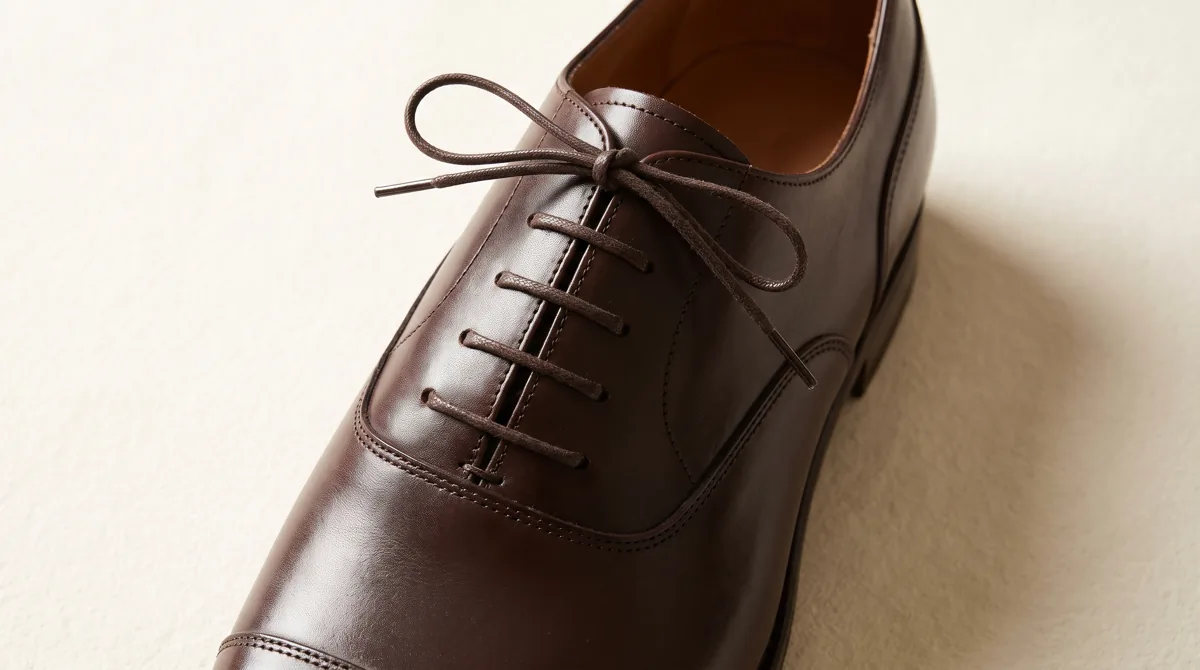
Two details matter more on dress shoes than anywhere else. First, use thin waxed round laces (2-3 mm) — the wax coating adds grip so the small bow stays put, and the thin profile suits closed lacing. Second, keep the bow short: 75-80 cm laces on a five-eyelet oxford leave just enough for a neat bow with short tails. If your dress bow still slips, tuck the finished bow under the crossed laces at the ankle, or add a second wrap of the loop through the knot before tightening — a version of the surgeon's knot that waiters and doormen use through twelve-hour shifts.
How to tie running shoes: the heel lock (runner's loop)
Look at any running shoe and you will find an extra eyelet at the top, slightly behind the last one you normally use. It exists for the heel lock, and most people never touch it:
- Lace normally up to the second-to-last eyelet.
- Feed each lace end into the extra top eyelet on its own side, leaving a small vertical loop on each side. Do not pull the loops closed.
- Cross the ends and thread each one through the opposite loop.
- Pull down and back toward the ankle — the loops cinch and lock the heel into the shoe — then tie your normal square bow.
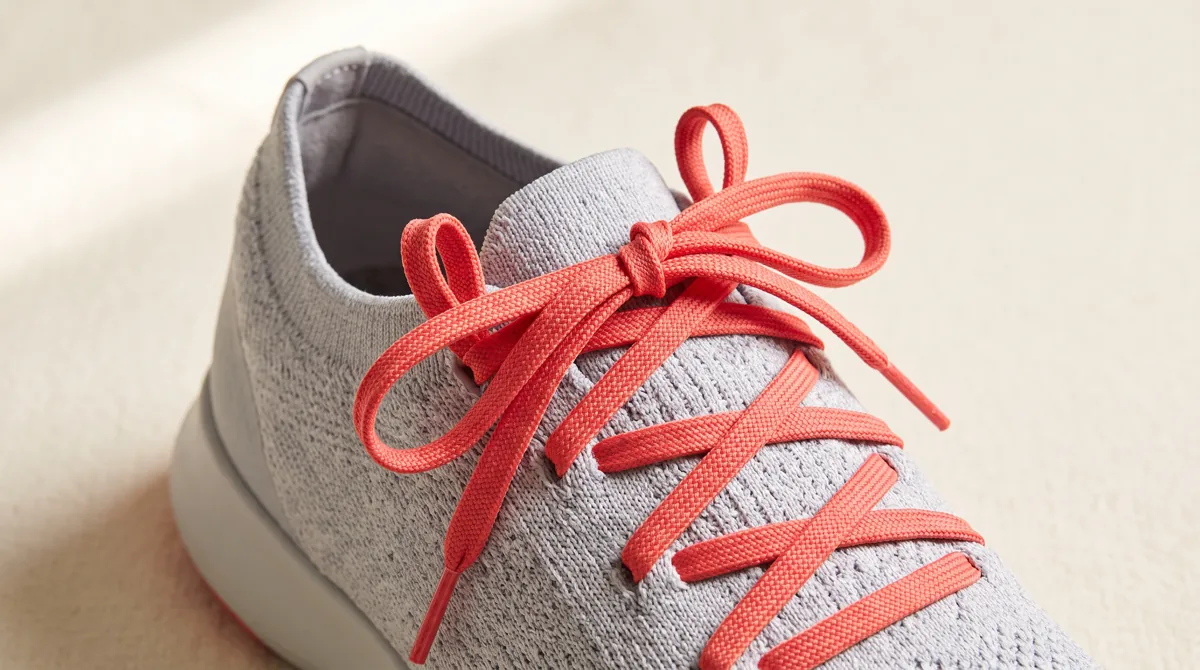
The heel lock stops heel slip without strangling the midfoot, which is exactly the tension pattern distance runners need — snug ankle, relaxed toes. It also takes strain off the bow itself, so laces stay tied through a long run. If your feet swell on long distances, combine it with skipping one mid-foot crossing ("window lacing") to relieve pressure across the instep.
What length should your shoelaces be?
Half of "my laces won't stay tied" complaints are really length problems — tails so long they whip the knot loose, or so short the bow is starved. The trade standard, by eyelet pairs:
| Eyelet pairs | Typical shoe | Lace length |
|---|---|---|
| 3-4 | Dress oxford, loafer conversion | 60-75 cm |
| 5 | Dress shoe, low sneaker | 75-90 cm |
| 6 | Casual sneaker, skate shoe | 90-120 cm |
| 7 | Running shoe, high-top | 120-140 cm |
| 8+ | Work and hiking boot | 140-200 cm |
Flat laces measure longer than round for the same shoe because they follow a wider path over the eyelet stack. When we cut laces to order, running styles get 5-10 cm extra over the chart if the buyer specifies heel-lock lacing — those two loops consume exactly that much.
Does the lace itself matter?
Yes — after the knot, construction is the next biggest factor, and this is the part we see from the production side. Flat braided laces hold knots better than round ones: the flat profile gives the knot more contact surface, which is why sneakers ship with flat laces and why round dress laces need wax for grip. Polyester holds a bow better than slick nylon and shrugs off water; waxed cotton grips hardest of all and is the classic choice for boots and dress shoes. Elastic "no-tie" laces solve the problem a different way — no knot at all — and are worth considering for kids and triathletes.
The tip matters too: a properly shrunk acetate aglet threads through eyelets without fraying for the life of the lace. When an aglet cracks, the lace frays within weeks — it is usually the aglet that dies first, not the lace. You can read how we make and tip flat laces on our wholesale shoelaces page, and if you buy laces for a brand, a repair chain or a shoe line, we cut to your length list, dye to your shades and quote within one working day.
Frequently Asked Questions
Why do my shoelaces keep coming untied?
Almost always because the starting knot and the bow are tied in the same direction, producing a granny knot that works loose as you walk. Check the lie of your bow: if it twists along the shoe instead of across it, reverse the direction of your starting knot. Length is the second suspect — over-long tails whip the knot open.
What is the most secure way to tie shoelaces?
A square bow — starting knot and bow tied in opposite directions — holds through a normal day. For running or work boots, add a heel lock through the extra top eyelet, or upgrade to a surgeon's bow: wrap the loop twice through the knot instead of once before tightening. It is the same bow, one extra wrap, and it unties with the same single pull.
How do you lace dress shoes properly?
Straight bar lacing: the lace runs straight across the bottom eyelets, then each end climbs vertically on the inside and crosses on the outside, producing clean horizontal bars with no diagonals. Finish with a small square bow in thin waxed laces, 75-80 cm for a typical five-eyelet oxford.
What is the extra eyelet on running shoes for?
The heel lock (runner's loop). Make a small loop through the extra eyelet on each side, cross the ends through the opposite loops, cinch down toward the ankle and tie normally. It locks the heel, prevents blisters from heel slip, and takes strain off the bow.
Are flat or round shoelaces better?
Flat laces hold knots better because the knot gets more contact surface — the practical choice for sneakers and sport shoes. Round laces look sharper on dress shoes and boots but need a wax coating for grip. If a round lace keeps slipping, switching to a waxed version fixes it more often than a new knot does.