Packaging designers, hair-accessory brands and garment trims buyers all hit the same fork: satin, grosgrain or velvet? All three come off our own floor in Jaipur, dyed in the same house, so this guide has no favourite to sell — just the differences that decide orders.
The three faces
Satin is woven for gloss: a smooth face that catches light, available single-face (shiny front, matte back) or double-face (shine both sides). It drapes fluidly, ties a soft bow, and photographs with that liquid sheen luxury packaging leans on.
Grosgrain is woven with crosswise ribs — a matte, firm, almost corded texture. It holds structure: a grosgrain bow keeps its loops crisp, an apparel trim lies flat and stays put, and the ribbed surface hides handling marks that would show on satin.
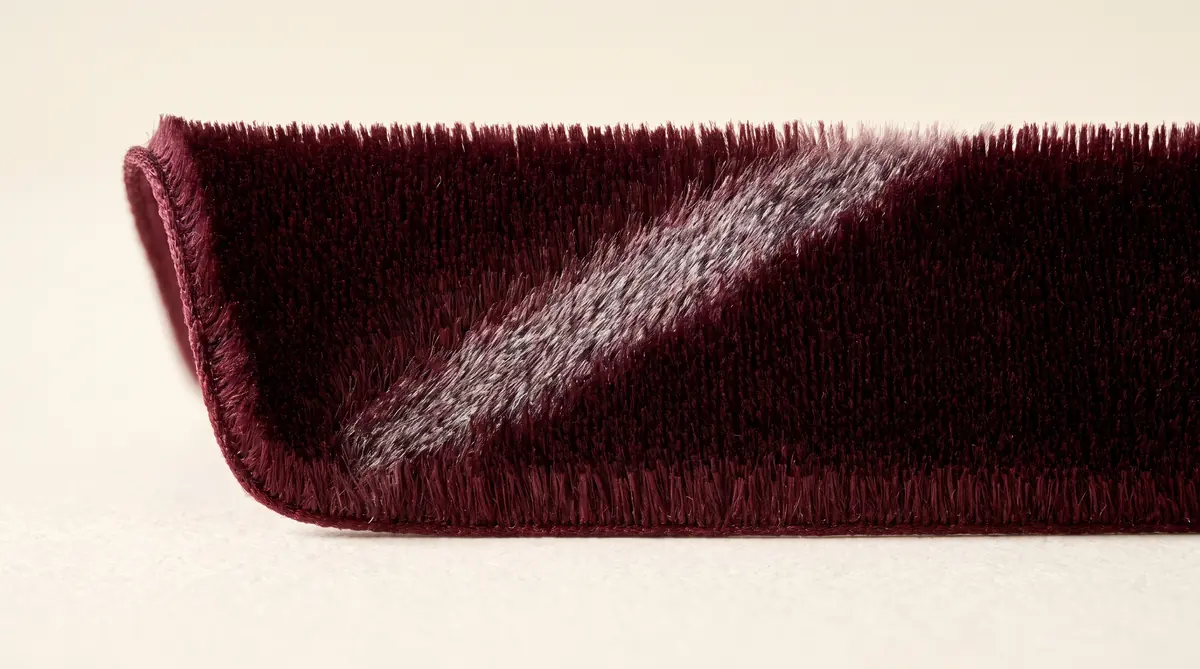
Velvet carries a pile — thousands of tiny upright fibres on a woven base — with a smoother satin reverse. The depth of colour a pile gives cannot be imitated by a flat weave, which is why velvet reads premium from across a room and prices above both flat ribbons.
Side by side
| Property | Satin | Grosgrain | Velvet |
|---|---|---|---|
| Face | Glossy, smooth | Matte, ribbed | Soft raised pile |
| Body | Fluid, drapes | Firm, structured | Substantial, plush |
| Bow behaviour | Soft, romantic loops | Crisp loops that hold | Rich, dense bows |
| Signature uses | Gift wrap, luxury boxes, lingerie straps, wedding | Hair bows, apparel trim, medals, packaging that travels | Jewellery boxes, wine and perfume packaging, winter and festive lines |
| Relative price | Economical | Similar band to satin | Above both — the pile is a second manufacturing step |
How buyers actually choose
By handling. If the ribbon gets tied and retied — boutique counters, hair accessories — grosgrain's structure survives fingers that would crease satin. If it is tied once for the photo and the unboxing, satin's gloss earns its place.
By season and shelf position. Velvet owns winter, festive and premium lines; its pile reads warm and expensive. Plenty of brands run satin or grosgrain most of the year and switch the same shade to velvet for the gifting quarter — one dye house making all three (ours does) keeps that shade consistent across the switch.
By print and finish plans. Satin takes print crisply on its smooth face; grosgrain's ribs give print a textured character; velvet is rarely printed — the pile itself is the statement.
Ordering across the three
All three lines run 1,000 metres per SKU minimum, dyed to your reference in our own house — and because they share that dye house, a satin, a grosgrain and a velvet in the same brand shade can travel in one shipment, quoted together within one working day. Widths and put-ups per line are on each product page.
Frequently asked questions
Which is cheaper, satin or grosgrain ribbon?
At the same width and put-up they sit in a similar band — neither is the 'cheap one'. The real price step is velvet, which sits above both because the pile is a second manufacturing stage. Exact rates depend on width and metreage; every combination is quoted within one working day.
Which ribbon is best for hair bows?
Grosgrain, and it is not close — the ribbed weave holds a bow's loops crisp through wear, handling and humidity that would wilt satin. Boutique hair-accessory production runs overwhelmingly on grosgrain, with satin reserved for soft, drapey styles and velvet for premium winter ranges.
Can all three ribbons be dyed to the same brand colour?
Yes — that is the practical advantage of one mill making all three. Dyeing happens in our own house against your swatch or reference, so a satin, grosgrain and velvet in the same shade stay consistent, including on reorders. Each line carries its own 1,000 m per SKU minimum.
Is double-face satin worth it over single-face?
When both sides show, yes — bows whose tails twist, straps, and ties seen from both sides. Single-face satin (shine one side, matte back) is the economical default for wrap and trims where the back stays hidden. Both faces run on our lines; state which with the width in your enquiry.