Home › Ribbons & Tapes › Grosgrain Ribbon Manufacturer — Ribbed Polyester, 3 mm to 100 mm
Grosgrain Ribbon Manufacturer — Ribbed Polyester, 3 mm to 100 mm
✓ Specs last checked: 2026-09-02
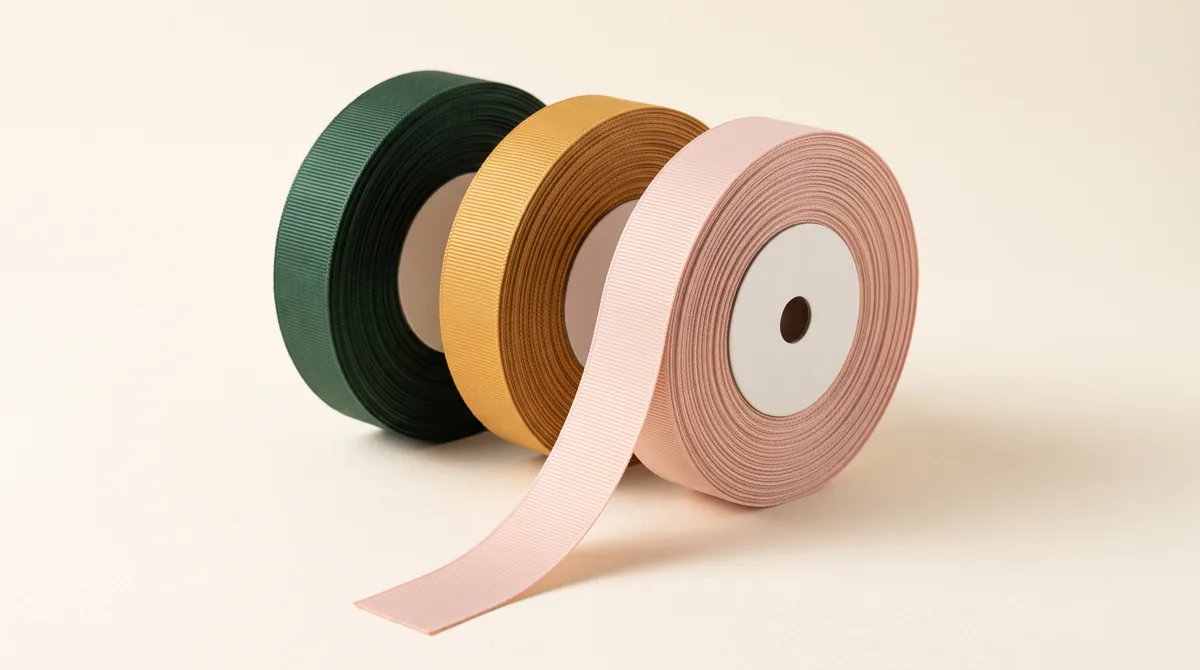
We weave and supply polyester grosgrain ribbon from our Jaipur factory — the ribbed, matte-finish ribbon used for hair bows, apparel trim, medals and packaging. Widths run 3 to 100 mm, every shade is dyed in-house to your reference, and MOQ is 1,000 meters per SKU. We export worldwide and answer every quote within one working day.
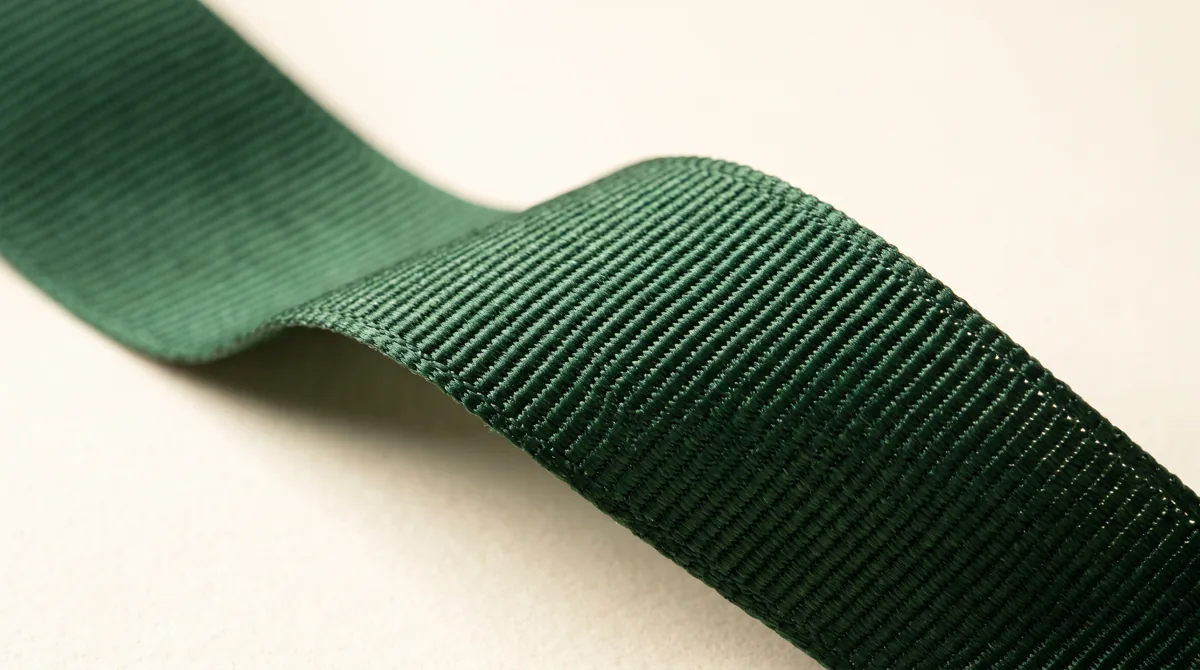
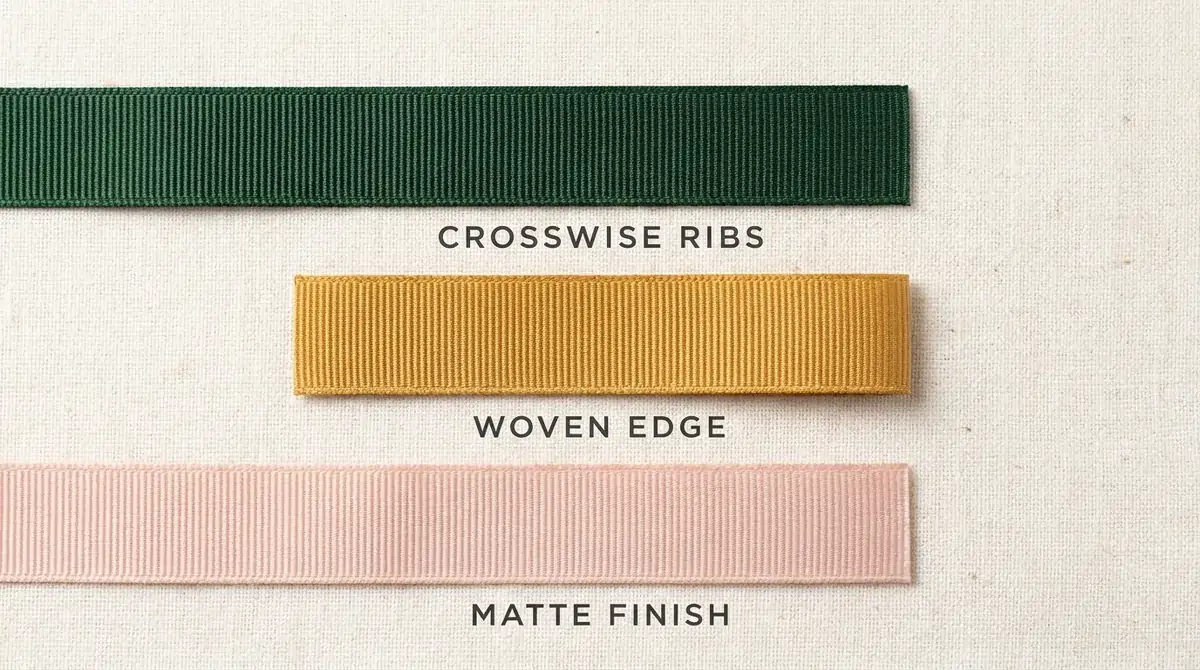
Where satin floats its warp across the face for gloss, grosgrain does the opposite: a fine, dense warp is woven over a much heavier weft, and that heavier weft stands up as the crosswise ribs the ribbon is named for. The result is matte, firm and dimensionally stable — it holds a bow crisp, takes a stitch without slipping, and does not shift or curl on a production table.
We're a cordage and narrow-fabrics factory in Jaipur, India, running since 1991, and we supply polyester grosgrain ribbon the way importers actually buy it: continuous rolls, shades dyed in-house to your reference, trial orders from 1,000 meters, and export packing that survives a sea container.
How Wholesale Buying Works From Our Factory
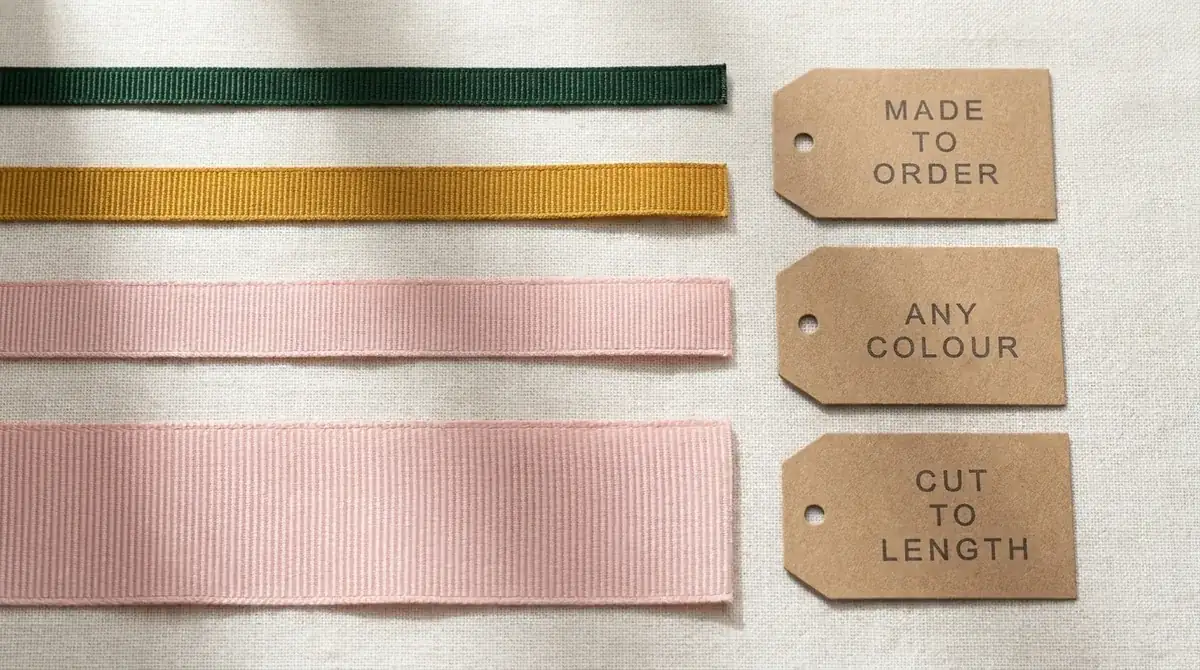
Dyeing happens in-house on our own equipment. Send us a swatch, a Pantone reference or a physical sample and we dye to match it, then hold the recipe so your repeat orders land on the same shade.
MOQ is 1,000 meters per SKU, and each width-and-shade combination counts as one SKU, so a first shipment can pair a couple of widths with a couple of colourways. Rolls come polybagged and carton-packed for export, and we prepare the paperwork in-house.
Grosgrain Ribbon for Hair Bows, Apparel Trim, Medals and Packaging
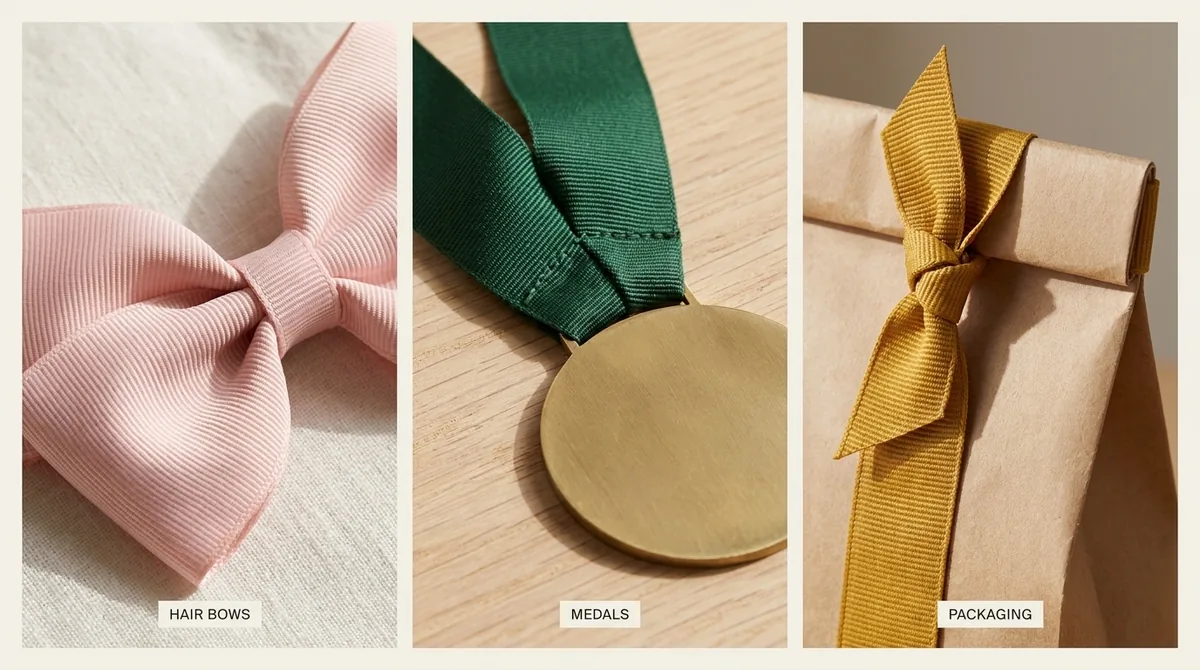
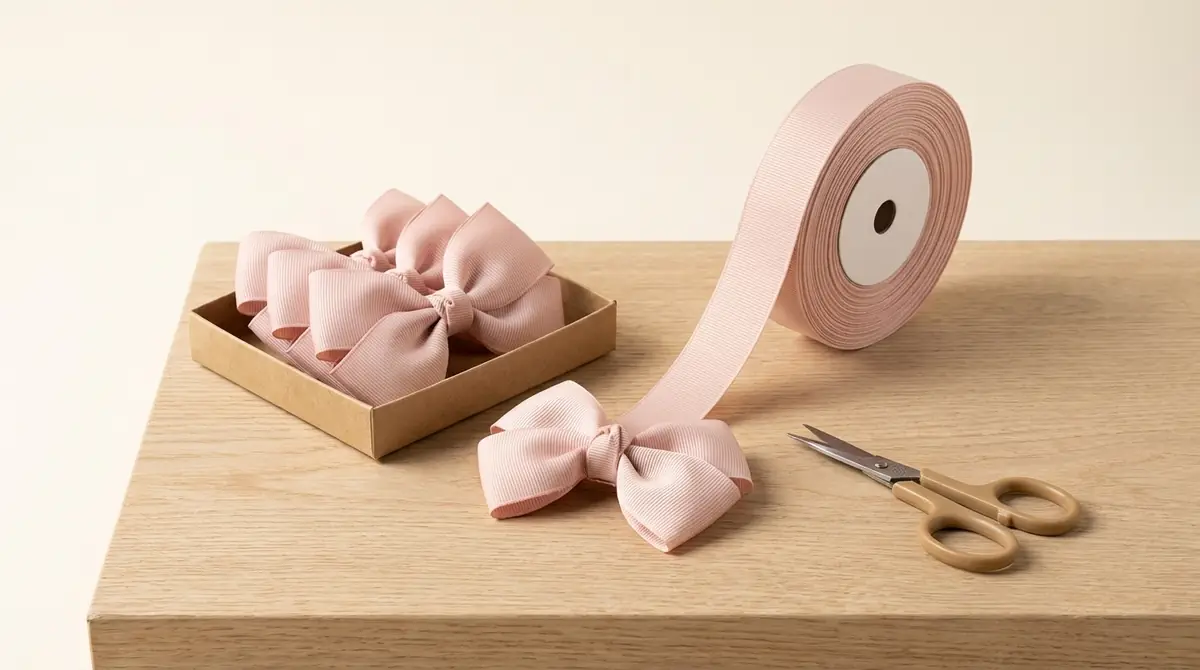
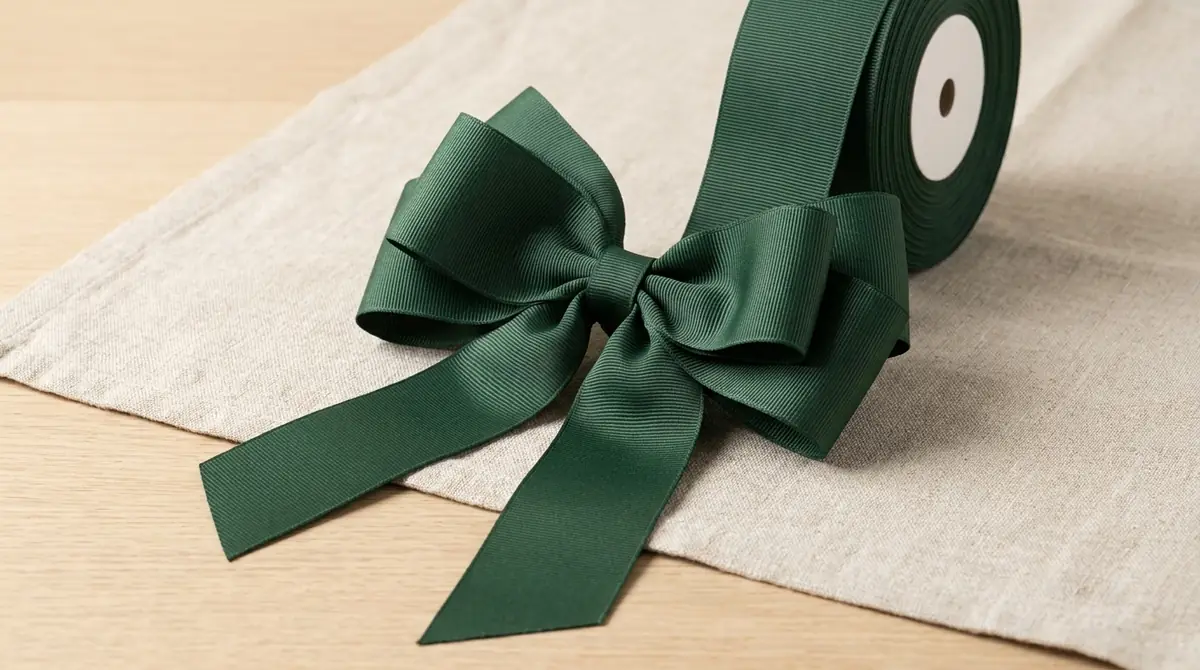
The single biggest channel is hair accessories — bow makers buy 22 mm (7/8") and 38 mm (1.5") grosgrain by the carton, because the ribbed body folds into crisp loops and holds them. The 38 mm — the 1.5 inch — is the cheer bow width; we supply it dyed plain, since glitter and printed faces are added downstream rather than on our looms. Apparel factories take 13-25 mm (roughly 1/2" to 1") for waistband facing, placket backing and hem binding, where the ribbon disappears inside the garment but does the structural work. Medal and lanyard suppliers buy 25-38 mm (1" to 1.5") for neck ribbons, where grosgrain's firmness keeps a medal hanging flat. Packaging houses use it where a matte, fabric-feel tie reads more premium than gloss — coffee bags, candle boxes, garment folders.
The Factory Behind the Ribbon
Most listings under a manufacturers search are trading companies with a catalogue. This page is the factory. The grosgrain is woven and dyed under our own roof in Jaipur, shades are matched in our own dye house against your reference, and rolls are wound and export-packed on the same floor — one site responsible for the ribbon from yarn to carton.
For a buyer that means three practical things: the quote comes from the people who will actually run the order; a repeat order matches the first because the dye recipe stays in our records; and when a width or shade is non-standard, the answer is a production decision made here, not a supplier hunt. Send the width, shade and metreage — the mill price comes back within one working day.
Every grosgrain width in mm and inches, next to our satin, velvet and organza widths, is in the ribbon width chart.
Dispatch and freight
Ex-works Jaipur — about 2 to 6 days by surface across India. Freight is to your account, by your transporter or ours. Export orders are quoted separately with air and sea options.
Grosgrain Ribbon Manufacturer — Specifications
Material
Polyester, ribbed grosgrain weave
Construction
Heavy weft rib under a fine dense warp, woven edge
Widths
3 mm to 100 mm — standard trade widths 6, 9, 13, 16, 19, 22, 25, 38, 50 and 75 mm (approx. 1/4, 3/8, 1/2, 5/8, 3/4, 7/8, 1, 1.5, 2 and 3 inch)
Finish
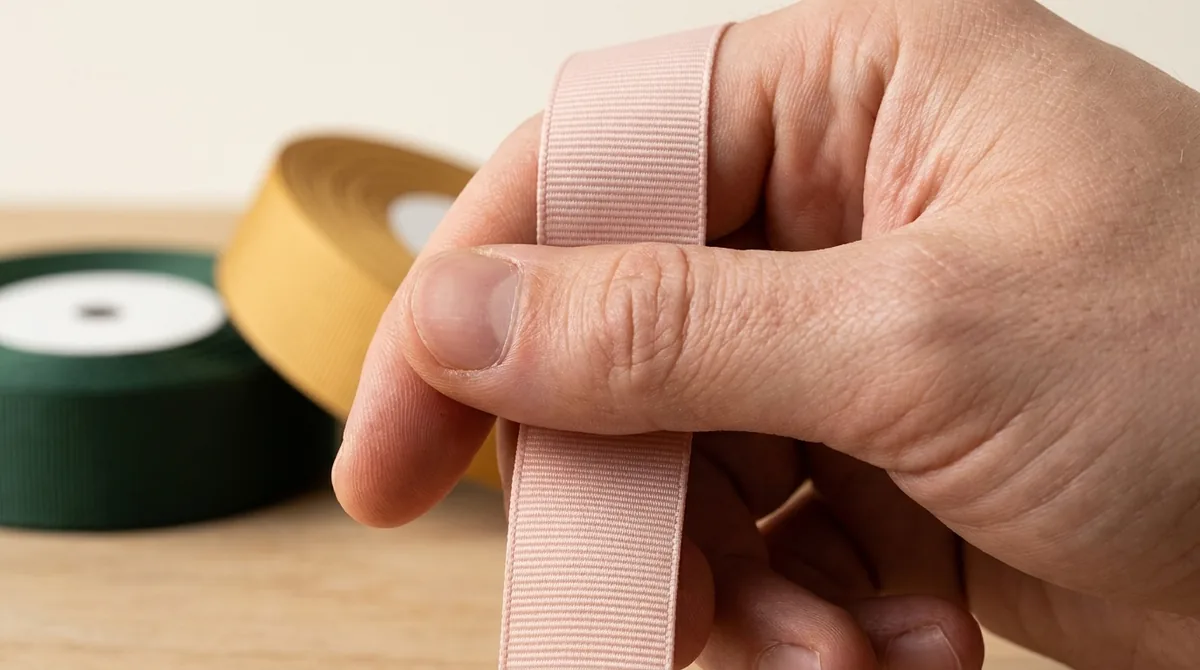
Matte, firm hand; holds bows and stitching without slip
Colours
Custom-dyed in-house to your shade reference
Put-up
Continuous rolls, polybagged and carton-packed
MOQ
1,000 m per SKU, shade and size
Lead time
Quote within one working day; air 7-14 days, sea 25-40 days
Origin
Jaipur, India
Frequently asked questions
What is the minimum order for wholesale grosgrain ribbon?
Our MOQ is 1,000 meters — about 1,094 yards — per SKU. Each width-and-shade combination counts as its own SKU, so one trial shipment can cover several widths and colours before you commit to production volume. Quotes come back within one working day.
Are you a grosgrain ribbon manufacturer or a trading company?
A manufacturer. The ribbon is woven and dyed at our own factory in Jaipur and rolls ship factory-direct — no trading layer in between. That is why custom widths and dyed-to-reference shades can be quoted in one working day, and why the price you get is the mill price.
What does grosgrain ribbon cost per metre?
₹4-10 per metre ex-works Jaipur. The 25 mm stock widths sit mid-band; narrow 10 mm runs cheaper and 50 mm-plus dearer, with custom-matched shades above the stock card. The rib is woven, not embossed, which is what the band is buying.
What is the difference between grosgrain and satin ribbon?
Construction. Satin floats the warp yarn across the face, which produces gloss; grosgrain weaves a fine warp over a heavy weft, which produces crosswise ribs and a matte finish. Grosgrain is stiffer, grips knots and stitches better, and hides handling marks, so it suits hair bows, garment trim and anything worn or handled. Satin suits surfaces where gloss sells the product.
Can you dye grosgrain ribbon to match our brand colour?
Yes — dyeing happens in-house. Send a swatch, Pantone reference or physical sample and we dye to match, then hold the recipe so repeat orders land on the same shade. That consistency matters most to bow makers and packaging buyers who reorder one colour for years.
What widths of grosgrain ribbon do you supply?
3 mm to 100 mm, which is roughly 1/8 inch to 4 inch. The standard trade ladder — 6, 9, 13, 16, 19, 22, 25, 38, 50 and 75 mm, or approximately 1/4, 3/8, 1/2, 5/8, 3/4, 7/8, 1, 1.5, 2 and 3 inch — is always in rotation, and other widths within the range are made to order on the same looms.
Do you send samples before a bulk grosgrain order?
Yes. Samples ship before bulk on every order, so you can check the rib weight, hand and dyed shade against your reference before the production run starts. Tell us the widths and shades you are considering and we will include them in one sample dispatch.
How do I get a price from a grosgrain ribbon manufacturer directly?
Send three things — the width, the shade reference and the metreage you need — and the mill price comes back within one working day. Prices are quoted ex-works Jaipur, so add your own freight and duty when you compare quotes. Because the quote comes from the floor that will run the order, a non-standard width or an unusual shade gets a production answer rather than a supplier hunt.
What should I ask grosgrain ribbon manufacturers before placing a first order?
Ask whether they weave and dye themselves or buy in from a mill — ours is woven and dyed under one roof in Jaipur, running since 1991. Ask how the MOQ is counted, because it changes what a trial order can cover: ours is 1,000 metres per SKU, and each width-and-shade combination is its own SKU. Ask whether samples ship before the bulk run, and whether the dye recipe is kept on file so a reorder lands on the same colour. On both of those the answer here is yes, which is what keeps a repeat order matching the first.
Do you export grosgrain ribbon, and how is it packed for shipping?
Yes — we export worldwide from the Jaipur factory. Ribbon goes out in continuous rolls, polybagged and then carton-packed so it survives a sea container, and the export paperwork is prepared in-house rather than farmed out. Air freight runs 7 to 14 days and sea 25 to 40 days.
Which grosgrain ribbon widths do hair bow and cheer bow makers order?
22 mm (7/8 inch) and 38 mm (1.5 inch) are the two hair-accessory widths that move by the carton, and the 38 mm is the cheer bow standard. Apparel factories take roughly 13 to 25 mm for waistband facing, placket backing and hem binding, where the ribbon does structural work inside the garment. Medal and lanyard suppliers buy 25 to 38 mm for neck ribbons, since grosgrain's firmness keeps a medal hanging flat. All of these sit inside the 3 to 100 mm range and run on the same looms, so mixing widths across one order is normal.
Do you supply glitter or printed grosgrain ribbon?
We supply grosgrain dyed plain. Glitter faces and printed designs are added downstream rather than on our looms, so cheer bow makers order the plain dyed 38 mm from us and have the glitter or print applied after. What we do customise is the colour — every shade is dyed in-house to your swatch, Pantone reference or physical sample.