Home › Elastics › Elastic Thread — Covered, Dyed and Coned in Jaipur
Elastic Thread — Covered, Dyed and Coned in Jaipur
✓ Specs last checked: 2026-09-02
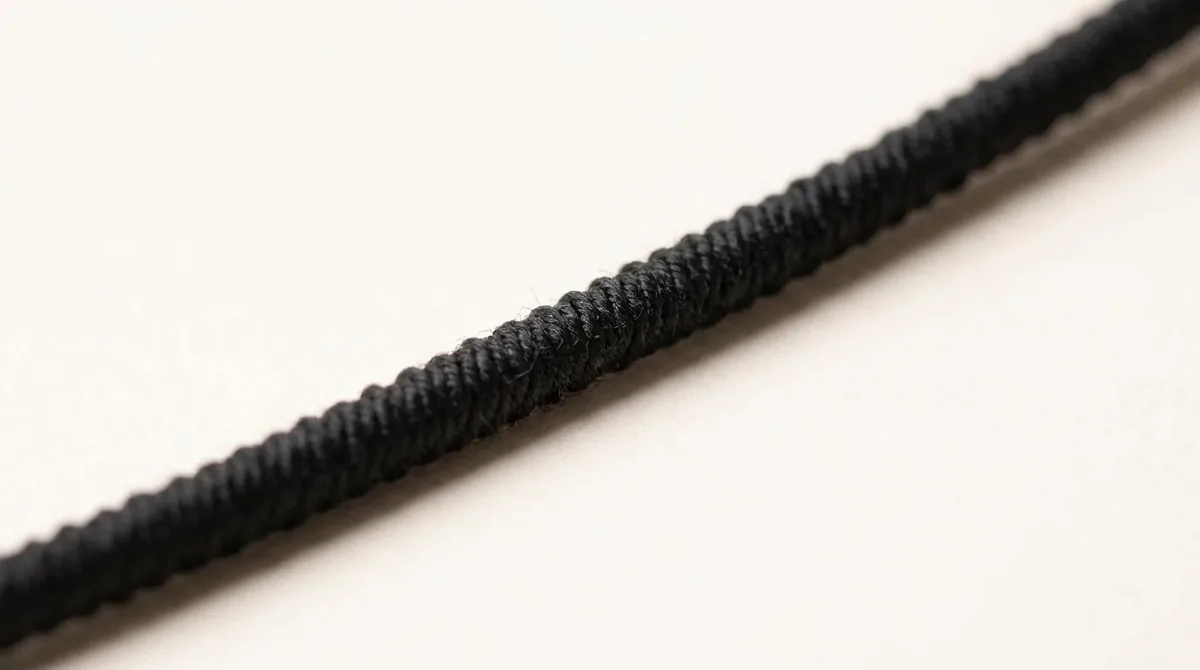
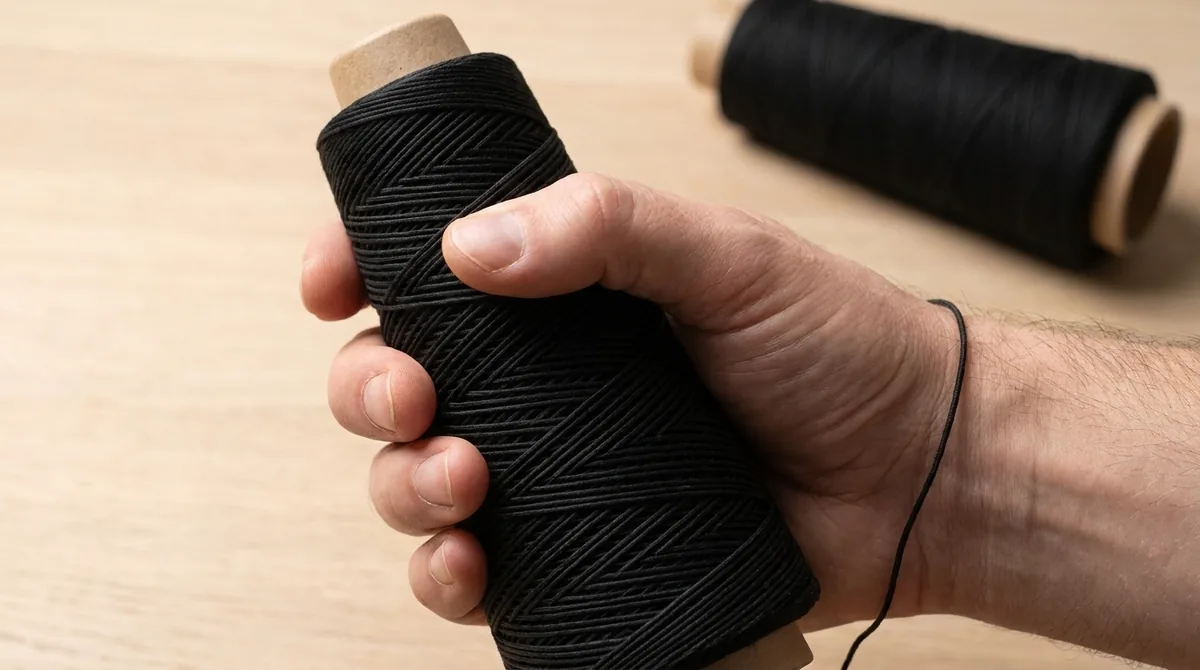
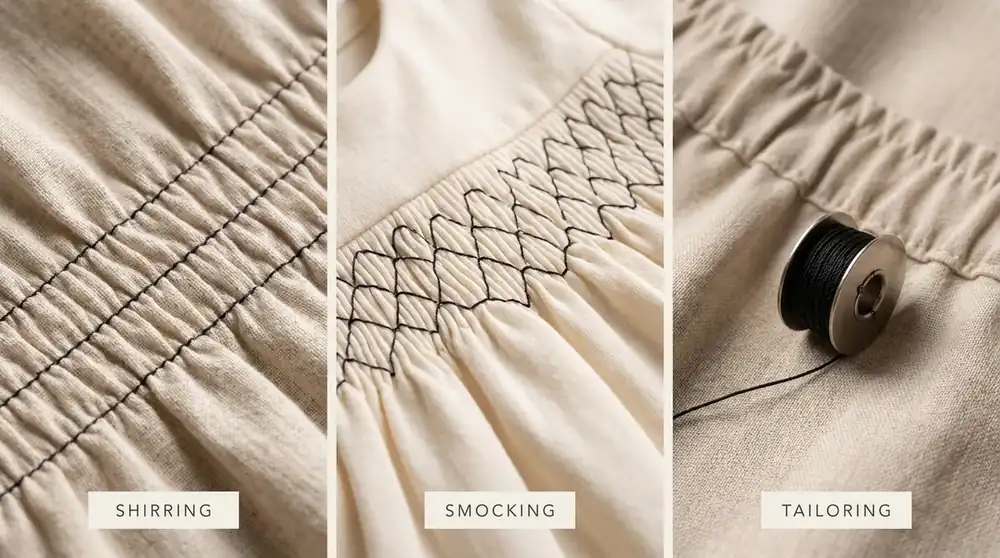
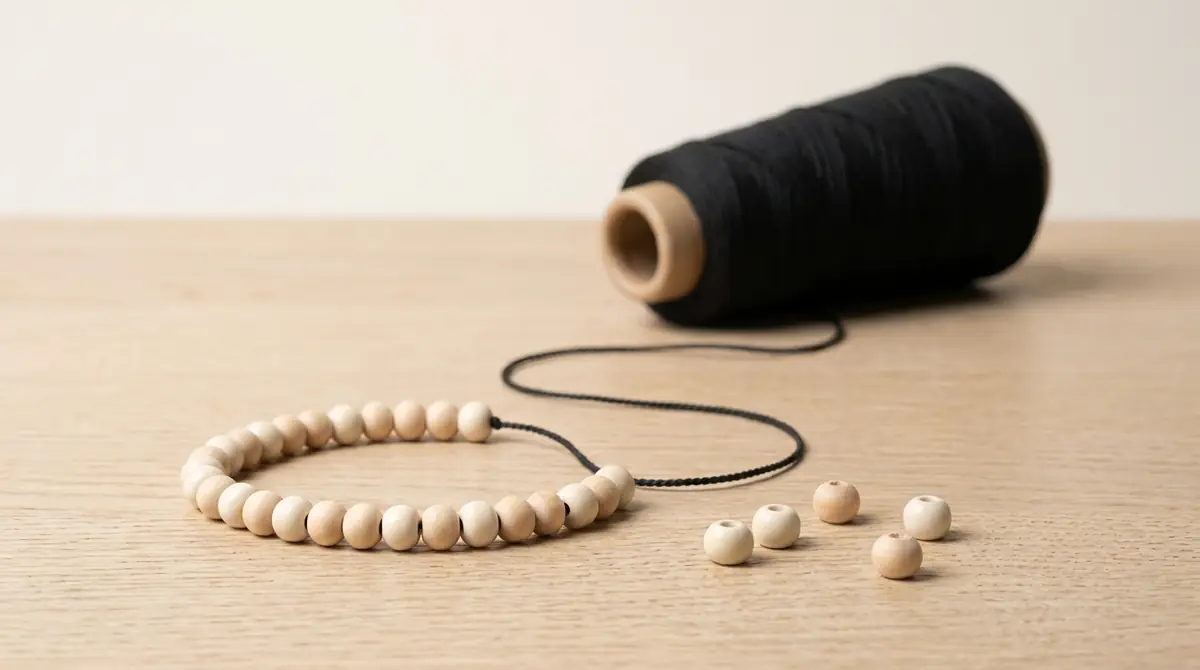
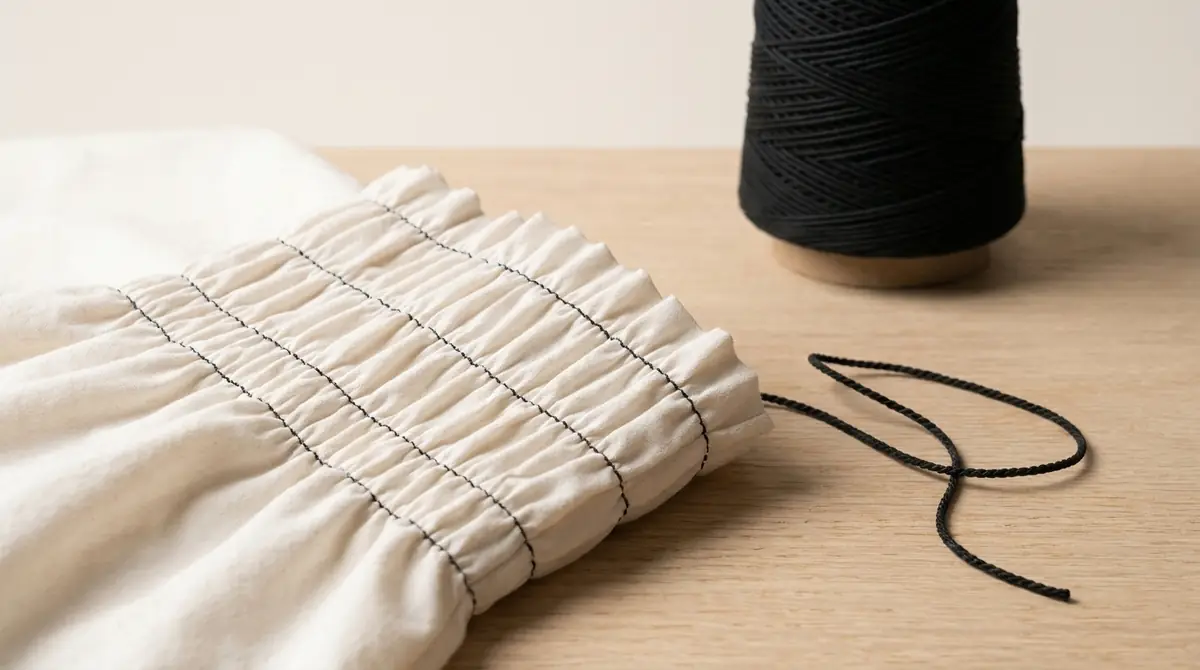
Elastic thread is a fine rubber core with a yarn cover wound tightly around it, used for shirring, smocking and any tailoring seam that has to give. We cover a 0.5-1mm rubber thread in our Jaipur factory — spun polyester for every dyed shade, cotton where the cover stays natural and undyed — dye in-house to standard black and white plus fashion shades, and wind it onto bulk cones for the trade. Trial orders start at 1,000 metres, about 1,094 yards, and we supply across India and export worldwide.
We have run twisting, braiding, dyeing and tipping machines in Jaipur since 1991. Elastic thread is the same covered rubber construction as our elastic cord, only much finer, and it leaves the factory by the cone rather than the spool.
How shirring elastic thread is made: core, cover and winding
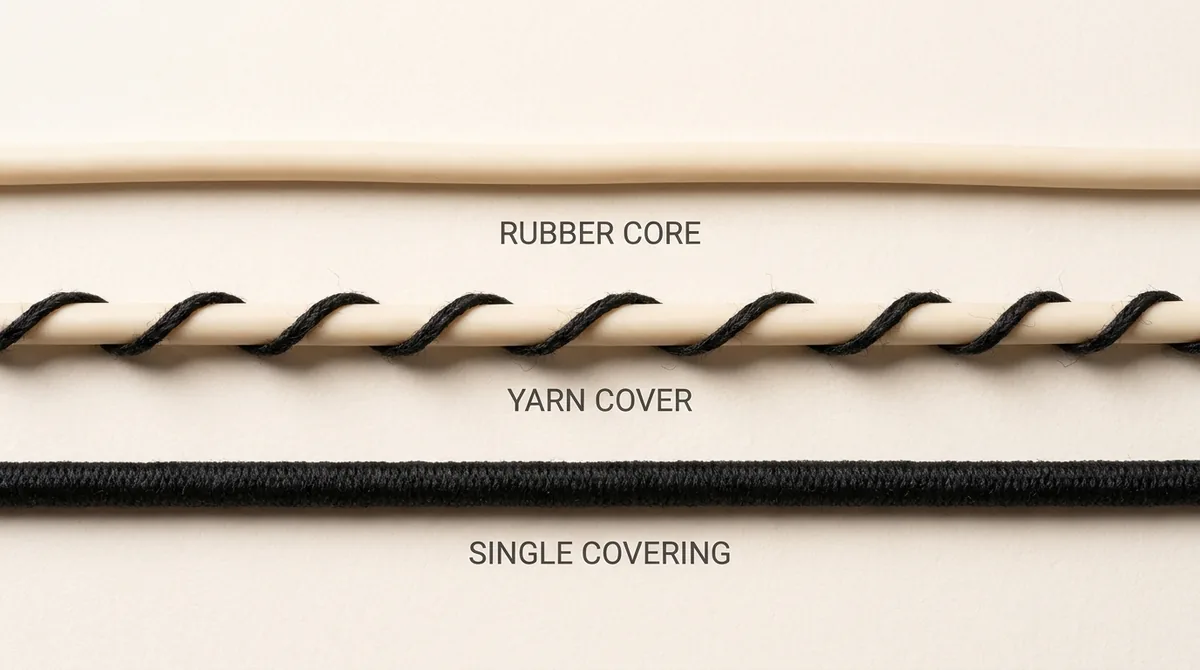
It starts as a bare rubber thread. We run rubber cores from 0.5 mm up to 15 mm through a covering machine — 0.5, 0.7 and 1 mm are the standard fine gauges, which wraps a fine yarn around the stretched core in one continuous helix. When the tension releases, the cover crimps down and grips the rubber so it cannot be seen.
Core — bare rubber thread, 0.5mm to 1mm, chosen for the stretch and recovery the end use needs
Cover — fine spun polyester on every dyed shade, for sheen and colourfastness; cotton where the cover stays natural and undyed, for a matte, softer hand
Covering — single covering, one yarn wrapped in one direction
Finishing — the cover is dyed in-house, then wound onto cones
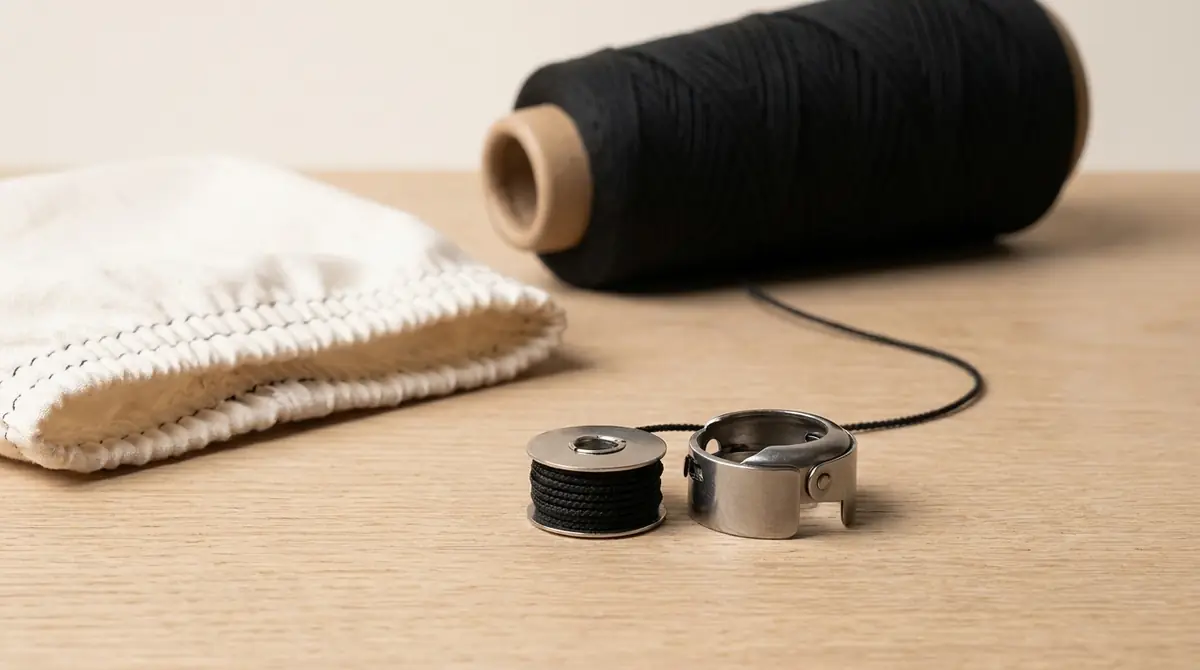
Winding tension is where cones go wrong. Wound too tight and the thread will not relax evenly when the fabric is gathered. Wound too loose and the rubber shows through under stretch and drags in the bobbin case. Consistency along the cone matters as much as the average.
Single covering is the standard construction for shirring and tailoring thread. It is not the same thing as a braided elastic cord and we do not sell it as one — if you need load-bearing stretch, ask about braided cord instead.
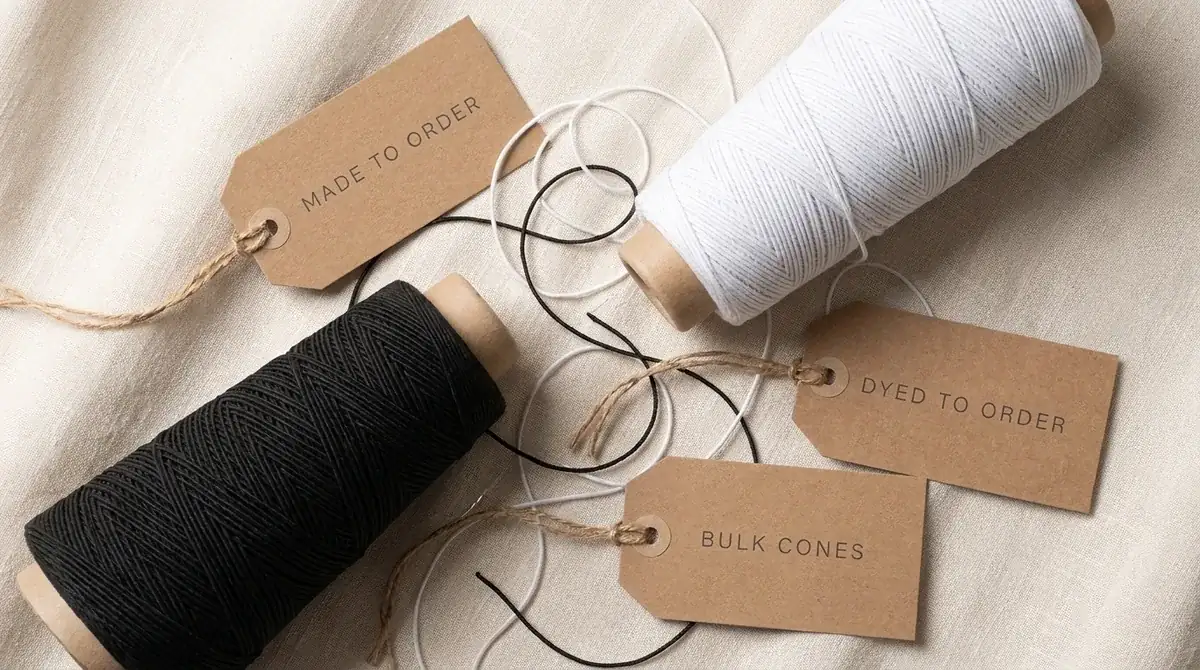
Colour: black and white as stock, everything else to your card
Black and white are the bulk of what leaves the factory and we keep both running, so a standard order does not sit waiting for a dye batch. Fashion shades are dyed to order.
The fibre follows the shade. Every dyed shade, black included, is spun polyester finished to look and feel like cotton; cotton cover is used where the thread stays natural and undyed. Other cover fibres can be run to your specification at bulk volumes.
Those come in as a shade card or, better, a physical cutting. We dye a short length, send it for approval, and once you sign it off the recipe is held against your account for repeat orders. Dyeing is done in our own plant in Jaipur rather than sent out.
How wholesale buying works
Almost everyone starts small. Tell us the core diameter you currently run, the colour — which settles the cover fibre, since dyed shades run in spun polyester and natural undyed cover runs in cotton — and the cone weight or metreage your machines and stockroom are set up for. We make a trial quantity, you sew it off, and if the stretch and recovery suit your work we move to production cones.
Trial orders start at 1,000 metres per SKU, and an SKU here is one core size, one cover yarn and one colour. Four shades of the same thread is four SKUs, not one large commitment, so you can test an assortment rather than gamble on a single colour.
Ask for the trial to be wound on the put-up you actually intend to use. Elastic thread unwinds differently from a small retail spool than from a production cone, and that is the thing worth testing before you commit.
Reorders are simple once the first one closes: quote the shade and the core size and we run it against the held recipe. Cones are poly-bagged and carton-packed, and export cartons are marked to your instructions.
Dispatch and freight
Ex-works Jaipur — about 2 to 6 days by surface across India. Freight is to your account, by your transporter or ours. Export orders are quoted separately with air and sea options.
Elastic Thread — Specifications
Material
Rubber core with a cover yarn — every dyed shade: spun polyester, finished to a cotton hand; natural and undyed: cotton; other fibres to buyer specification at bulk volumes
Construction
Single covering — one yarn wrapped around a stretched rubber core
Sizes
Rubber core diameters from 0.5 mm to 15 mm; 0.5, 0.7 and 1 mm held as the standard fine gauges
Colours
Black and white held as standard; fashion shades dyed to your shade card or cutting. Every dyed shade, black included, is spun polyester
Dyeing
Cover dyed in-house in Jaipur, recipe held on file for reorders
MOQ
1,000 m per SKU, shade and size
Put-up
Bulk cones wound to your required weight or metreage; also available on retail spools
Packing
Cones poly-bagged and boxed by shade, carton-packed for export
Origin
Jaipur, India — covering, dyeing and winding in our own factory
Frequently asked questions
Can I use elastic thread for shirring and smocking on a sewing machine?
Yes, that is the largest use for it. The thread is wound onto the bobbin by hand or at low tension and sewn with normal thread on top, so the fabric gathers as you sew. A 0.5mm or 0.7mm core is the usual choice for shirring; 1mm is heavier and suits gathering and craft work. Tell us at quote stage if you are shirring, because winding tension changes how evenly the rows pull up.
Should I take a polyester or a cotton cover?
The shade decides it. Every dyed shade is spun polyester, finished to look and feel like cotton — it holds colour through washing and sunlight and slides easily through a bobbin case. Cotton cover is used where the thread stays natural and undyed, which is what baby-wear and natural-fibre buyers ask for. Other cover fibres can be run to your specification at bulk volumes. Both run on the same core sizes, so order a mixed trial and decide with the thread in your hand.
What is the minimum order, and can I trial it first?
Trial orders start at 1,000 metres per SKU — about 1,094 yards — where an SKU is one core size, one cover yarn and one colour. You can split the trial across shades and core sizes so you test the actual assortment you plan to run. Most buyers trial in black or white first, confirm stretch and recovery on their own machines, and only then order fashion shades in production quantity.
What is the price of elastic thread?
₹2-5 per metre ex-works Jaipur. The fine shirring gauges — 0.5, 0.7 and 1 mm — sit at the bottom of the band; heavier covered cores toward 15 mm sit at the top. Dyed shades carry a small premium over white and black.
How is it packed and how long does delivery take?
Cones are wound to the weight or metreage you specify, poly-bagged, boxed by shade and carton-packed. Within India, surface despatch from our Jaipur factory reaches most destinations in three to six days. For export we quote air or sea depending on quantity, and cartons are marked to your instructions.
Do you make rubber ka dhaga for garments?
Rubber ka dhaga — elastic thread with a rubber core wrapped in textile — is this exact product. Cores run 0.5 mm to 15 mm with 0.5, 0.7 and 1 mm as the standard fine gauges garment units order. MOQ 1,000 metres per SKU.