Home › Elastics › Round Elastic Cord, 1-3 mm — Braided in Our Jaipur Factory
Round Elastic Cord, 1-3 mm — Braided in Our Jaipur Factory
✓ Specs last checked: 2026-09-02
Round elastic cord is a rubber core with a sheath braided tightly over it, and we have been an elastic cord manufacturer in Jaipur since 1991. The 1mm to 3mm sizes that haberdashery, mask and packaging buyers ask for run on our braiders regularly, dyed in our own dye house and cut with heat-tipped ends when you need a finished component. Trial orders start at 1,000 meters — about 1,094 yards — per size and colour, and we export worldwide.
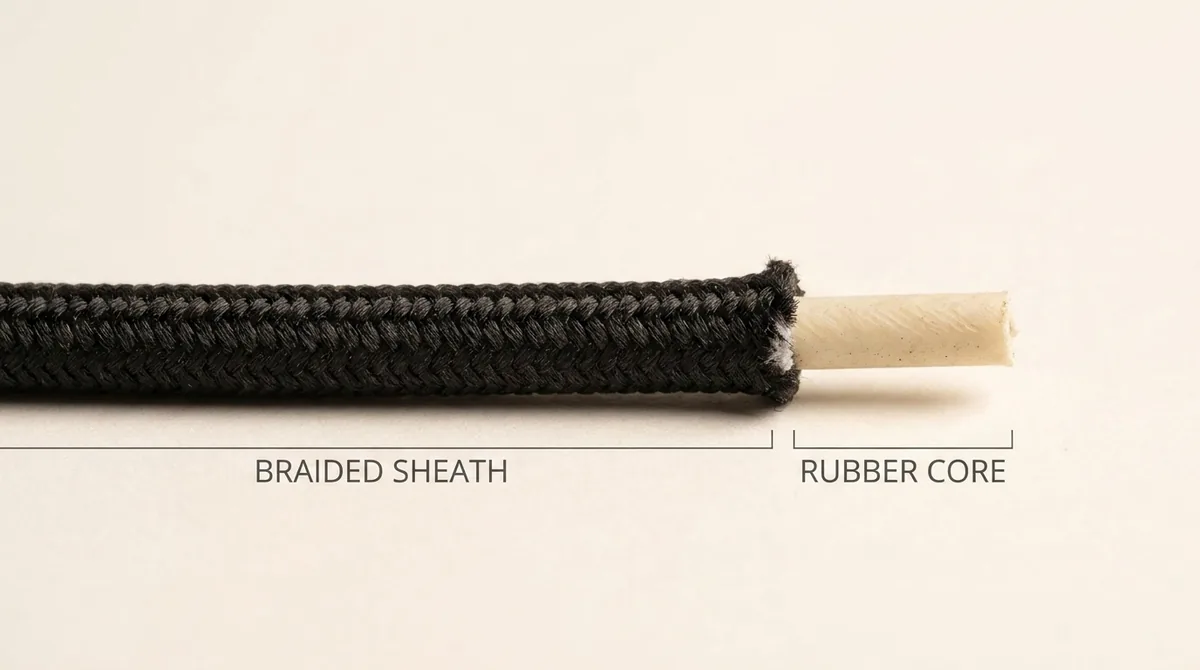
Round elastic cord is a rubber core with a textile sheath braided around it, so the cord stretches and springs back without the rubber ever touching skin or fabric. We run twisting, braiding, dyeing and tipping under one roof in Jaipur, and have done since 1991.
How round elastic cord is constructed
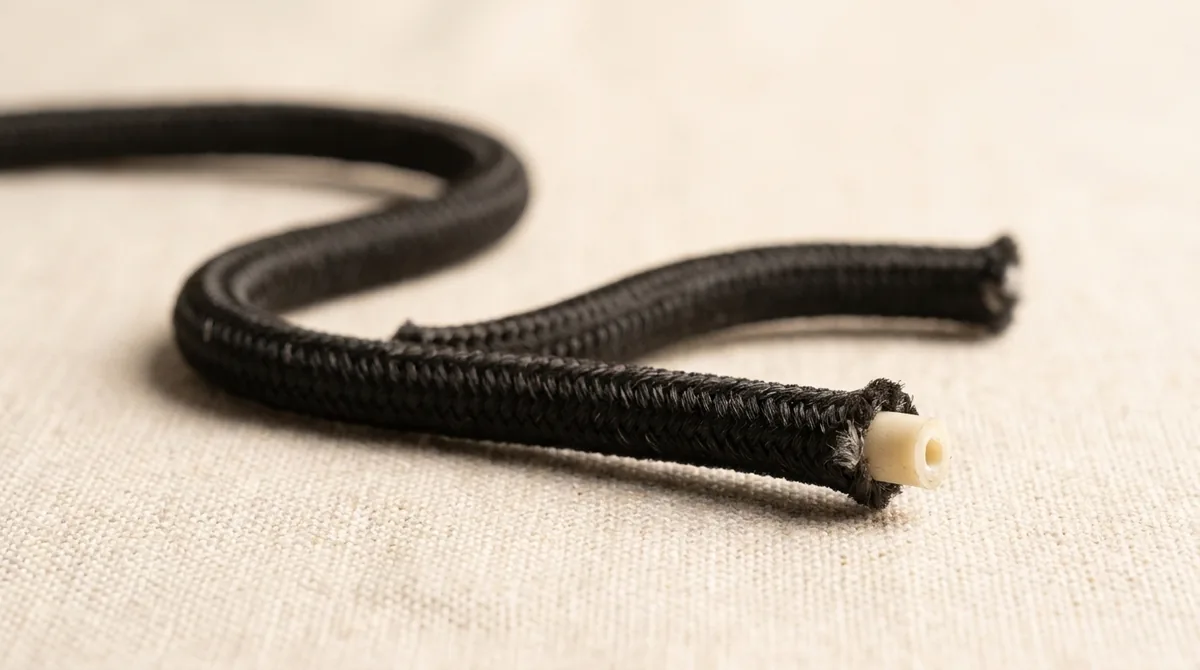
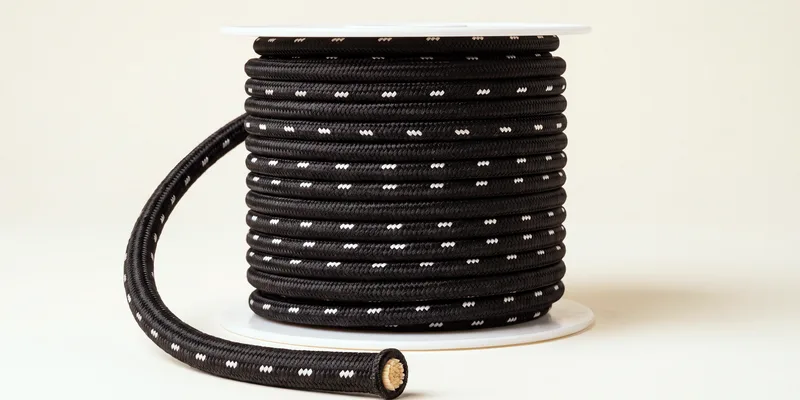
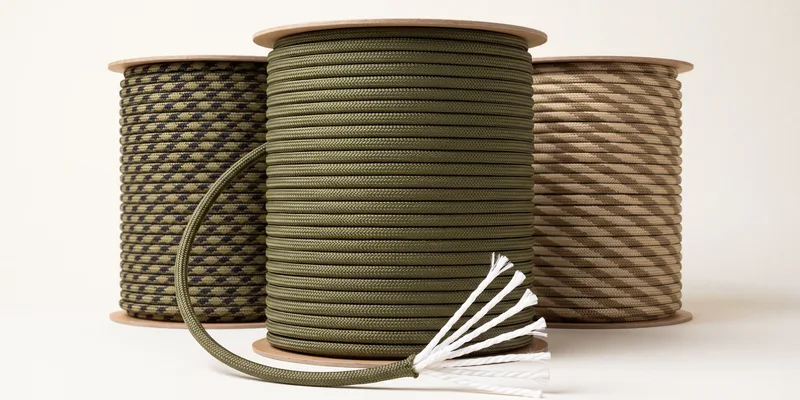
Two parts, and they fail for different reasons. The core is extruded rubber, either a single thread or several fine threads gathered together, and it supplies all of the stretch and recovery. The sheath is braided over the top and it is what the buyer actually sees, handles and washes. Natural and undyed sheath is cotton; every dyed shade is spun polyester, finished to look and feel like cotton. Nylon and other fibres are made to your specification at bulk volumes.
The sheath is where most complaints start. A loose braid lets the rubber grin through when the cord is pulled, goes fuzzy after a few weeks of handling, and takes dye unevenly. A dense braid keeps a round profile, holds colour, and does not thin out at a knot. We braid on our own machines, so braid density is a setting we choose rather than something we inherit from a subcontractor.
At 1mm to 3mm the balance is delicate. Too much rubber and the cord curls in the packet; too little and it will not hold a mask loop or a bag closure through repeated use. Tell us the end use at enquiry stage and we match the core count to it instead of sending a generic construction.
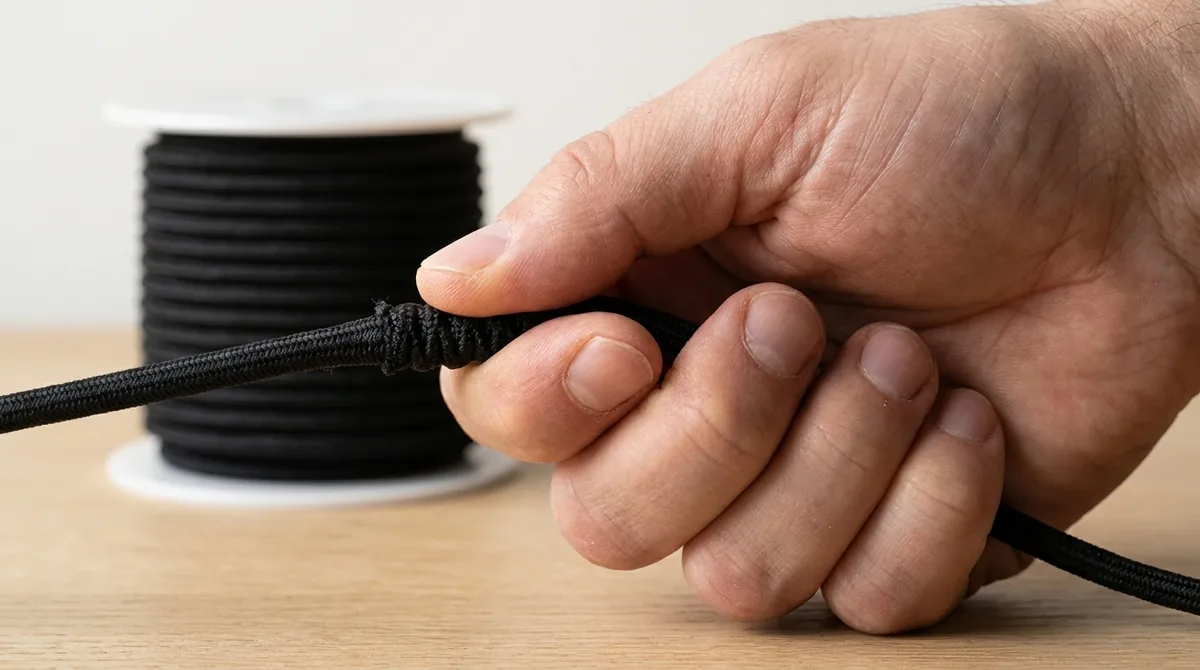
When you compare samples, stretch a 20cm length hard and look at the sheath rather than the stretch. Rubber showing through is the fault your own customers will report.
Choosing a diameter and a sheath
Diameter drives pull force, how the cord sits in a channel, and whether a knot holds:
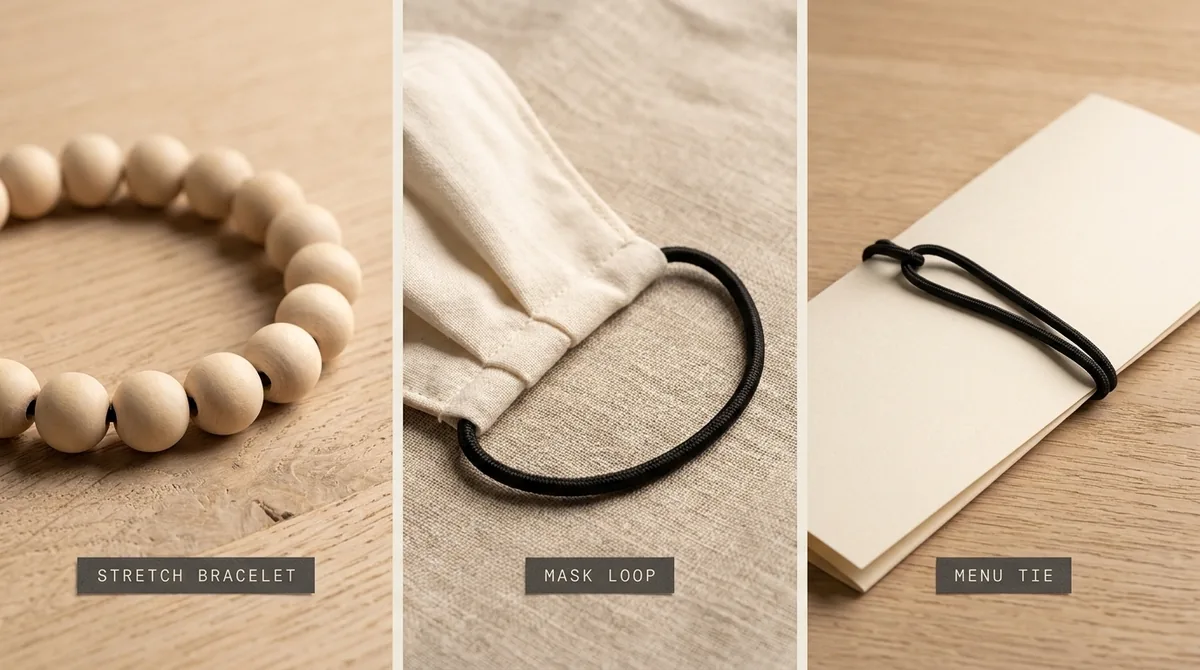
1mm — beading, stretch bracelets, gift tags, fine craft work
1.5mm to 2mm — mask and ear loops, hair ties, light garment loops
2.5mm to 3mm (3mm ≈ 1/8 in) — the general-purpose size: drawstrings, bag and box closures, folder and menu ties
On sheath fibre the shade decides, not preference. Natural and undyed cord is cotton, which is what craft and baby-product buyers ask for by name. Every dyed shade is spun polyester finished to look and feel like cotton: it takes dye cleanly, holds colour through washing and daylight, and braids tightly at fine diameters. Nylon, for the softer and glossier hand that suits jewellery and apparel trim, and any other fibre are made to your specification at bulk volumes.
If you are undecided, put two diameters in the trial order. The difference between 2.5mm and 3mm reads as trivial on paper and is obvious in the hand.
How wholesale buying works with us
Send a physical cutting or a shade reference, we dye and braid a short trial length, you approve it, and we hold the recipe for reorders.
Trial orders start at 1,000 meters per SKU, where a SKU means one diameter, one sheath fibre and one colour. Small-lot dyeing is routine here, since we are not waiting on an outside dye house to fill a batch.
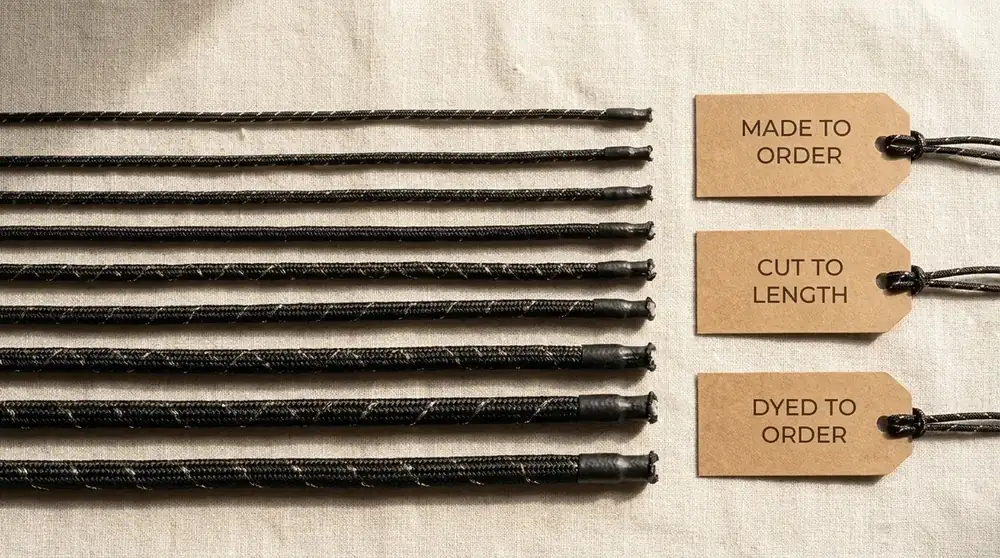
Two put-ups are normal. Continuous cord on spools or in hanks if you cut and pack yourself, or cut lengths with heat-tipped ends from our own tipping machine if you want a retail-ready or assembly-ready component. Tipping is worth asking about: a sealed end stops the braid unravelling and threads cleanly through eyelets, channels and packaging. Cutting and tipping happen in-house, so it adds no second supplier and no second lead time.
Dispatch and freight
Ex-works Jaipur — about 2 to 6 days by surface across India. Freight is to your account, by your transporter or ours. Export orders are quoted separately with air and sea options.
Round Elastic Cord, 1-3 mm — Specifications
Material
Extruded rubber core with a braided sheath — natural and undyed: cotton; every dyed shade: spun polyester, finished to a cotton hand; nylon and other fibres to buyer specification at bulk volumes
Construction
Single or multi-strand rubber core, round braided sheath, braided in-house
Sizes
1mm to 3mm diameter as standard (3 mm ≈ 1/8 in); heavier diameters on request
Colours
Dyed in our own dye house to your shade reference or physical cutting; small-lot fashion shades supported
Finishing
Cut to length with heat-tipped ends on our tipping machine, or supplied continuous
MOQ
1,000 m per SKU, shade and size
Put-up
Wound on spools or cones, or in hanks; cut lengths bagged and carton-packed for export
Lead time
Air courier 7-10 days; sea freight 25-40 days
Origin
Jaipur, India — twisting, braiding, dyeing and tipping in-house since 1991
Frequently asked questions
What is round elastic cord made of?
Two parts. The core is extruded rubber, either one thread or several fine threads together, and it provides the stretch and the recovery. Over it a sheath is braided, which protects the rubber from abrasion and daylight and carries the colour. Natural and undyed cord has a cotton sheath; every dyed shade is spun polyester, finished to look and feel like cotton. Nylon and other fibres are made to your specification at bulk volumes.
What diameters do you make, and which suits my product?
We braid 1mm to 3mm as standard, with heavier diameters on request. 1mm suits beading and fine craft work, 1.5mm to 2mm suits mask and ear loops and hair ties, and 2.5mm to 3mm is the general-purpose size for drawstrings, bag closures and packaging ties. If you are unsure, order two diameters in the trial run.
What is the minimum order for round elastic cord?
Trial orders start at 1,000 meters per SKU — about 1,094 yards — where a SKU is one diameter, one sheath fibre and one colour. Several shades or two diameters in one shipment is fine and costs the minimum for each, so most haberdashery and craft buyers prove one combination before widening the range, which is how most haberdashery and craft buyers prefer to start.
What does round elastic cost per metre?
₹2-5 per metre ex-works Jaipur. The 1 mm jewellery gauge sits at the bottom; 3 mm with a dense sheath at the top. White and black run below dyed shades, which each carry their own dye lot.
Can you match a specific colour or shade card?
Yes. Send a physical cutting, a shade reference, or a swatch of the fabric the cord has to sit beside, and we dye a trial length for approval. Once you sign off we hold the recipe so repeat orders come back the same. Dyeing is done inside our own factory, so shade consistency across reorders is our responsibility rather than a third party's.
Can you supply cut lengths with finished ends instead of spools?
Yes. We run a tipping machine in-house, so we cut to your length and heat-tip the ends. Tipped ends stop the braid unravelling and thread cleanly through eyelets, channels and packaging, which is what mask sewers, kit assemblers and packaging converters normally want. Continuous cord on spools, cones or in hanks is also available.
Is this rubber dori / elastic dori for masks and crafts?
Rubber dori and elastic dori both mean this round elastic cord — 1 mm to 3 mm as standard, braided over a rubber core in Jaipur. Mask makers, craft units and packaging buyers order it at 1,000 metres per SKU, natural or dyed.