Home › Threads & Wicks › Zari Thread — Round and Flat Metallic Thread, Twisted in Jaipur
Zari Thread — Round and Flat Metallic Thread, Twisted in Jaipur
✓ Specs last checked: 2026-09-02
We twist zari thread in our own Jaipur factory, wrapping metallised polyester film around a core we dye in-house first. Every dyed core is spun polyester finished to a cotton hand, or viscose where a softer, higher-sheen core is wanted; the natural, undyed core is cotton, and at bulk volumes other core fibres can be run to your specification. Round and flat constructions, supplied on reels, spools or hanks, with cut lengths aglet-tipped if you need them. MOQ is 1,000 meters per SKU — one shade in one construction, so each further shade or construction carries its own 1,000 m — and we export worldwide.
We've been twisting cords in Jaipur since 1991, and zari runs on the same twisting frames as everything else we make.
We buy metallised polyester film and twist it around a dyed core to produce round and flat zari, then wind it onto whatever put-up your line needs. We don't metallise or slit the film ourselves. What we control is the core, the dye, the twist and the winding. If your specification depends on a particular film grade or metallic tone, say so up front and we'll confirm availability before quoting rather than after.
What Metallic Embroidery Thread (Zari) Actually Is — Film, Core and Twist
The film gives the shine; the core gives the thread its body, strength and stitchability. Change the core and you change how the thread behaves in a needle or on a loom.
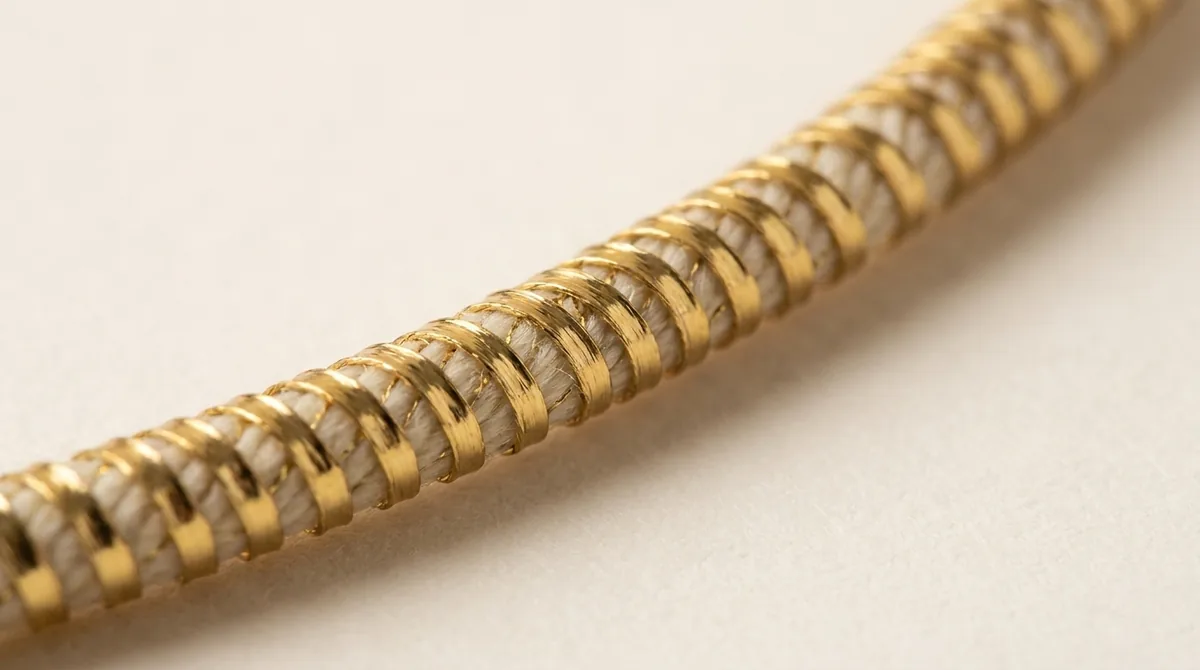
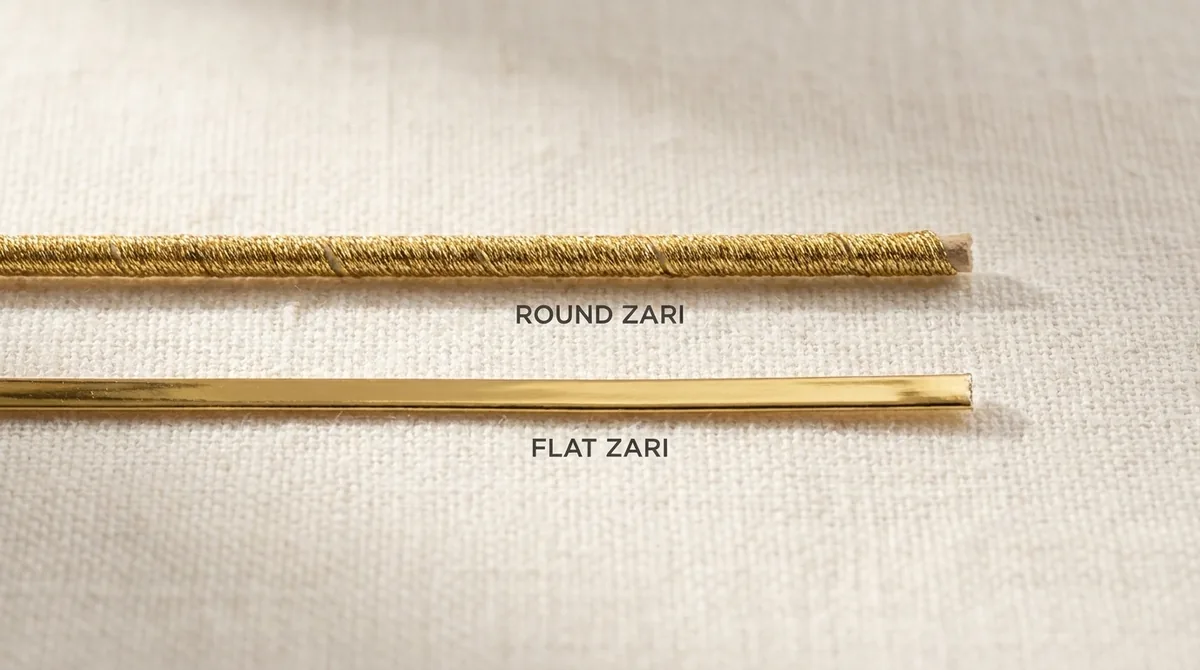
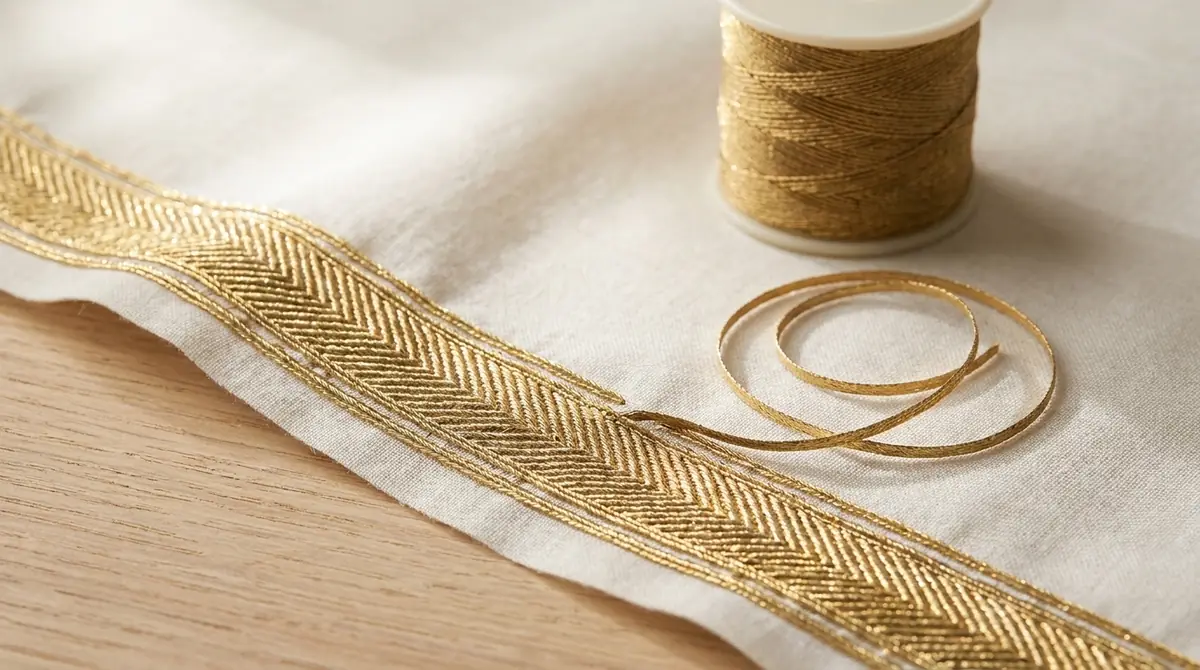
We run two constructions. Round zari has the film wrapped spirally around the core so the thread stays cylindrical, catches light from every angle and handles like a normal sewing or embroidery thread. Flat zari keeps the film lying flat against the core, giving a ribbon-like, mirror-bright sparkle that reads much stronger from a distance — the look you see on heavy border work.
The core matters more than buyers expect. We dye the core yarn in-house before twisting, which means the colour sits underneath the metallic film and shows through at the twist gaps. A red-cored gold reads warm; a black-cored gold reads antique. That's a design decision, not a defect, and it's the reason we keep dyeing on our own floor instead of buying pre-dyed yarn.
Fibre follows the shade. Every dyed core is spun polyester finished to look and feel like cotton, or viscose where you want a softer core with more sheen. The natural, undyed core is cotton. At bulk volumes other core fibres can be run to your specification.
How Wholesale Zari Buying Works
Before we quote, send us four things: the construction you want (round or flat), the core fibre, the shade of both the metallic and the core, and the put-up your production line uses.
MOQ 1,000 meters per SKU — one shade in one construction, so a first order is a single combination run on your own machine; further combinations in the same shipment each carry their own 1,000 m
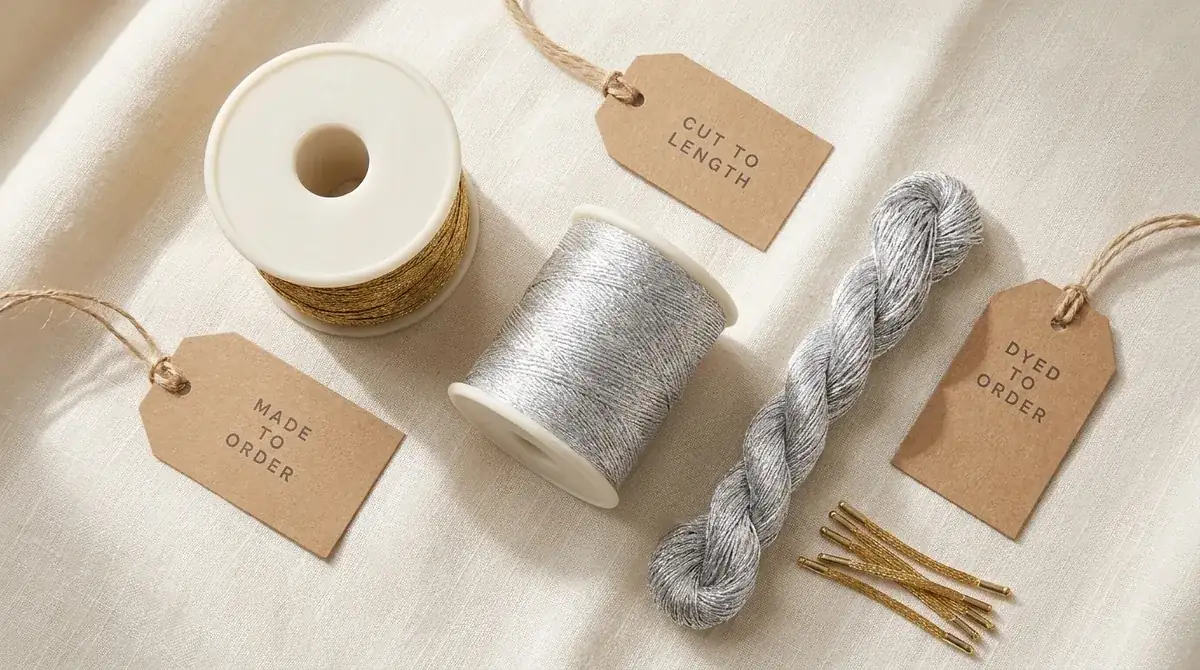
Put-up your way — wound onto reels, spools or hanks, in the length per unit you specify
Cut lengths with tipped ends — we run an aglet-tipping machine, so cut zari for tassels, tie cords or hangtags can come finished rather than raw
Repeatable reorders — the same core, dye lot reference and twist spec go back onto the frame for your next order
Always sample before volume. Metallic film can shed or abrade under a heavy needle, and the right answer depends on your stitch density and machine speed. Ask for a few meters of each construction with your quote and run it on your own equipment first.
We twist, dye and wind under one roof in Jaipur. Quotes are answered within one working day, and we ship worldwide.
Zari for Bulk Embroidery Units
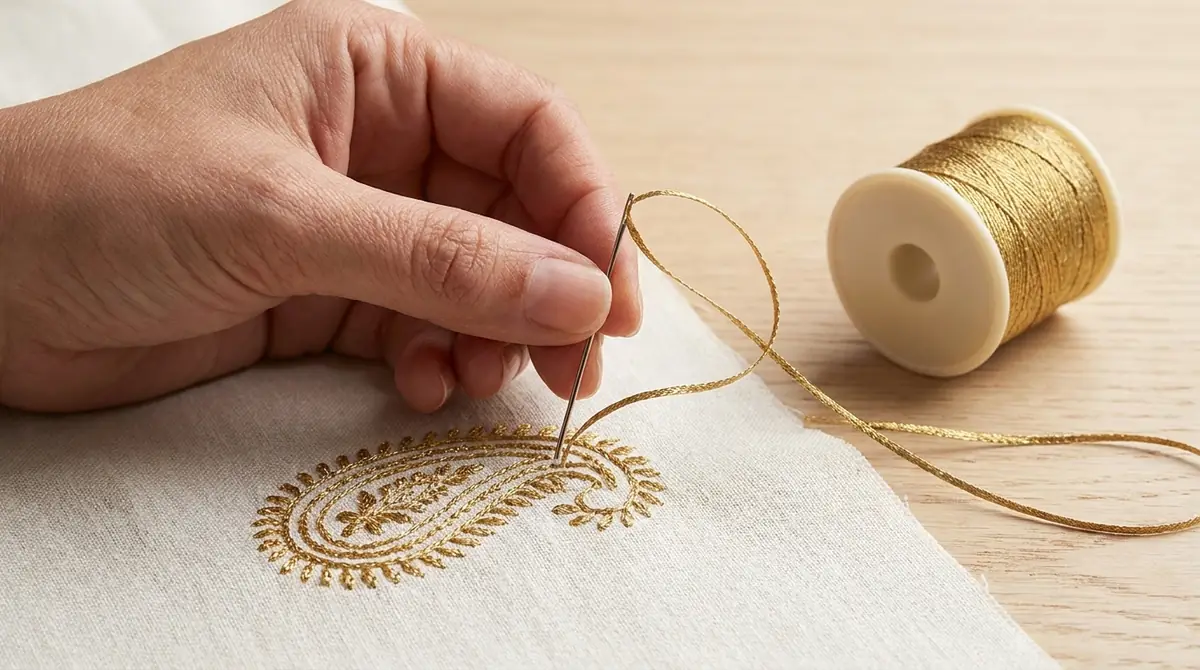
If you're a converter rather than an end user, tell us the downstream process. Thread destined for a high-speed embroidery head needs a different twist tension from thread that will be hand-couched, and we set that on the frame rather than asking you to work around it.
Winding is specified the same way. Give us the length per reel, spool or hank your machines run and we wind to it, so the unit out of the carton goes straight onto the head instead of through a rewinding step. Note that the 1,000 meter minimum counts per shade and per construction, so trialling round and flat in one gold is two minimums, not one.
Dispatch and freight
Ex-works Jaipur — about 2 to 6 days by surface across India. Freight is to your account, by your transporter or ours. Export orders are quoted separately with air and sea options.
Zari Thread — Specifications
Material
Metallised polyester film (lurex/mylar) over a core — every dyed core: spun polyester finished to a cotton hand, or viscose; natural and undyed: cotton; other core fibres to buyer specification at bulk volumes
Construction
Round zari (spiral wrap) or flat zari (flat-laid film)
Sizes
Multiple counts and film widths — matched to your needle, loom or machine
Colours
Gold and silver metallics; core dyed to shade in-house before twisting
MOQ
1,000 m per SKU, shade and size
Put-up
Reels, spools or hanks; cut lengths available aglet-tipped
Finishing
In-house core dyeing, twisting, winding and tipping
Lead time
Quote within one working day; production confirmed against your spec
Origin
Jaipur, India — twisted and wound in our own factory
Frequently asked questions
Is your zari thread real gold or silver?
No. We twist metallised polyester film — lurex or mylar — around a spun polyester or viscose core, or around a cotton core where the core stays natural and undyed. This is what the trade now calls imitation or plastic zari, and it is what almost all commercial embroidery and border work uses today. It doesn't tarnish the way metal zari does, and it costs a fraction of the real thing.
What is the difference between round zari and flat zari?
Round zari has the metallic film wrapped spirally around the core, so the thread stays cylindrical, handles like ordinary embroidery thread and catches light evenly. Flat zari keeps the film lying flat against the core, giving a brighter, more mirror-like sparkle that reads strongly from a distance. Round is the usual pick for needle and machine embroidery; flat is used where maximum shine matters, like heavy borders and couched surface work.
What is the minimum order for zari thread?
1,000 meters per shade and construction, which means every combination is its own minimum — round and flat in the same gold is two lots of 1,000 m, not one. What that buys you is a single combination run on your own machine before production quantities are committed; several in one shipment is fine, priced at the minimum each. We export worldwide from Jaipur.
How is zari thread priced?
₹5-18 per metre ex-works Jaipur — imitation and metallic kasab only; real gilt zari is bullion-linked and quoted separately on request. Film width and count set the position in the band, and gota-patti season demand firms prices from September.
Can you dye the core to a specific colour?
Yes. We dye the core yarn in-house before it goes onto the twisting frame, so the core colour is part of your specification rather than whatever the yarn supplier had in stock. Every dyed core runs in spun polyester finished to a cotton hand, or in viscose for a softer core with more sheen; a cotton core is supplied natural and undyed. Because the core shows through the twist gaps, the core colour changes the overall tone of the thread — a dark core gives an antique effect, a matching core gives a cleaner single-colour look. Send a physical shade reference where you can.
How is the thread supplied, and can you cut and tip lengths?
We wind zari onto reels, spools or hanks in the length per unit you specify. We also run an aglet-tipping machine, so if your product needs cut lengths with finished ends — tassels, hangtag ties, drawstrings, packaging cords — we can cut and tip them here instead of you doing it downstream. Tell us the cut length and tip style with your enquiry.
Do you sell zari dhaga / kasab for embroidery wholesale?
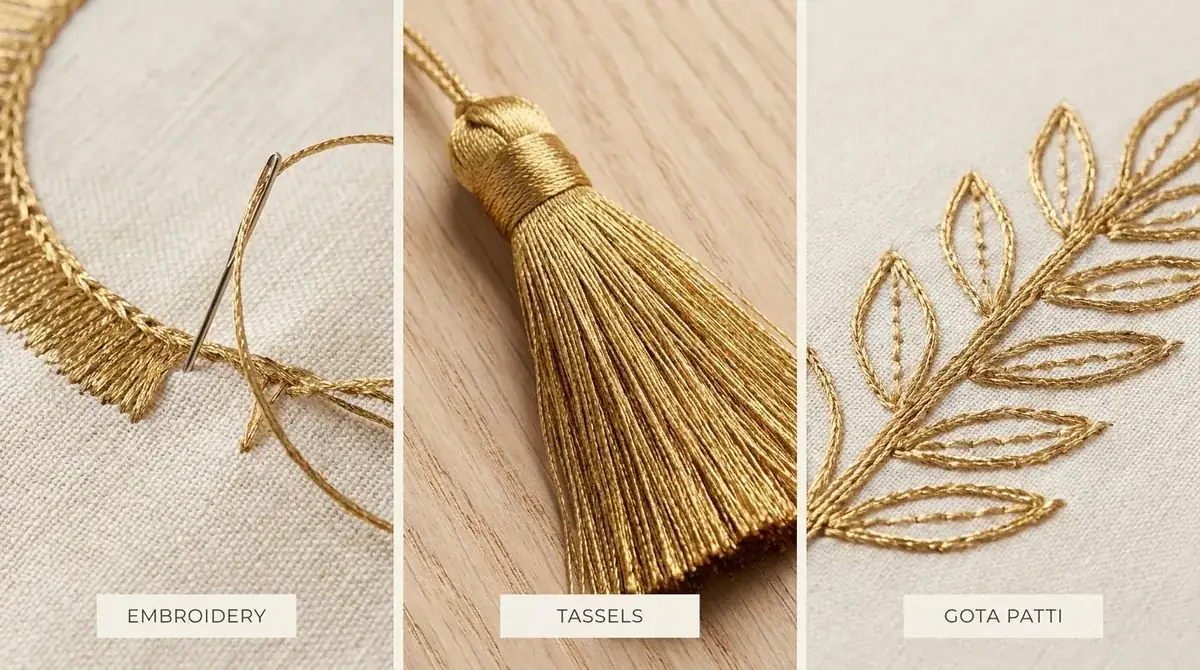
Zari dhaga and kasab are the trade names for this metallic thread — round or flat zari, gold and silver, cores dyed in our own house before wrapping. Gota, embroidery and rakhi units buy it at 1,000 metres per SKU; send a strand of what you use now for the closest match.
What is metallic zari thread?
Metallic zari thread is a metallised polyester film — the trade calls it lurex or mylar — twisted around a yarn core, so the film supplies the shine and the core supplies body, strength and stitchability. We buy the film and twist it onto a core we dye ourselves in Jaipur before the thread goes onto the frame. Because the core shows through at the wrap gaps, its colour changes the tone of the finished thread: a red-cored gold reads warm, a black-cored gold reads antique. It is not metal, so it does not tarnish the way real gilt zari does.
What types of metallic zari thread do you make?
We twist two constructions. Round zari has the film spiral-wrapped around the core so the thread stays cylindrical and handles like an ordinary embroidery thread; flat zari keeps the film lying flat against the core for a ribbon-like, mirror-bright sparkle. Both run in gold and silver metallics over a core dyed to your shade in-house — spun polyester finished to a cotton hand, or viscose where you want a softer core with more sheen, while a cotton core is supplied natural and undyed. We run multiple counts and film widths matched to your needle, loom or machine, and wind onto reels, spools or hanks, with cut lengths aglet-tipped where your product needs finished ends.
Is metallic zari thread the same as lurex or mylar thread?
Lurex and mylar are names for the metallised polyester film itself; zari is the name for the finished thread once that film has been twisted around a core. So metallic zari thread from us is lurex or mylar film over a dyed polyester or viscose core, or over a natural undyed cotton core — not bare film. We buy the film in and do not metallise or slit it ourselves; what we control is the core, the dye, the twist and the winding. If your specification depends on a particular film grade or metallic tone, tell us before we quote so we can confirm availability first.
Which metallic zari thread should I use for machine embroidery?
Round zari is the usual pick for needle and machine embroidery, because the spiral wrap keeps the thread cylindrical and it feeds like an ordinary embroidery thread; flat zari is generally chosen where maximum shine matters, such as heavy borders and couched surface work. Tell us the downstream process when you enquire — thread heading for a high-speed embroidery head needs a different twist tension from thread that will be hand-couched, and we set that on the frame rather than asking you to work around it. Sample before you commit to volume, because metallic film can shed or abrade under a heavy needle and the right answer depends on your stitch density and machine speed. Ask for a few metres of each construction with your quote and run it on your own equipment.
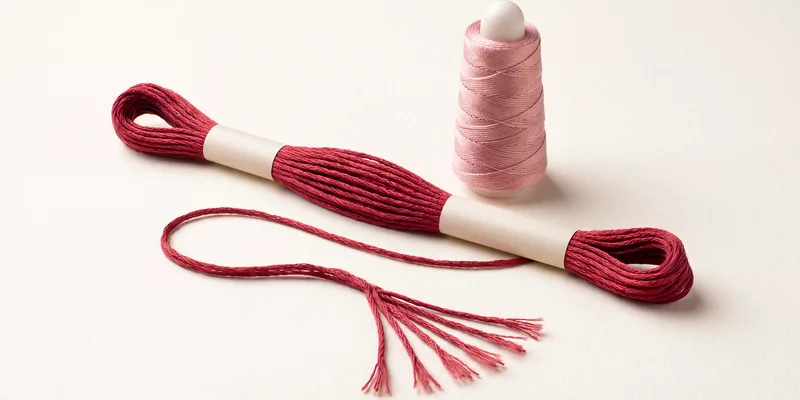
Six-strand mouliné in skeins, machine thread on cones. Natural mouliné is cotton; dyed shades are spun polyester finished to look and feel like cotton — MOQ 1,000 m per SKU.