Home › Footwear & Custom › Tissue Box Covers in Coiled Cotton Rope, Made From Our Own Rope
Tissue Box Covers in Coiled Cotton Rope, Made From Our Own Rope
✓ Specs last checked: 2026-09-02
We make rope tissue box covers in Jaipur — rope twisted and dyed on our own machines, then coiled and zigzag-stitched over a box former. The natural, undyed rope is cotton; a dyed shade is spun polyester, finished to look and handle like cotton — matte, soft, no synthetic sheen. This is a domestic-spec build on purpose — natural undyed or one dyed shade, stitched to a lower gsm so the piece stays sensible at hotel and gifting quantities rather than being a one-off decor showpiece. Orders start at 5,000 pieces in one size and one shade, and quotes come back within one working day.
Because we make the rope before we make the cover, whether the tenth batch matches the first is a question we can actually answer. The natural, undyed rope is cotton; the dyed shades are spun polyester, finished matte and soft so they look and handle like cotton.
How the cover is built, starting with the rope
We are a cordage factory that also finishes product, not a stitching unit buying rope from the market.
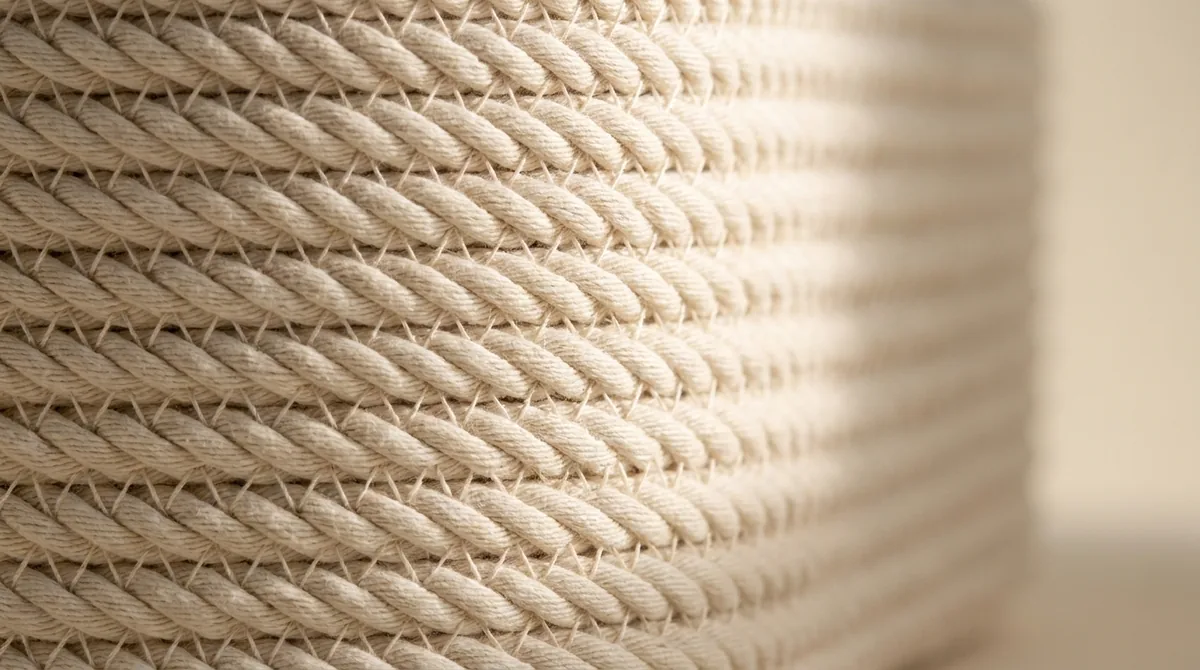
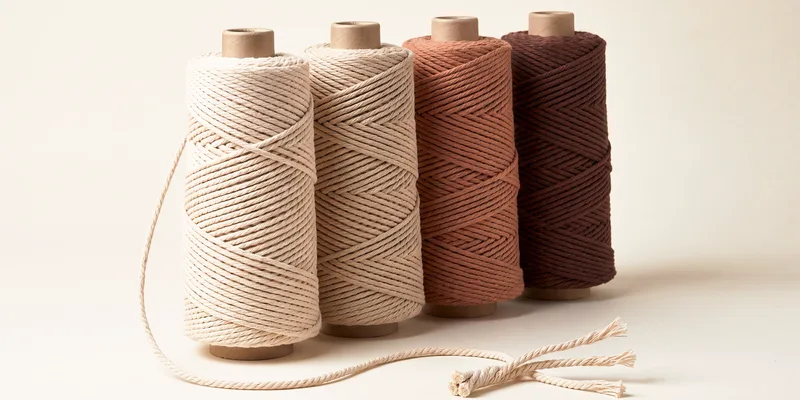
The rope. Ring-spun singles are plied on our own frames and laid into twisted rope, or run through the braiders when a smoother surface is wanted — cotton for the natural, undyed rope, spun polyester finished to a matte, cotton-like hand for the dyed shades. For this product the useful band is fine rope — thin enough that the coil ridging reads as texture rather than as a chunky basket wall, and thin enough that the cover slides over the box without the sides bowing out.
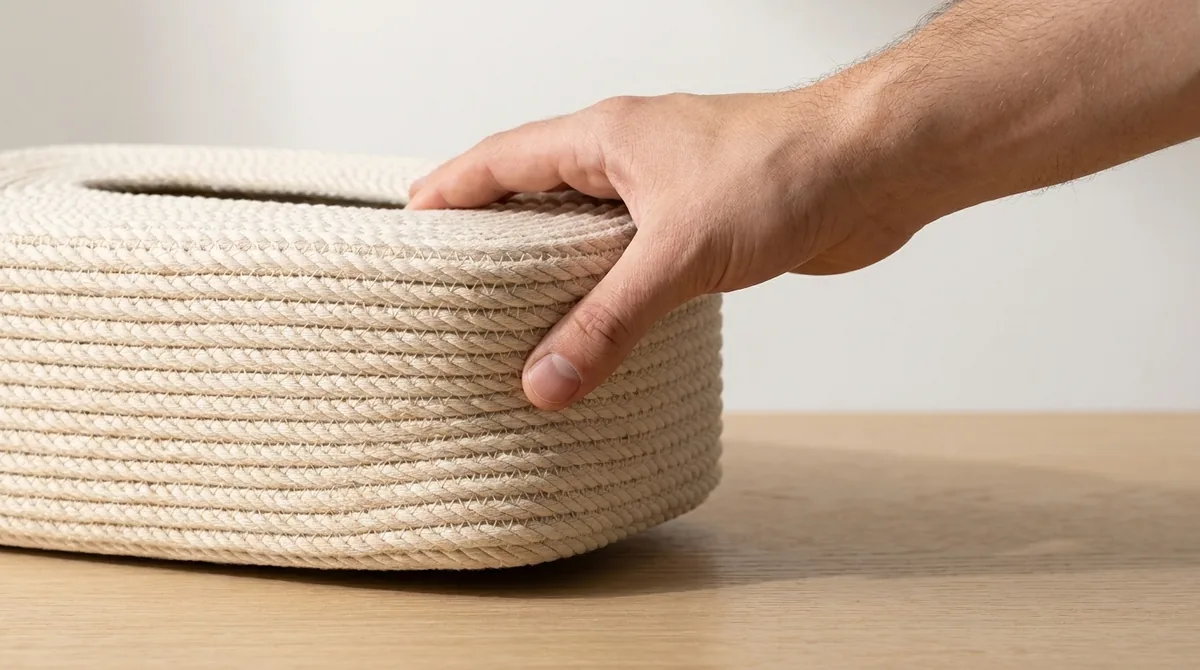
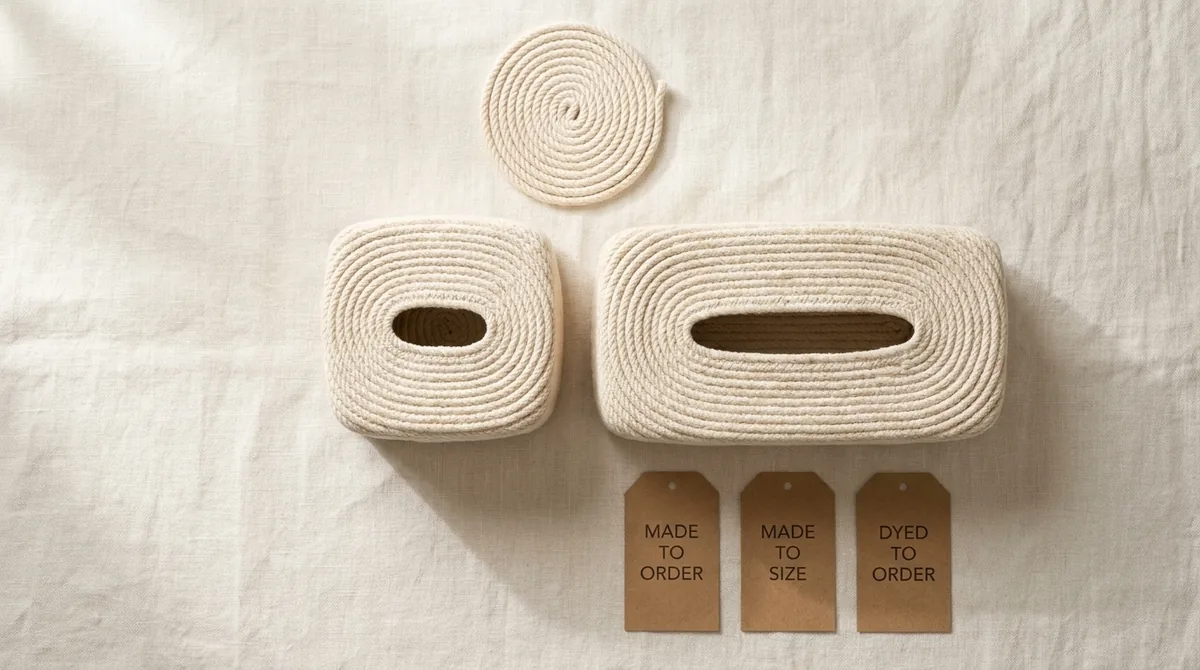
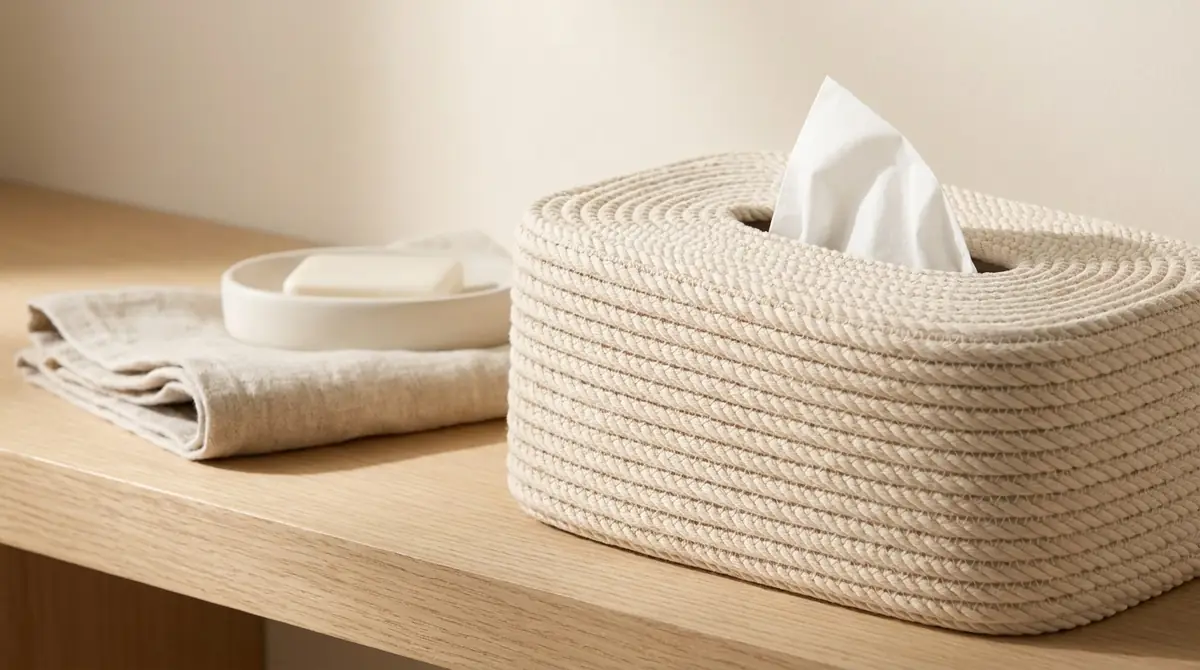
The body. The rope is coiled around a box former and each turn is zigzag-stitched to the one below it, so the wall is a single continuous spiral instead of four panels joined at the corners. The top face is coiled with the dispenser opening left in and stitched around, which is what stops the edge fraying as tissues are pulled through.
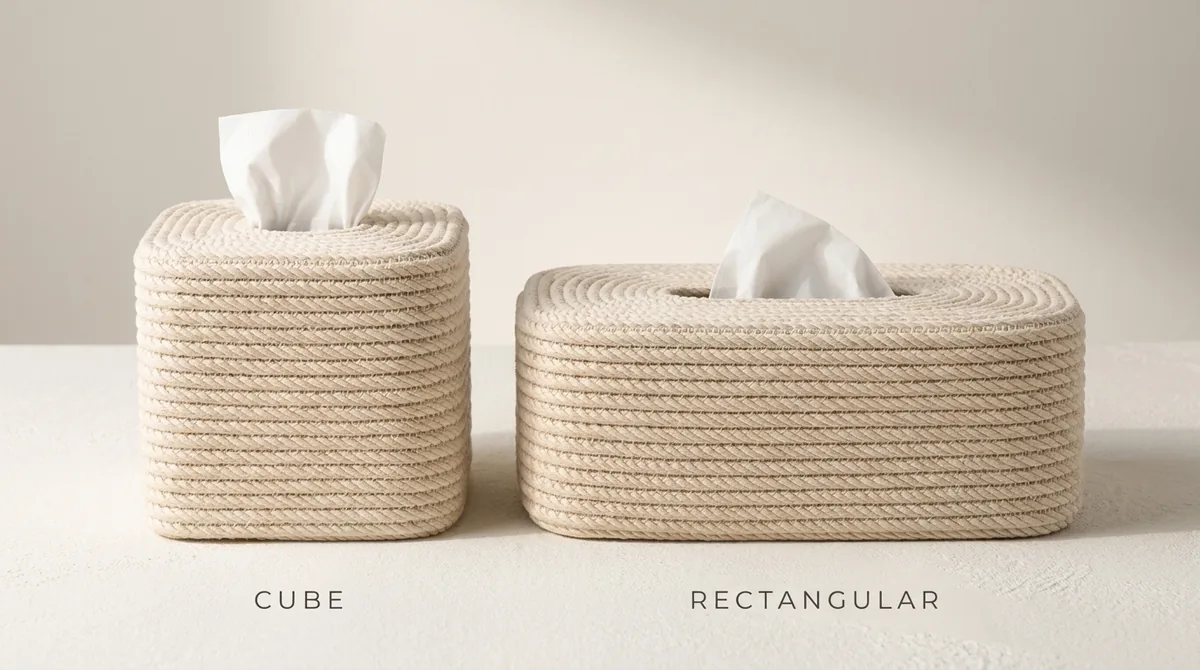
The former. Cube and rectangular boxes both run on the same line. A cover for an unusual box is a new former, not a new process — send us the box and we build to it.
This is coiled and stitched construction. It is not woven, not crocheted and not knitted.
The domestic spec, and what lower gsm actually means
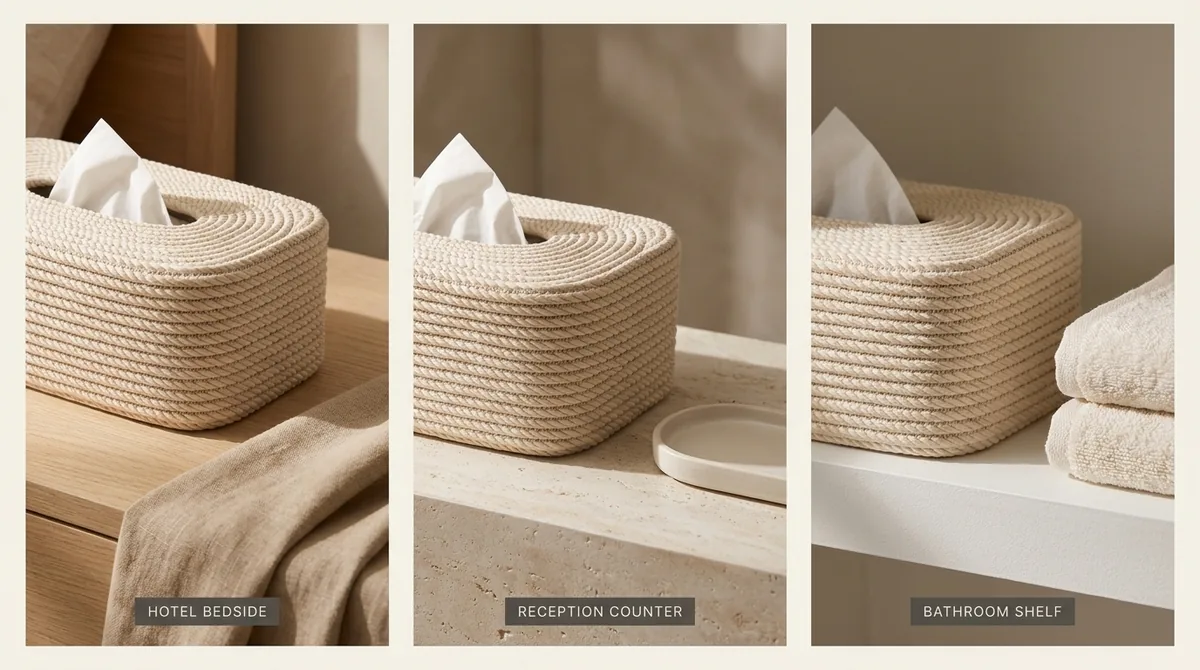
Lower gsm means less rope per piece and a slightly more open zigzag than we would run on a rope basket. The cover holds its shape sitting on a bedside table, a reception counter or a bathroom shelf and takes normal daily handling. It is not built to be crushed into storage or to carry weight, because nothing about a tissue box cover asks it to.
The heavier, denser build runs on the same machines with more rope and a tighter stitch. Ask for it at enquiry stage rather than after the sample, so we quote the right thing the first time.
Colour is kept to natural undyed cotton or one dyed shade per order. Natural is the warm off-white of raw cotton rope — it is not bleached white. A dyed shade is spun polyester rather than cotton, dyed in-house before the rope is coiled, so the shade runs through the whole length instead of sitting on a finished cover. We match to a physical swatch or a Pantone reference and send a dyed rope sample for approval before bulk.
If the covers are going into hotel rooms, order the full quantity from one dye lot even if you take delivery in stages. Two lots of the same beige, sitting in adjacent rooms, is the complaint that surfaces six months later.
How wholesale buying works with us
Four steps, and most orders run in weeks rather than months.
Send the box, or its measurements. Length, width and height in cm, and whether it is a cube or a flat rectangular carton. Posting us one actual box is faster and more accurate than a drawing, because fit is what this product is judged on.
From 5,000 pieces. The minimum counts per design, style or colour — 5,000 in one size and one shade, so a first order is a single cover put on your real boxes and handed to whoever signs off before a season's spread is committed. A second size or shade carries its own 5,000.
Approve the rope shade and one physical cover. Colour on the dyed rope sample, fit and stitch on the finished piece. Both before bulk starts.
Fix packing and dispatch. Sizes are set to nest and cartoned for transport, with individual polybagging if the covers go straight into gift or hamper packing.
Quotes come back within one working day.
Dispatch and freight
Ex-works Jaipur — about 2 to 6 days by surface across India. Freight is to your account, by your transporter or ours. Export orders are quoted separately with air and sea options.
Tissue Box Covers in Coiled Cotton Rope, Made From Our Own Rope — Specifications
Material
Natural/undyed: ring-spun cotton. Dyed shades: spun polyester with a cotton-look matte finish and soft cotton hand. Both plied in-house before rope-making; other fibres to your specification at bulk volumes
Construction
Rope coiled over a box former and zigzag-stitched turn to turn; one continuous spiral, no corner seams, opening stitched around
Rope thickness
Fine rope band suited to small-format work; heavier rope quoted separately as it changes how the corners and the opening hold shape
Build weight
Domestic spec — lower gsm and a more open stitch for volume orders; the denser build runs on the same machines on request
Sizes
Made to your box dimensions in cm; cube and rectangular tissue boxes both run on the same line
Colours
Natural undyed cotton, or one dyed spun-polyester shade per order against your swatch or Pantone reference, dyed as rope before coiling
MOQ
5,000 pieces per design, style or colour
Put-up
Nested and cartoned for transport; individual polybagging on request for gift and retail-ready packing
In-house processes
Twisting, braiding, dyeing, tipping, coiling and stitching; weaving, crochet and printing are not done here
Origin
Jaipur, India
Frequently asked questions
What is the minimum order for wholesale tissue box covers?
Orders start at 5,000 pieces, and that minimum counts per design, style or colour — 5,000 in one size and one shade, so a second size or a second shade carries its own 5,000. What it buys you is one cover settled properly: fitted over your real boxes and put in front of whoever approves the order, before a season's spread of sizes is committed. Bulk is quoted per size and shade, because both the former setup and the dye lot change with quantity, and quotes come back within one working day.
What is the price of rope tissue box covers?
₹90-170 per piece ex-works Jaipur at the 5,000-piece minimum. The rope gauge and the finish set the spread — a tight 4 mm coil in a dyed shade costs more to wind than a natural 6 mm. Sets and gift packing are quoted as options.
Can you make covers to fit the tissue boxes we already use?
Yes, and this is the part worth settling first. Send length, width and height in cm, or better, post us one of the actual boxes. Tissue cartons vary more between brands than people expect, and a cover made to an assumed standard will either sit loose or refuse to go on. We build the former to your box, you check the fit on the sample yourself, then bulk runs to that form.
What does the lower-gsm domestic spec mean in daily use?
It means less rope per piece and a more open zigzag than we would use on a rope basket. The cover stands up on a table, counter or bedside unit and takes normal handling, but it is not built to be crushed into storage or to carry weight. That trade is exactly what keeps the piece viable at hotel and gifting quantities. If you want the denser, stiffer build we make it on the same machines — just say so at enquiry stage rather than after the sample.
Can we get one specific shade, and will a repeat order match it?
One shade per order, matched from a physical swatch or a Pantone reference. The dyed rope is spun polyester rather than cotton; we dye it in-house before coiling, send you a dyed rope sample for approval, and keep the recipe against your order so a repeat six or twelve months later comes back the same. The honest caveat is that dye lots are lots — if a large quantity has to be identical, order it in one lot even if you take delivery in stages.
How do they pack and dispatch within India?
Sizes are set so covers nest, which keeps the cubic volume down on a light but bulky product, and they go out cartoned by road from Jaipur — usually three to six days to the main metros. If they are heading straight into gift or hamper packing we can polybag them individually so your packing line does not have to. Tell us your dispatch date and we will work backwards from it, since dyeing rather than stitching is what sets the lead time.