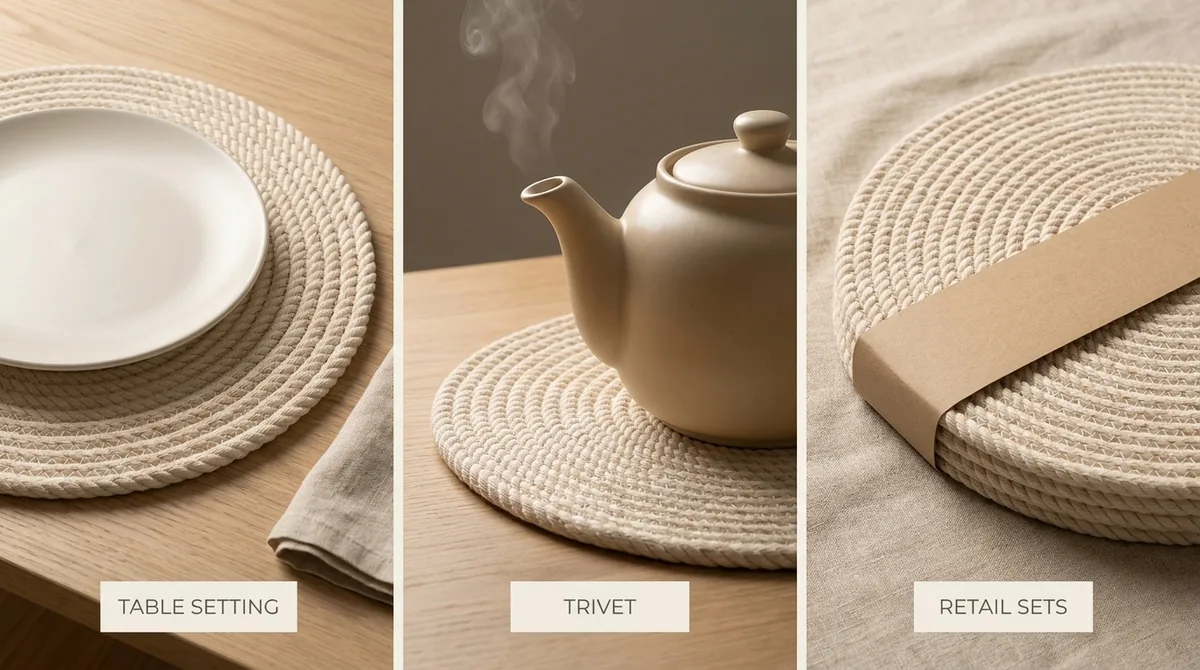
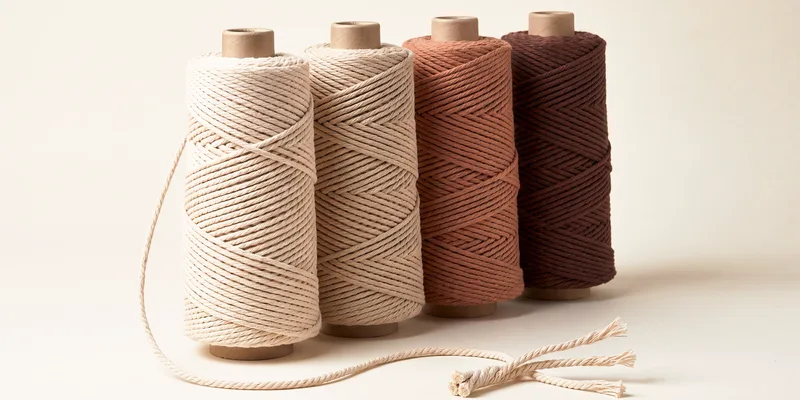
We braid 8mm rope on our own machines in Jaipur, dye it in our own dyehouse and coil-stitch it into 38cm round placemats — the same mat we run for the US line, in natural undyed cotton and the muted stone shades UK buyers keep asking for. The natural, undyed rope is cotton; every dyed shade is spun polyester, finished to look and handle like cotton — matte, soft, no synthetic sheen. Because the rope is dyed before it is coiled, a single dye lot can cover a full set of six, so the mats match each other on the table rather than drifting through three near-identical greys. Orders start at 5,000 pieces per size and shade, and quotes come back within one working day.
The mat starts on our braiding machines, is dyed before it is ever formed into a mat, and is then coil-wound and stitched into a flat 38cm round — so the rope diameter, the shade and the stitch are all things we control rather than things we buy in from someone else. The natural, undyed rope is cotton; the dyed shades are spun polyester, finished matte and soft so they look and handle like cotton.
How the mat is built, and what "woven" means here
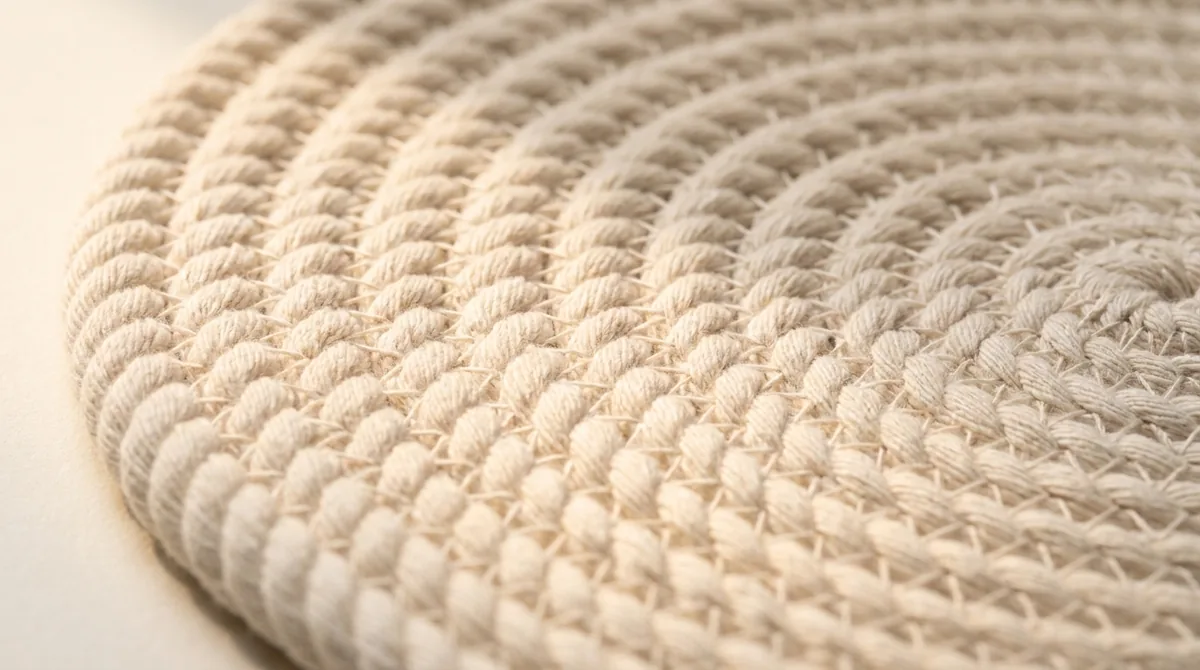
These are not loom-woven mats. The body is 8mm braided rope, wound in a flat spiral and stitched coil to coil, which gives the ridged, ropey, over-and-under surface most buyers are picturing when they search for a woven placemat.
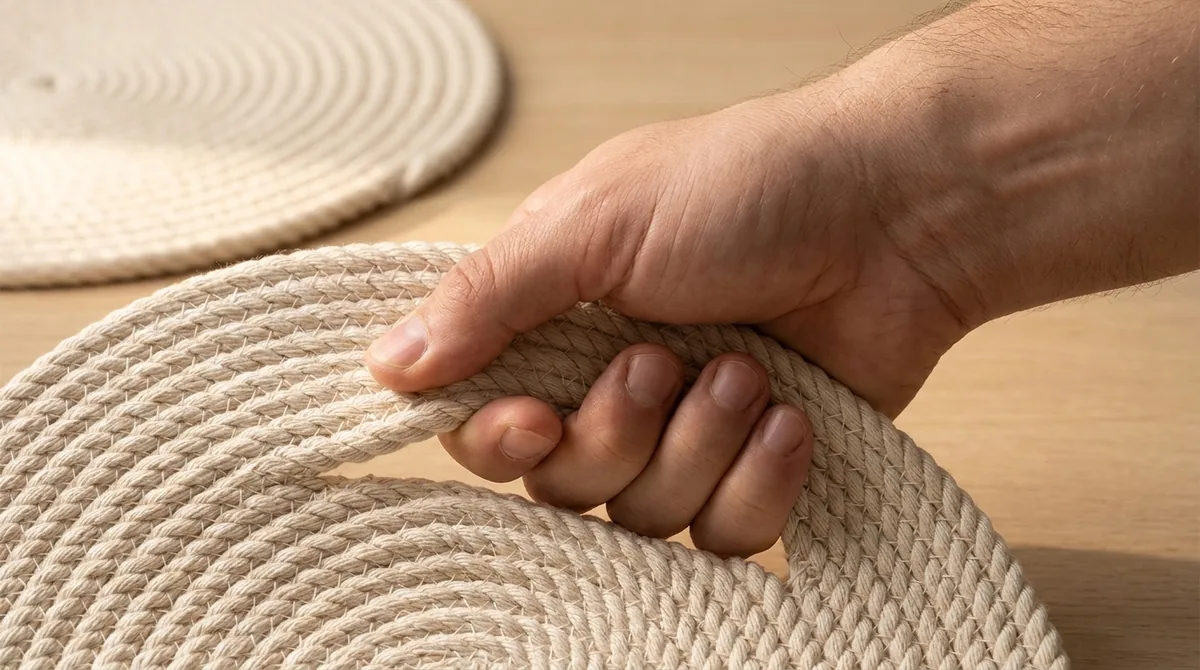
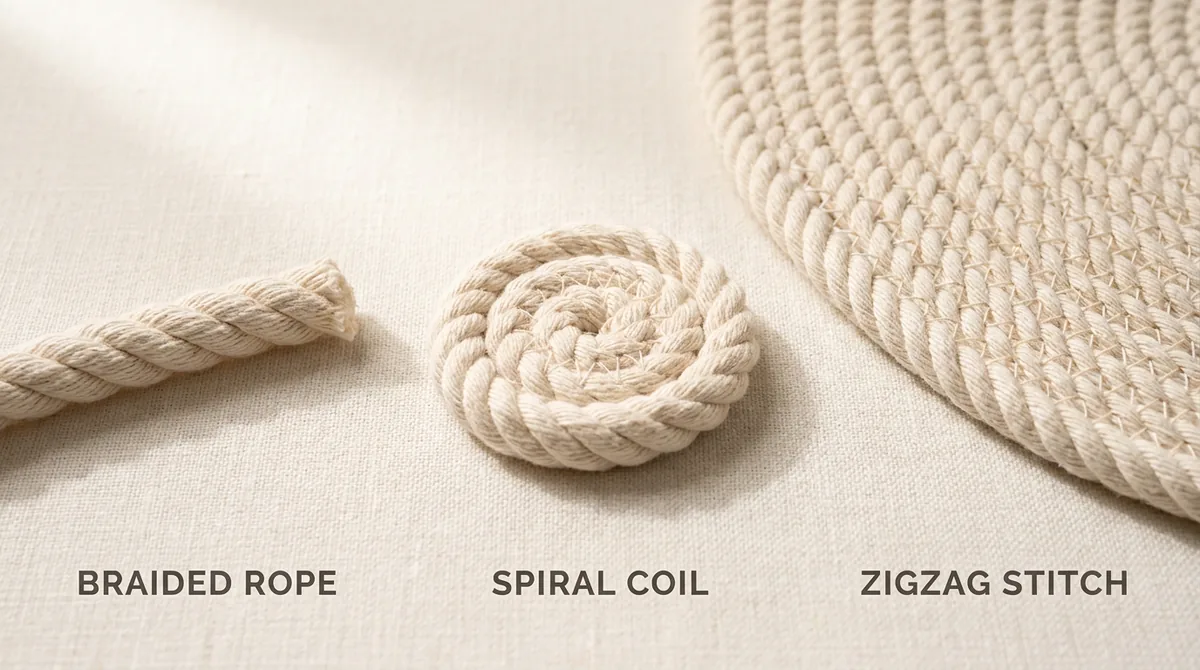
The rope. Ring-spun singles are plied on our own frames and run through our braiding machines at 8mm — cotton for the natural, undyed rope, spun polyester finished to a matte, cotton-like hand for the dyed shades. Braided rather than twisted matters on a flat mat: a braid holds a round, even cross-section under the stitching foot, so the coils sit level and the mat lies flat on the table instead of cupping at the rim.
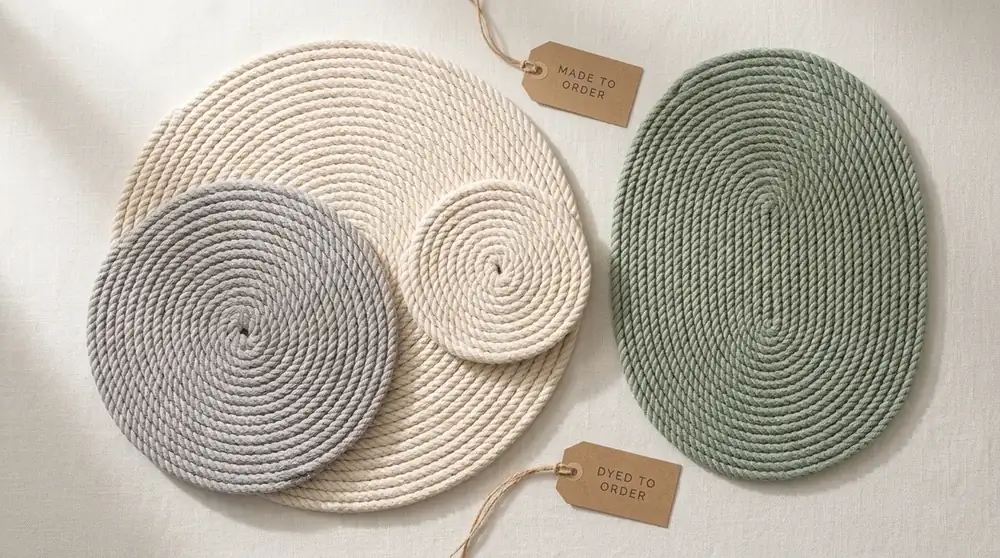
The body. The rope is wound from the centre outwards and zigzag-stitched to the coil beside it, then the tail is tucked and finished at the edge. Standard is a 38cm round, which is the size most dinner-plate settings are built around. Ovals, rectangles and smaller coaster sizes come off the same stitch table.
The finish. Stitch density is a real specification, not a detail. A tighter zigzag gives a firmer, flatter mat that behaves like a trivet; a more open one gives a softer mat with more visible rope. Tell us which behaviour you want and we set the machine to it.
Colour: natural, undyed and the muted stone range
We dye the rope in-house before it is coiled, not the finished mat. Dyeing rope on a cone is far more even than trying to dye a stitched spiral, and it means one dye lot can supply an entire set, so mat one and mat six came off the same batch. The dyed rope is spun polyester rather than cotton — it takes colour well and repeats shade-to-shade, which is what makes a reorder match. Natural undyed cotton is the other standard option — a slightly warm off-white, which is not the same thing as bleached white, so say which one you mean when you brief us.
We match against a physical swatch or a Pantone reference, send a lab dip for approval, and only then run bulk.
If you are listing a set of six, ask for all six to be cut from a single dye lot. It costs nothing and it removes the most common complaint on rope placemats.
How wholesale buying works with us
Four steps, and it normally runs in weeks rather than months.
Send a size and a picture, not just a product name. Diameter in cm, the shape, how firm you want the mat, and a photo of something you already sell or want matched. A picture tells us more than a paragraph of description.
From 5,000 pieces. The minimum counts per size and shade — 5,000 in one size and one shade, so a first order is a single mat settled properly: handled, washed and photographed before a range is committed. A second size or shade carries its own 5,000.
Approve the lab dip and the sample mat. Colour on the dip, construction on the physical mat. Both sign-offs happen before bulk starts.
Fix packing and port. Mats stack flat and are cartoned for export, with polybagging or banded sets if you are shipping retail-ready to a UK warehouse or straight to a marketplace fulfilment centre. Tell us the destination port and we will say honestly whether air or sea makes sense at your volume.
Quotes come back within one working day.
Dispatch and freight
Ex-works Jaipur — about 2 to 6 days by surface across India. Freight is to your account, by your transporter or ours. Export orders are quoted separately with air and sea options.
Woven Rope Dining Table Mats, Coiled and Stitched — Specifications
Material
Natural/undyed: ring-spun cotton. Dyed shades: spun polyester with a cotton-look matte finish and soft cotton hand. Both plied in-house before rope-making; other fibres to your specification at bulk volumes
Construction
8mm (5/16 inch) braided rope, coil-wound in a flat spiral and zigzag-stitched coil to coil
Rope diameter
4-10 mm typical; full range 1.5-10 mm available (10 mm = 3/8 inch)
Sizes
38cm (approx. 15 inch) round as standard; ovals, rectangles and coaster sizes made to your dimensions
Colours
Natural undyed cotton as standard; muted stone, oatmeal, clay, grey and sage in spun polyester, dyed in-house to your swatch or Pantone reference
Firmness
Set by stitch density — tighter zigzag for a flat, trivet-like mat, more open for a softer one
MOQ
5,000 pieces per design, style or colour
Put-up
Stacked flat and cartoned for export; polybagged or banded sets on request
In-house processes
Twisting, braiding, dyeing, coil-winding and stitching; loom weaving is not done here
Origin
Jaipur, India
Frequently asked questions
What is the minimum order for wholesale woven placemats?
Orders start at 5,000 pieces, and that minimum counts per design, style or colour — 5,000 in one size and one shade, so a second size or a second shade carries its own 5,000. What it buys you is one mat settled properly: handled, washed and photographed before a whole range is committed. Bulk is quoted per size and shade, because both the machine setup and the dye lot change with quantity, and quotes come back within one working day.
What is the wholesale price of rope table mats?
₹75-110 per piece ex-works Jaipur at the 5,000-piece minimum. The 38 cm round sits mid-band; smaller glass mats below it and oval runners above. Dyed shades add a dye lot over natural.
Are these actually woven, or are they coiled rope?
They are coiled and stitched, not loom-woven. We braid 8mm cotton rope, wind it in a flat spiral and zigzag-stitch coil to coil, which produces the ridged rope surface most buyers mean when they ask for a woven placemat. It is a different look and a different price point from a loom-woven mat, and we would rather be clear about that before you order a sample than after.
Can you match a muted, neutral shade card rather than bright colours?
Yes, and that is most of what we run for UK buyers — oatmeal, stone, putty, clay, warm grey, soft charcoal and sage in dyed spun polyester finished to look and feel like cotton, plus the natural undyed, which is cotton. Send a physical swatch or a Pantone reference and we will send a lab dip for approval before anything is coiled. Muted shades sit close together, so we work from a dip rather than a screen; screens will not agree on the difference between two greys and a customer's kitchen light certainly will.
Can the placemats be washed, and will the colour hold?
The natural mats are cotton and the dyed shades are spun polyester; either way, gentle machine washing in a laundry bag or hand washing both work, laid flat to dry so the spiral keeps its shape. Because we dye the rope on the cone before the mat is formed, the colour is set through the rope rather than sitting on a finished stitched surface, which is what keeps a set looking like a set after repeated washing. We always send a mat in your shade before bulk so you can test-wash it yourself rather than take our word for it.
How do they ship from India to the UK, and how do they pack?
Placemats stack dead flat, so they take very little cube compared with most home textiles, and cube is what decides your freight cost. Most UK buyers take a few samples by air courier in about 6 to 9 days, then move bulk by sea in roughly 24 to 32 days into Felixstowe, London Gateway or Southampton. Tell us the destination port, the shade and the quantity and we will give you the carton count and work the timeline backwards from the sailing you need to hit.