Home › Cords & Ropes › Cotton Macrame Cords & Thread, 1.5-10mm — Twisted and Braided in Jaipur
Cotton Macrame Cords & Thread, 1.5-10mm — Twisted and Braided in Jaipur
✓ Specs last checked: 2026-09-02
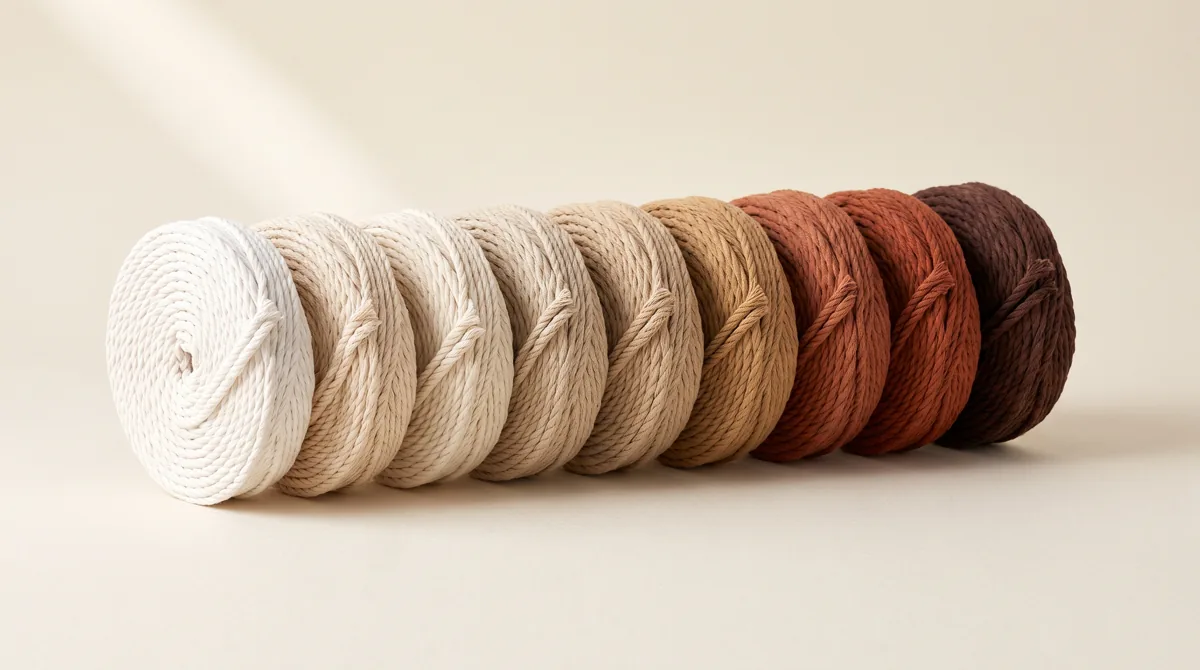
Saras Udyog manufactures 3-ply twisted and braided macrame cord in Jaipur, India. You pick the fibre: the natural, undyed cord is cotton, and every dyed shade is spun polyester finished to look and feel like cotton — matte, soft, no synthetic sheen. 1.5mm to 10mm, 40+ in-house dyed colours, MOQ 1,000 meters per SKU, air freight worldwide in 7-14 days. Indian buyers usually ask for this as macrame thread — same product, same spools, both names describe the twisted and braided cord we run.
We've been twisting cord in Jaipur since 1991, and macrame cord is now the biggest thing leaving our factory floor. 3-ply twisted and braided, 1.5mm to 10mm, single or double twist. The natural, undyed cord is cotton — it needs no dyeing, so cotton is what we run. The 40+ dyed shades are spun polyester, finished matte and soft to look and handle like cotton, all dyed in-house. We export to 60+ countries.
Our MOQ is 1,000 meters per SKU, so a first order can carry a few shades side by side rather than one bulk colour.
What is macrame cord, and which size do you need for plant hangers or wall hangings?
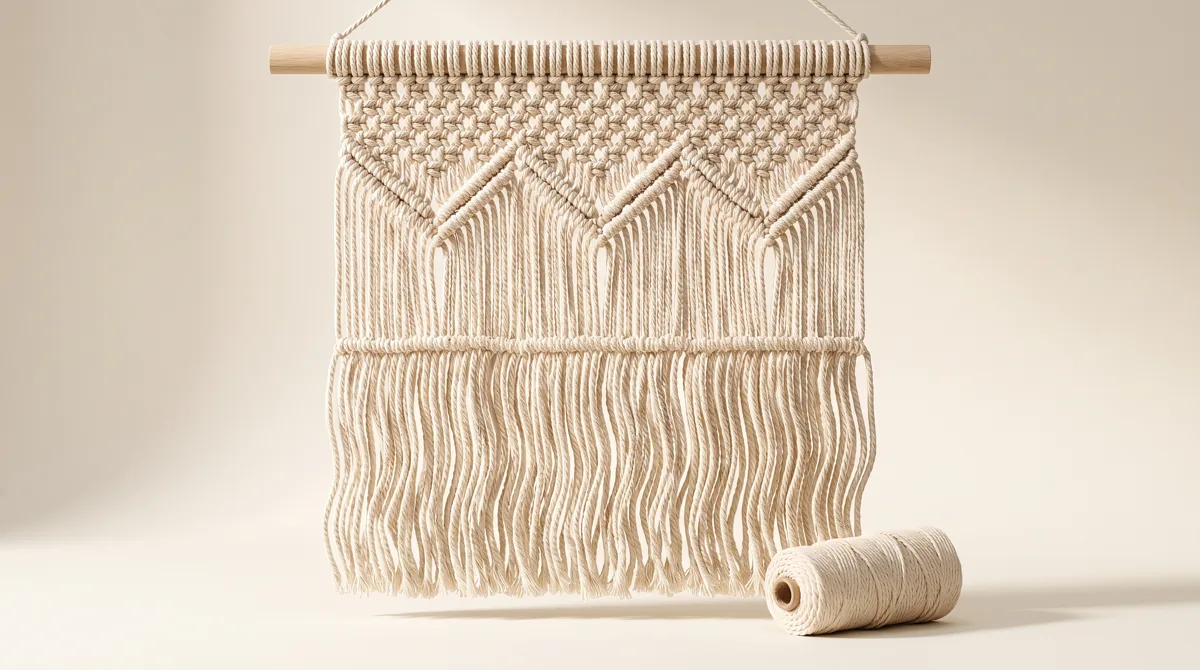
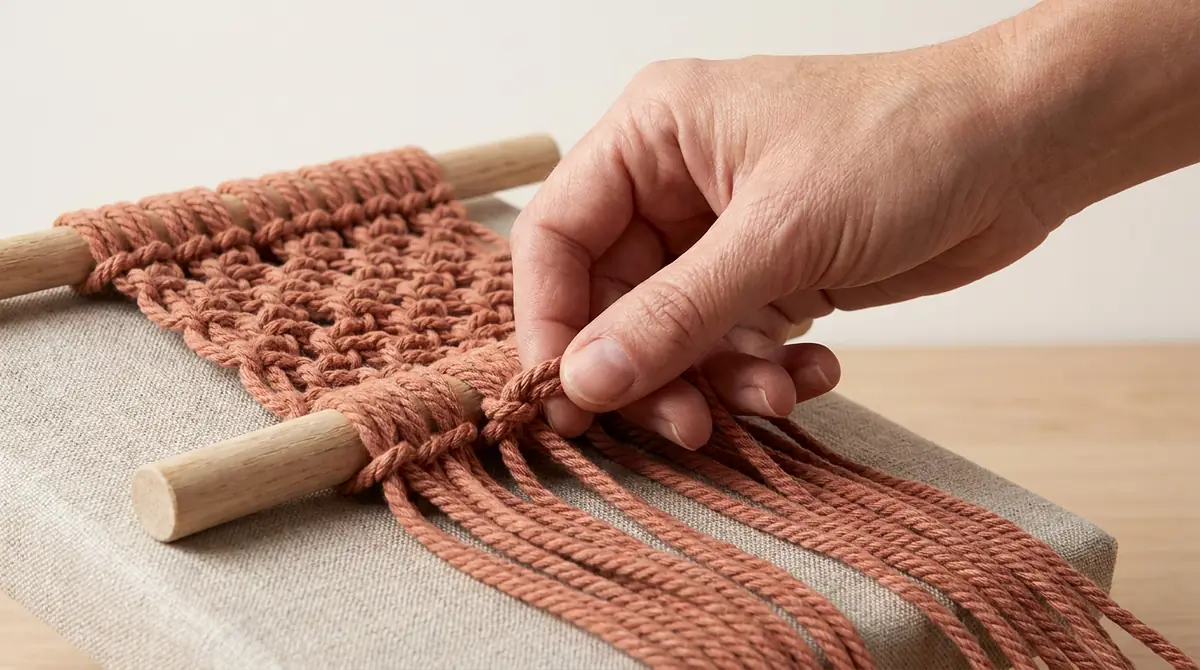
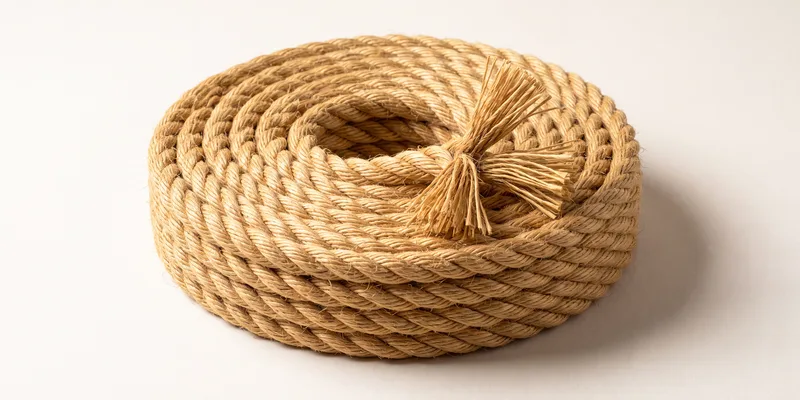
Macrame cord is a twisted or braided craft rope, typically 1.5mm to 10mm thick, used for knotting wall hangings, plant hangers, bags, and boho decor. Traditionally it's cotton, and our natural undyed cord still is; the dyed shades are spun polyester finished to that same matte, cotton-like look and hand.
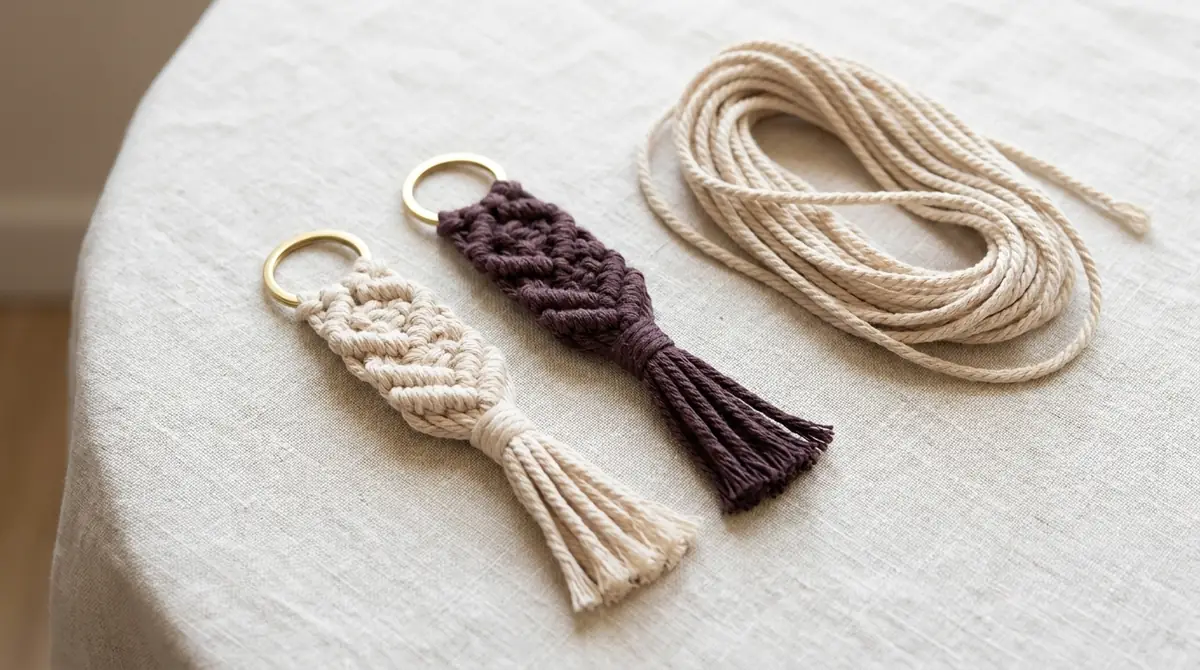
1.5-2mm — jewellery, keychains, micro-macrame
3-4mm — the workhorse; wall hangings and plant hangers. 3mm macrame cord is our best seller.
5-6mm — bold knots, statement pieces
8-10mm — chunky wall art, rugs, oversized decor
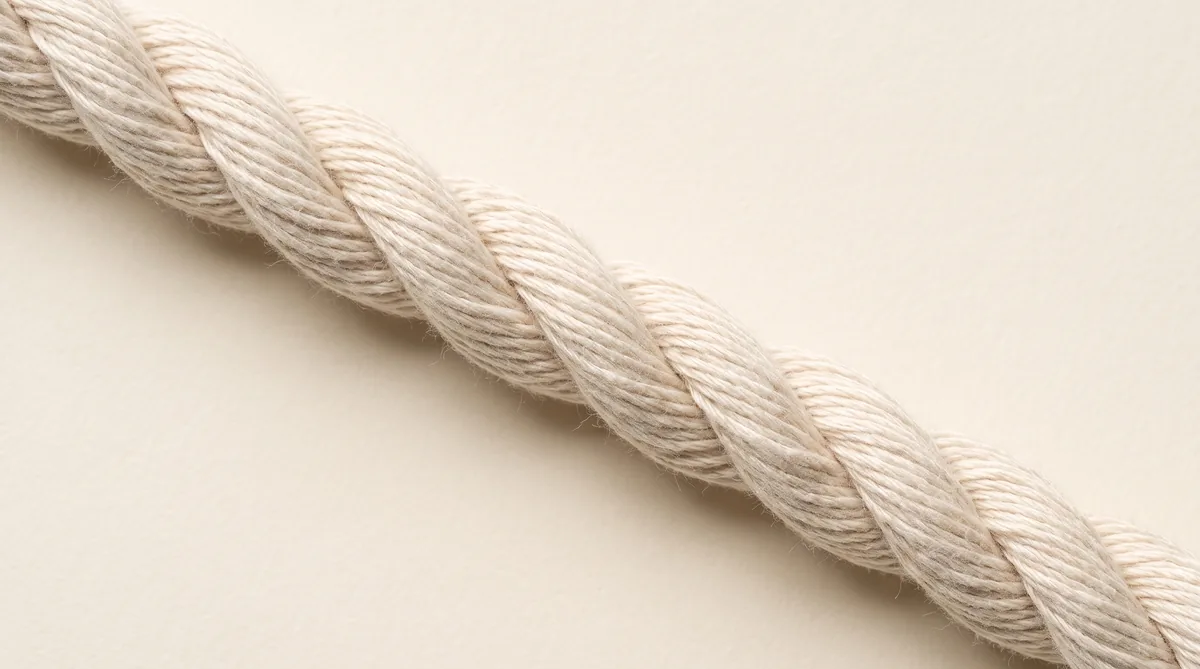
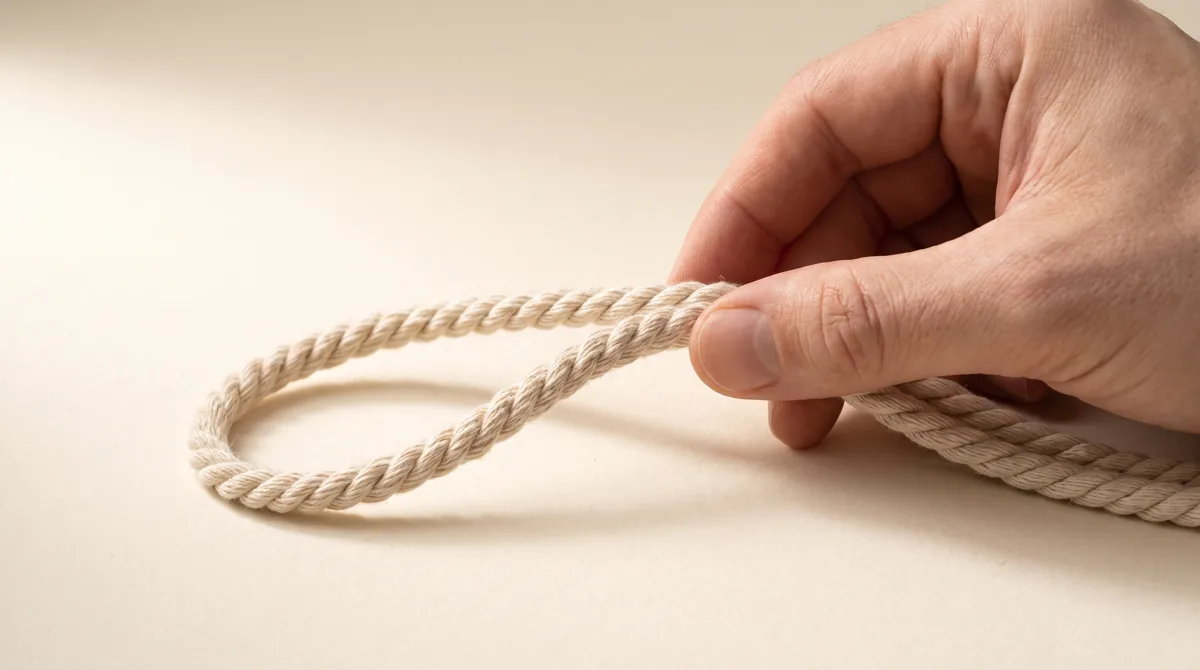
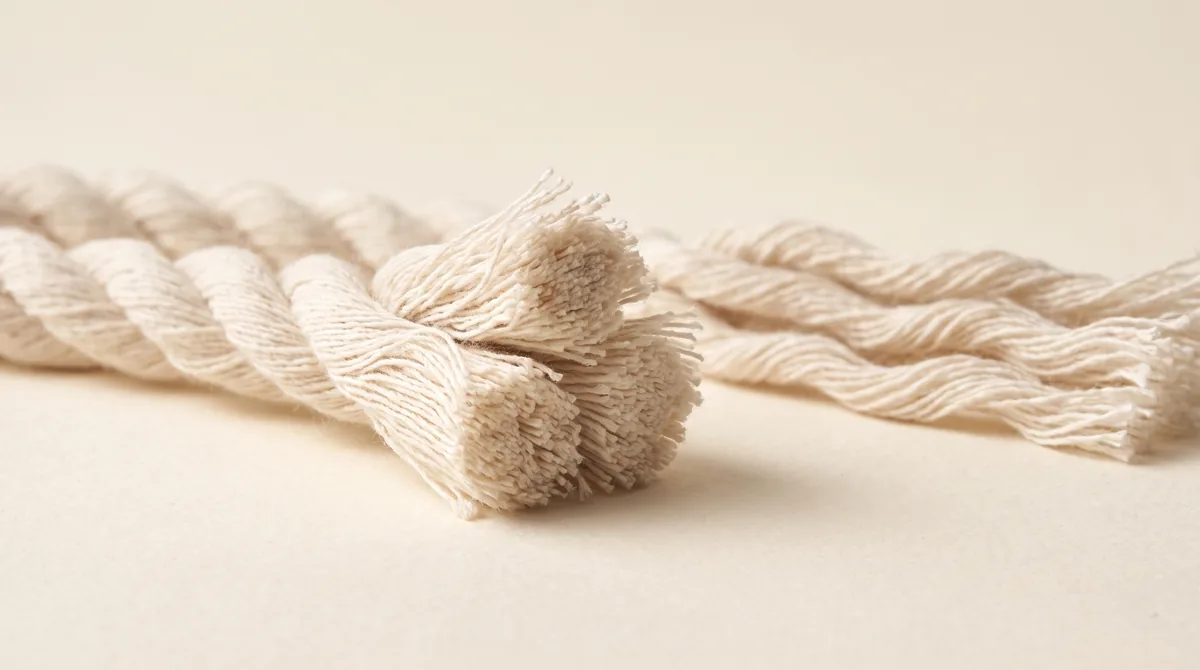
Construction matters as much as diameter. Single twist — the construction most US sellers list as single strand macrame cord — brushes out into soft fringe. 3-ply twisted cord holds knots with that classic ropey texture. Braided won't unravel at all, which makes it right for bag handles and anything that takes abrasion.
Single twist frays into a fluffy fringe the moment you comb it — perfect for feathers and tassels, wrong for load-bearing plant hangers. Match the construction to the project before you order in bulk.
Wholesale macrame cord: MOQ, lead time and what we run in-house
We run twisting, braiding, dyeing and cord-tipping in-house at our Jaipur factory — no jobwork sent outside. That is why we can answer a quote within one working day and hold the MOQ at 1,000 meters per SKU (≈1,094 yards).
Minimum — 1,000 m per size, construction and shade; mixed orders across all three are normal.
Quote — within one working day of receiving sizes, shades and quantities.
Shade approval — lab dip against your swatch or Pantone reference before the bulk lot is dyed.
Put-up — spools or hanks, cartoned for export.
Transit to the US — 7-10 days air, 25-40 days sea.
Colours, dyeing, and how this compares to cotton macrame cord
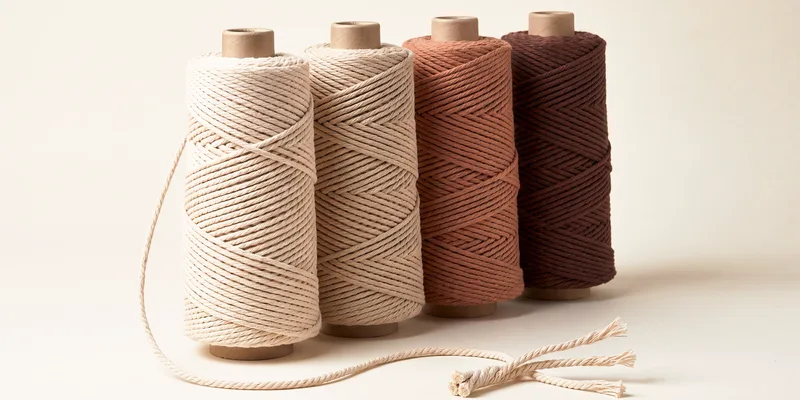
We stock 40+ standard shades, all dyed in-house — naturals, dusty pastels, deep terracottas and saturated brights. Because the dye house is our own floor, batch-to-batch colour consistency is something we control directly.
The natural, undyed cord is cotton — it needs no dyeing, so cotton is what we run. Every dyed shade is spun polyester, spun and finished to give the matte surface, soft hand and fibre-like texture crafters expect from cotton: no plastic shine, no slippery feel, and it photographs the same way in a listing. We use polyester on the dyed side because it takes colour colourfast, repeats shade-to-shade between batches, and dyes consistently at a lower cost.
In the coloured stock that shows up as: shades hold instead of bleeding into a neighbouring strand, far less lint on the workbench, stronger for its diameter, holds a knot without creeping, and stays dimensionally stable rather than going limp or shrinking with humidity. If your customers specifically want a natural fibre, order the natural — that line genuinely is cotton. Order a sample card either way: the hand is easier to feel than to read about.
If recycled content matters to your customers, raise it when you request a quote.
To compare macrame cord sizes with our other cords in mm and inches, see the cord size chart.
Dispatch and freight
Ex-works Jaipur — about 2 to 6 days by surface across India. Freight is to your account, by your transporter or ours. Export orders are quoted separately with air and sea options.
Natural/undyed: cotton. Dyed shades: spun polyester with a cotton-look matte finish and soft cotton hand
Construction
3-ply twisted (single or double twist) and braided
Sizes
1.5mm to 10mm. Imperial approximates: 3mm ≈ 1/8 in, 5mm ≈ 3/16 in, 6mm ≈ 1/4 in, 8mm ≈ 5/16 in, 10mm ≈ 3/8 in
Colours
40+ standard shades, dyed in-house
MOQ
1,000 m per SKU, shade and size
Lead time
Quote within one working day; shipping 7-10 days air to the US (7-14 days air elsewhere), 25-40 days sea
Packing
Spools or hanks, packed in export cartons
Frequently asked questions
Is your macrame cord cotton?
It depends which one you order, and you choose. The natural, undyed cord is cotton — it needs no dyeing, so cotton is what we run. Every dyed shade is spun polyester, made to look and feel like cotton: matte surface, soft hand, no synthetic sheen, so it knots and photographs like the cotton cord crafters know. We use polyester on the dyed side because it is colourfast, repeats shade-for-shade between orders, sheds far less lint, and is stronger for its diameter. If you need a natural fibre specifically, order the natural. Ask for a sample card if you want to judge the hand yourself.
Is macrame yarn the same as macrame cord?
Yes — macrame yarn, macrame thread, macrame cord and macrame rope are four names for the same family of twisted or braided craft cord. Yarn usually implies the softer, loosely spun end and rope the thicker end, but what actually decides the result is the diameter in millimetres and the construction: single strand, 3-ply twisted, or braided. Compare those two numbers and ignore the name.
What sizes does macrame cord come in?
Standard macrame cord runs from 1.5mm to 10mm in diameter. 1.5-2mm suits jewellery and micro-macrame, 3-5mm covers wall hangings and plant hangers, and 6-10mm is for chunky statement pieces. We manufacture the full range in twisted and braided constructions.
Where can I buy macrame thread near me in India?
We are the factory rather than a shop — macrame cord is twisted and braided at our Jaipur plant and dispatched anywhere in India in 2-5 days, so for most buyers the nearest reliable source is the courier from Jaipur. Samples travel the same way before a bulk order, and the WhatsApp number on this page is answered within one working day.
What is the minimum order for wholesale macrame cord from India?
Our MOQ is 1,000 meters per SKU — about 1,094 yards — which lets you sample many colours and sizes without a container commitment. Mixed orders across sizes, constructions, and shades are fine.
What does macrame thread cost wholesale in India?
₹6-20 per metre ex-works Jaipur. Thickness sets the base — 1.5 mm at the floor, 10 mm at the top — and in the Indian trade the same cord is also quoted per kilogram, so ask for both figures if you buy by weight. The rate holds across natural and stock dyed shades.
How long does shipping take from India to the US?
Air courier from our Jaipur factory reaches the US in 7-10 days; sea freight takes 25-40 days. For the Sep-Dec US craft season, book sea shipments by July or August. Small trial orders almost always go by air.
Which macrame cord is best for plant hangers?
3-ply twisted cord in 3mm or 4mm. It holds the knot under a filled pot, and the balanced twist keeps the hanger from spiralling. Single twist is the wrong choice here — it brushes out into fringe and won't take the load. Step up to 5-6mm for heavy pots.
Do you supply macrame dhaga or macrame dori in bulk?
Yes — macrame dhaga, macrame dori and macrame thread are all the same product family on this page. We twist and braid it in Jaipur from 1.5 mm to 10 mm, minimum 1,000 metres per SKU, and dispatch anywhere in India in 2-5 days.