Home › Cords & Ropes › Cotton Rope, 3–30mm — Twisted and Braided in Jaipur
Cotton Rope, 3–30mm — Twisted and Braided in Jaipur
✓ Specs last checked: 2026-09-02
We make rope two ways under one roof: 3-strand twisted rope off our twisting frames, and 8 or 16-carrier braided rope off our braiding machines. The natural, undyed rope is cotton; every dyed shade is spun polyester, finished to look and handle like cotton — matte, soft, no synthetic sheen. It ships cut and coiled or wound onto spools at the length you specify, with heat-set or metal-tipped ends when you need them. Trial orders start at 1,000 m per SKU — one diameter in one shade — and quotes come back within one working day, and at bulk volumes we can run other fibres to your specification.
We've been twisting and braiding in Jaipur since 1991. Rope leaving our floor is made start to finish here — twisted or braided, dyed, cut to length and tipped, without a single step going out to a job worker. The natural, undyed rope is cotton; the dyed shades are spun polyester, finished matte and soft so they look and handle like cotton.
Twisted or braided cotton rope: how each one is built
There are two constructions and they behave differently, so it's worth picking deliberately. Buyers call the finer diameters cotton cord and the heavier ones rope — it's the same product off the same machines.
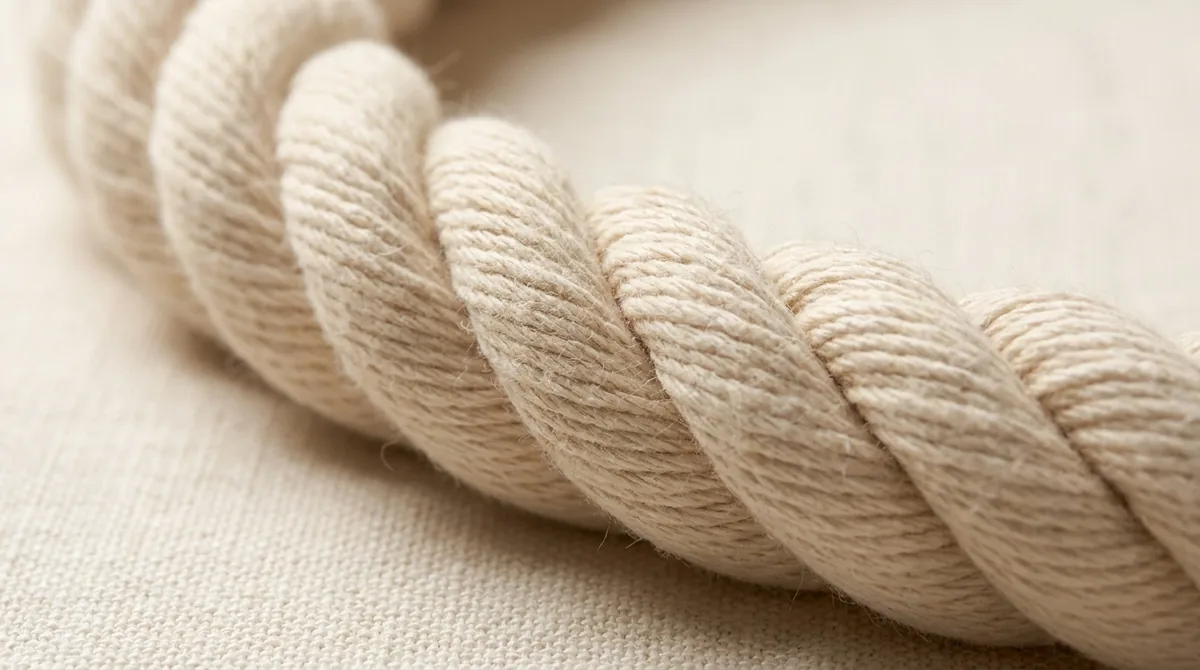
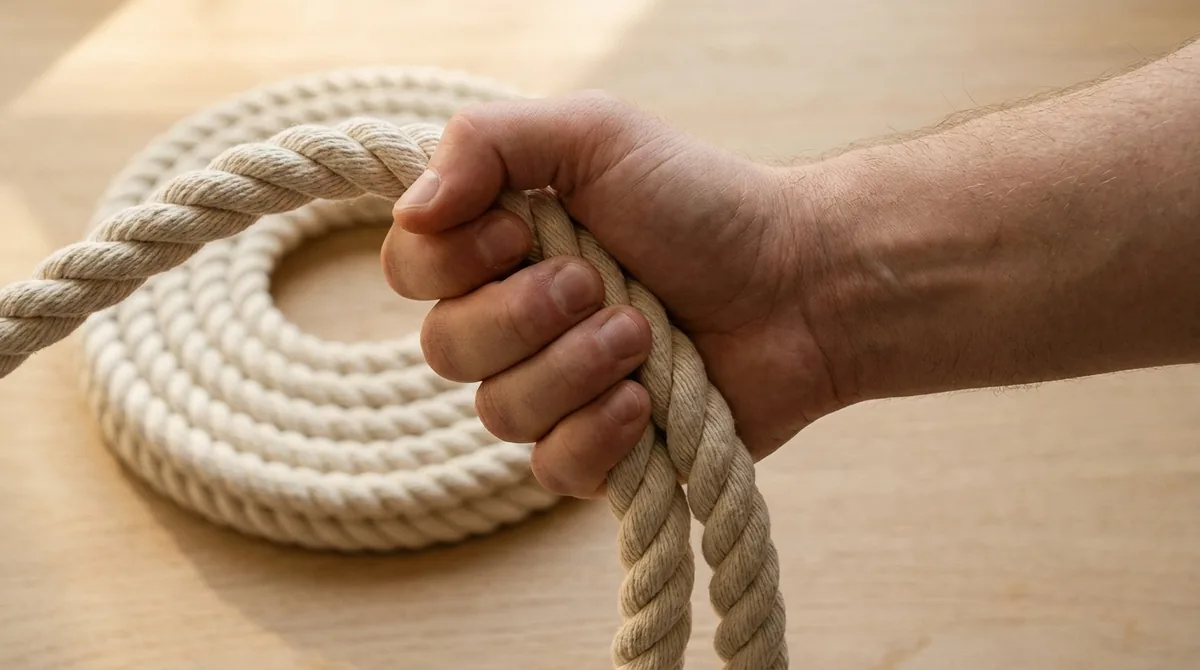
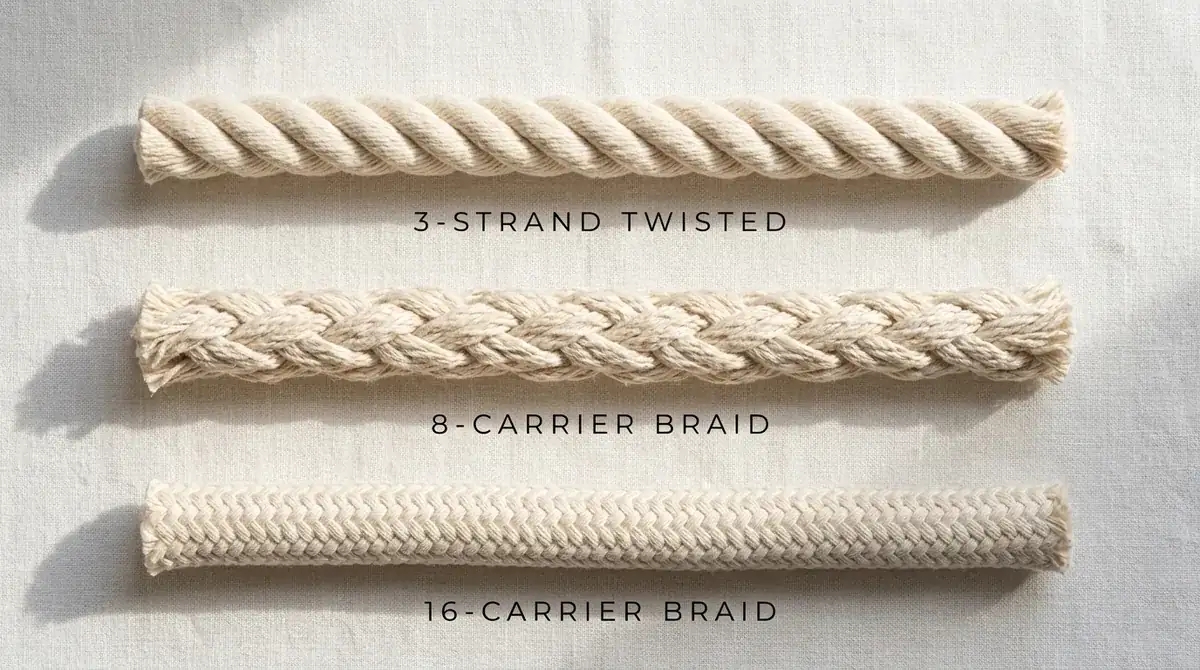
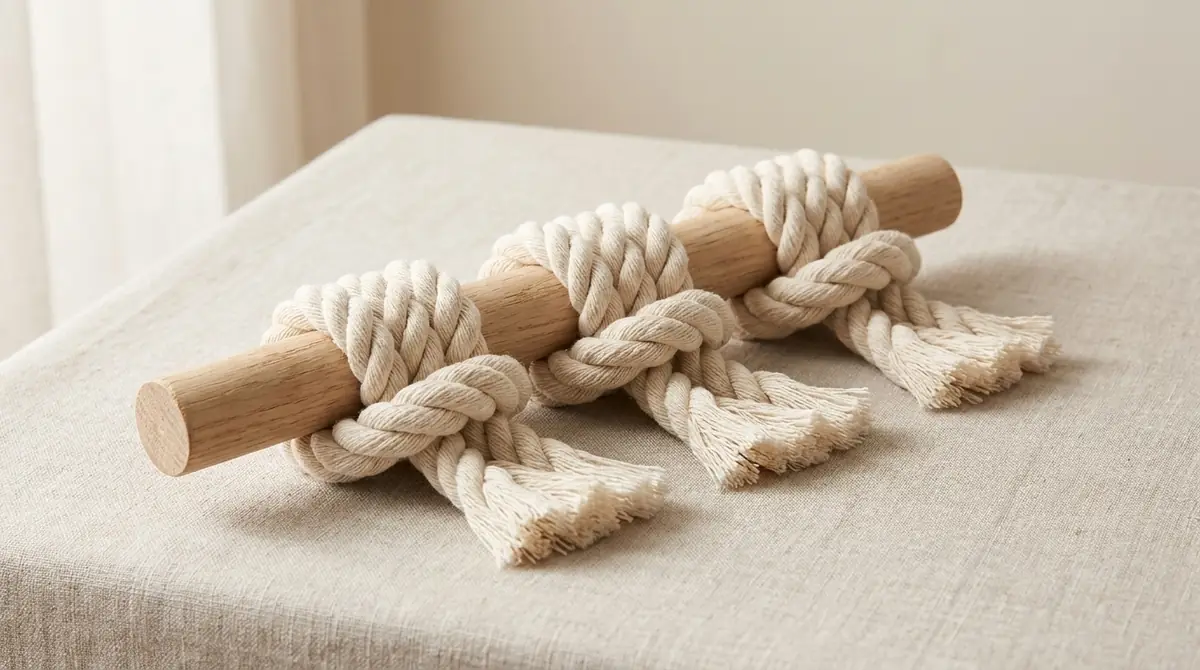
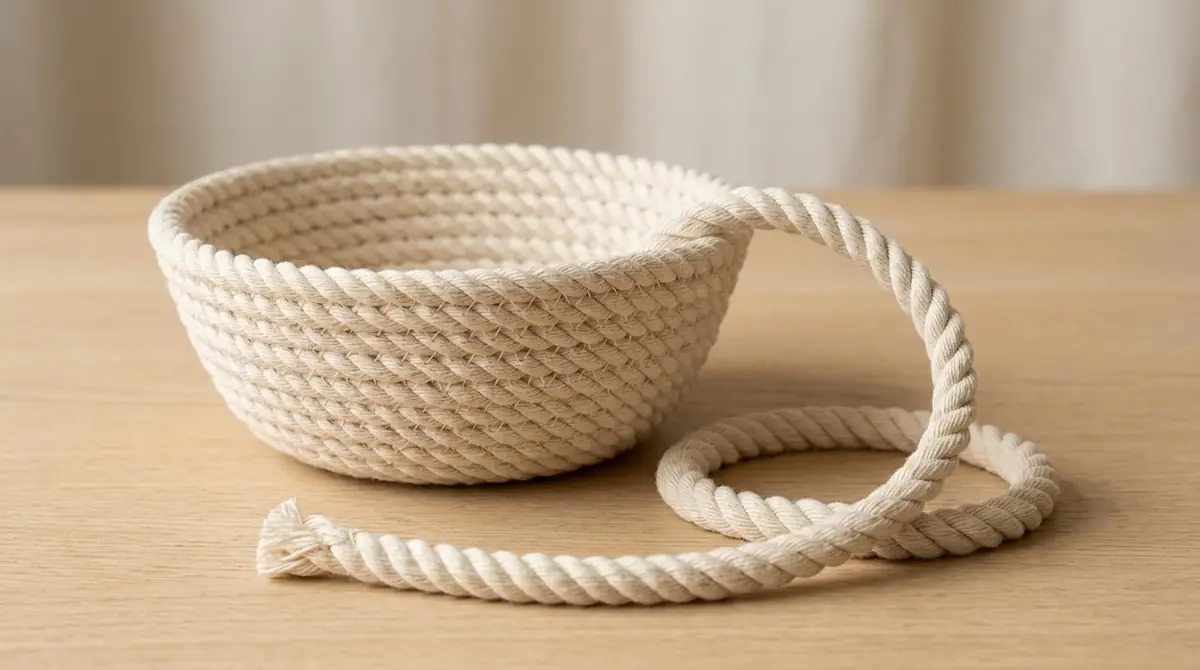
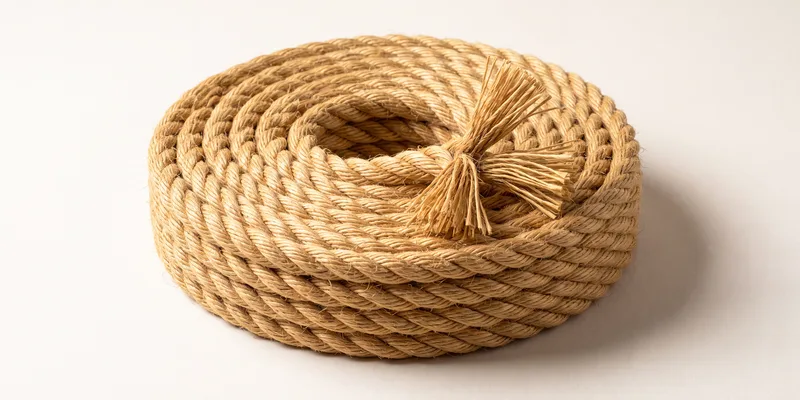
3-strand twisted cotton rope comes off our twisting frames. Three plied strands are laid together with a set twist, S and Z balanced so the finished rope hangs straight instead of corkscrewing off the coil. It has the classic spiral look, it splices easily, and it's what most decor, macrame and photography-prop buyers ask for. The trade-off is that a cut end will unlay if it isn't whipped, tipped or knotted.
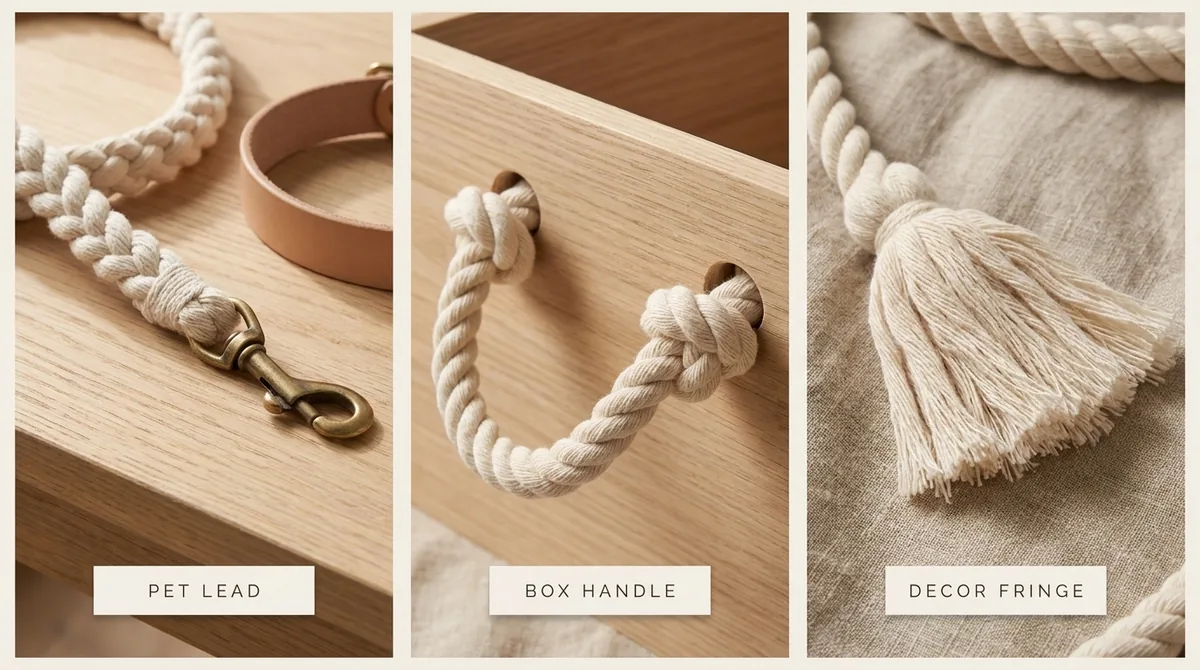
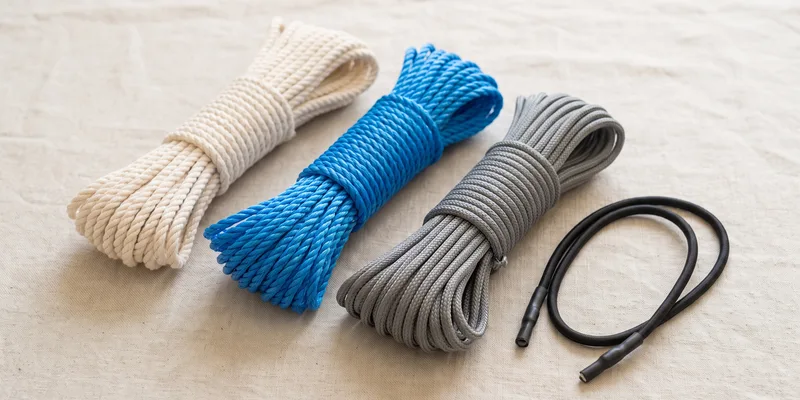
Braided rope comes off our braiding machines on 8 or 16 carriers. Eight carriers gives a coarser, more open braid; sixteen gives a denser, rounder rope with a smoother surface. Braided rope holds its round section under load, doesn't unlay when cut, and resists kinking — which is why it's the usual choice for handles, drawstrings, pet leads and anything that runs through a hole or a hardware fitting.
Which fibre you get depends on the shade, not on the construction. The natural, undyed rope is ring-spun cotton. Every dyed shade is spun polyester, finished matte and soft so it looks and handles like cotton — no synthetic sheen, no slippery feel. Either way the singles are plied on our own frames before they go into the rope. We don't spin raw fibre — we control every step after that. At bulk volumes other fibres can be run to your specification.
Cotton rope for macrame: which diameter and construction
Buyers asking for cotton rope for macrame almost always mean the heavier 3-strand twisted rope, 8mm to 20mm (≈5/16 in to 3/4 in). Below 8mm the same knotting work usually moves to our macrame cord.
Order twisted rather than braided for macrame: the 3-strand rope has the classic spiral, it splices, and a cut end brushes out into fringe. Braided rope will not unlay when cut — right for handles, drawstrings and anything running through hardware, but it will not fringe.
Colour, finishing and how it's put up
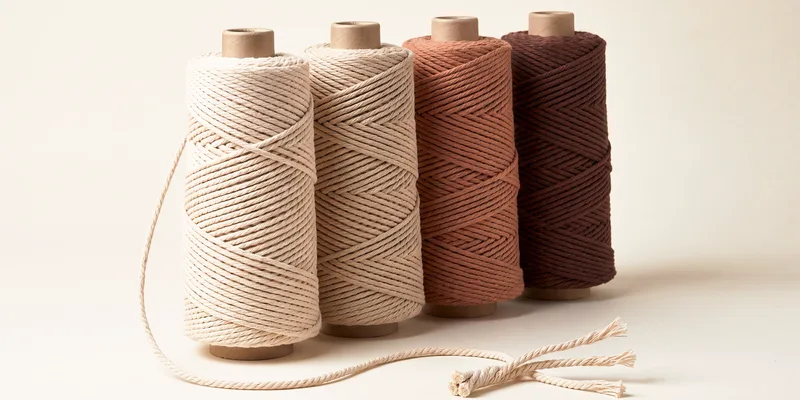
Rope leaves here either natural or dyed. Natural means undyed greige cotton with its own slightly warm off-white cast, which is what most decor buyers want. Bleached white is a separate request, not the same thing as natural.
For colour we piece-dye the finished rope rather than dyeing the yarn first. That keeps the shade consistent across the whole rope surface and means the colour is our responsibility end to end. The dyed rope is spun polyester rather than cotton: it takes colour well and repeats shade-to-shade between batches, which is what makes a reorder match the first one. We match against a physical swatch or a Pantone reference, send a lab dip, and only run bulk once you've signed it off. That approved dip stays on file as the standing reference for repeats.
Ends are finished to order. Heat-set tipping seals the cut end into a firm point on the dyed polyester shades; on the natural cotton we use a bonded tip or a metal aglet crimped on our tipping machine, which is the same equipment we run for lace and drawstring work. Rope ships cut and coiled to a set length, wound onto spools for machine feed, or in continuous hanks — tell us how your line consumes it and we'll match the put-up.
If you're cutting the rope yourself downstream, order braided rather than twisted. Braided rope won't unlay at a raw cut, which saves you a whipping or tipping operation you'd otherwise have to add.
How wholesale buying works with us
Send the spec, not just the product name. Diameter in mm, twisted or braided, natural or a shade reference, and what the rope has to do in the finished product. If you don't know the construction, send a sample of what you buy now and we'll identify it.
Trial order from 1,000 m per SKU. That is one diameter in one shade, run through your own process before you commit to a season; a second shade or diameter is its own 1,000 m.
Approve the shade and the tip. Lab dip for colour, physical sample for the end finish, both before bulk starts.
Fix the put-up and the port. Coils, spools or hanks, cartoned for export. Tell us the destination port and we'll say plainly whether air or sea makes sense at your volume.
Ex-works Jaipur — about 2 to 6 days by surface across India. Freight is to your account, by your transporter or ours. Export orders are quoted separately with air and sea options.
Cotton Rope, 3–30mm — Specifications
Material
Natural/undyed: ring-spun cotton. Dyed shades: spun polyester with a cotton-look matte finish and soft cotton hand. Both plied in-house before rope-making; other fibres to your specification at bulk volumes
Construction
3-strand twisted on our twisting frames, or 8 and 16-carrier braided on our braiding machines
Sizes
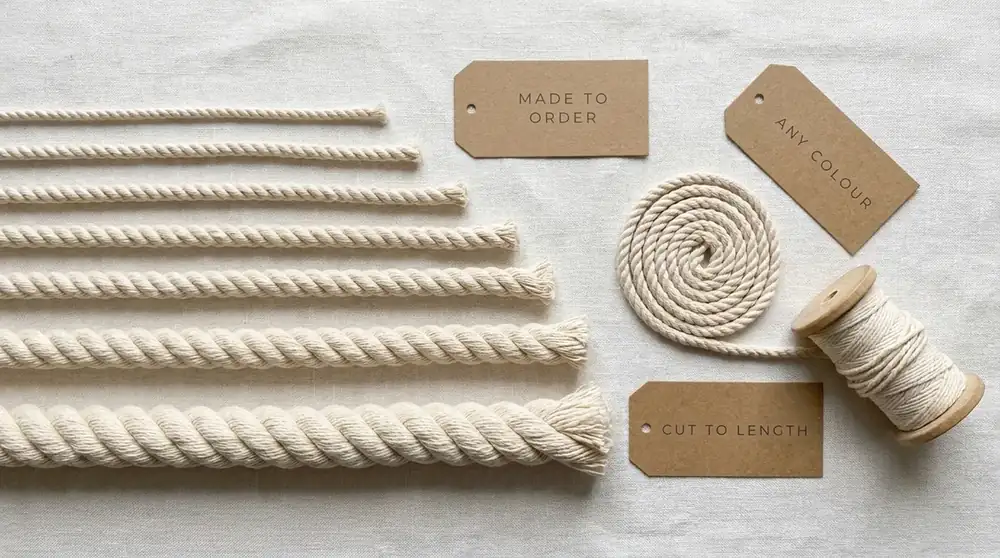
Roughly 3mm to 30mm diameter; other diameters made to order. Imperial approximates: 3mm ≈ 1/8 in, 6mm ≈ 1/4 in, 8mm ≈ 5/16 in, 10mm ≈ 3/8 in, 12mm ≈ 1/2 in, 20mm ≈ 3/4 in, 25mm ≈ 1 in
Colours
Natural undyed greige cotton as standard; dyed shades in spun polyester, matched in-house to your swatch or Pantone reference with a lab dip approved before bulk; bleached white on request
MOQ
1,000 m per SKU, shade and size
Put-up
Cut and coiled to length, wound on spools, or continuous hanks, cartoned for export
End finish
Raw cut, heat-set tipping or crimped metal aglets on our own tipping machine
In-house processes
Twisting, braiding, dyeing, cutting, tipping and winding; raw fibre spinning is not done here
Lead time
Quote within one working day; 7-10 days air or 25-40 days sea after approval
Origin
Jaipur, India
Frequently asked questions
Is your cotton rope cotton?
It depends which one you order, and you choose. The natural, undyed rope is cotton — it needs no dyeing, so cotton is what we run. Every dyed shade is spun polyester, made to look and feel like cotton: matte surface, soft hand, no synthetic sheen, so it coils, knots and photographs like the cotton rope buyers know. We use polyester on the dyed side because it holds colour and repeats shade-for-shade between orders. If you need a natural fibre specifically, order the natural. At bulk volumes we can run other fibres to your specification. Ask for a sample length either way — the hand is easier to feel than to read about.
Should I order twisted or braided cotton rope?
Twisted if the look matters — 3-strand rope has the classic spiral and it splices and unravels into fringe cleanly, which is what decor and macrame buyers want. Braided if the rope has to work: it holds a round section under load, runs through eyelets and hardware without kinking, and won't unlay when you cut it. If you're unsure, send a sample of what you currently buy and we'll tell you which construction it is.
What is the minimum order for wholesale cotton rope?
Trial orders start at 1,000 m per SKU, and a SKU is one diameter in one shade — so a first order runs one rope through your own process before you commit to a season. Several shades in one shipment is fine; each carries its own 1,000 m. Bulk quantities are quoted per diameter and shade, since both the machine setup and the dye lot economics change with size.
What does cotton rope cost wholesale in India?
₹8-30 per metre ex-works Jaipur. Thickness is the main lever — 3 mm twisted rope sits at the low end, 30 mm braided at the top — and dyed shades carry a small premium over natural. Tell us diameter, construction and shade and the quote is back within one working day.
Can you dye the rope to my colour and finish the ends?
Yes to both, and both happen here. We piece-dye the finished rope in-house against a physical swatch or a Pantone reference, sending a lab dip for approval before bulk, and the approved dip becomes the reference for repeat orders. Note that the dyed rope is spun polyester finished to look and feel like cotton; if you need the cotton, order the natural undyed. Ends can ship raw cut, heat-set into a firm sealed tip, or fitted with crimped metal aglets on the same tipping machine we run for lace work — tell us which and we'll send a physical sample first.
Do you cut rope to a fixed length and spool it?
That's normal for us. Rope goes out cut and coiled to a set length, wound onto spools for machine feed, or in continuous hanks. Tell us how your line consumes it — including the tolerance you can accept on length — and we'll set the put-up to match rather than shipping bulk coils you then have to process.
How does cotton rope ship from India, and how long does it take?
Most US buyers air-freight a trial coil in 7 to 10 days, then move to sea freight at 25 to 40 days once the spec is locked. Rope is bulky relative to its value, so sea is where the landed cost works for real volume. Give us the destination port and your target arrival date and we'll work backwards from it — including how the dye lot and the sailing need to line up.
Is this the same as sooti rassi?
Sooti rassi is exactly what this page sells — cotton rope, twisted or braided on our own frames from roughly 3 mm to 30 mm. Wholesale buyers who ask by the Hindi name and buyers who ask for cotton rope get the same quote: 1,000 metres per SKU, ex-works Jaipur.
Braided vs twisted rope — what is the actual difference?
Both come off our own machines here, but they are built in different ways. Twisted rope is 3-strand: three plied strands laid together with a set twist, S and Z balanced so the finished rope hangs straight off the coil instead of corkscrewing, and it carries the classic visible spiral. Braided rope is interlaced on 8 or 16 carriers, where 8 carriers gives a coarser, more open braid and 16 gives a denser, rounder rope with a smoother surface. In use the practical difference is that twisted shows its spiral and can be unlaid, while braided holds its round section under load and resists kinking, which is why it goes into handles, drawstrings and anything running through a hole or a hardware fitting.
Twisted vs braided rope: which one is stronger?
We do not publish breaking loads for either construction, and neither is sold as a load-rated rope, so do not size this for lifting or safety work. What we can tell you is how each one behaves in the decor, craft and trim jobs it does go into: the braid holds its round section under load and resists kinking, while a 3-strand twisted rope carries the classic spiral, splices, and will unlay at a raw cut unless the end is whipped, knotted or tipped. The fibre matters at least as much as the construction here — the natural undyed rope is ring-spun cotton and every dyed shade is spun polyester. If load behaviour is critical to your product, ask for a sample length in the exact diameter and shade and run it through your own assembly before you commit.
Braided vs twisted rope: which one can be spliced?
Twisted. A 3-strand rope splices cleanly, which is one reason decor, macrame and photography-prop buyers order twisted. A braid is not spliced — it holds its round section and will not unlay when cut, so the end gets finished rather than joined back into itself: raw cut, heat-set into a firm tip on the dyed polyester shades, or a bonded tip or crimped metal aglet on the natural cotton, both done on our own tipping machine. Tell us which end finish you want and we will send a physical sample before bulk.
Twisted vs braided rope: what happens to the end when you cut it?
A twisted rope starts to unlay at a raw cut unless the end is whipped, knotted or tipped, and that is not always a fault — for macrame and decor, the same cut end brushes out into fringe, which is exactly what those buyers want. A braided rope will not unlay when it is cut, so if you are cutting to length downstream you save yourself a whipping or tipping operation. If you would rather we finish the ends, heat-set tipping seals the cut into a firm point on the dyed polyester shades, and on the natural cotton we use a bonded tip or a crimped metal aglet. Tell us how your line cuts and we will suggest the construction and the end finish together.
Braided vs twisted rope: can we switch construction and keep the same diameter and colour?
Yes. Both constructions are made here across the same roughly 3mm to 30mm range, with other diameters made to order, and colour is a separate decision from construction because we piece-dye the finished rope rather than the yarn — so the switch is a specification change rather than a different product. Quote it as its own line: we quote per diameter, construction and shade, and the minimum is 1,000 m per SKU, meaning one diameter in one shade, with a second shade or diameter carrying its own 1,000 m. Do expect the hand to differ at the same millimetre — the 16-carrier braid is denser and rounder, the 8-carrier braid coarser and more open, and the twisted rope carries the classic spiral. If you are not certain which construction you currently buy, send a short sample and we will identify it before quoting.