Home › Ribbons & Tapes › Woven Labels — Dyed Label Tape, Cut, Folded and Sealed in Jaipur
Woven Labels — Dyed Label Tape, Cut, Folded and Sealed in Jaipur
✓ Specs last checked: 2026-09-02
A woven label is made on a jacquard needle loom, and we do not run one — so read this page as a supply-side offer, not a full label service. What we do supply from our own plant in Jaipur is the part that sits underneath every woven label: satin and twill tape base dyed to your ground shade, then cut, folded and heat-sealed into finished label blanks. Natural undyed twill base is cotton; dyed ground shades run in spun polyester finished to a cotton hand. MOQ is 1,000 metres per shade on continuous base tape sold by length, or 5,000 pieces per design, style or colour on finished cut-and-folded blanks; quotes come back within one working day, and we ship worldwide.
Since 1991 our plant in Jaipur has dyed, cut and heat-finished narrow fabrics. If you already have a jacquard source and need a dependable partner for the dyed base tape and the cut-fold-seal finishing, that is exactly the piece we cover.
Which Part of a Woven Label Do We Make?
We do not run jacquard needle looms. What we do run is a dye house and a cutting and heat-sealing line, and those cover the rest of the label:
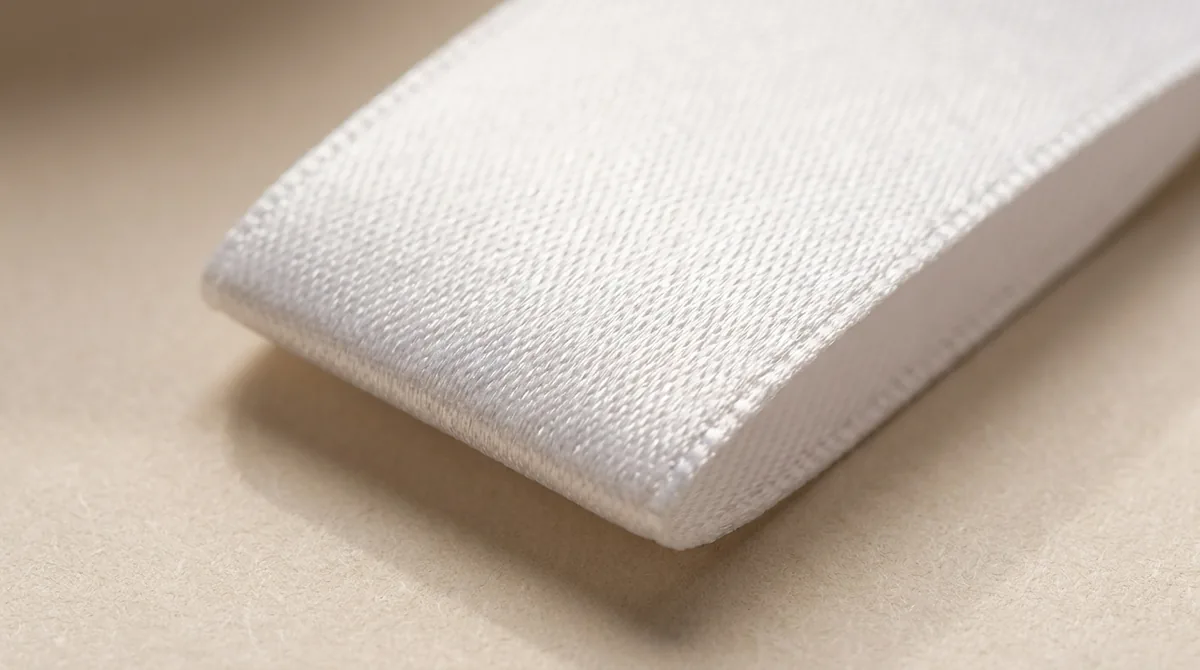
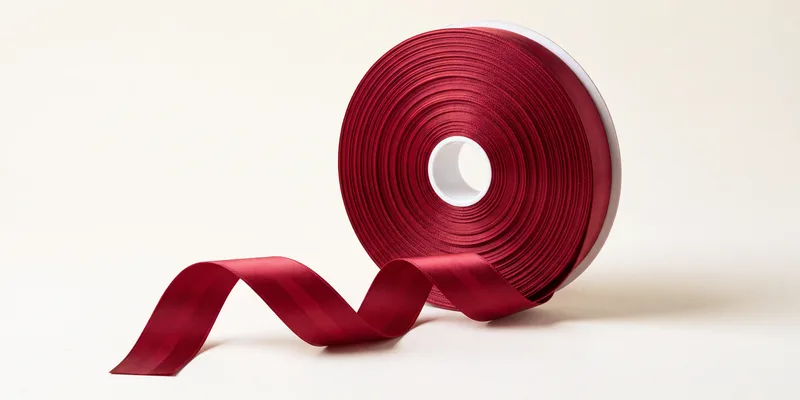
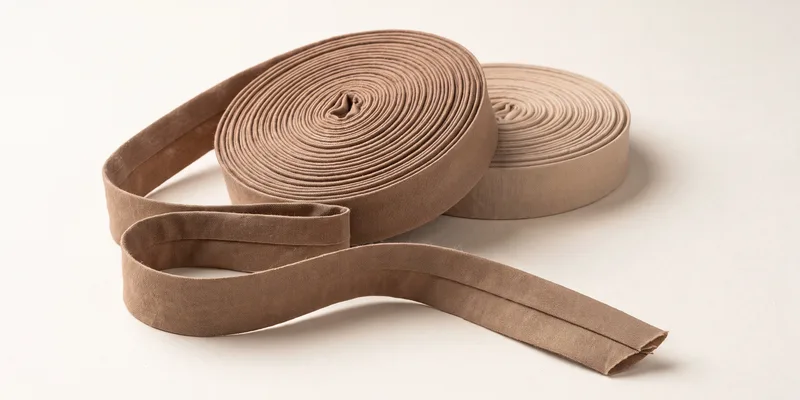
Base tape supply — satin tape for a soft, low-scratch label and twill tape where a firmer, more matte ground is wanted
Shade dyeing — the ground colour of the tape dyed in-house against your physical swatch, with the recipe held for reorders
Cutting — heat cutting to your finished label length so the cut edge is sealed rather than raw
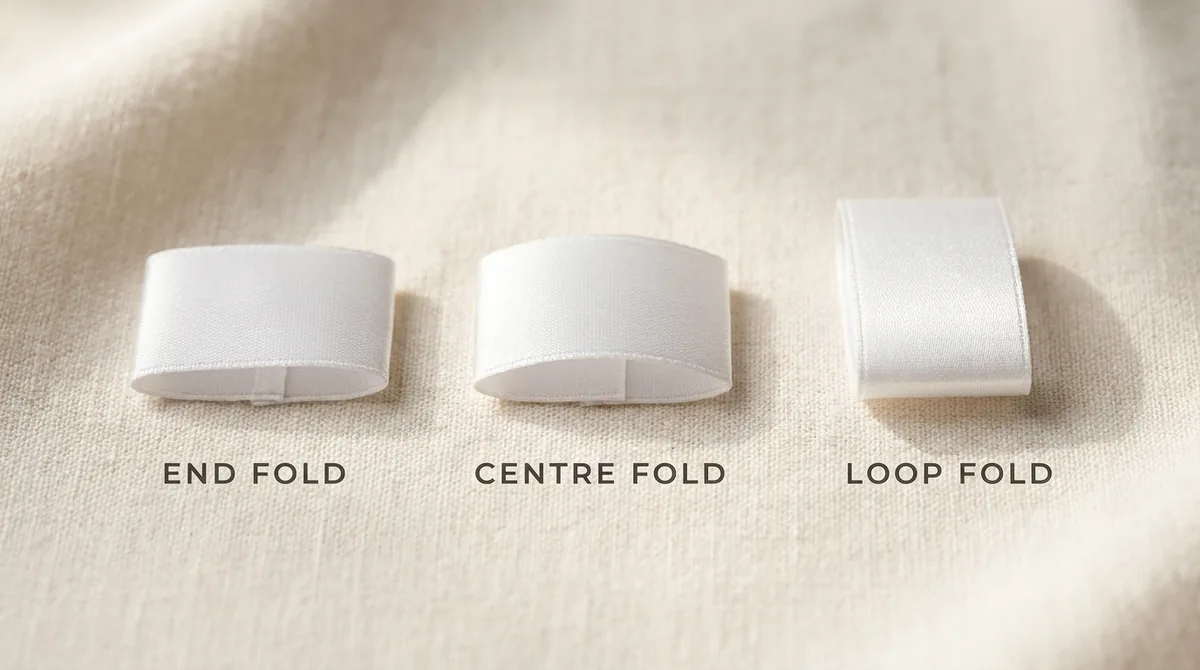
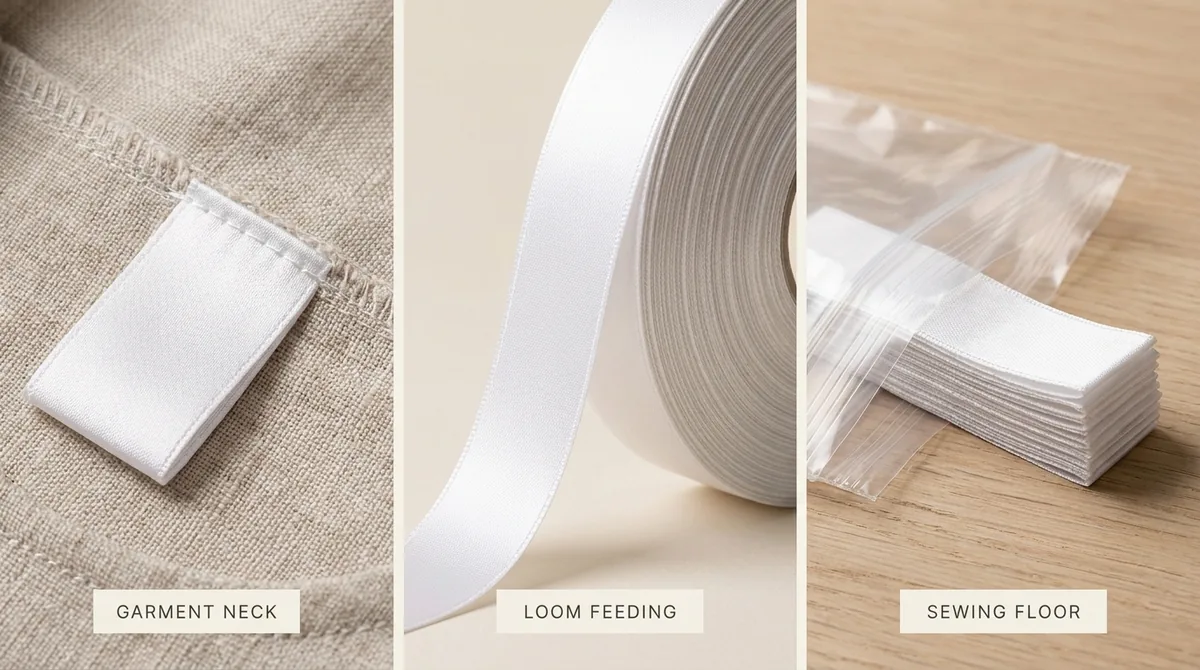
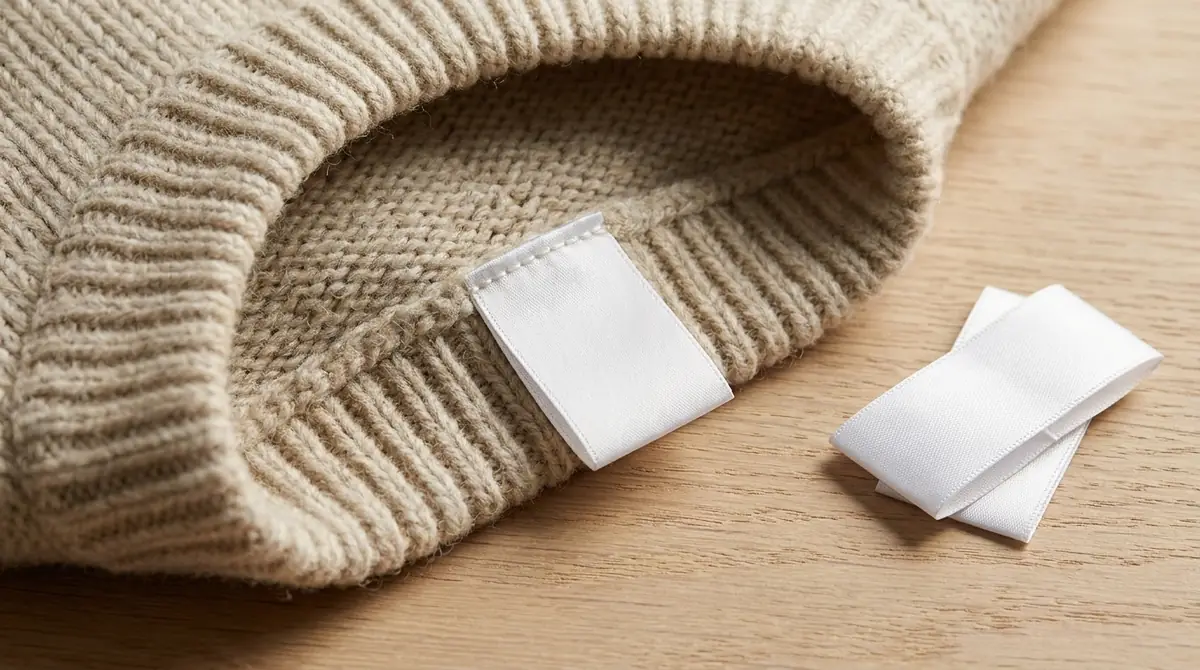
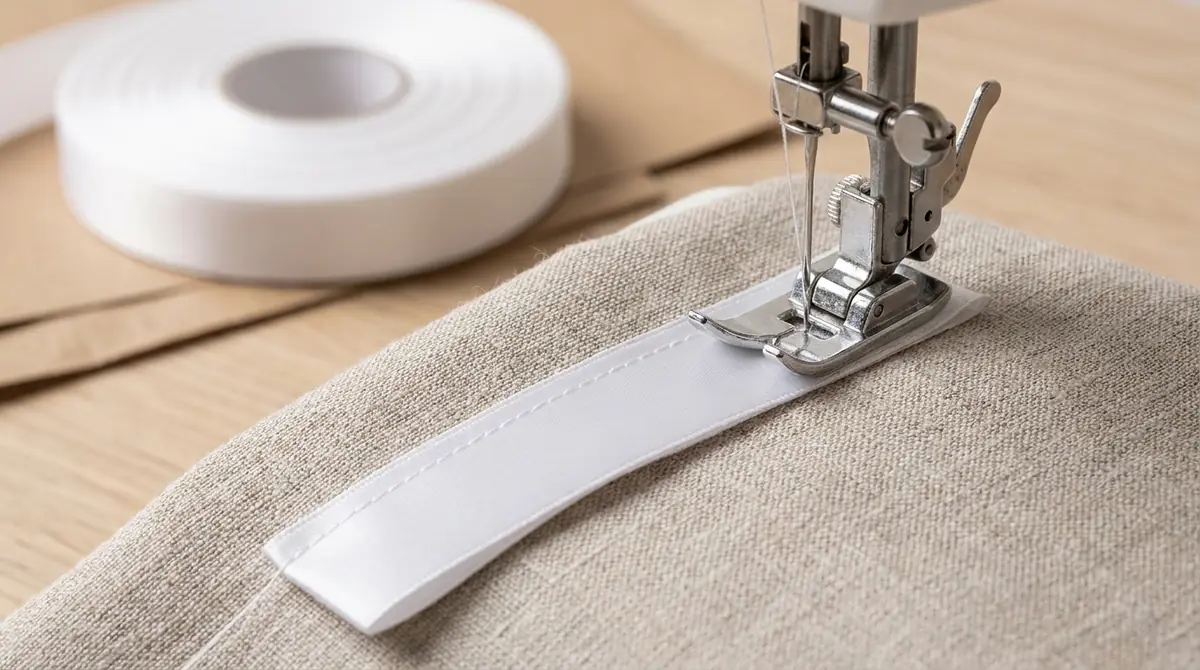
Folding — end-fold, centre-fold and loop-fold blanks, folded and set so the label feeds straight into a sewing line
Heat sealing — sealed edges and folds that hold through laundering and do not fray in the carton
Bring us the woven or unwoven tape and we will finish it, or take our dyed blank tape and weave on it elsewhere.
How Does Wholesale Buying Work From Our Factory?
Tell us which of the two jobs you want. Either you need dyed base tape by the metre to feed your own jacquard loom, or you need finished blanks — dyed, cut to length, folded and sealed — from tape you supply or tape we dye. Both are quoted within one working day.
MOQ of 1,000 metres per shade on continuous base tape, or 5,000 pieces per design, style or colour on finished blanks — the minimum is counted separately against each shade of base tape and against each design, style and colour of finished blank, so every variant on the order carries it in full
Custom ground shades dyed in-house against your swatch; the recipe is saved against your account so repeats match
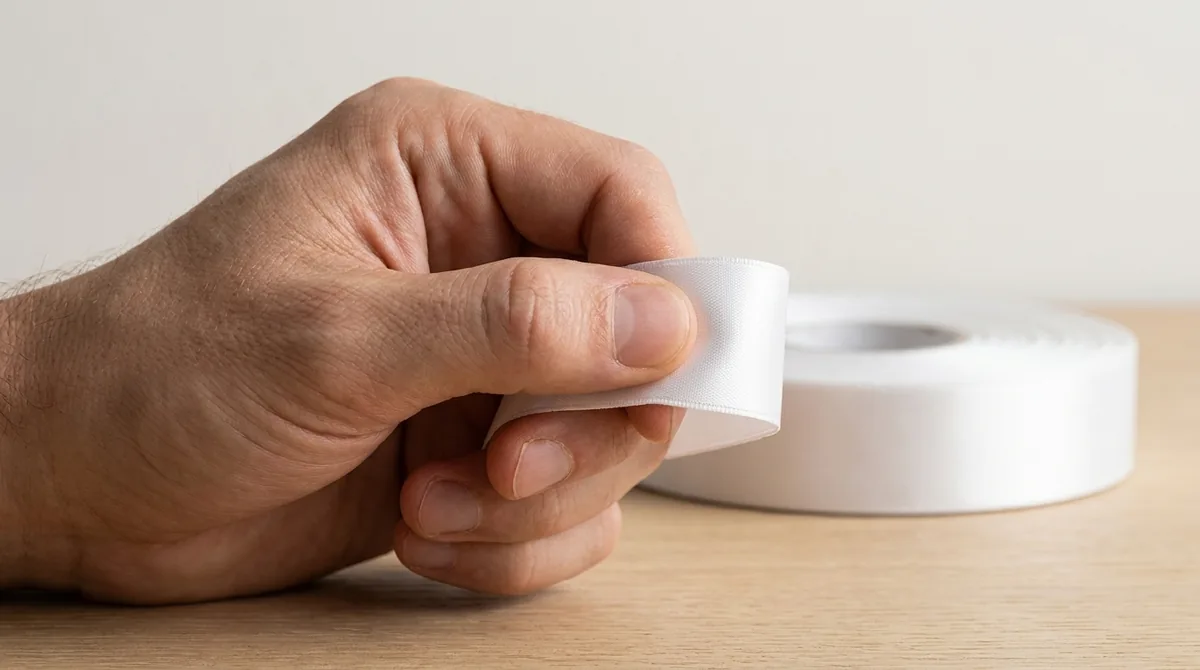
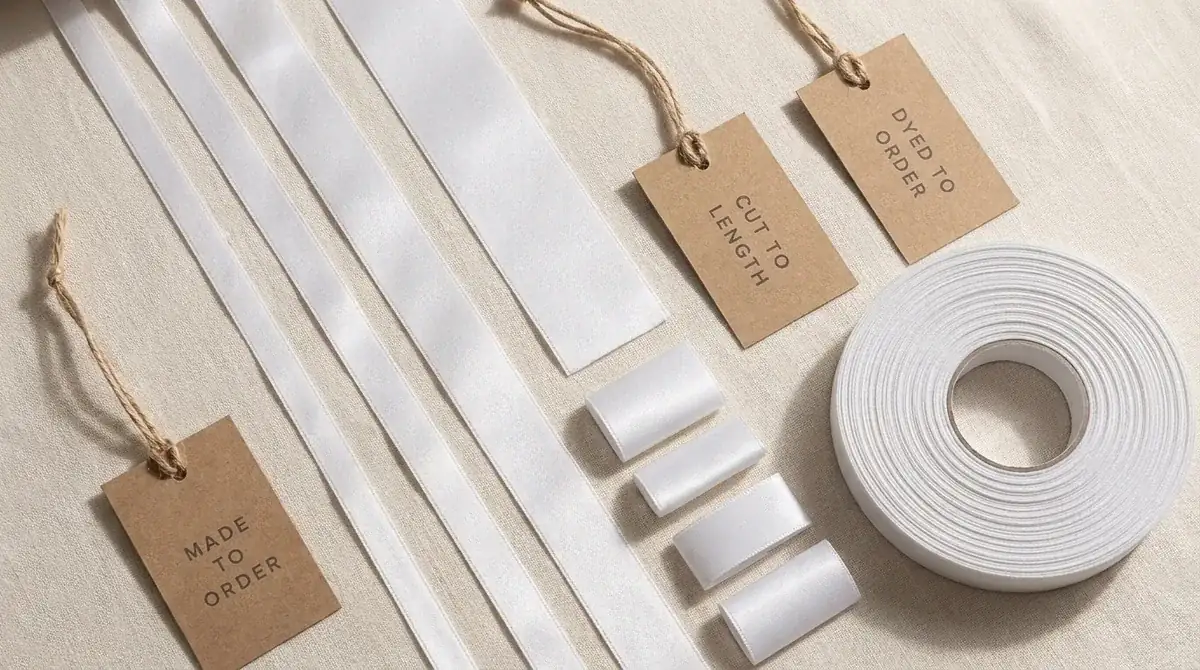
Continuous rolls for loom feeding, or cut, folded and sealed blanks counted and polybagged for the sewing floor
Repeat orders run against your saved spec, so ground shade, width and fold type do not drift between shipments
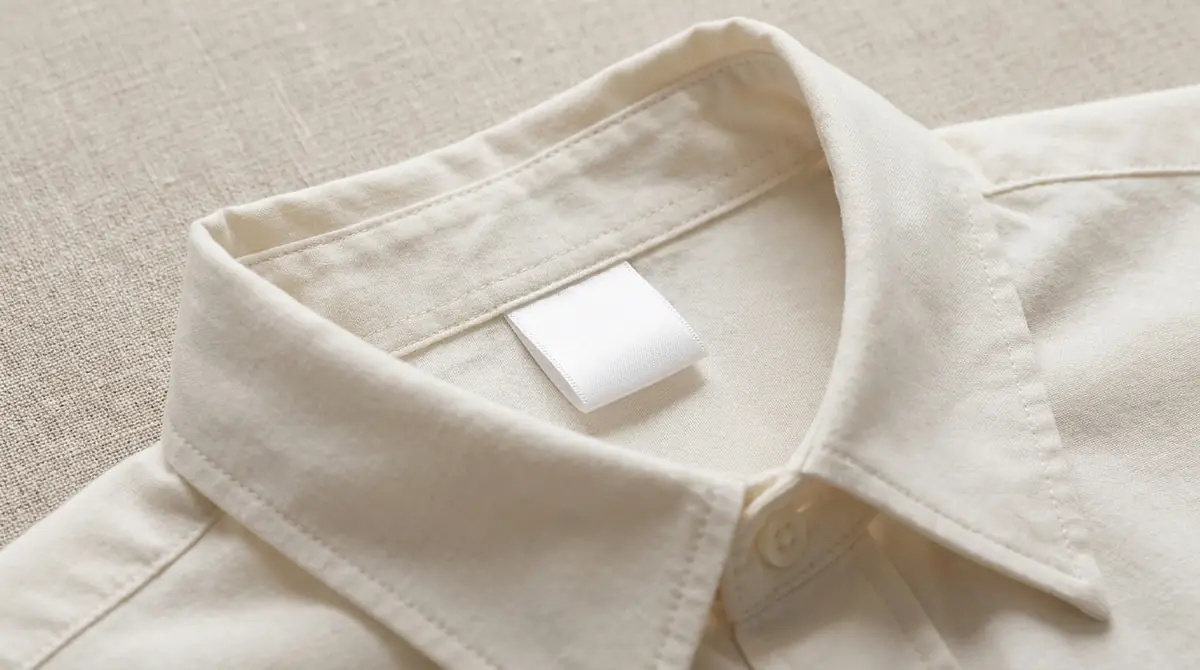
Approve the ground shade on a laundered sample, not a dry one. A label that shifts half a tone after the first wash will be noticed at the neck of a garment long before anywhere else.
Dispatch and freight
Ex-works Jaipur — about 2 to 6 days by surface across India. Freight is to your account, by your transporter or ours. Export orders are quoted separately with air and sea options.
Woven Labels — Specifications
Material — satin base
Polyester satin tape
Material — twill base, natural / undyed
Cotton
Material — twill base, dyed ground shades
Spun polyester, finished to look and feel like cotton
Material — other fibres
Made to buyer specification at bulk volumes
Construction
Narrow woven tape base; jacquard logo weaving is done on needle looms outside our plant
Our processing
Ground-shade dyeing, heat cutting to length, end-fold, centre-fold and loop-fold, heat sealing
Widths
Standard narrow label widths — specify the finished label width with your enquiry
Colours
Ground shade dyed in-house to your swatch or colour reference; recipe held for reorders
MOQ
Continuous base tape 1,000 metres per shade; finished blanks 5,000 pieces per design, style or colour
Put-up
Continuous rolls for loom feeding, or cut and folded blanks counted and polybagged for export
Customisation
Ground shade, tape width, cut length and fold type made to order
Lead time
Quote within one working day; air 7-14 days, sea 25-40 days
Origin
Jaipur, India — dyeing, cutting, folding and heat sealing in-house
Frequently asked questions
Do you weave the labels with our logo in them?
No. Weaving a logo into a tape needs a jacquard needle loom, and we do not run one. We supply the dyed satin or twill tape that a woven label is built on, and we do the cutting, folding and heat sealing after weaving. If you need finished logo-woven labels, you need a jacquard label house — tell us in your enquiry and we will say so straight away instead of quoting around it.
What is the minimum order for label tape?
It depends which of the two jobs you are buying. Continuous base tape is sold by length, at 1,000 metres per shade. Finished blanks — heat cut to length, folded and sealed — are sold by the piece, at 5,000 pieces per design, style or colour. The minimum is counted separately against each shade of base tape and against each design, style and colour of finished blank, so every variant on the order carries it in full: two ground shades of base tape means 2,000 metres, and two designs of finished blank means 10,000 pieces. Both are production runs rather than trial quantities.
What do woven labels cost per piece?
₹5 per piece ex-works Jaipur at the 5,000-piece minimum. That figure carries the loom set-up and design origination spread over the run — which is why label pricing collapses at volume and why below the minimum a one-time setup charge applies instead. Artwork in, exact quote back within one working day. Continuous dyed base tape by the metre is not priced off a card — it is quoted against your spec of width, base weave (satin or twill) and shade, on the same one-working-day turnaround.
Can you dye the label tape to our brand ground colour?
Yes. Dyeing is done in our own dye house in Jaipur against your physical swatch or colour reference, and the recipe is saved against your account so a repeat order matches the first shipment. Custom shades start from the 1,000-metre minimum per shade on continuous base tape, or the 5,000-piece minimum per design, style or colour on finished blanks.
Can you cut and fold labels from tape we send you?
Yes, that is a common arrangement. You send woven tape, we heat cut it to your finished length, fold it end-fold, centre-fold or loop-fold as specified, seal the edges and return it counted and polybagged ready for the sewing floor. Send the fold type, the finished length and the pack count with your enquiry.
Will the cut edges fray or feel scratchy against skin?
Not if the cut is sealed properly. We heat cut rather than shear cut, so the edge fuses instead of leaving loose ends, and satin base tape gives a softer hand than twill where the label sits at the neck. If skin contact matters for your garment, ask for satin base and say so with your enquiry, and test the sample after laundering before you approve it.