Home › Ribbons & Tapes › Bias Tape — Single-Fold and Double-Fold Binding, Cut on True 45°
Bias Tape — Single-Fold and Double-Fold Binding, Cut on True 45°
✓ Specs last checked: 2026-09-02
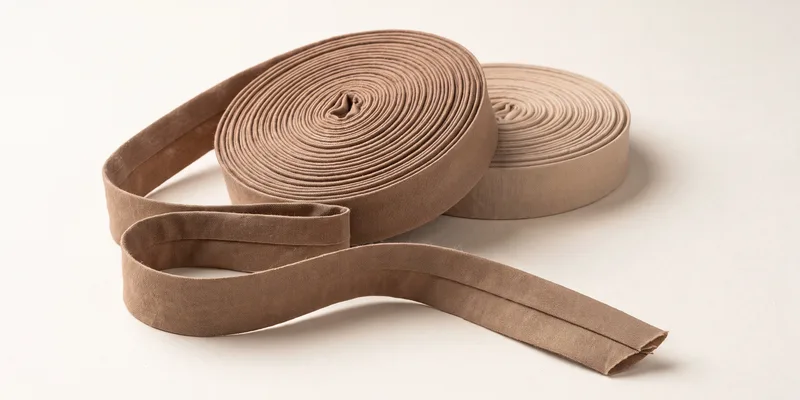
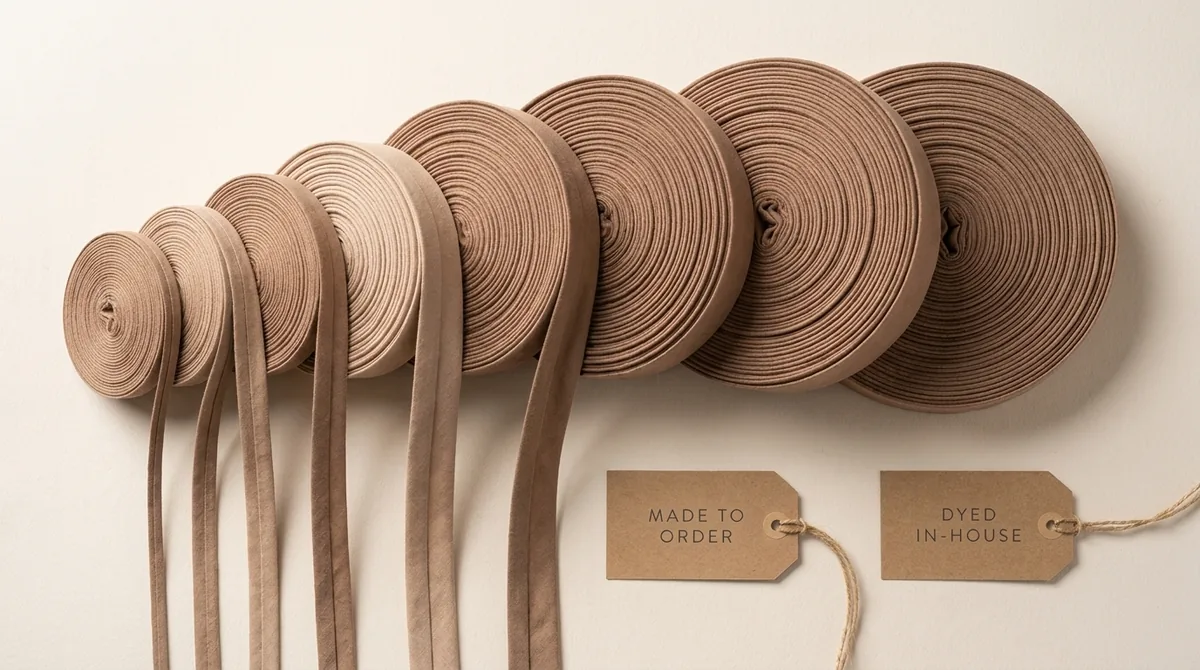
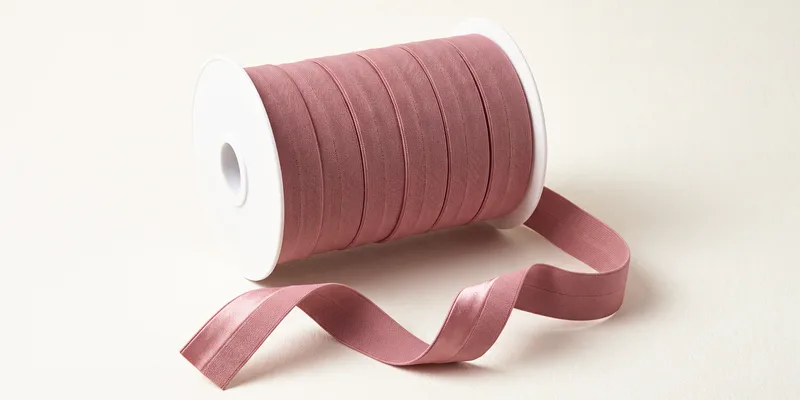
We make bias tape in our Jaipur factory — single-fold and double-fold binding, cut to your width and dyed to your shade in-house. Natural undyed tape is cotton; dyed shades run in spun polyester finished to look and feel like cotton. MOQ is 1,000 meters (approx. 1,094 yards) per SKU — one shade in one width — so a first order is a single tape proven on your own line, and we export worldwide.
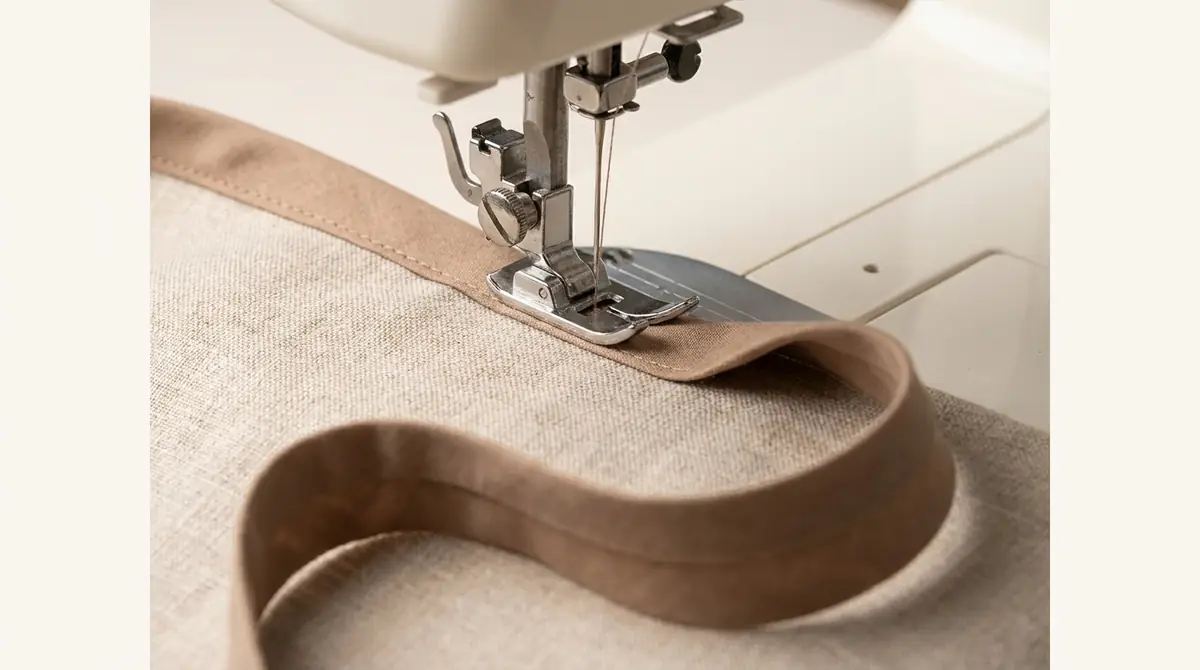
Bias tape is cut at a true 45 degrees, folded evenly, and dyed consistently roll after roll — so it curves around necklines and quilt corners without puckering.
We've been making narrow fabrics in Jaipur since 1991, with dyeing and finishing in-house, so we control the shade, the fold, and the put-up ourselves and can repeat your spec exactly on reorder.
What Is Bias Tape, and What Constructions Do We Offer?
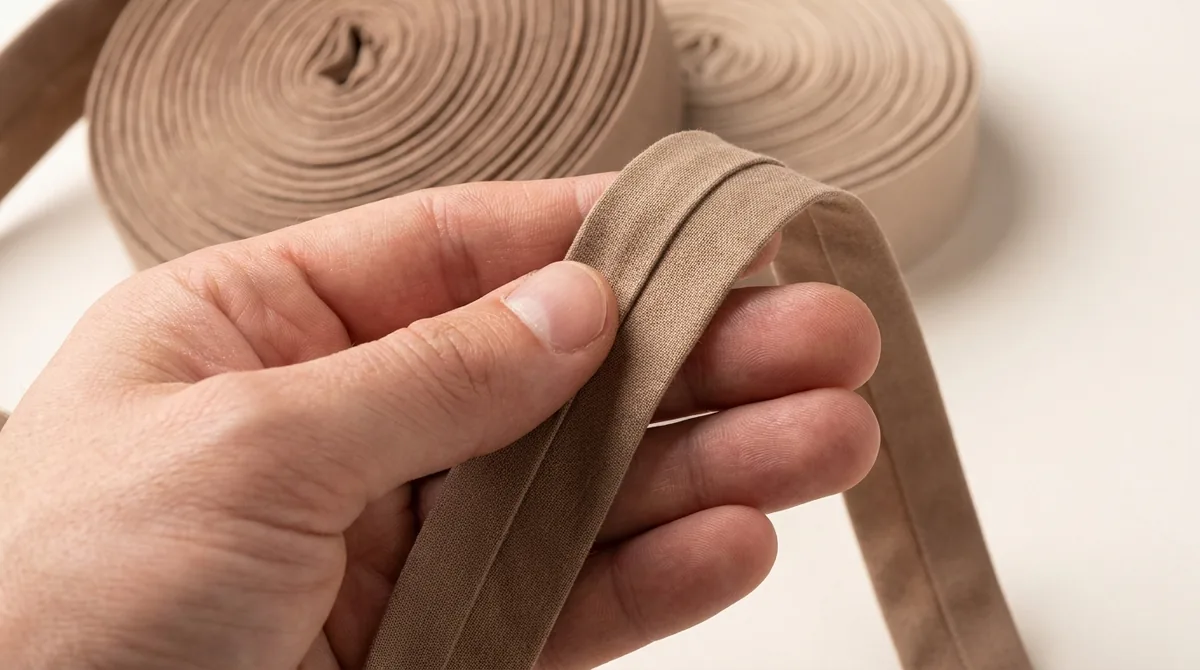
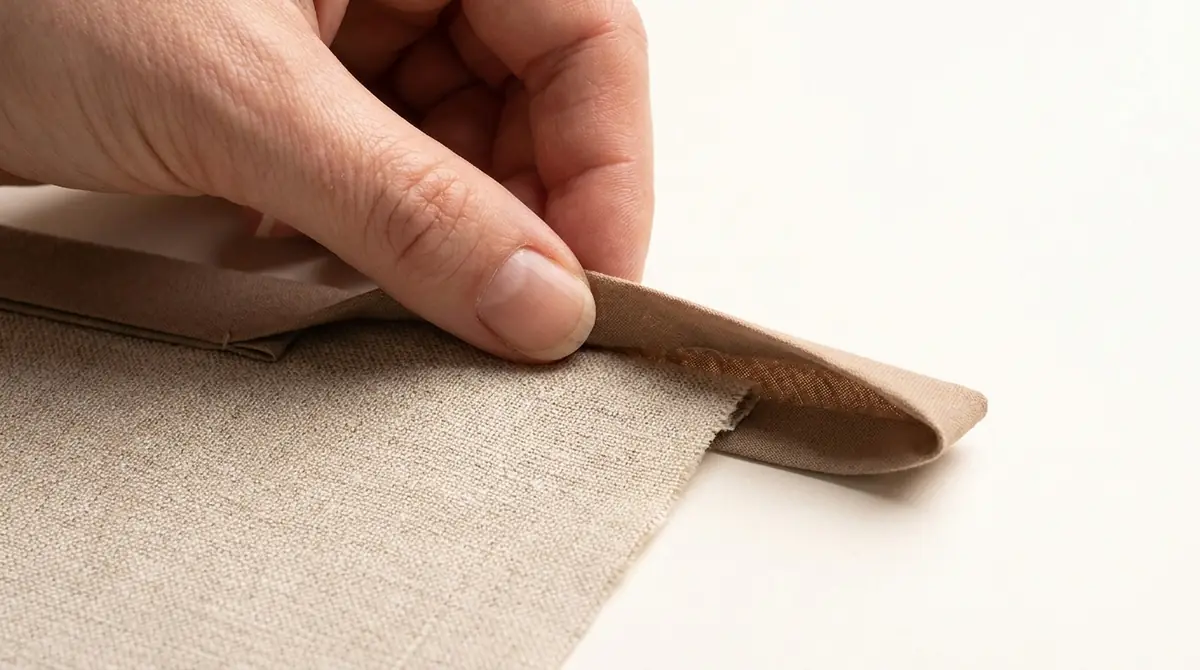
Bias tape is a strip of woven fabric cut at 45 degrees to the grain, then folded and pressed. Cutting on the bias is the whole point: it gives the strip a natural stretch that straight-grain tape doesn't have, so it wraps smoothly around curves — necklines, armholes, scalloped quilt edges — without wrinkling or fighting you.
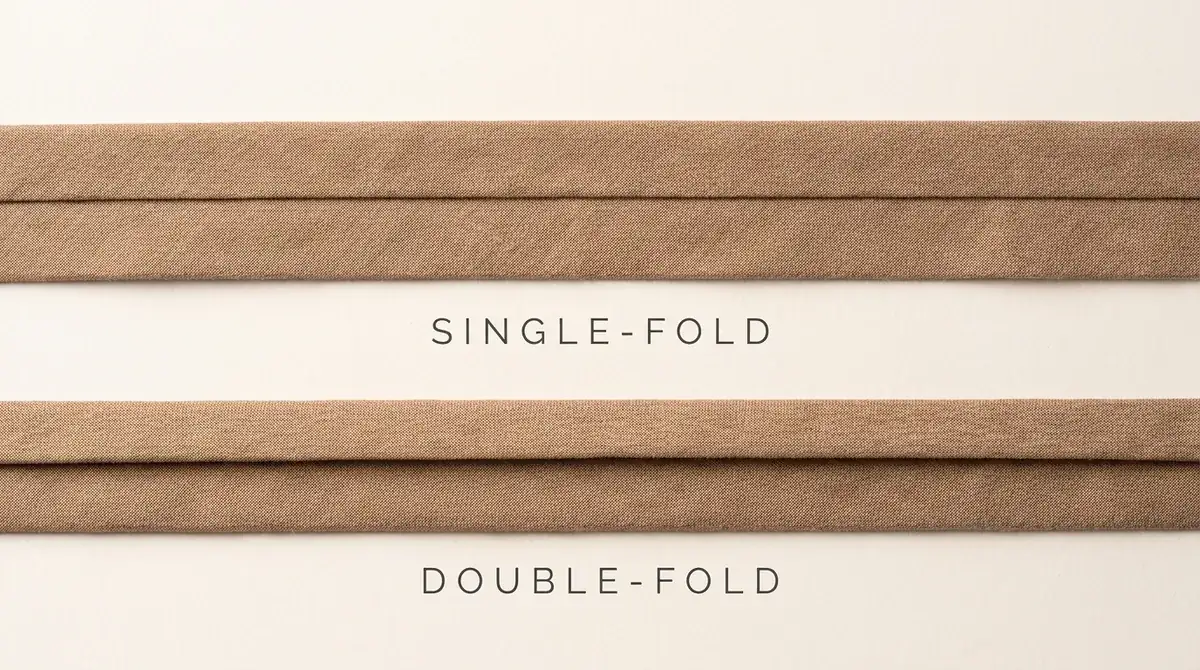
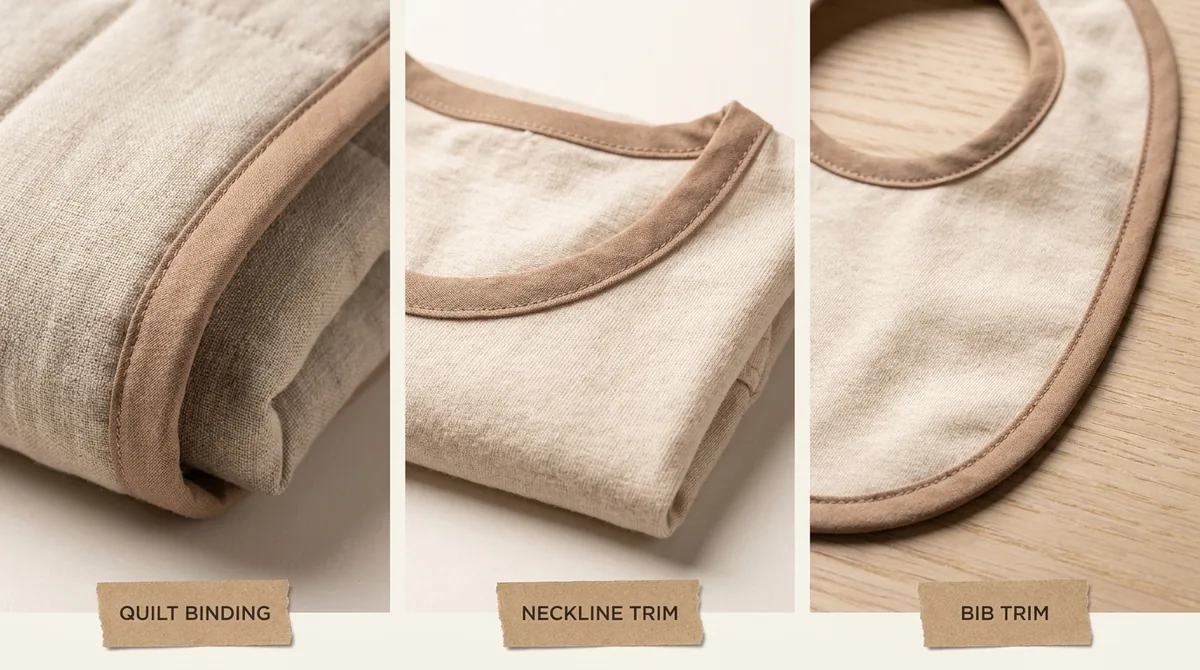
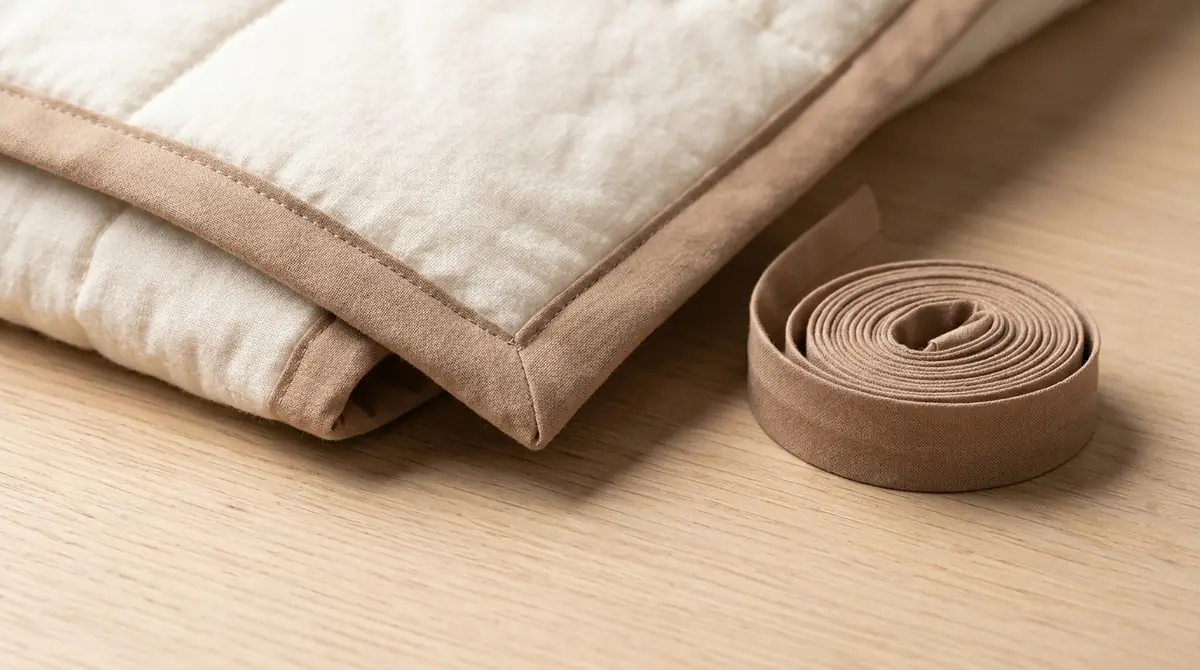
We supply the two standard constructions. Single-fold bias tape has both raw edges folded to the center, leaving the strip flat — used for facings, casings, and decorative trim where the tape sits on one side of the fabric. Double-fold bias tape is a single-fold strip folded again down the middle, so it wraps over a raw edge and binds it in one pass — the workhorse for quilt binding, apron edges, and bib trim.
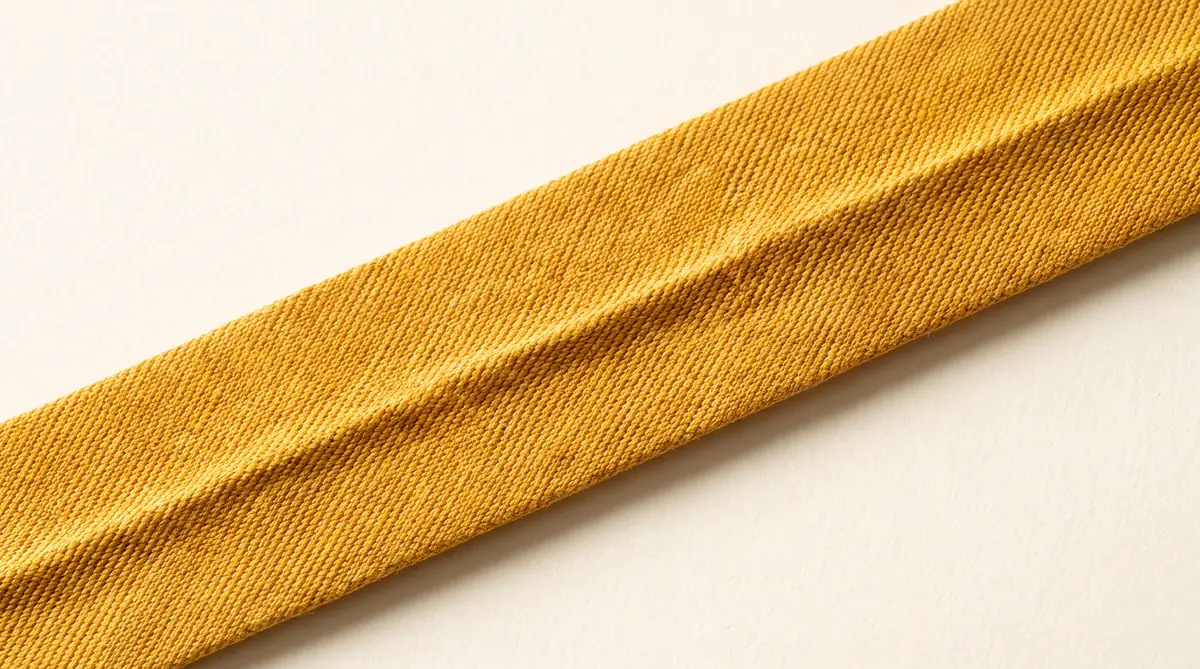
Fibre follows the shade. Natural, undyed and greige tape is cotton. Dyed shades are spun polyester, finished to look and feel like cotton, which is also what holds the color evenly roll after roll. At bulk volumes we make other fibres to your specification. Dyeing is in-house, so we match to your swatch or color reference and hold that shade batch to batch.
How Does Wholesale Buying Work From Our Factory?
Tell us the width, fold, material, and colors, and we quote against it.
MOQ of 1,000 meters (approx. 1,094 yards) per SKU, and a SKU is one shade in one width — a first order is one tape run through your own line; several shades ship together, each at its own 1,000 m
Custom shades dyed in-house against your swatch or color reference
Continuous rolls in export-grade packing: polybagged rolls, carton-packed for sea or air freight
Repeat orders run against your saved spec, so shade and fold stay consistent
Always check fold width and shade against a physical sample before committing to volume. Ask for sample lengths with your quote — approve first, then order bulk.
Dispatch and freight
Ex-works Jaipur — about 2 to 6 days by surface across India. Freight is to your account, by your transporter or ours. Export orders are quoted separately with air and sea options.
Bias Tape — Specifications
Material — natural/undyed
Cotton
Material — dyed shades
Spun polyester, finished to look and feel like cotton
Material — bulk orders
Other fibres made to buyer specification
Construction
Single-fold or double-fold, cut on true 45° bias
Widths
Cut to your finished width — specify in mm or inches (1/2" ≈ 12mm, 1" ≈ 25mm, 1-1/4" ≈ 32mm, 2" ≈ 50mm), from narrow trim to wide quilt binding
Colours
Dyed in-house; matched to your swatch or color reference
Put-up
Continuous rolls, polybagged and carton-packed for export
MOQ
1,000 m per SKU, shade and size
Customization
Width, fold, material, and shade made to order
Lead time
Quote within one working day; air 7-14 days, sea 25-40 days
Origin
Jaipur, India — dyeing and finishing in-house
Frequently asked questions
What is the minimum order for wholesale bias tape?
Our MOQ is 1,000 meters per SKU, and a SKU is one shade in one width — a different shade or a different width carries its own 1,000 m. So a first order is one tape, checked for fold quality against your own line before you commit to a season. Several shades can ship together; each counts 1,000 m.
What is the wholesale price of bias tape?
We quote bias tape against your spec rather than from a published band — fold style, width and shade move the number too much for one figure to be honest. Send single-fold or double-fold, the cut width and a shade reference, and you will have a price within one working day, ex-works Jaipur.
Do you sell bias tape by the yard, and what does the 1,000 m minimum work out to?
We quote and ship in metres and will put the yardage on the order alongside it. The 1,000 m minimum works out to roughly 1,094 yards, and it applies per color and per width — so a minimum order is 1,094 yards of one width in one shade, not 1,094 yards split across a range.
Can you dye bias tape to match our brand colors?
Yes. Dyeing happens in-house at our Jaipur factory, so we match shades against your physical swatch or color reference and hold that shade on every reorder. Dyed shades run in spun polyester finished to look and feel like cotton; natural undyed tape is cotton. Custom colors are available from the 1,000 meter MOQ upward.
Do you provide samples before a bulk order?
Yes — ask for sample lengths when you request your quote. We recommend approving fold width, hand feel, and shade on a physical sample before committing to volume, especially for visible bindings like quilt edges and apron trim.
How long does production and shipping take to the USA?
Quotes are answered within one working day, and production time depends on quantity and the number of custom shades. Shipping from India to the US runs 7-14 days by air courier or 25-40 days by sea.
What's the difference between single-fold and double-fold bias tape?
Single-fold tape has both edges folded to the center and lies flat — used for facings, casings, and surface trim. Double-fold tape is folded again down the middle so it wraps over and binds a raw edge in one pass, which makes it the standard for quilt binding and edge finishing. We make both.