Home › Ribbons & Tapes › Cotton Tape and Twill Tape — Dyed to Shade, Cut and Spooled to Your Spec
Cotton Tape and Twill Tape — Dyed to Shade, Cut and Spooled to Your Spec
✓ Specs last checked: 2026-09-02
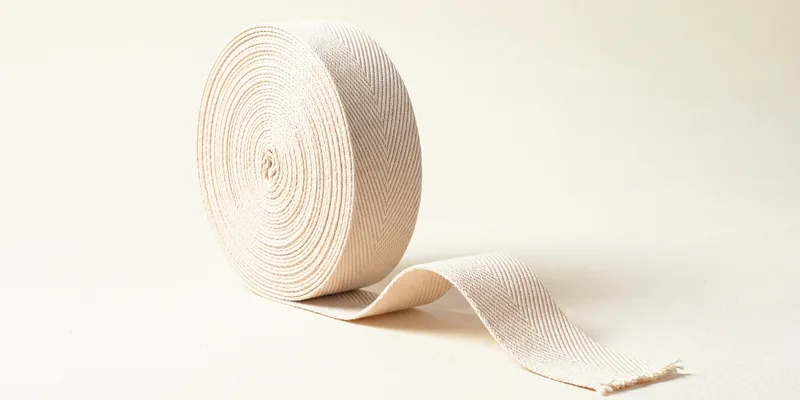
We supply cotton twill tape in bulk from Jaipur, India. The tape itself is woven on narrow-fabric needle looms in our cluster; everything after the greige roll — shade dyeing, cutting to width and length, spool winding and end tipping — happens in our own plant, which is where the quality and the colour consistency are actually decided. Natural undyed tape is cotton; dyed shades run in spun polyester finished to look and feel like cotton. MOQ is 1,000 meters (approx. 1,094 yards) per SKU — one shade in one width, so each further shade or width carries its own 1,000 m — and every quote is answered within one working day.
We don't run needle looms — greige twill tape comes to us from weavers in the same Jaipur cluster. What we do is dye it to your shade, cut it to width and length, wind it onto spools and tip the ends where the job calls for it. Since 1991 that finishing work has been our trade.
What Do We Actually Do to the Tape?
Our work starts the moment the undyed greige roll reaches us.
Dyeing to shade — greige tape dyed in our own dye house against your physical swatch or colour reference, with the recipe held for reorders
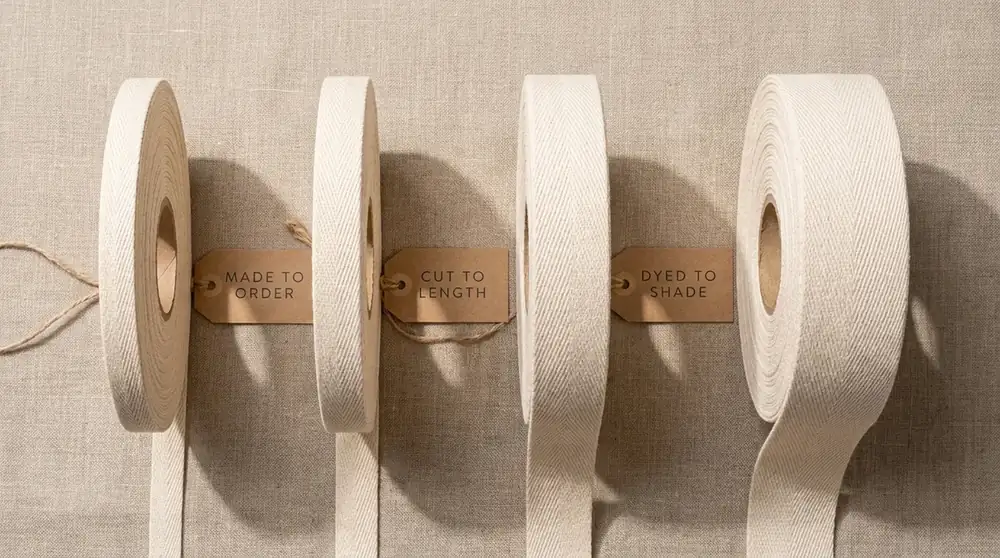
Cutting to width and length — rolls broken down to the width and cut length your line runs, rather than whatever the standard roll happens to be
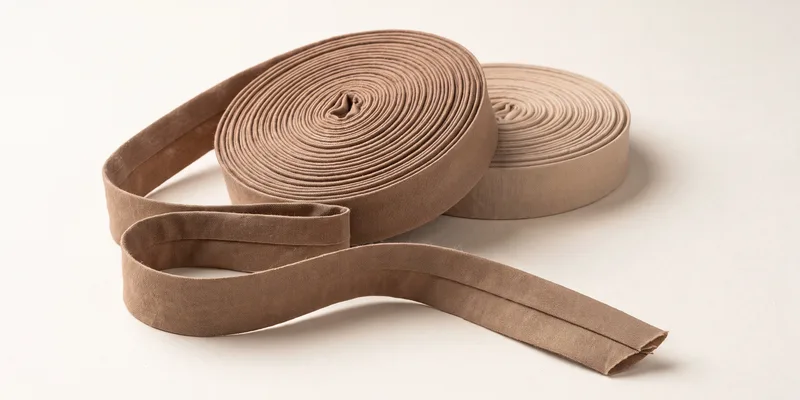
Spool winding — wound onto spools or cones in the put-up your machines feed from
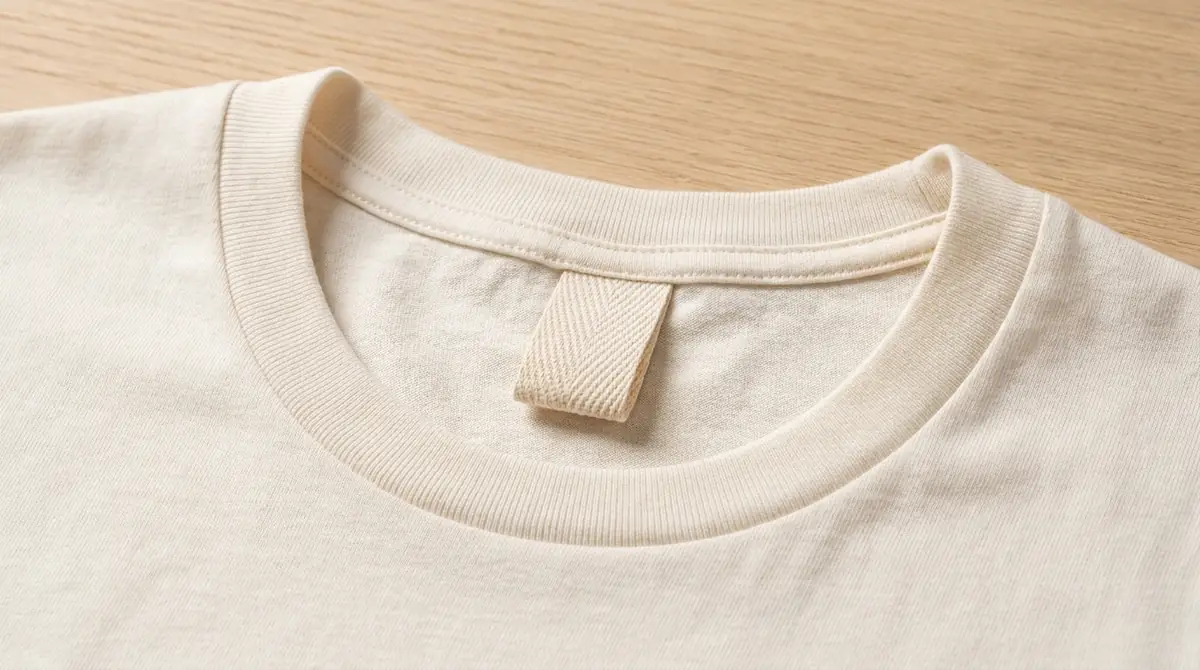
Tipping — heat or metal tipping on cut lengths used as drawcords, hang tabs or pull loops, so the end doesn't fray in the bag
Fibre follows the shade. Natural, undyed and greige tape is cotton. Dyed shades are spun polyester, finished to look and feel like cotton, which is also what gives them higher tensile strength and lower shrinkage after wash. At bulk volumes we make other fibres to your specification.
How Does Wholesale Buying Work From Our Factory?
You send the width, the fibre, the colours and the put-up you need; we quote within one working day. Because the dyeing and finishing are ours rather than subcontracted, we can commit to a shade and repeat it.
MOQ of 1,000 meters (approx. 1,094 yards) per SKU — one shade in one width, so a first order is a single tape proven on your own line; several shades or widths in one shipment is fine and costs the minimum for each
Custom shades dyed in-house against your swatch; the recipe is saved against your account for reorders
Continuous rolls, spools or pre-cut lengths, polybagged and carton-packed for sea or air freight
Repeat orders run against your saved spec, so width, shade and put-up don't drift between shipments
Always wash-test an approved sample before you commit volume. Twill tape sewn into a garment must shrink at a similar rate to the shell fabric — approve on a laundered sample, not a dry one.
Dispatch and freight
Ex-works Jaipur — about 2 to 6 days by surface across India. Freight is to your account, by your transporter or ours. Export orders are quoted separately with air and sea options.
Cotton Tape and Twill Tape — Specifications
Material — natural/undyed
Cotton
Material — dyed shades
Spun polyester, finished to look and feel like cotton
Material — bulk orders
Other fibres made to buyer specification
Construction
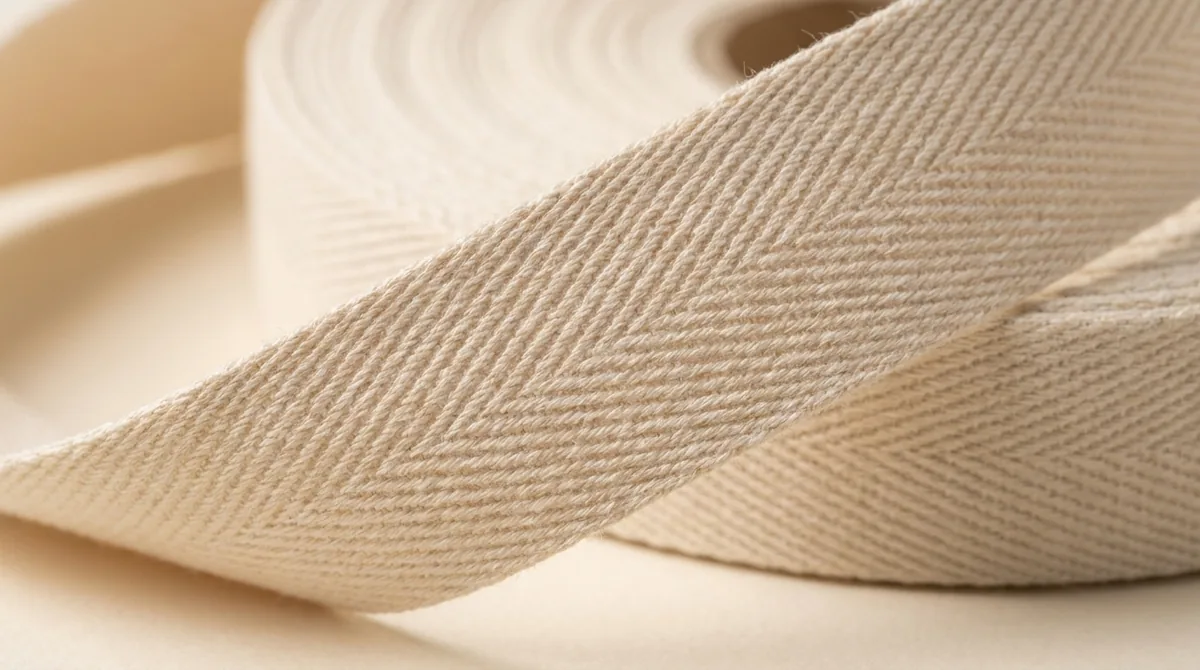
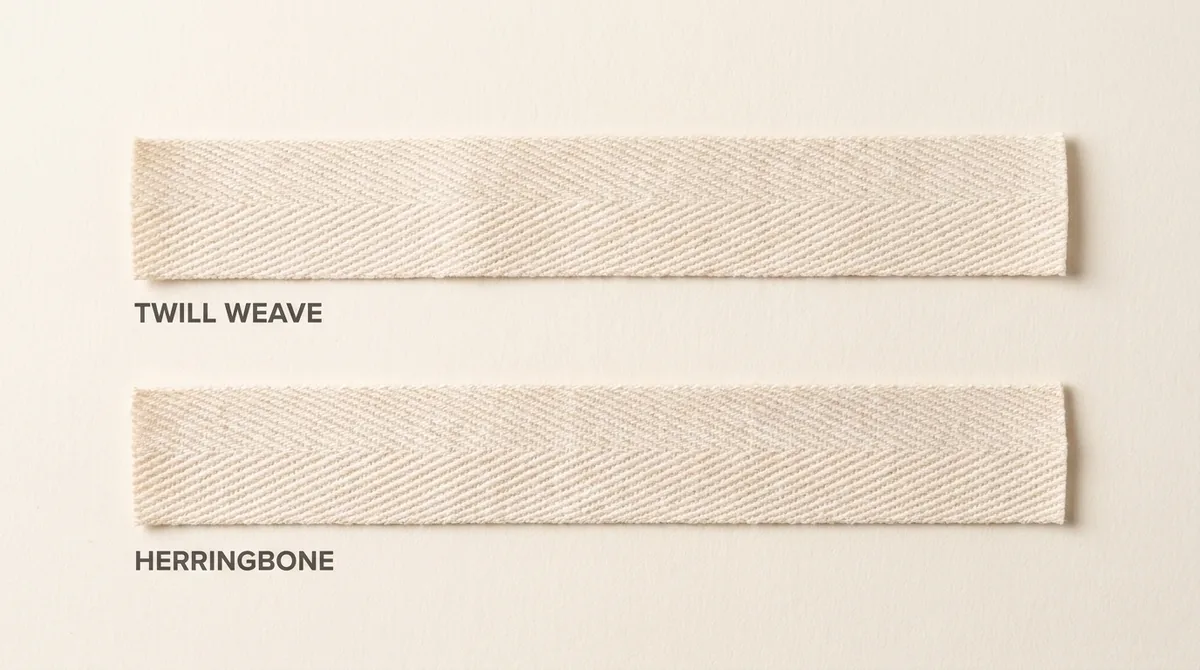
Twill-weave narrow fabric with diagonal rib; woven on needle looms in our Jaipur cluster
Our processing
Shade dyeing, cutting to width and length, spool winding, end tipping
Widths
Cut to the width your line runs — specify in mm or inches (1/2" ≈ 12mm, 1" ≈ 25mm, 1-1/4" ≈ 32mm, 2" ≈ 50mm), from narrow tape through wide binding widths
Colours
Dyed in-house to your swatch or colour reference; recipe held for reorders
Put-up
Continuous rolls, spools, or pre-cut and tipped lengths; polybagged and carton-packed for export
MOQ
1,000 m per SKU, shade and size
Customization
Width, cut length, shade, spool put-up and tipped ends made to order
Lead time
Quote within one working day; air 7-14 days, sea 25-40 days
Origin
Jaipur, India — dyeing, cutting, winding and tipping in-house
Frequently asked questions
Do you weave the twill tape yourselves?
No, and we'd rather be straight about it. Twill tape is woven on narrow-fabric needle looms, and we don't run those. We buy greige tape from weavers in our own Jaipur cluster and do the dyeing, cutting, spool winding and tipping ourselves. That's the half of the process that determines shade consistency and finish, and it's the half we can guarantee.
What is the minimum order for wholesale twill tape?
1,000 meters (approx. 1,094 yards) per SKU, where a SKU is one shade in one width — a second shade or a second width carries its own 1,000 m. What that buys a buyer is a single tape run through a production sample first, with season volume committed only once the spec is proven. Several shades in one shipment is fine; each is quoted at the minimum.
What does cotton tape cost per metre?
₹3-8 per metre ex-works Jaipur. Width sets the base — 12 mm at the floor, 25 mm-plus toward the top — and herringbone weave prices level with plain twill. Dyed-to-shade runs above natural, one dye lot per shade.
Can you dye twill tape to match our brand colour?
Yes. Dyeing is done in our own dye house in Jaipur against your physical swatch or colour reference, and the recipe is saved against your account so reorders match the first shipment. Dyed shades run in spun polyester finished to look and feel like cotton; natural undyed tape is cotton. Custom shades are available from the 1,000 meter MOQ upward.
Can you supply cut lengths with tipped ends instead of rolls?
Yes. We cut to your specified length and tip the ends so they don't fray — useful for drawcords, hang tabs, pull loops and retail-packed craft lengths. Tell us the cut length and quantity per pack and we'll quote the finished put-up rather than the roll.
Will the tape shrink differently from my shell fabric?
It can, which is why we recommend testing before volume. Natural undyed cotton tape has some residual shrinkage; the spun polyester we use for dyed shades moves less. Ask for sample lengths with your quote, launder them alongside your shell fabric, and approve on the washed result. Once you approve a construction we hold it on repeat orders.
Is this sooti tape / niwar tape for garments and bags?
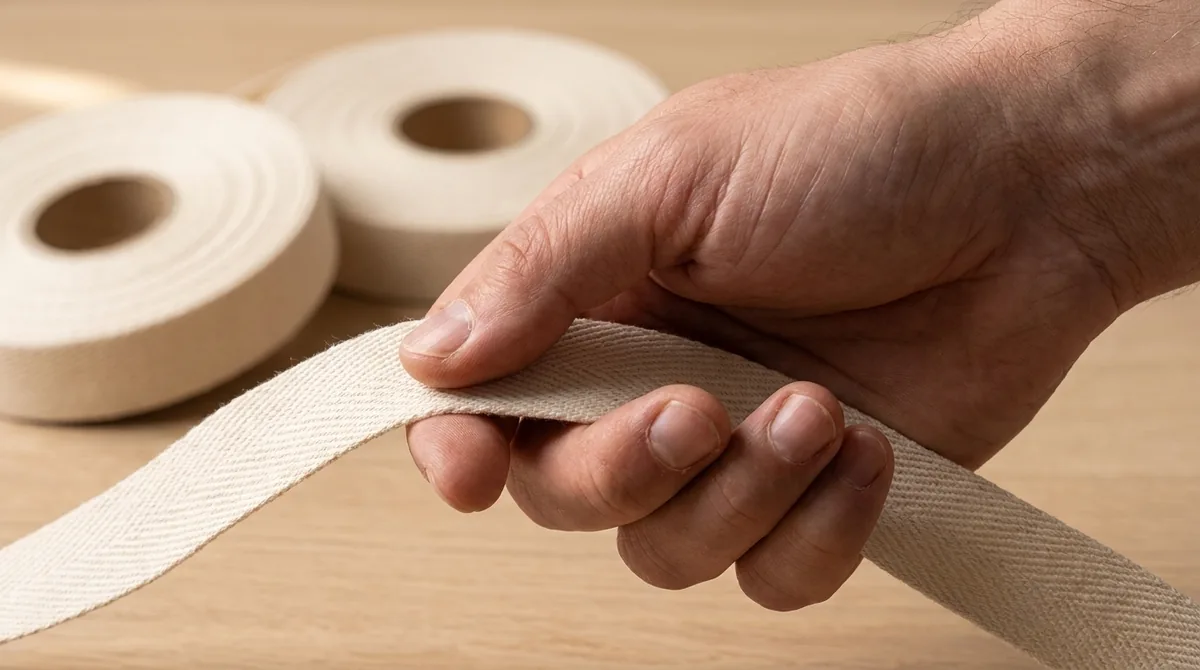
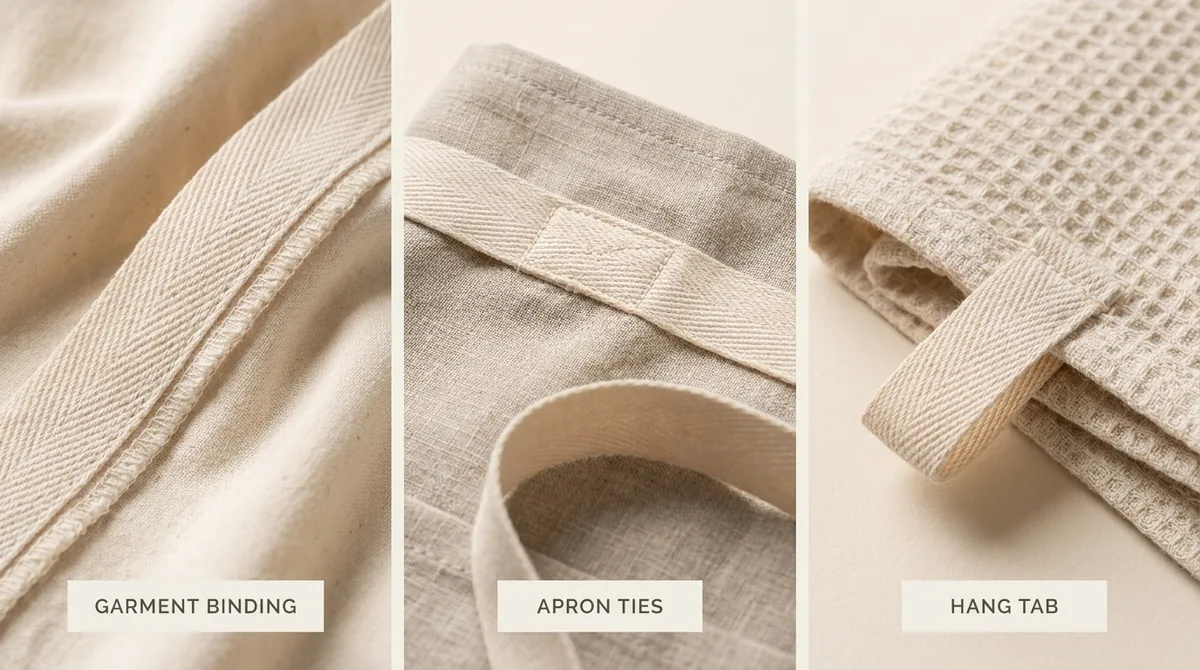
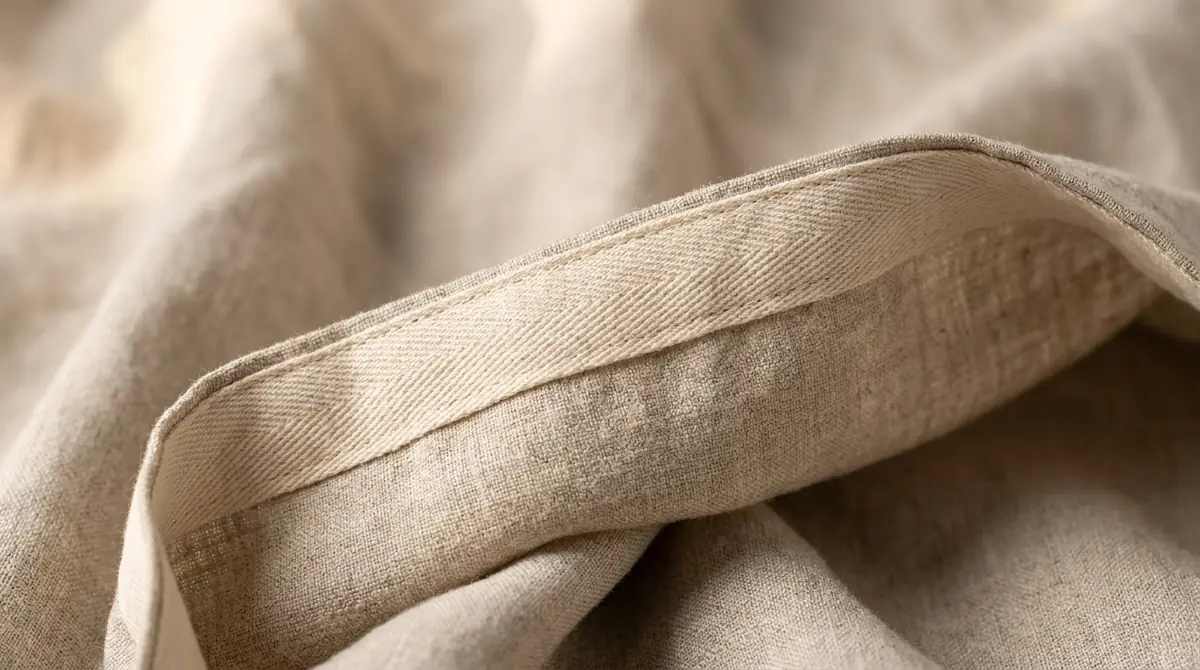
Sooti tape and light niwar tape both point to this cotton twill tape — the flat woven cotton tape used for garment binding, bag straps and apron ties, cut to the width your line runs and dyed to your shade in-house. Minimum is 1,000 metres per SKU, quoted within one working day.