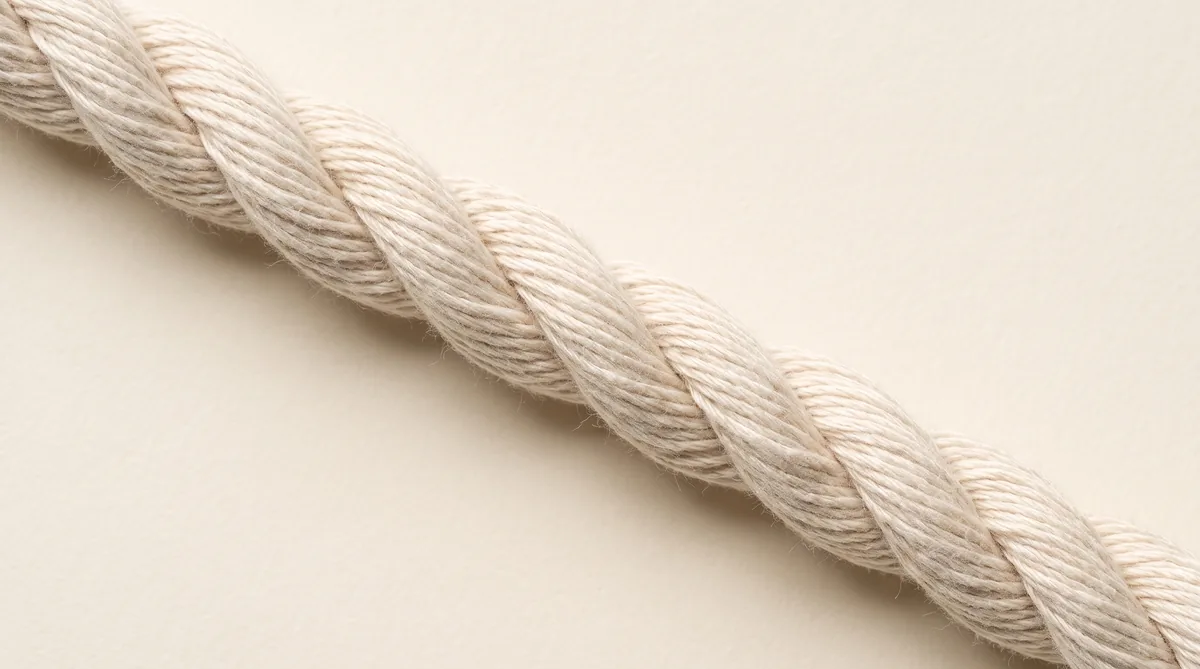
"Is it cotton?" is the most loaded question in this trade, because the honest answer is usually "which version?" We twist and braid both fibres in Jaipur, so this comparison is not a sales pitch for either — it is the reasoning we walk buyers through every week, written down once.
Where cotton wins
Hand and look. Cotton's matte, soft, slightly irregular surface is the natural aesthetic that macrame, craft and premium packaging buyers want. Polyester can be finished to come close — ours is spun and finished matte specifically for that — but undyed cotton is the reference the imitation is measured against.
End of life. Cotton biodegrades; polyester does not. For brands whose customers compost or who market natural-fibre products, this is the deciding line, and it is a fair one.
Knot behaviour. Cotton grips itself — knots bed in and stay put, which matters for wall hangings and hand-tied packaging.
Where polyester wins
Dyed colour that stays. This is the big one, and the reason for our fibre rule. Dyed cotton fades in sunlight and bleeds in enthusiastic washing; dyed spun polyester holds its shade through industrial laundering and UV far better. A dyed cord that leaves colour on a customer's wall or garment comes back as a return, and no discount survives that.
Water and rot. Cotton drinks up water and, kept damp, will mildew and rot; left outdoors it weathers and breaks down over seasons. (Counter-intuitively the cotton fibre is actually a little stronger while wet — but that does nothing for a cord that stays damp, mildews or lives outside.) Polyester is largely indifferent to water. Outdoor and bathroom applications lean polyester for this alone.
Abrasion and drawstrings. A cord that runs through a channel or grommet thousands of times lasts longer in polyester.
The comparison in one table
| Property | Cotton | Spun polyester |
|---|---|---|
| Hand / look | Natural matte reference | Very close when spun + finished matte |
| Dyed colour-fastness | Fades and can bleed | Holds shade through laundering and sun |
| Wet behaviour | Absorbs water; mildews and rots if kept damp | Largely unaffected |
| Abrasion life | Moderate | Higher |
| Biodegradable | Yes | No |
| Knot grip | Excellent | Good |
Our rule, and how to order around it
Across our cotton family — macrame cord, cotton rope, drawstring cord, cotton yarn and more — the published rule is: natural and undyed means cotton; dyed shades run in spun polyester finished to the cotton hand. It exists because we would rather explain fibre honestly at the quote than argue about a faded cord six months later.
Need dyed cotton anyway — for a compostable line, say, where some fading is acceptable? Say so in the enquiry. At bulk volumes lines run to specification, the fibre is stated plainly on the quote, and the colour-fastness trade-off is yours to make with open eyes rather than discovered by your customers.
Frequently asked questions
Why is dyed cord usually polyester instead of cotton?
Colour-fastness. Dyed cotton fades in sunlight and can bleed in washing; dyed spun polyester holds its shade through industrial laundering and UV exposure. A cord that transfers colour becomes a product return, so our dyed shades run in spun polyester finished matte to keep the cotton look and feel — and the fibre is always stated on the quote.
Does polyester cord feel different from cotton?
Ordinary filament polyester does — it is shinier and slicker. Spun polyester finished matte, which is what we run, comes very close to cotton's hand; most buyers cannot pick the difference without a side-by-side. Ask for samples of both and judge in your own hands before committing a collection.
Which is better for outdoor use, cotton or polyester?
Polyester, without much contest — it keeps its strength when wet, resists mildew and holds dyed colour in sunlight. Cotton outdoors weathers to grey and weakens over seasons, which some rustic looks actually want; if that is the aesthetic, use natural undyed cotton and treat the weathering as the finish.
Can I get pure dyed cotton cord if my brand requires it?
At bulk volumes, yes — lines run to specification and the quote states the fibre plainly. We will also state the honest caveat on the same quote: dyed cotton will not match polyester's colour-fastness, so plan shades and wash instructions accordingly.