People searching for macrame thread and people searching for macrame cord are usually looking at the same spool. So are the ones typing macrame yarn or macrame rope. Four names, one product family — and none of the four tells you the thing that actually decides how your piece turns out.
Two things decide that: how thick the cord is, and how it is built. Get those right and the name does not matter. Get them wrong and no amount of technique rescues the piece. We twist, braid and dye this cord at our own factory in Jaipur, so what follows is the way we spec it for buyers, not the way a listing describes it.
What is macrame thread?
Macrame thread is a twisted or braided craft cord, usually between 1.5mm and 10mm thick, used for knotting rather than sewing or weaving. It is not thread in the sewing sense — nobody puts it through a needle. The word survives in Indian usage because the trade grew out of the yarn and thread business, and the name stuck.
On our floor the fibre line is simple: the natural, undyed cord is cotton. Every dyed shade, and bleached white, is spun polyester finished to look and feel like cotton — matte surface, soft hand, no synthetic sheen. At bulk volumes other fibres run to a buyer's specification.
Macrame thread vs cord vs yarn vs rope
These are naming conventions, not product categories, and they shift by region and by seller.
- Macrame thread — the common Indian term, used across all thicknesses.
- Macrame cord — the international trade word. If you are reading an English pattern, this is what it will say.
- Macrame yarn — usually implies a softer, loosely spun cord, often sold in cakes rather than on spools.
- Macrame rope — tends to mean the thicker end, 5mm and up, and almost always three-ply twisted.
If a seller uses one word and your pattern uses another, ignore both and compare the two numbers that matter: diameter in millimetres, and construction.
Macrame thread in Hindi: what to ask for at the shop
Macrame thread ko Hindi mein kya kehte hain? At a local shop, ask for dori — the everyday Hindi word for cord. Thicker sizes may be called rassi. Neither word distinguishes construction, so bring the millimetre figure with you, or bring a 30cm sample of what you already use. In most Jaipur and Delhi trim markets the shopkeeper will know exactly what you mean from the sample and nothing from the name.
Types of macrame thread: single strand, three-ply and braided
This is the section that changes results, and it is the one most listings skip.
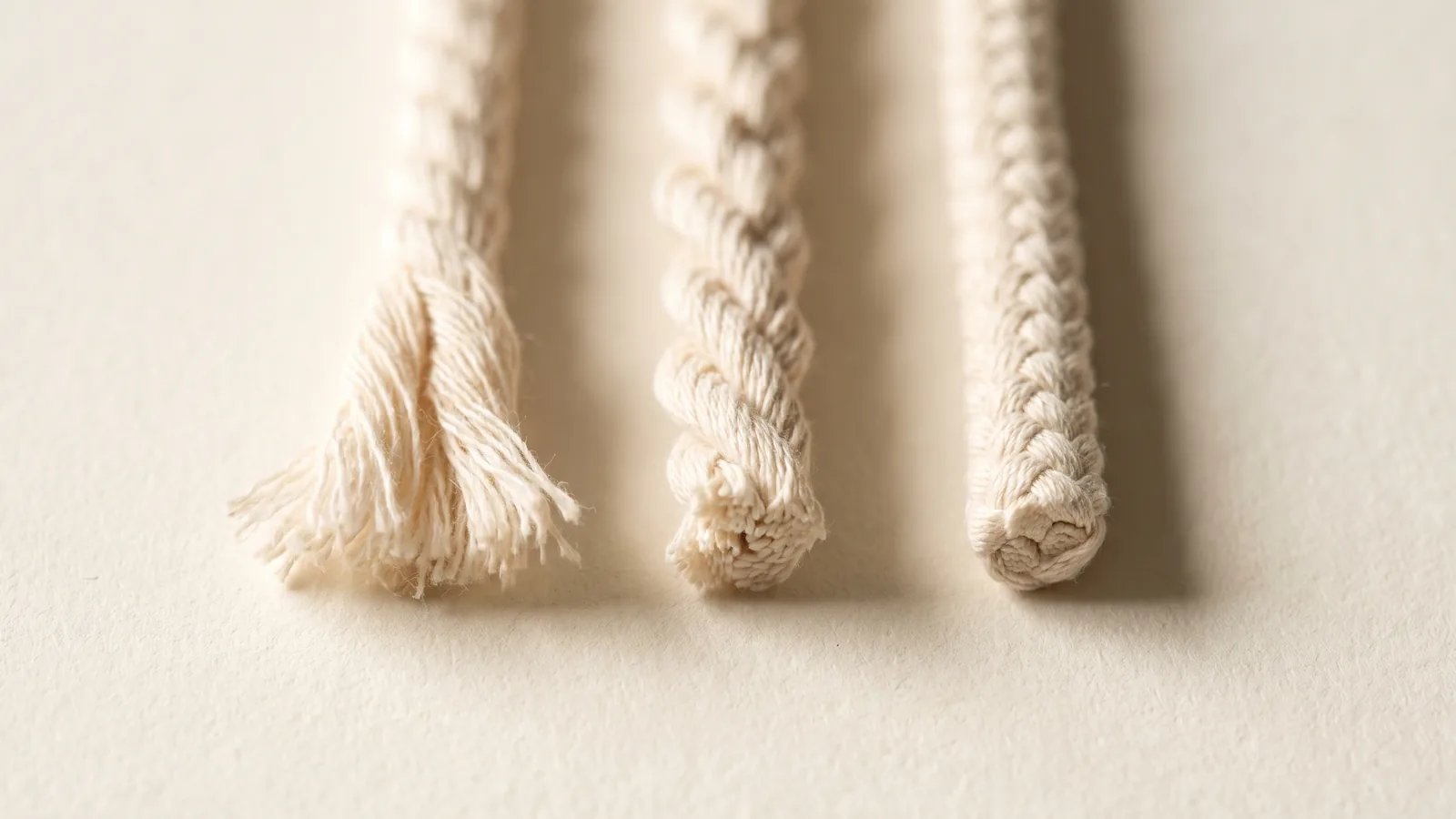
Single strand is one bundle of fibres with a light twist. Comb it and it opens into soft fringe, which is exactly why feather wall hangings and tassels use it. Put a filled plant pot on it and it creeps and sags. Do not use it for anything load-bearing.
Three-ply twisted is three strands twisted together. It holds a knot under load, keeps that classic ropey texture, and it is what we run most of. If a pattern does not specify, this is the safe choice.
Braided is woven around itself, so it will not unravel even when cut. That makes it right for bag handles, straps, and anything that takes abrasion — but it does not brush out, so it is wrong wherever you want fringe.
Macrame thread size guide: which thickness for which project
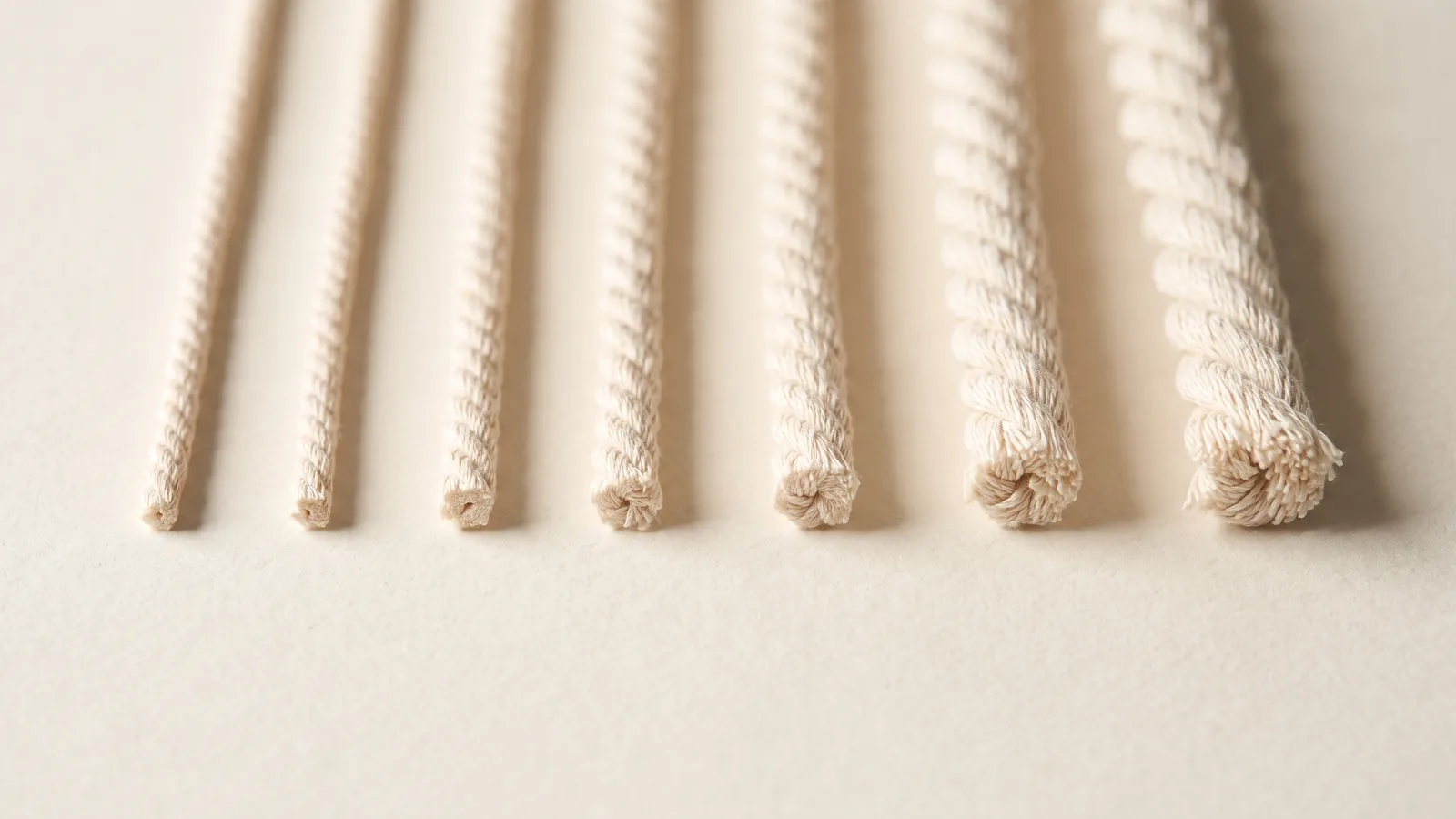
Thickness is where most first orders go wrong. The table below is the ladder we actually run.
| Thickness | Best for | Notes |
|---|---|---|
| 1.5-2mm | Jewellery, keychains, micro-macrame | Thin macrame thread; fiddly by hand but holds fine detail |
| 3mm | Wall hangings, plant hangers | The workhorse. If you buy one size, buy this |
| 4-5mm | Larger wall pieces, bag straps | Knots read clearly from across a room |
| 6-8mm | Statement pieces, chunky decor | Eats length fast — measure twice before ordering |
| 10mm | Rugs, oversized wall art | Heavy; check your rail or dowel can carry it |
Two things worth knowing before you order. Thicker cord consumes length far faster than the diameter suggests, because knot volume rises with the cube of the thickness — a 6mm piece can use three or four times the cord of the same design in 3mm. And cord is priced by weight in the Indian trade, so a thicker cord costs more per metre even at the same rate per kilogram.
Macrame cord for plant hangers
Plant hangers are the single most common first project, and the most common place to get the construction wrong.
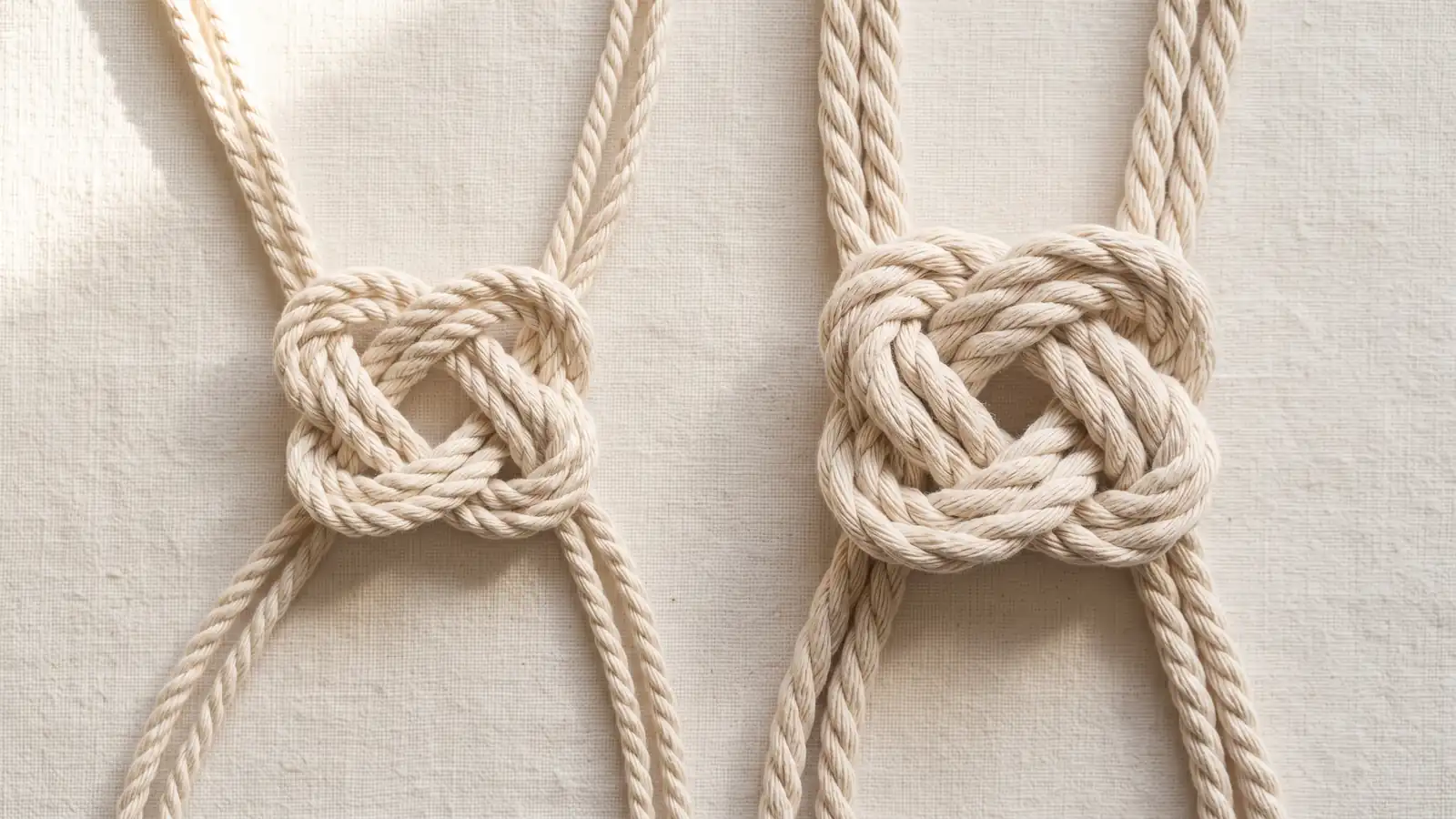
Use 3mm or 4mm three-ply twisted. It holds the knot under a filled pot, and the balanced twist stops the hanger spiralling as the pot settles. Step up to 5-6mm only for heavy ceramic pots. Single strand is the wrong choice here regardless of thickness — it will creep under sustained load and the pot will slowly drop.
What else macrame thread is used for
Beyond wall hangings and plant hangers, the same cord runs into bag handles and straps, curtain tie-backs, table runners and placemats, keychains and jewellery, wedding and event backdrops, and pet accessories. Retailers and craft brands buy it by the kilogram and cut to their own put-up; individual makers buy it by the metre.
What does macrame thread cost?
In India this is priced by weight, not by length, because the same kilogram gives very different metreage at different thicknesses. When you compare two quotes, check three things: the rate, the diameter, and whether the price is per kilogram or per metre. A cheaper rate on a heavier cord is not cheaper.
For current factory rates and minimum order quantities, see our macrame cord page, which lists sizes, shades and the buying terms. If you are sourcing at volume and want to be quoted the same thing by every supplier you approach, our guide on how to specify a cord covers the six lines a quote request needs. Buyers importing from India should read how to buy macrame cord wholesale from India first.
Before you order
Three habits that save money. Order a sample card before a bulk lot — the hand of a cord is easier to feel than to read about. Buy one shade in one construction and knot a small test piece before committing to a colour story. And if colour consistency matters across a season, order the whole season in one lot: dye batches match within a lot far more reliably than across lots, whoever you buy from.
Frequently asked questions
Is macrame thread the same as macrame cord?
Yes. Macrame thread, macrame cord, macrame yarn and macrame rope all describe the same family of twisted or braided craft cord. "Thread" is the common Indian term and "cord" is the international trade word. Ignore the name and compare diameter in millimetres and construction — single strand, three-ply twisted, or braided.
What is the best thickness of macrame thread for beginners?
3mm three-ply twisted. It is thick enough that the knots read clearly while you learn them, thin enough to handle comfortably, and it covers the two most common first projects — wall hangings and plant hangers. If you buy only one size to start with, buy this one.
Macrame thread ko Hindi mein kya kehte hain?
Dori is the everyday Hindi word for cord and is what most shops will understand. Thicker sizes are sometimes called rassi. Neither word tells the shopkeeper the construction, so carry the millimetre size or a 30cm sample of what you already use.
Is macrame thread cotton?
It depends which one you order. Our natural, undyed cord is cotton — it needs no dyeing, so cotton is what we run. Every dyed shade, and bleached white, is spun polyester finished to look and feel like cotton: matte surface, soft hand, no synthetic sheen. Polyester takes a level shade and repeats it batch to batch, which is why the coloured stock runs in it. At bulk volumes other fibres are made to specification.
What is the difference between single strand and 3 ply macrame cord?
Single strand is one lightly twisted bundle that brushes out into soft fringe, which suits feathers and tassels but creeps under load. Three-ply is three strands twisted together; it holds a knot under weight and keeps the classic ropey texture. For anything load-bearing, including plant hangers, use three-ply.
How much macrame thread do I need for a plant hanger?
As a rough guide, a standard four-strand plant hanger in 3mm uses about 25 to 30 metres. Thicker cord consumes far more than the diameter suggests — the same design in 6mm can take three to four times the length, because knot volume rises with the cube of the thickness. Measure your design in the thickness you will actually use.