Home › Cords & Ropes › Cotton Dori & Drawcord — Braided, Dyed and Tipped In-House
Cotton Dori & Drawcord — Braided, Dyed and Tipped In-House
✓ Specs last checked: 2026-09-02
We braid and twist drawstring cord at our own factory in Jaipur, dye it to your shade, cut it to garment length and finish the ends with metal or heat tips on our in-house aglet machines. Natural undyed drawcord is cotton; every dyed shade is spun polyester finished to look and feel like cotton. Drawcord is made start to finish under one roof, with trial orders accepted from 1,000 meters (about 1,094 yd). We ship worldwide and answer quotes within one working day.
We've run cordage machines in Jaipur since 1991. Braiders, twisters, our own dye house and cord-tipping machines all sit in the same building, so a hoodie drawcord is braided, shade-matched, cut to length and tipped without ever leaving our floor.
What is drawstring cord made of, and how is it constructed?
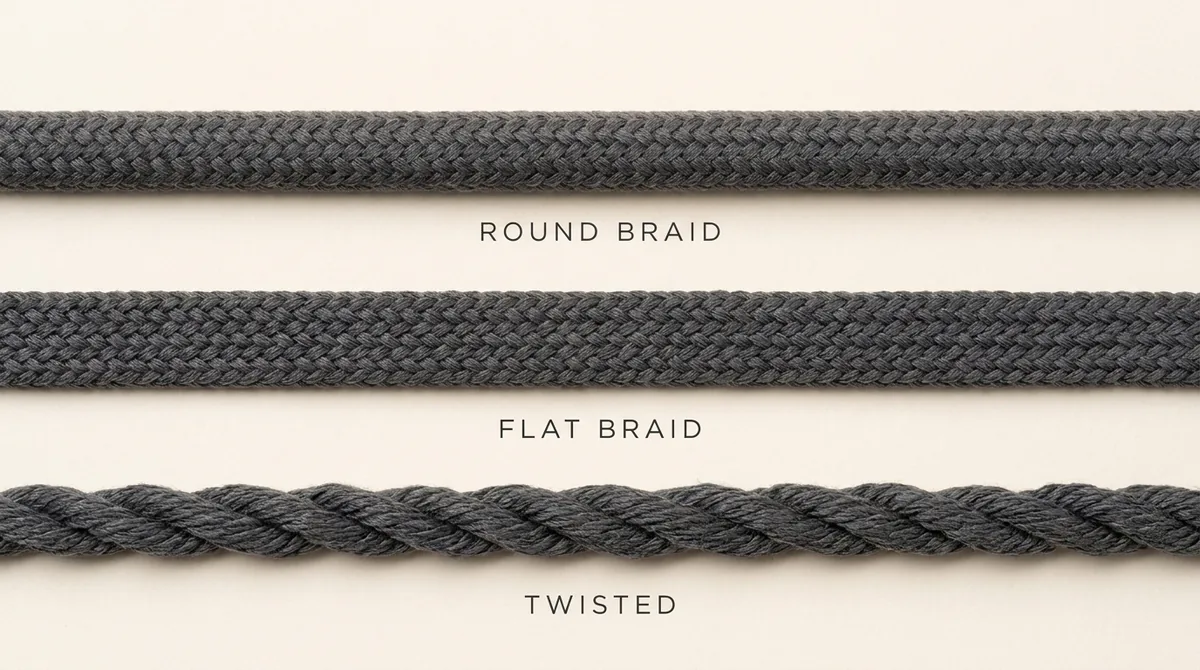
Drawstring cord is made two ways, and the difference is visible on the shelf:
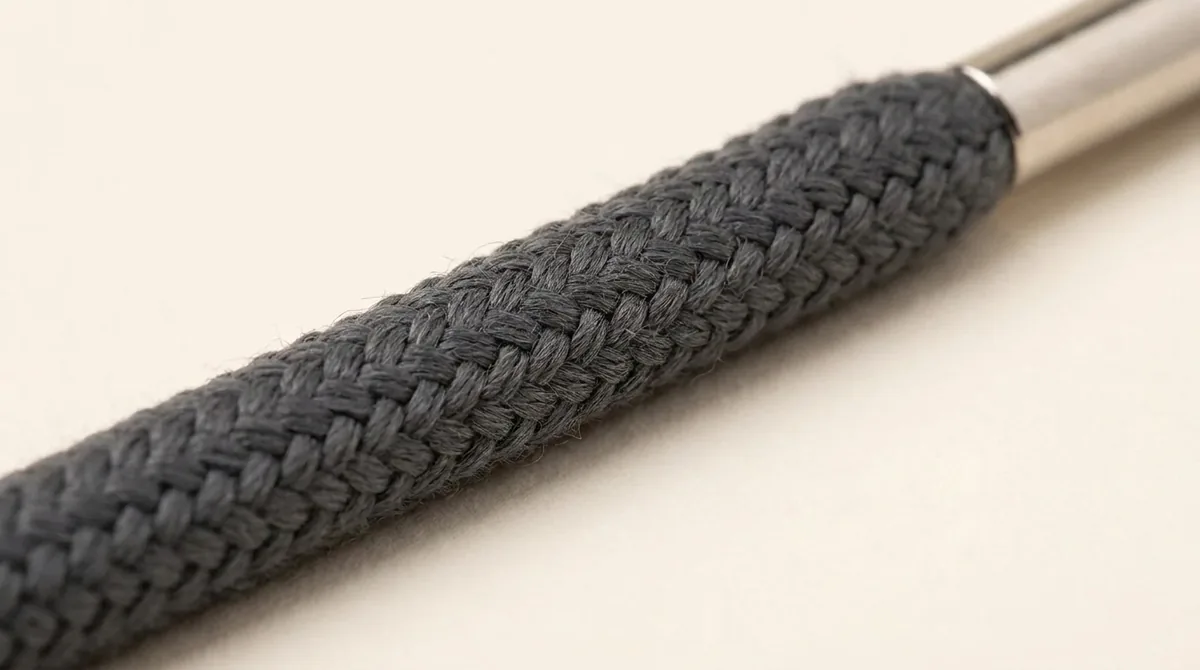
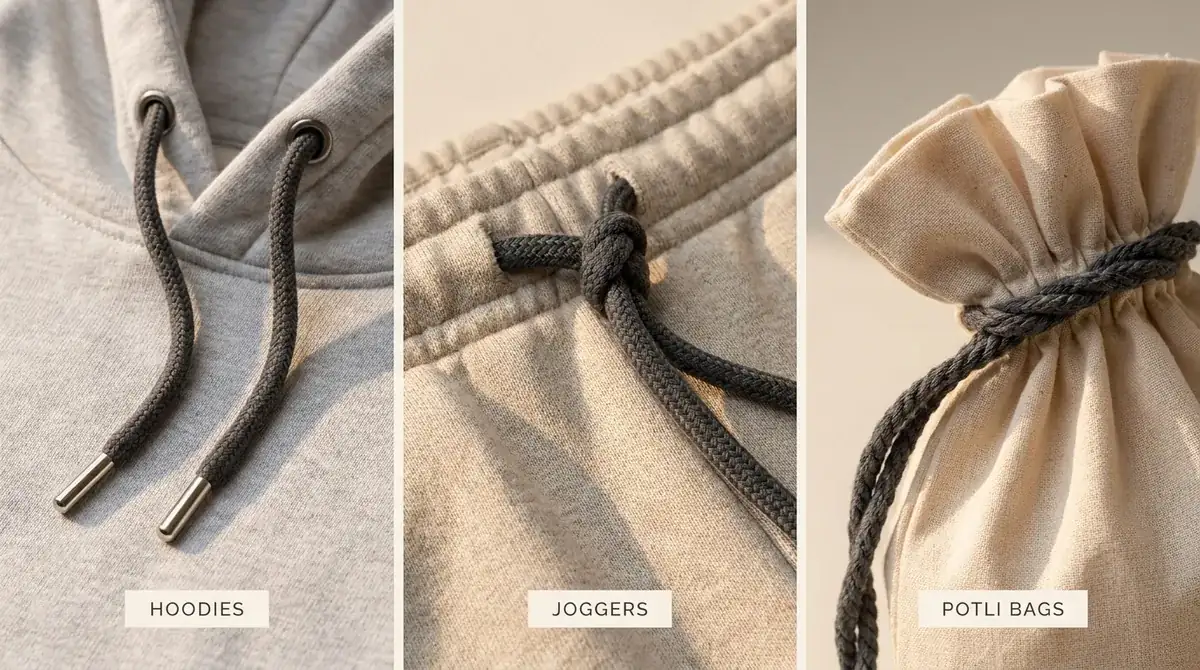
Braided cord — yarns interlaced in a tubular or flat braid on our braiding machines. Braided cord is round, smooth, resists untwisting and slides easily through eyelets. This is the standard for hoodies, joggers, shorts and swimwear.
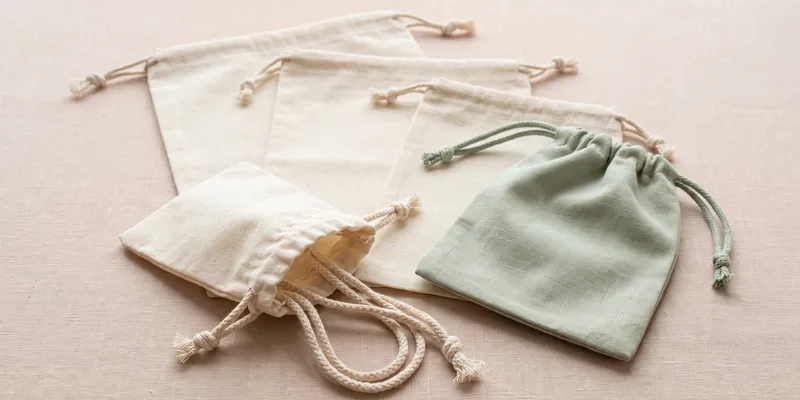
Twisted cord — yarns plied together on the twisters. It has visible spiral texture and a softer hand, and suits gift bags, home textiles, drawstring pouches and heritage-look apparel.
Natural and undyed drawcord is cotton — soft against skin, matte, and suited to natural-fibre garments; specify pre-shrunk if the finished garment will be washed hot. Every dyed shade is spun polyester, finished to look and feel like cotton: it holds colour, resists abrasion at the eyelet and does not relax after laundering. At bulk volumes other fibres can be made to your specification.
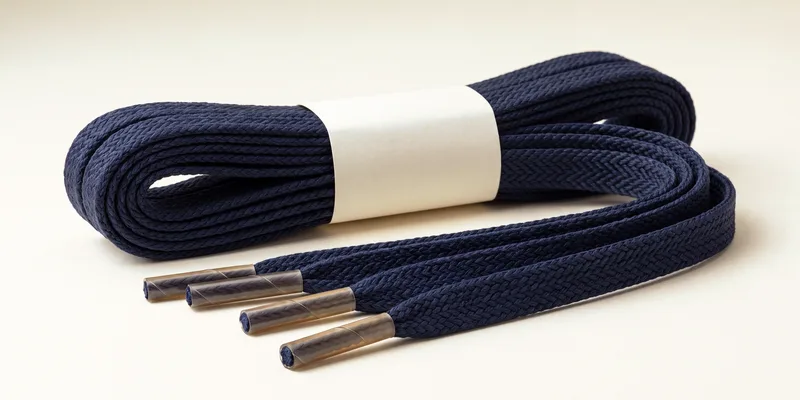
Flat drawstring cord — a flat braid rather than a round one — lies flat inside the casing, does not roll, and is easier to grip. Worth considering for heavyweight hoodies and drawstring bags.
How does buying drawstring cord wholesale actually work?
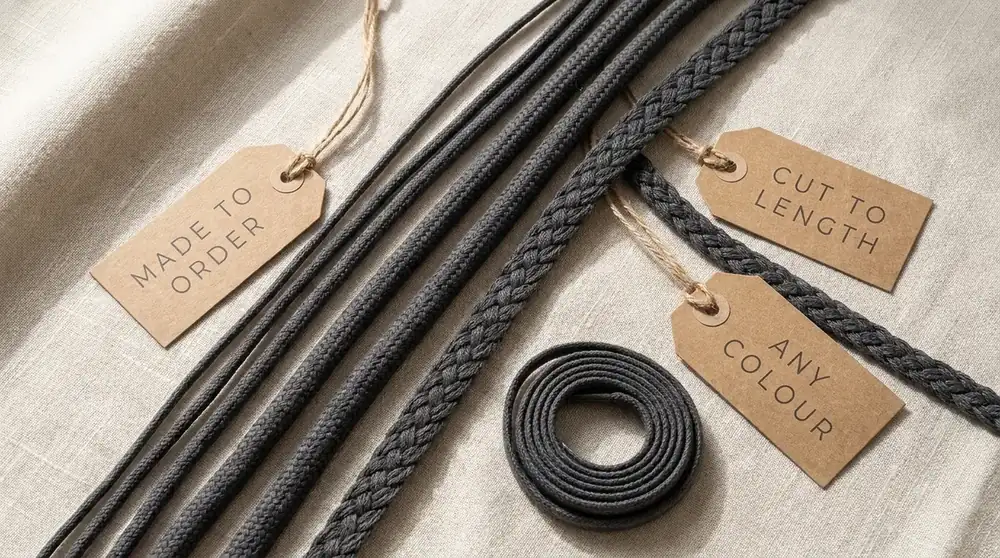
Send us four things and the quote writes itself: construction (braided or twisted), material, diameter or width, and either a Pantone reference or a physical fabric swatch for the shade. Tell us the finished cut length and the tip style if you want the cord delivered garment-ready.
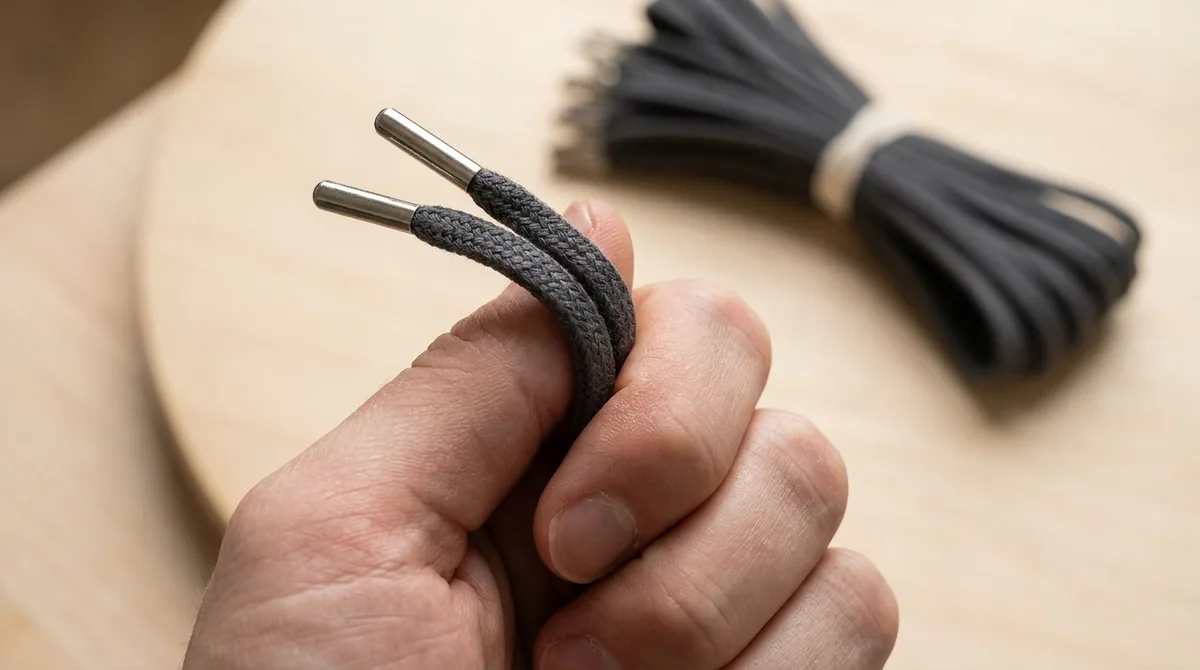
From there the sequence is: we braid or twist the cord, dye it to shade — package-dyed for bulk running lengths, hank-dyed for smaller colour lots — then cut to your garment length and tip the ends on our aglet machines. Metal tips for a premium or streetwear look, heat-sealed or moulded tips for volume programs, or plain cut ends if you tip in your own factory.
Trial orders start at 1,000 meters (about 1,094 yd). You can mix shades and diameters across SKUs in one shipment, and the same minimum applies whether you buy drawstring cord wholesale by the reel or in cut-and-tipped bulk bundles.
Approve the shade on the cord itself, not on a screen. Braid structure and yarn twist change how a shade reads, so always ask for the cord swatch against your garment fabric before bulk.
Dispatch and freight
Ex-works Jaipur — about 2 to 6 days by surface across India. Freight is to your account, by your transporter or ours. Export orders are quoted separately with air and sea options.
Cotton Dori & Drawcord — Specifications
Material — natural / undyed
Cotton
Material — dyed shades
Spun polyester, finished to look and feel like cotton
Material — other fibres
Made to buyer specification at bulk volumes
Construction
Braided (round or flat) or twisted
Sizes
2-12 mm diameter round (up to approx. 1/2 in); 5-20 mm width flat braid (approx. 3/16-3/4 in)
Cut length
Any finished garment length, cut to the centimeter; specify in cm or inches
Colours
Package- or hank-dyed in-house to a Pantone reference or physical swatch
End finish
Metal tips, heat-sealed or moulded tips, or plain cut ends
MOQ
1,000 m per SKU, shade and size
Put-up
Cut-and-tipped bundles bagged by size and shade, or continuous cord on reels, cones or hanks
Lead time
Quotes within one working day; shipping 7-10 days air courier, 25-40 days sea
Origin
Manufactured in Jaipur, India; exported worldwide
Frequently asked questions
What is the minimum order quantity for wholesale drawstring cord?
Trial orders start at 1,000 meters (about 1,094 yd) per SKU, and you can mix diameters and shades across SKUs in one shipment. The same minimum covers drawstring cord bulk reels and cut-and-tipped bundles. We keep the trial minimum low on purpose — you should see the cord against your own fabric before committing to a season's requirement.
How is cotton dori priced for garment orders?
₹5-15 per metre ex-works Jaipur. Diameter and construction set the base — 2 mm round braid at the floor, 20 mm flat at the top — and cutting to garment length with tipping is quoted on top as a per-piece operation. Send your length and tip spec with the enquiry.
Can you match a drawstring cord to a specific colour?
Yes. Send a Pantone reference or, better, a physical swatch of your garment fabric. We dye in our own house, so we can run a lab dip and send you the cord to approve before bulk. Note that dyed drawcord runs in spun polyester finished to a cotton hand — cotton is the natural, undyed option — so confirm the construction and diameter at the same time as the shade.
Do you supply drawcord already cut to length and tipped?
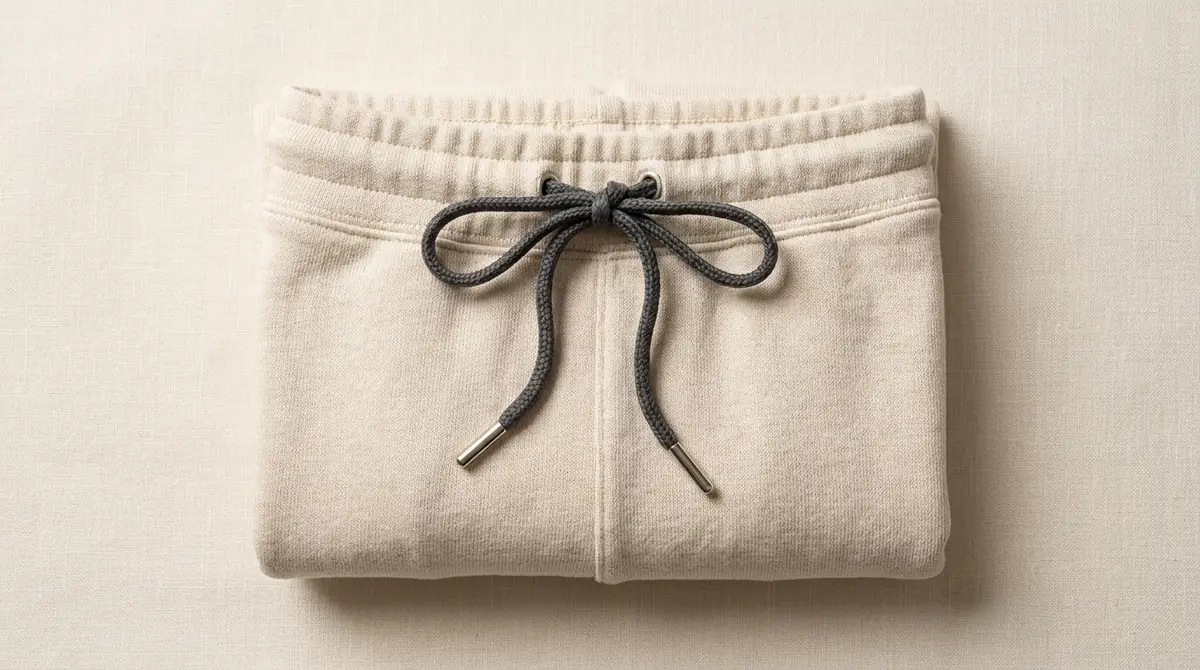
That is our standard for apparel programs. We cut to your finished garment length and tip both ends on our in-house aglet machines — metal tips, heat-sealed tips or moulded tips. Bundles are bagged by size and shade so they feed straight into your sewing line. Plain cut ends are also available if you tip in-house.
Is your drawstring cord cotton or polyester?
It depends on the shade. Natural, undyed drawcord is cotton — soft, matte, and specify pre-shrunk if the garment gets a hot wash. Every dyed shade is spun polyester, finished to look and feel like cotton, which also gives colour retention, abrasion resistance at the eyelet and dimensional stability after laundering. At bulk volumes we can make the cord in other fibres to your specification.
How long does shipping take from India to the United States?
Air courier runs 7-10 days to US destinations and suits trial orders and urgent replenishment. Sea freight runs 25-40 days to US ports and makes sense for full-carton bulk programs. We quote both options with every enquiry so you can decide against your cutting date.
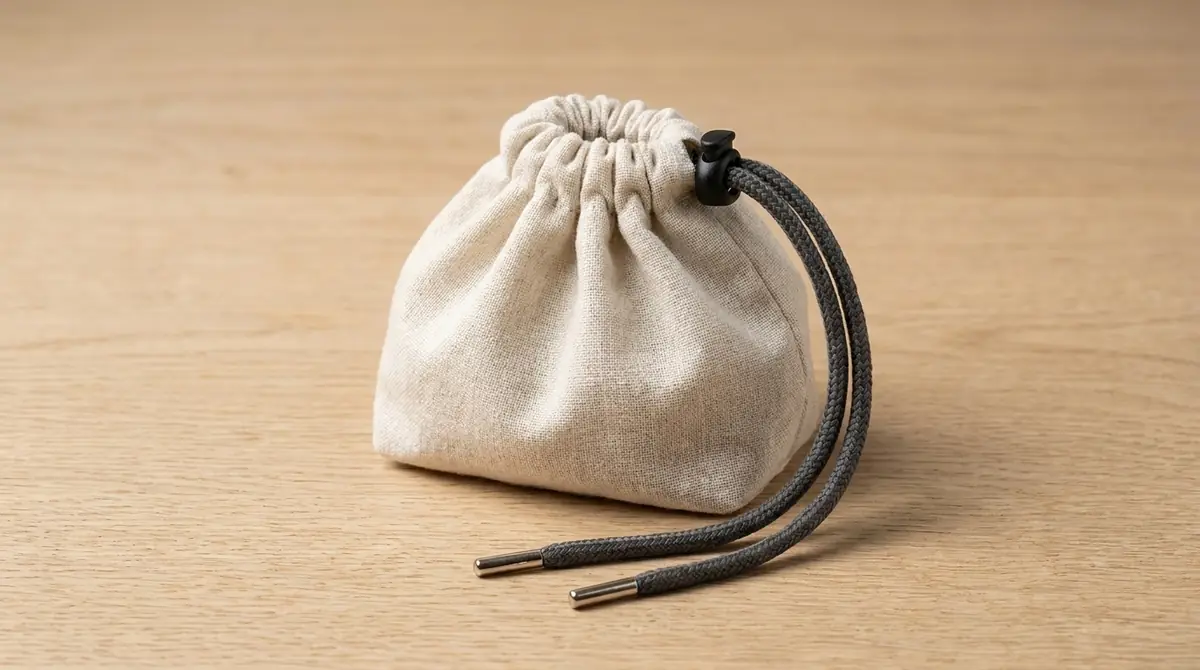
Can I order potli dori for potli bags?
Potli dori is one of the biggest uses of this cord — braided or twisted drawstring in the diameter your potli pattern needs, natural cotton or dyed shades. Potli makers usually order 2-3 diameters together; each is its own SKU at 1,000 metres.