Home › Threads & Wicks › Cotton Crochet Yarn and Macrame Yarn, Plied and Dyed in Jaipur
Cotton Crochet Yarn and Macrame Yarn, Plied and Dyed in Jaipur
✓ Specs last checked: 2026-09-02
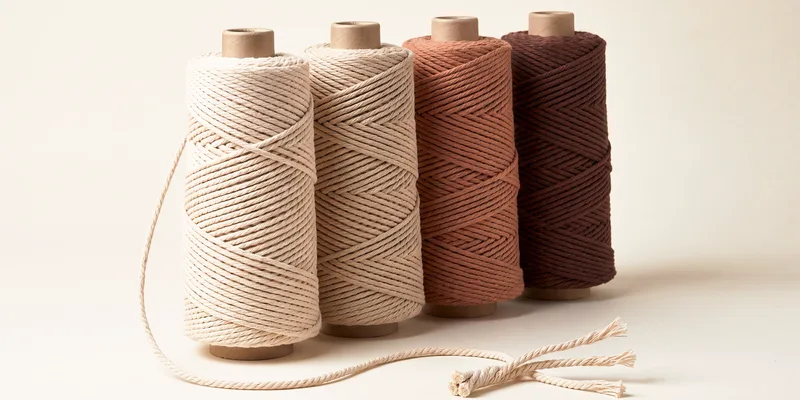
We ply and dye yarn for wholesale buyers on our own twisting frames in Jaipur — grey ring-spun singles plied to the count and TPM you specify, dyed in-house and wound onto cones, balls or hanks. The natural, undyed yarn is cotton; every dyed shade is spun polyester, finished to look and handle like cotton — matte, soft, no synthetic sheen. We don't spin raw fibre — we control everything after the singles. Trial orders start at 1,000 m, every quote comes back within one working day, and at bulk volumes we can ply other fibres to your specification.
We've been running twisting frames in Jaipur since 1991. Most of the macrame, crochet and weaving yarn leaving our floor starts as grey ring-spun singles that we ply, balance, dye and wind ourselves. The natural, undyed yarn is cotton; the dyed shades are spun polyester, finished matte and soft so they look and handle like cotton.
How our cotton yarn is actually built
Start with the honest part: we don't spin raw fibre. We buy grey ring-spun singles from spinning mills, and everything after that happens under our roof. Which fibre you get depends on the shade: the singles we ply for the natural, undyed yarn are cotton, and the singles we ply for the dyed shades are spun polyester, finished matte and soft so the yarn looks and handles like cotton.
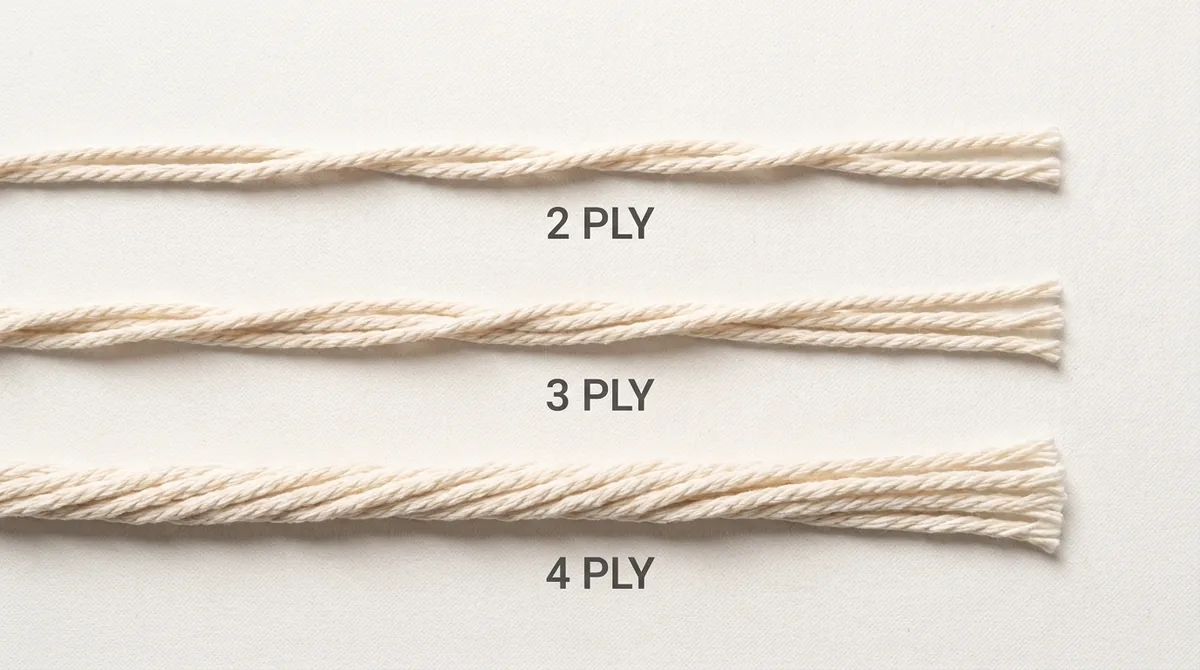
The singles go onto our twisting frames, where we ply them — two, three or four ends depending on the count you want — and set the twist per metre. TPM is the number most buyers underestimate. Too little and the yarn goes limp and sheds; too much and it kinks and snarls off the cone. We balance S and Z twist so the finished yarn hangs straight instead of corkscrewing.
At bulk volumes other fibres run the same route on the same frames. Tell us the fibre and the count at enquiry stage and we will say plainly what plies cleanly and what does not.
Colour: dyeing the plied yarn, and how shades repeat
We dye after plying, not before, and we do it in-house. Dyeing the finished ply means the shade is even right through the cross-section rather than sitting on individual singles that then get twisted together unevenly.
We match to a physical swatch or a Pantone reference, run a lab dip, and only go to bulk once you've approved it. That approved dip stays on file as the standing reference, so a repeat order six or twelve months later comes back to the same shade rather than to a fresh interpretation of it.
Always order one shade family in a single dye lot if the finished product shows large flat areas of colour. Two lots of the same shade can sit a hair apart, and on a plain woven panel that hair is visible.
How wholesale buying works with us
Tell us the yarn, not the product name. Count or finished diameter, number of plies, roughly the twist you want, and what you're making with it. We'll come back with what's practical on our frames.
Trial order from 1,000 m. Buy one shade, one count, run it through your process and see whether it behaves.
Approve the shade. We send a lab dip or a physical sample against your reference before bulk dyeing starts.
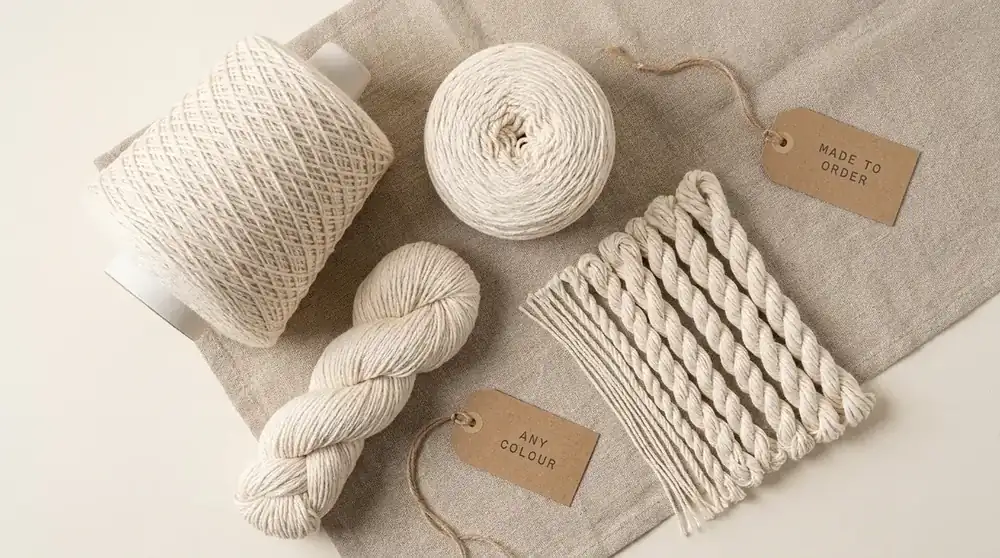
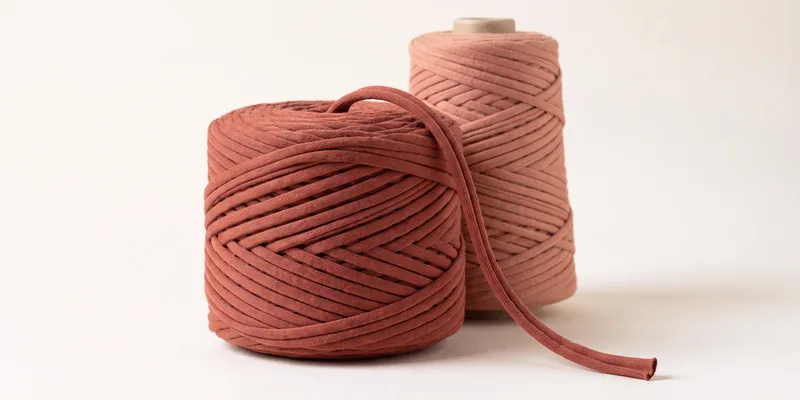
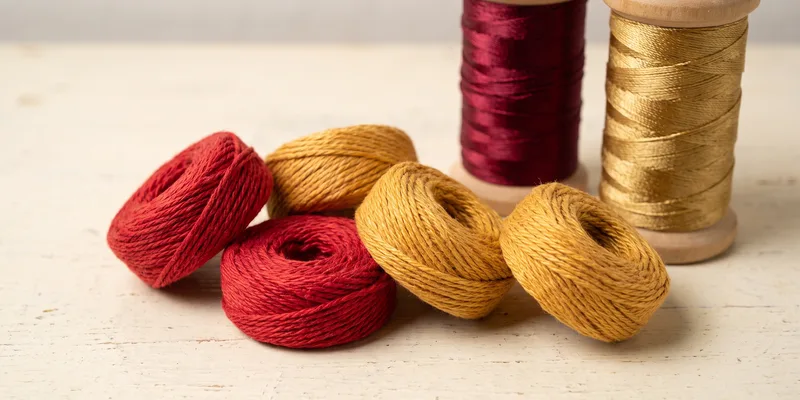
Choose the put-up. Cones for machine feed and volume, balls for retail packs, hanks for hand-dyeing or display.
Tell us the destination port and we'll tell you plainly whether air or sea makes sense for your volume.
Dispatch and freight
Ex-works Jaipur — about 2 to 6 days by surface across India. Freight is to your account, by your transporter or ours. Export orders are quoted separately with air and sea options.
Cotton Crochet Yarn and Macrame Yarn, Plied and Dyed in Jaipur — Specifications
Material
Natural/undyed: ring-spun cotton singles. Dyed shades: spun polyester singles with a cotton-look matte finish and soft cotton hand. Both plied in-house; other fibres to your specification at bulk volumes
Construction
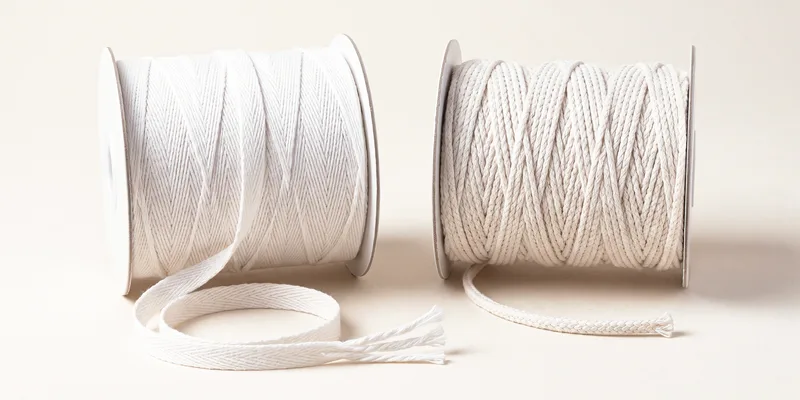
2, 3 and 4-ply twisted yarn, S/Z balanced to the count and TPM you specify
Sizes
Roughly 1mm to 5mm finished diameter (3mm ≈ 1/8 in, 5mm ≈ 3/16 in); other counts plied to order
Colours
Dyed to shade in-house against your swatch or Pantone reference, with a lab dip approved before bulk; natural greige and bleached white also available
MOQ
1,000 m per SKU, shade and size
Put-up
Cones, balls and hanks, wound to your weight in export cartons
In-house processes
Twisting and plying, dyeing, winding; spinning of raw fibre is not done here
Lead time
Quote within one working day; 7-10 days air or 25-40 days sea after shade approval
Origin
Jaipur, India
Frequently asked questions
Is all of your yarn cotton?
It depends which one you order, and you choose. The natural, undyed yarn is cotton — it needs no dyeing, so cotton is what we ply. Every dyed shade is spun polyester, made to look and feel like cotton: matte surface, soft hand, no synthetic sheen, so it knits, knots and photographs like the cotton yarn crafters know. We use polyester on the dyed side because it holds colour, repeats shade-for-shade between orders and sheds less lint. If you need a natural fibre specifically, order the natural. At bulk volumes we can ply other fibres to your specification. Ask for a sample card if you want to judge the hand yourself.
Do you spin your own cotton yarn?
No, and we'd rather say so plainly. We buy grey ring-spun singles from spinning mills and do everything after that ourselves — plying and twist-balancing on our own frames, dyeing to shade in-house, and winding onto cones, balls or hanks. Raw fibre spinning is the one step we don't carry out.
Can you match a specific count and twist per metre?
Yes. Tell us the count or finished diameter, the number of plies you want, and the twist per metre, and we'll ply to that spec. If you only know the end use, send a sample of the yarn you're currently buying and we'll work backwards from it. We balance S and Z twist so the yarn hangs straight rather than corkscrewing.
How do you handle colour matching for a bulk order?
We dye the plied yarn in-house against a physical swatch or a Pantone reference, run a lab dip first, and only go to bulk once you approve it. The approved dip is kept on file as the reference for repeat orders. Keep one shade family within a single dye lot where the finished product shows large flat areas of colour, since two lots of the same shade can sit slightly apart.
What is the minimum order for wholesale cotton yarn?
Trial orders start at 1,000 m so you can run one shade and one count through your own process before committing. Bulk quantities are quoted per shade and count, because dyeing economics change with lot size.
Do you supply sooti dhaga for crafts wholesale?
Sooti dhaga in craft weights — roughly 1 mm to 5 mm finished — is what this page carries. Natural cotton as standard, plied to order, 1,000 metres per SKU, quoted within one working day.
What is the price of cotton yarn in India?
Indicative ex-works Jaipur pricing runs ₹6 to ₹15 per metre, and where a yarn falls in that band depends on the count, the number of plies and whether the shade is natural or dyed. Domestic orders are quoted in rupees ex-works with GST applicable; export orders are quoted per metre with air and sea options. Minimum is 1,000 metres per shade and count. Send the count, ply and quantity and a firm quote follows within one working day.
Is this crochet yarn or macrame yarn?
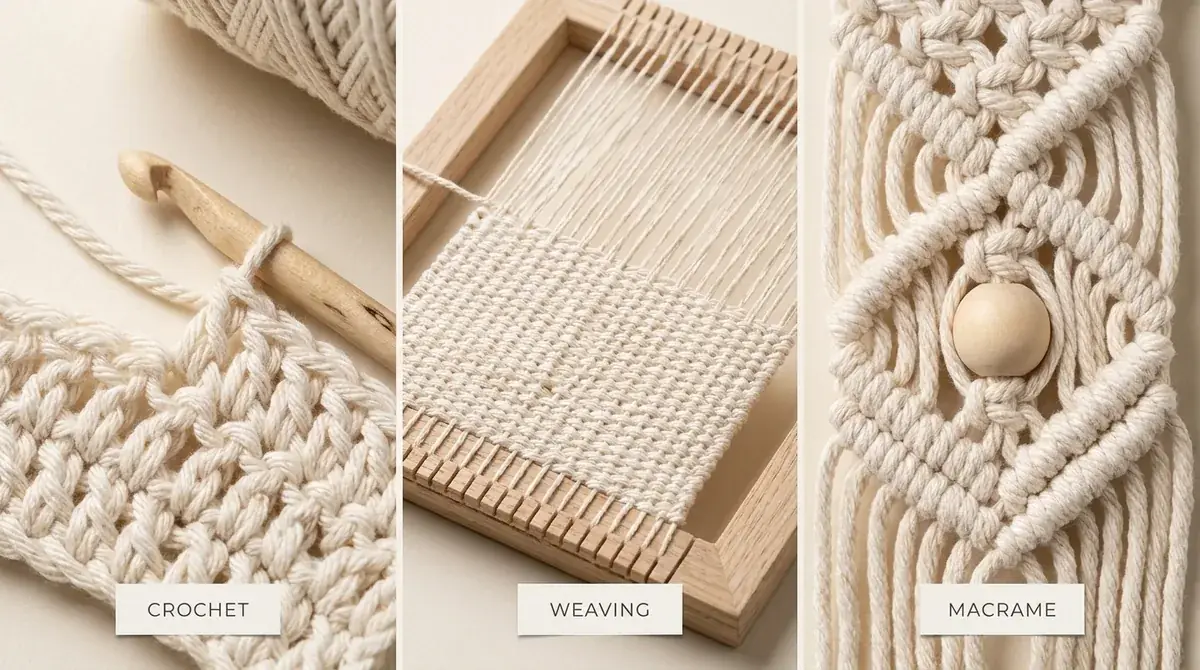
The same plied yarn serves both, which is why crocheters and macrame makers buy off the same reel here. What changes is the count and ply you specify: finer counts suit crochet hooks and detailed work, heavier plies suit macrame where the cord has to hold a knot and show definition. Tell us the craft and the hook or knot size you are working to and we will point at the right build.
Is your dyed crochet yarn cotton?
No, and it matters enough to say plainly. Natural undyed yarn is cotton. Every dyed shade is spun polyester finished to a cotton-look matte hand — it takes and holds colour far more reliably across repeat orders than dyed cotton does. If a run must be cotton in a colour, say so on the enquiry and we will quote it separately rather than substitute.