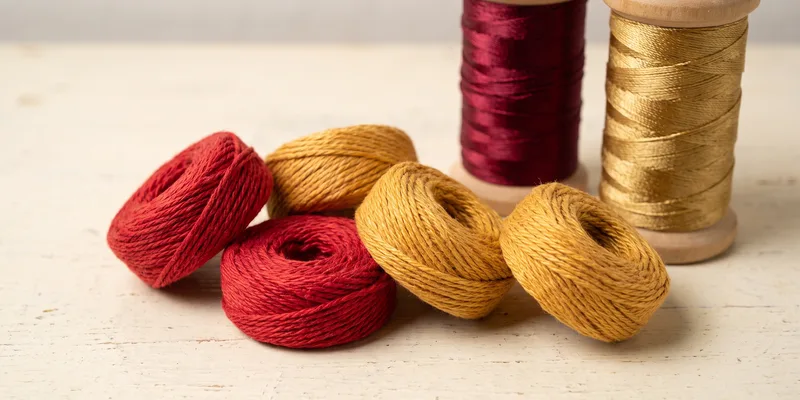
Rakhi making is a thread business. The bead, the stone and the foam motif get the attention, but metre for metre, what a rakhi unit actually consumes is thread — and buying it from three different traders means three shade lots that do not match. This is the list our rakhi-maker buyers order against, all of it made under one roof.
The buying list
| Material | What it does in the rakhi | Where to see it |
|---|---|---|
| Kalava / mauli rolls | The sacred red-yellow base thread — sold by the roll, wound to the length your counter expects | Rakhi & kalava thread |
| Rayon / resham-look threads | The glossy body work — braids, wraps and dori in festival shades | Rakhi threads · embroidery thread |
| Zari thread | The gold and silver — round zari for corded work, flat zari for flash | Zari thread |
| Narrow satin ribbon | Finishing, cards and packaging ties in matching shades | Satin ribbon |
| Cotton yarn / dori | Wrapped cores and tassels on heavier designs | Cotton yarn · tassels |
Every line runs 1,000 metres per SKU (finished tassels 5,000 pieces), each shade counts as its own SKU, and shades are matched in our own dye house — which is why a maker's red stays the same red across kalava, rayon and ribbon.
The calendar that actually matters
Raksha Bandhan 2026: 28 August. Production units build stock months ahead — thread bought from autumn through early summer becomes the rakhis sold in August. Distributors and late top-ups have more room than they think: dispatch from Jaipur reaches most Indian cities in 2-5 days, so even mid-August enquiries are often workable. The honest cut-off for thread in hand before the festival is around 20 August; after that, ask city by city.
The quieter truth: kalava is not seasonal at all. Mauli sells at every pooja, wedding and griha-pravesh through the year, which is why pooja-samagri wholesalers reorder it monthly while rakhi makers spike once a year.
Why one factory beats three traders
- Shade consistency — one dye house, one reference; kalava, rayon and ribbon match, and repeat orders match last season.
- One dispatch — five materials, one carton count, one transporter, one GST invoice.
- One quote — list the materials, shades and metreage in one message and the whole basket is priced within one working day.
Ready to price a season? Send your list on WhatsApp: +91 90794 16666 — or start from the rakhi thread page.
Frequently asked questions
Where do rakhi makers buy raw material in bulk?
From thread factories rather than retail craft shops — the volumes are in metres by the thousand. Jaipur is one of India's rakhi-making centres, and our factory supplies makers directly: kalava rolls, rayon and resham-look threads, zari and narrow ribbon at 1,000 metres per SKU, dispatched anywhere in India in 2-5 days.
When should a rakhi maker order thread for next season?
Production units buy from autumn through early summer so their own making season runs before the August dispatch rush. Late top-ups are usually workable — Jaipur to most Indian cities is 2-5 days — and for Raksha Bandhan 2026 (28 August) the honest order-by for thread in hand is around 20 August.
Can all rakhi materials come in matching shades?
Yes, and that is the point of buying from one floor: kalava, rayon threads, zari cores and ribbon are dyed in the same house against the same reference, so a maker's signature red or green stays identical across every material and every reorder.
Do you sell ready-made rakhis?
No — we supply the threads and stay out of our customers' business deliberately. Makers buy kalava, rayon, resham-look and zari from us and build their own designs; the one thing we finish ourselves is tassels, at 5,000 pieces per SKU.