Home › Threads & Wicks › Sewing Thread — Spun Polyester 2/40s and 3/30s, Twisted and Dyed in Jaipur
Sewing Thread — Spun Polyester 2/40s and 3/30s, Twisted and Dyed in Jaipur
✓ Specs last checked: 2026-09-02
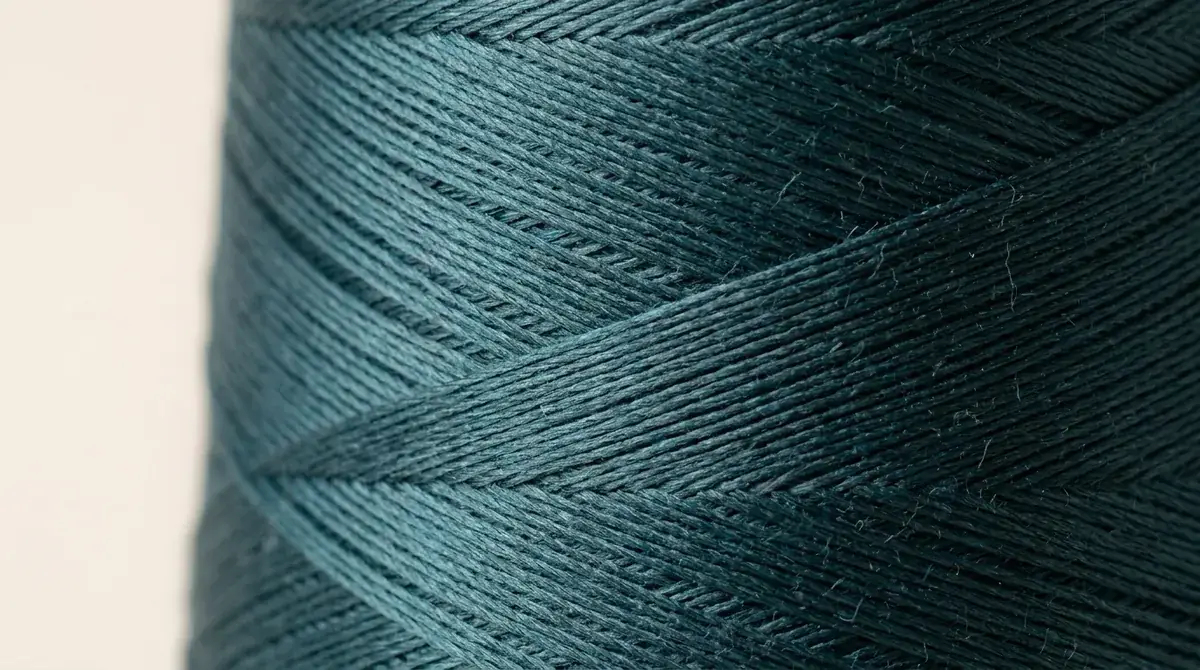
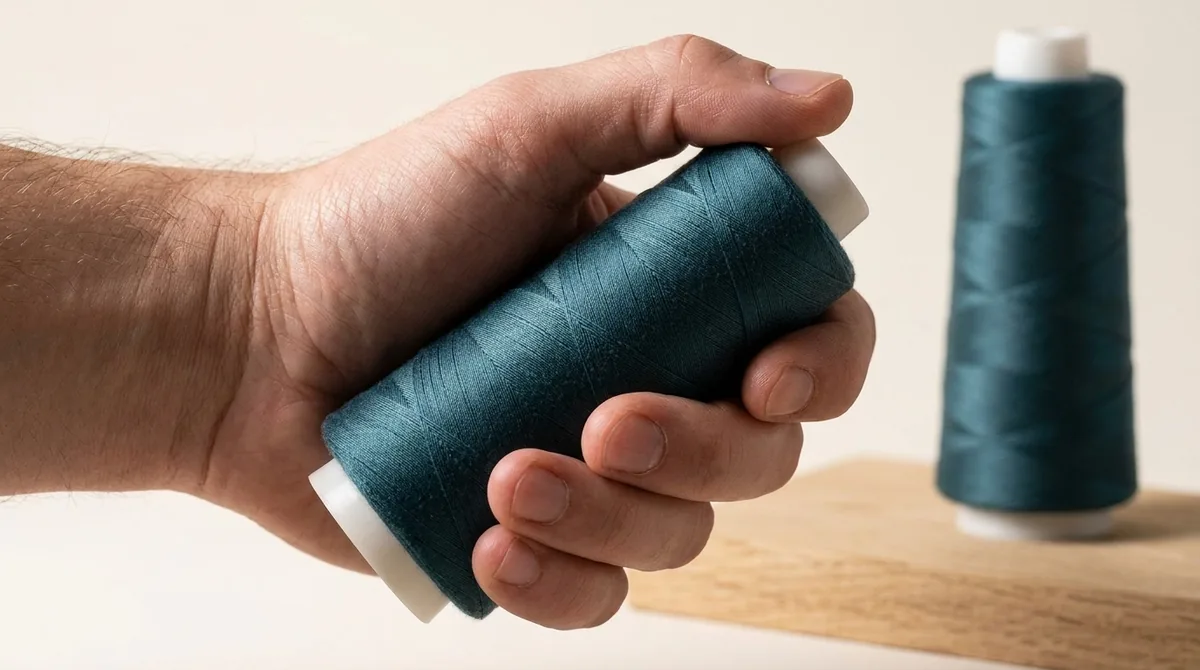
We twist spun polyester sewing thread in 2/40s and 3/30s on our own frames in Jaipur, cheese-dye it in-house and wind it onto cones for industrial lockstitch and overlock machines. We don't extrude polyester or spin raw fibre — we buy spun singles and control every step after that, so twist, shade and winding are all our responsibility. Trial orders start at 1,000 m per SKU — one shade in one ticket size — and quotes come back within one working day.
We have been twisting and dyeing in Jaipur since 1991, and this line exists mainly to feed domestic garment clusters that need the same shade and the same running behaviour month after month.
How the thread is actually built
The honest starting point: we do not extrude polyester filament and we do not spin raw fibre. We buy spun polyester singles, and every step after that happens on our own machines.
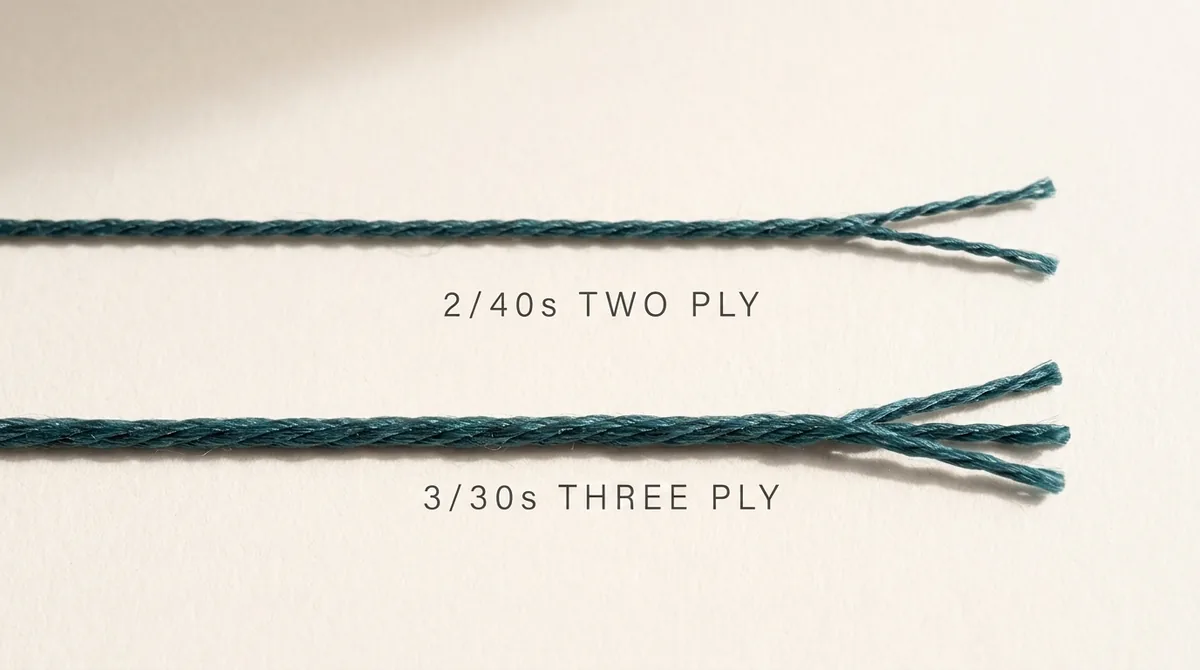
The singles go onto our twisting frames, where we build the two constructions we run here — 2/40s and 3/30s. The 2/40s is the finer of the two, a two-ply thread that suits lighter fabrics and topstitching that has to sit flat. The 3/30s is three-ply and heavier, which is what most units reach for on seams that carry load.
Twist per metre is the number buyers underestimate. Too soft and the thread fluffs, sheds lint into the machine and frays at the needle eye. Too hard and it kinks, snarls coming off the cone and throws loops behind the needle. We balance S and Z twist so the thread runs straight instead of corkscrewing, then wind it evenly so it feeds without jerking at speed.
Colour: cheese dyeing in our own unit
We dye after twisting, on cheeses, in-house. Dyeing the twisted thread rather than the singles means the shade sits evenly through the cross-section instead of showing as a streak once the plies are together. It also means colour is our responsibility from swatch to cone.
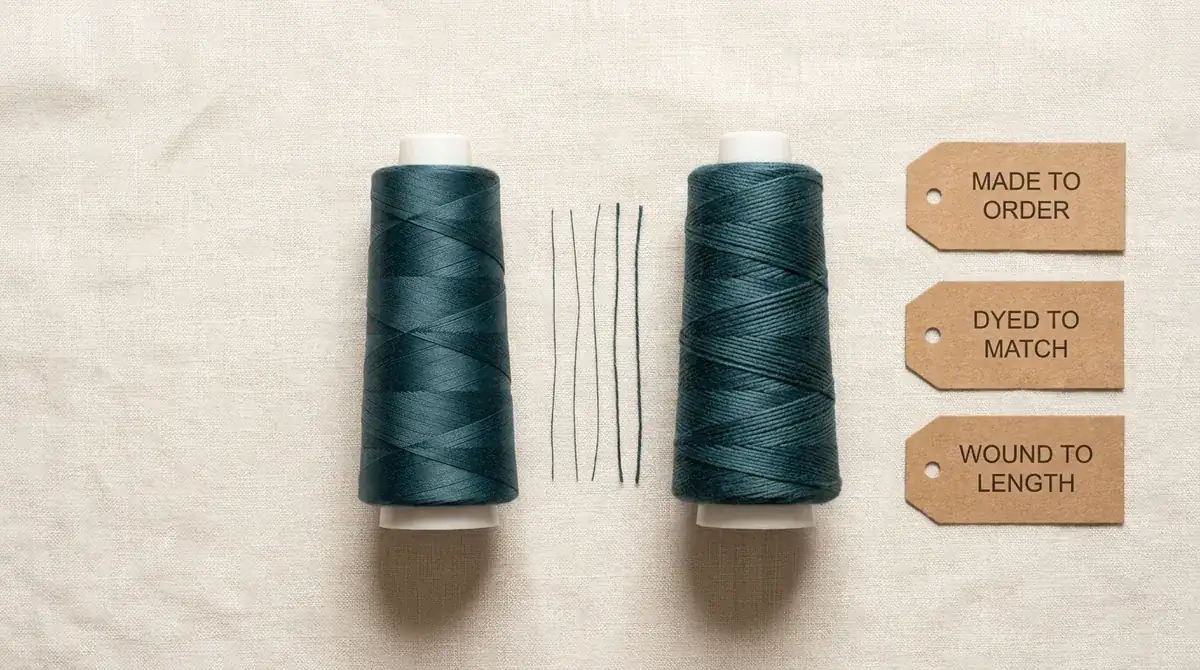
Matching normally starts from a physical fabric swatch rather than a colour card, because sewing thread is judged against the cloth it disappears into. We dye a sample first and wait for your approval before the bulk lot goes in.
Order the full requirement for one style in a single dye lot. Two lots of the same shade can sit a hair apart, and on visible topstitching that difference shows up under shop lighting even when the cones look identical side by side.
How wholesale buying works with us
Most enquiries move through the same few steps.
Tell us the ticket and the fabric. Whether you want 2/40s or 3/30s, what you are stitching, and which machines it has to run on. If you only know the thread you buy today, send a cone and we will work backwards from it.
Trial order from 1,000 m per SKU. A SKU is one shade in one ticket size, so a second shade or the other count carries its own 1,000 m. It buys you one shade run through your own line at production speed before you commit.
Approve the shade. We dye a sample against your fabric swatch and wait for sign-off before bulk dyeing starts.
Fix the put-up. Cones wound to the length your machines run, cartoned for road dispatch.
Quotes come back within one working day.
Dispatch and freight
Ex-works Jaipur — about 2 to 6 days by surface across India. Freight is to your account, by your transporter or ours. Export orders are quoted separately with air and sea options.
Sewing Thread — Specifications
Material
Spun polyester singles, twisted in-house; polyester extrusion and fibre spinning are not done here
Construction
2/40s two-ply and 3/30s three-ply, S/Z balanced to the twist per metre you specify
Sizes
2/40s for lighter fabrics and topstitching, 3/30s for heavier seam work; other counts twisted to order
Colours
Cheese-dyed in-house to match your fabric swatch; sample approved before the bulk lot
MOQ
1,000 m per SKU, shade and size
Put-up
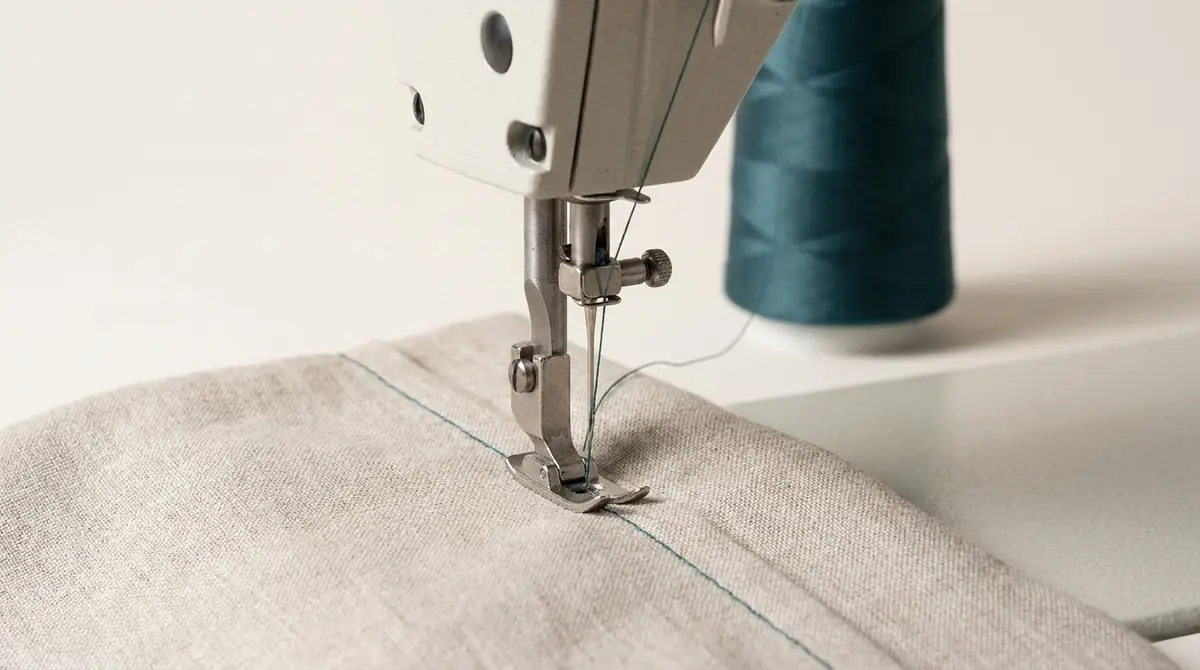
Wound onto cones for industrial lockstitch and overlock machines, packed in cartons
In-house processes
Twisting, cheese dyeing and cone winding
Lead time
Quote within one working day; 2-5 days by road after shade approval and winding
Origin
Jaipur, India
Frequently asked questions
What is the difference between 2/40s and 3/30s sewing thread?
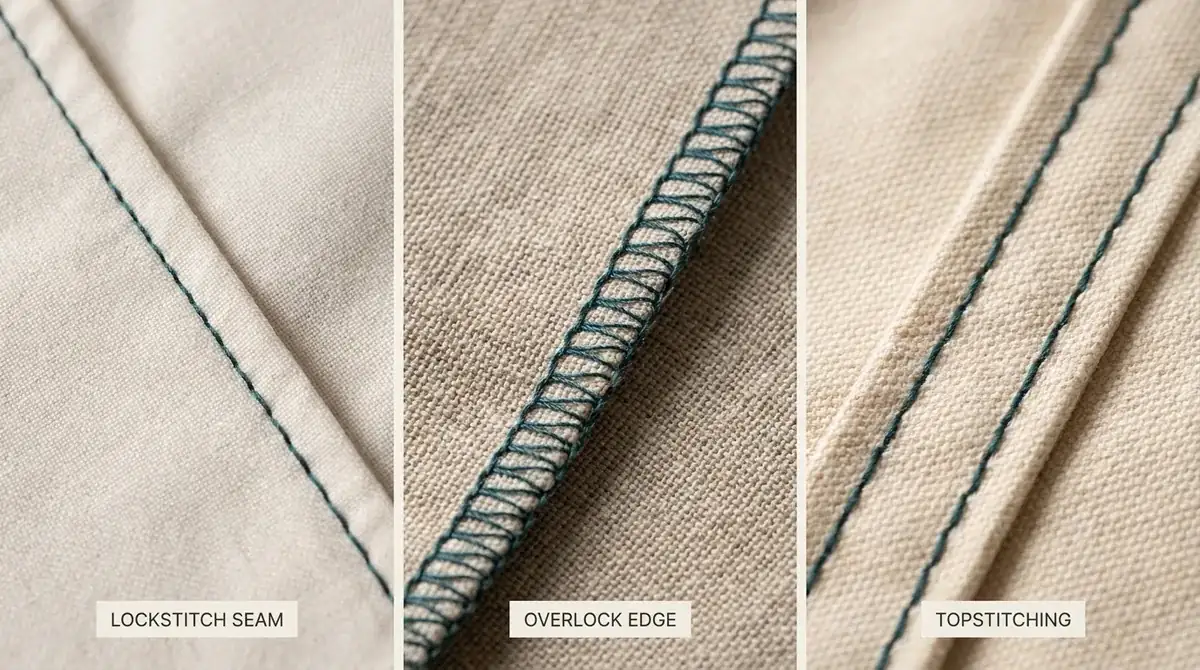
The 2/40s is a two-ply thread and the finer of the two, which is why units pick it for lighter woven fabrics and for topstitching that has to sit flat and look neat. The 3/30s is three-ply and heavier, so it goes onto seams that carry load. If you are unsure, tell us the fabric and the machines it runs on and we will tell you which of the two we would put on that job.
Do you make the polyester yourselves?
No, and we would rather say so plainly. We buy spun polyester singles and do everything after that in our own unit — twisting to the ply and twist per metre you need, cheese dyeing to shade, and winding onto cones. Extruding polyester filament and spinning raw fibre are the steps we do not carry out.
How do you match thread colour to our fabric?
We match against a physical fabric swatch rather than a colour card, because thread is judged against the cloth it sits in. We dye a sample first and only move to bulk once you have approved it. Keep one style's full requirement inside a single dye lot wherever the stitching is visible, since two lots of the same shade can sit slightly apart.
Will the thread run on a high-speed overlock without breaking?
That comes down to twist balance and winding, which is exactly why we control both. We balance S and Z twist so the thread runs straight instead of corkscrewing, set the twist per metre to suit the construction, and wind the cones evenly so the thread feeds without jerking. The trial order exists for this reason — run it on your own machines at production speed before you commit to a bulk lot.
What is the minimum order and how quickly can you dispatch?
Trial orders start at 1,000 m (approx. 1,094 yards) per SKU — one shade in one ticket size, so a second shade or ticket carries its own 1,000 m — which is enough to test that combination on your own line. Bulk is quoted per shade and ticket size, since dyeing economics change with lot size. Quotes come back within one working day, and once a shade is approved and the cones are wound, road dispatch to most garment clusters takes two to five days.
How is sewing thread priced?
₹2-6 per metre ex-works Jaipur, though the trade really buys it by the cone: tell us the ticket and the cone length and we quote per cone as well. 2/40s runs below 3/30s, and dyed-to-match shades price above stock black and white.
Do you supply silai ka dhaga in bulk for garment units?
Silai ka dhaga — sewing thread — is this page: spun polyester in 2/40s for lighter fabrics and 3/30s for heavier seam work, dyed to your shade card in our own house. Garment units order by the shade at 1,000 metres per SKU, quoted within one working day.
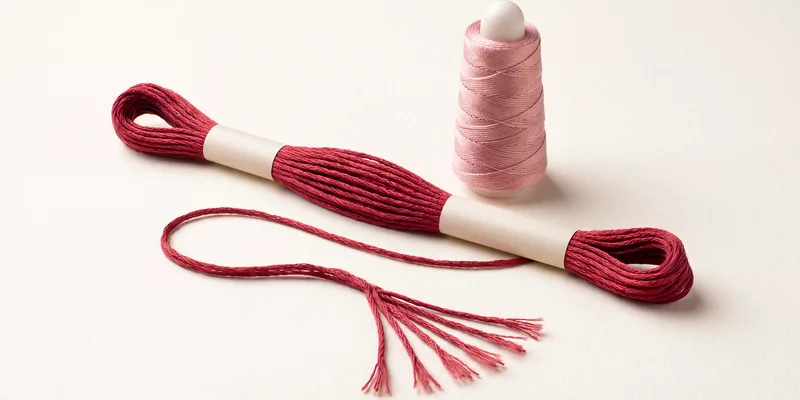
Six-strand mouliné in skeins, machine thread on cones. Natural mouliné is cotton; dyed shades are spun polyester finished to look and feel like cotton — MOQ 1,000 m per SKU.