Home › Cords & Ropes › Paracord — 550-Type, Micro and Para-Max from Our Jaipur Factory
Paracord — 550-Type, Micro and Para-Max from Our Jaipur Factory
✓ Specs last checked: 2026-09-02
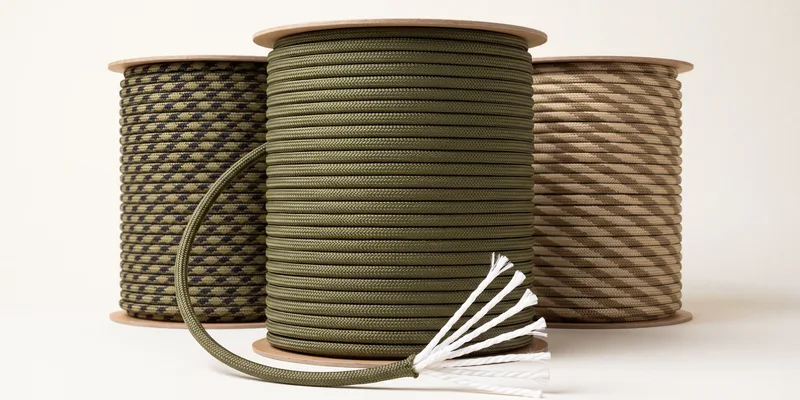
Saras Udyog manufactures 550-type paracord with a 7-strand core, plus 2mm micro and 6mm para-max, in polyester or nylon across 100+ colour patterns. We braid and dye in-house in Jaipur, India, ship to 60+ countries, and the MOQ is 1,000 meters per SKU — one colour in one size.
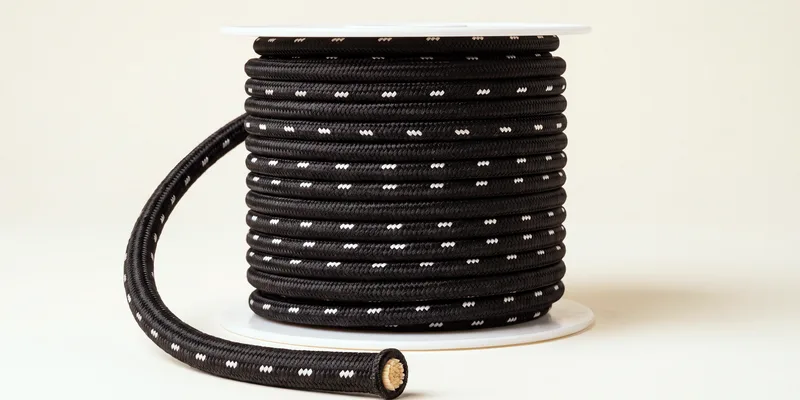
Paracord is a braided nylon or polyester rope with a twisted multi-strand core, originally made for parachute suspension lines. We've been twisting and braiding cords at our Jaipur factory since 1991, and paracord runs on our lines almost daily.
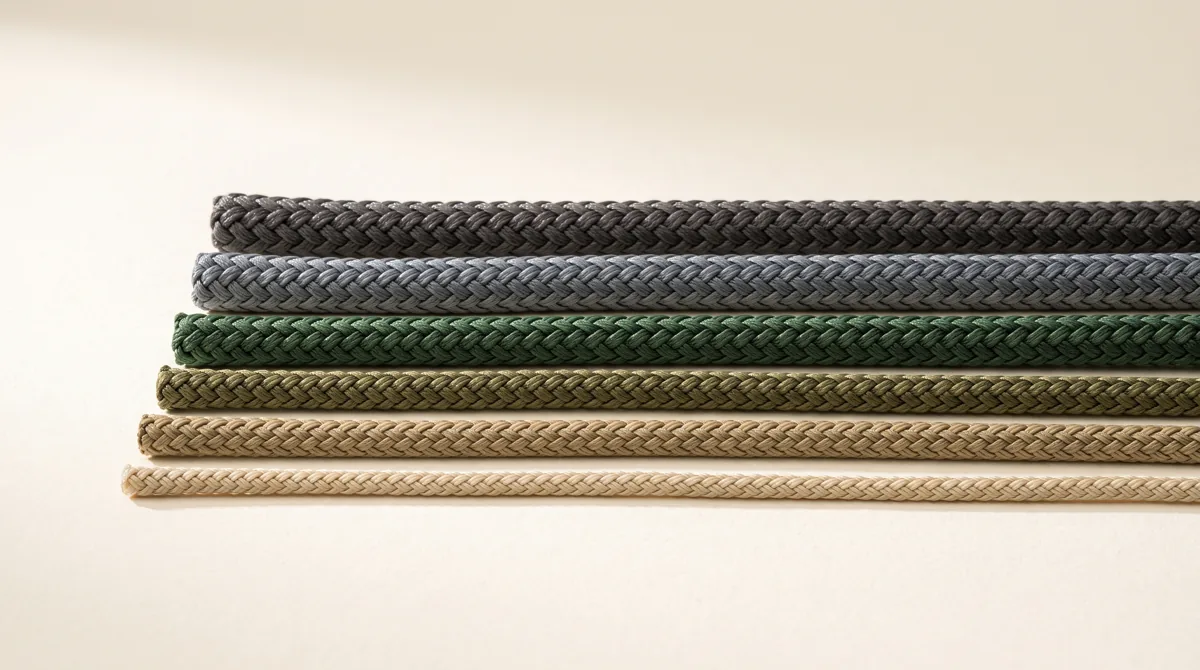
Our standard is the 550-type with a 7-strand core. We also run 2mm micro cord and 6mm para-max, in polyester or nylon, across 100+ colour patterns.
What exactly is 550 cord, and why is it called parachute cord?
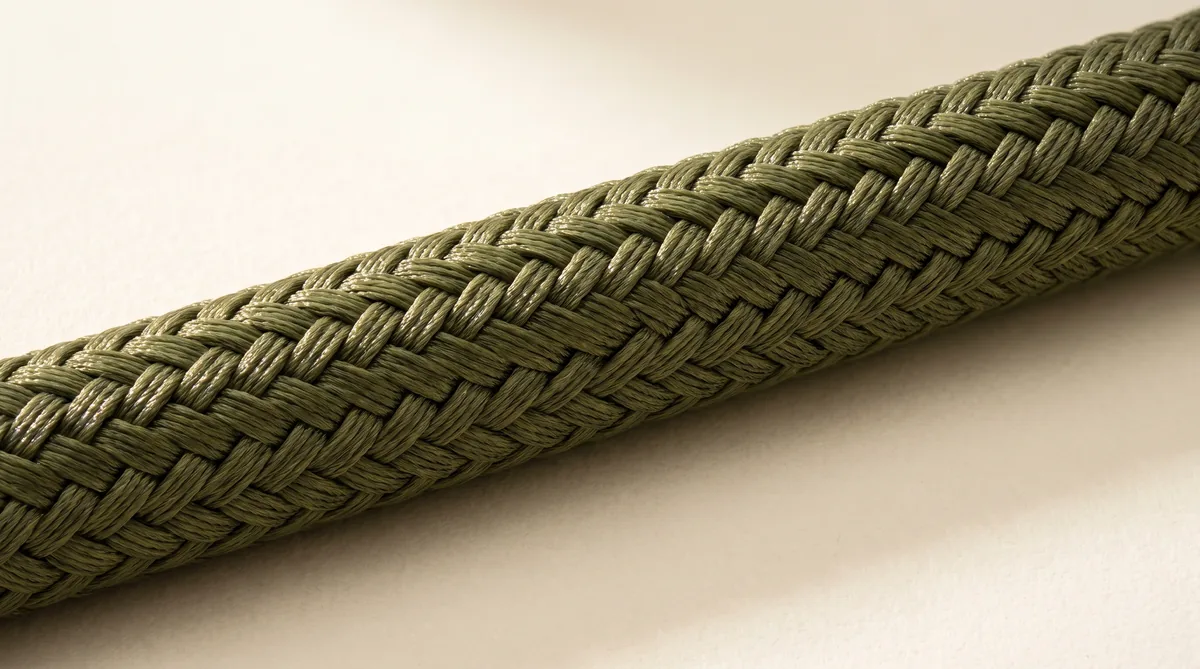
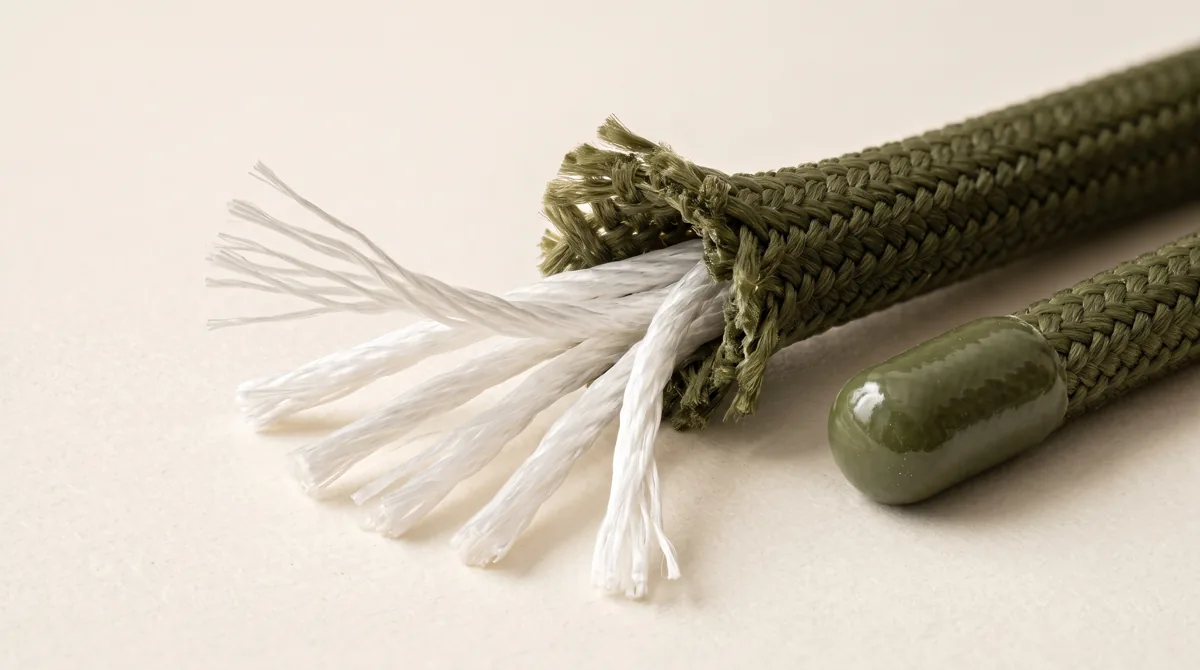
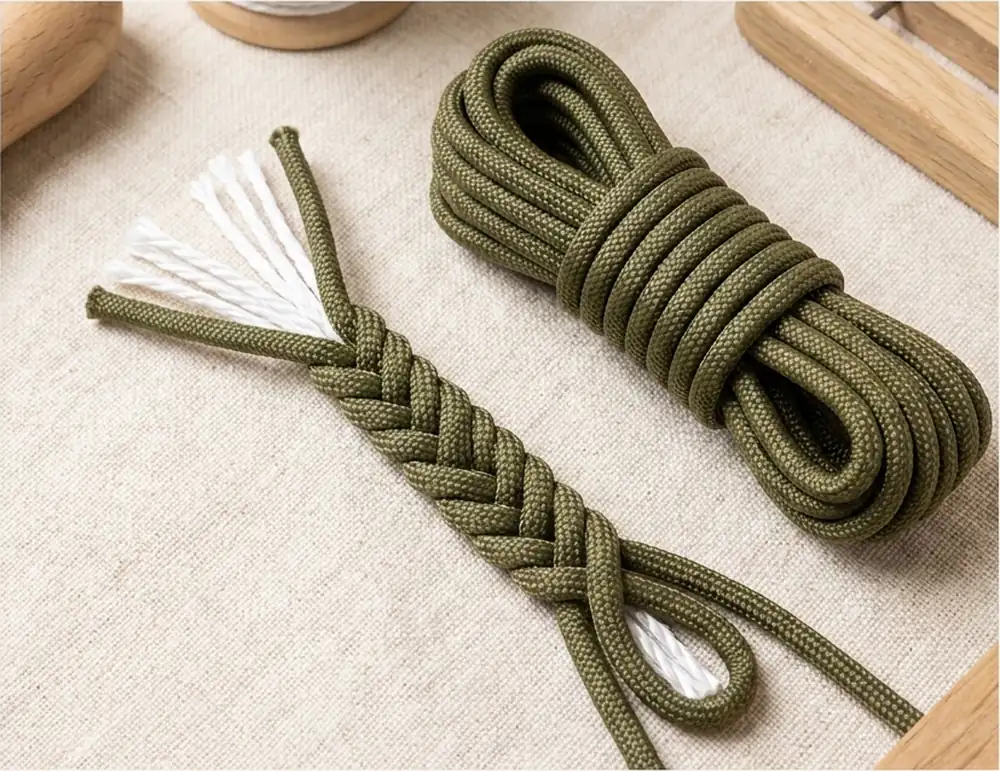
Paracord is short for parachute cord. The name traces back to the original parachute-line spec — a breaking strength of 550 pounds. What matters in manufacturing is the construction: a tight braided sheath over seven individually twisted core strands, which is why the cord stays flexible while carrying serious load.
We build the same construction on our own braiding machines, then dye in-house so colour stays consistent across reorders. Beyond the standard 550-type, we run 2mm micro cord for small knotwork and lacing, and 6mm para-max for buyers who want real heft in handles and leashes. On the fibre question: nylon stretches more and has the classic slightly silky hand, while polyester stretches less and holds colour far better in sunlight.
How do you order bulk paracord from our factory?
Send us the sizes, fibre (polyester or nylon), and colours you want — a photo or a Pantone reference both work. Twisting, braiding, and dyeing all happen in-house here in Jaipur. We can also tip cord ends on our own tipping machines if your product needs finished tips.
MOQ is 1,000 meters per SKU — about 1,094 yards — and spools run from 50 to 300 meters, roughly 164 to 984 feet. Air courier delivers in 7-14 days, sea freight in 25-40 days. Send your list; we'll price it within one working day.
Dispatch and freight
Ex-works Jaipur — about 2 to 6 days by surface across India. Freight is to your account, by your transporter or ours. Export orders are quoted separately with air and sea options.
Paracord — Specifications
Material
Polyester or nylon (chosen at quote stage)
Construction
Braided sheath over 7-strand twisted core (550-type)
Sizes
2, 3, 4, 5 and 6 mm — micro through para-max, including 550-type (3 mm ≈ 1/8 in, 5 mm ≈ 3/16 in, 6 mm ≈ 1/4 in)
Colours
100+ colour patterns, dyed in-house
MOQ
1,000 m per SKU, shade and size
Lead time
Quote within one working day; 7-14 days air courier or 25-40 days sea
Packing
Spools of 50-300 meters (approx. 164-984 feet), carton-packed
Frequently asked questions
What is 550 paracord used for?
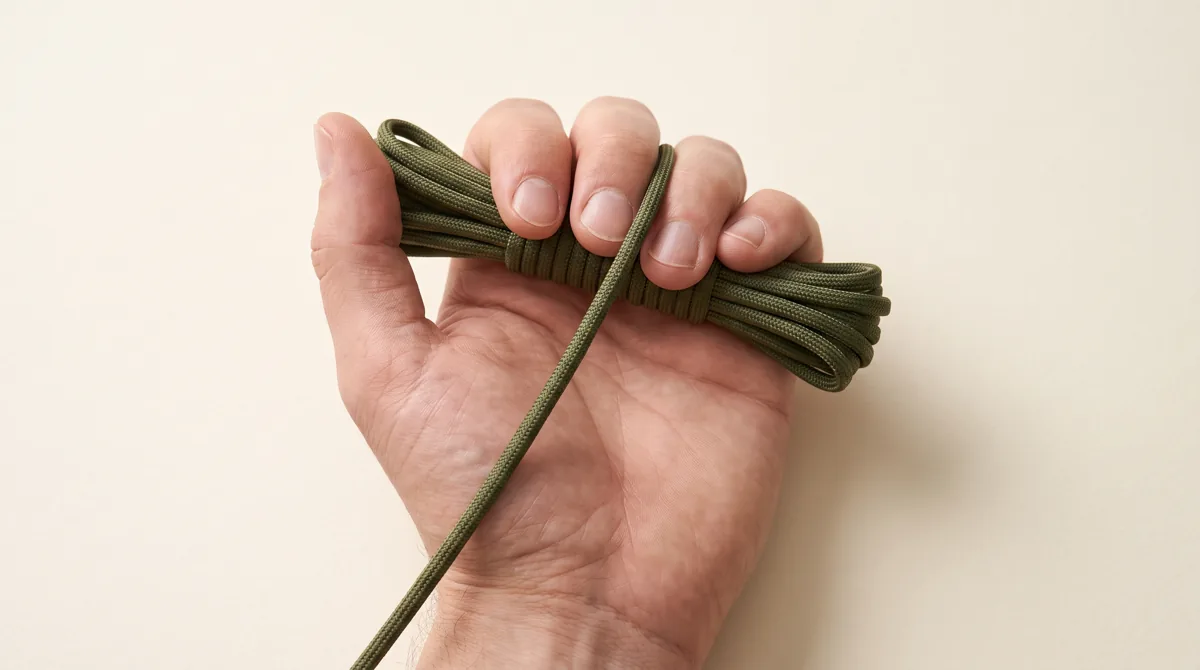
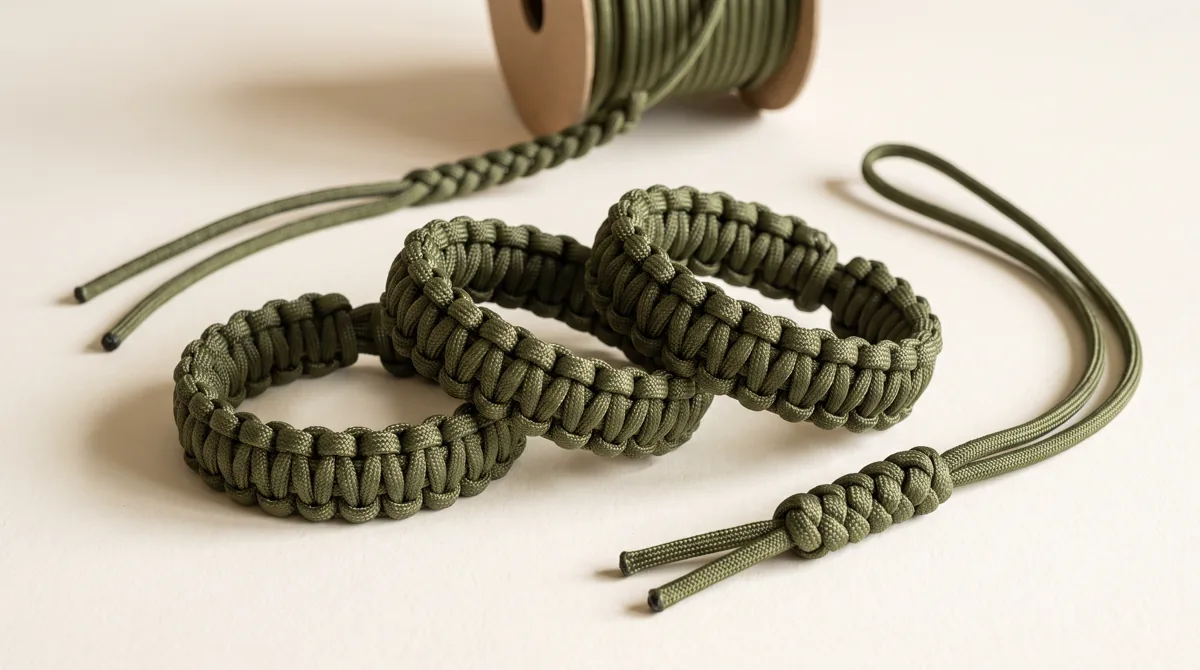
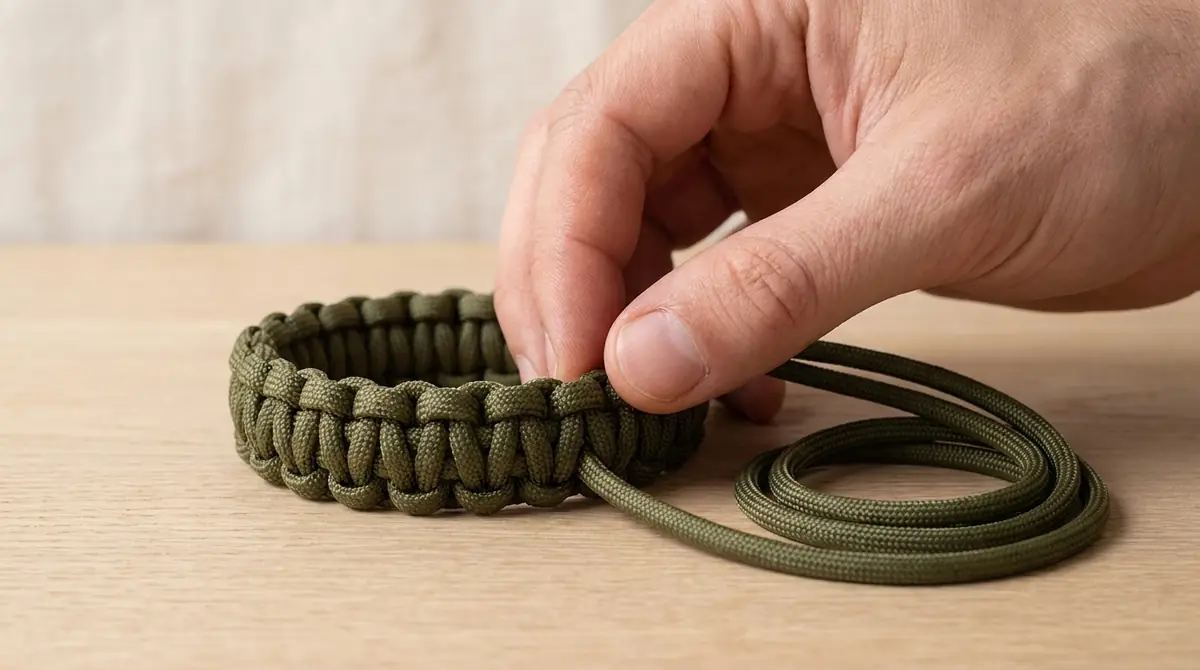
550 paracord is used for survival bracelets, lanyards, keychains, knife-handle wraps, camping tie-downs, and macrame or knotting crafts. Its 7-strand core can be pulled out and used as sewing thread or fishing line in the field. Craft buyers mostly use it whole for knotwork and pet gear.
What is the difference between nylon and polyester paracord?
Nylon paracord stretches more and has a slightly silkier feel, while polyester stretches less and holds its colour better in sunlight. For gear that lives outdoors in UV, polyester usually lasts longer. We run both fibres on the same machines, so you simply choose at quote stage.
What is the minimum order for bulk paracord?
Our minimum order is 1,000 meters per SKU, where each colour and size counts as its own SKU. You can mix many colours in one shipment as long as each one clears 1,000 meters. A full colour range therefore is not a small order — ten patterns is 10,000 meters — so most shops start with the two or three they know will sell and widen from there.
What is the price of paracord in bulk?
₹5-12 per metre ex-works Jaipur. The 2 mm micro cord sits at the bottom, 6 mm para-max at the top, and patterned weaves price slightly above solids. Nylon and polyester carry different rates at the same diameter — say which you need when you ask.
How long does paracord shipping from India take?
Air courier takes 7-14 days and sea freight takes 25-40 days from our Jaipur factory. Shipments to the US, EU, and Middle East usually land by air in 7-10 days. We quote both options so you can choose by urgency and budget.
What sizes of paracord can you manufacture?
We manufacture 2mm micro cord, standard 550-type paracord with a 7-strand core, and 6mm para-max. All sizes come in polyester or nylon across 100+ colour patterns. Spools run from 50 to 300 meters.
What spool lengths do you wind, and do you sell paracord by the foot?
Spools run 50 to 300 meters, which is roughly 164 to 984 feet. The 300 m spool is the closest put-up we run to the 1,000 ft spool US buyers usually specify. We sell by the meter rather than by the foot, so send your footage and we convert it at quote stage; the minimum stays 1,000 meters per SKU, about 3,281 feet.
Is your paracord mil-spec certified?
No. We make a commercial 550-type paracord — a braided sheath over a seven-strand twisted core — and we do not hold MIL-C-5040 certification or supply under a US military contract. The 550 in the name comes from the original parachute-line specification, so read it as a construction type rather than a certified rating. If a documented breaking strength has to appear on your purchase order, tell us the figure at enquiry stage.