Home › Cords & Ropes › Cotton Piping Cord, 2–8mm — Twisted in Our Jaipur Factory
Cotton Piping Cord, 2–8mm — Twisted in Our Jaipur Factory
✓ Specs last checked: 2026-09-02
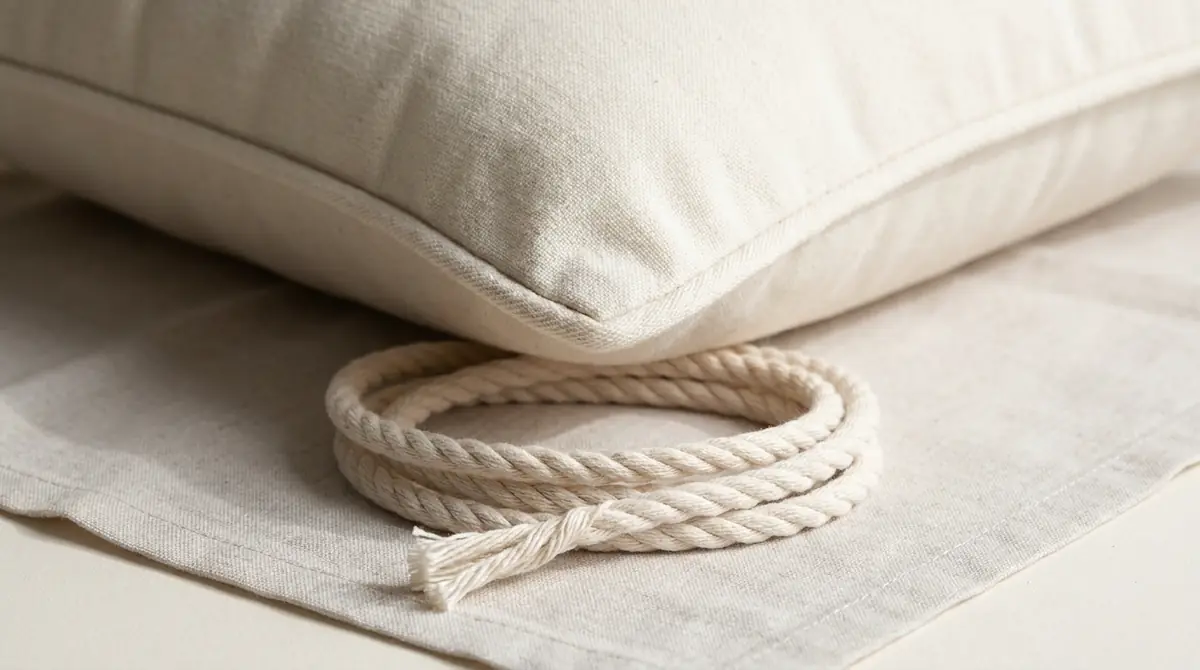
We twist cotton piping cord ourselves on our own twisting frames in 2mm to 8mm diameters, using a deliberately soft twist so the cord squashes flat under a zipper foot instead of fighting the seam. This is the bare filler core you cover in your own fabric — not pre-covered welting — and it ships as natural undyed cotton, or bleached white and dyed shades run in spun polyester, on cones or in hanks. Trial orders start at 1,000 m (about 1,094 yd) per SKU, which is one diameter in one finish, and quotes come back within one working day.
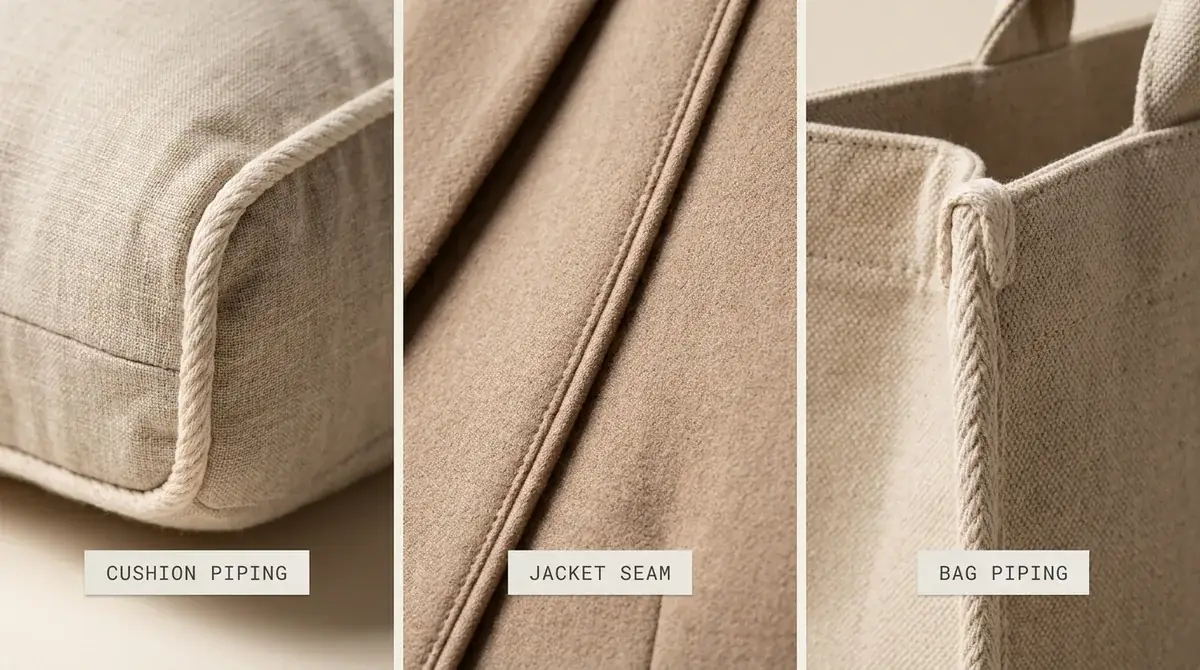
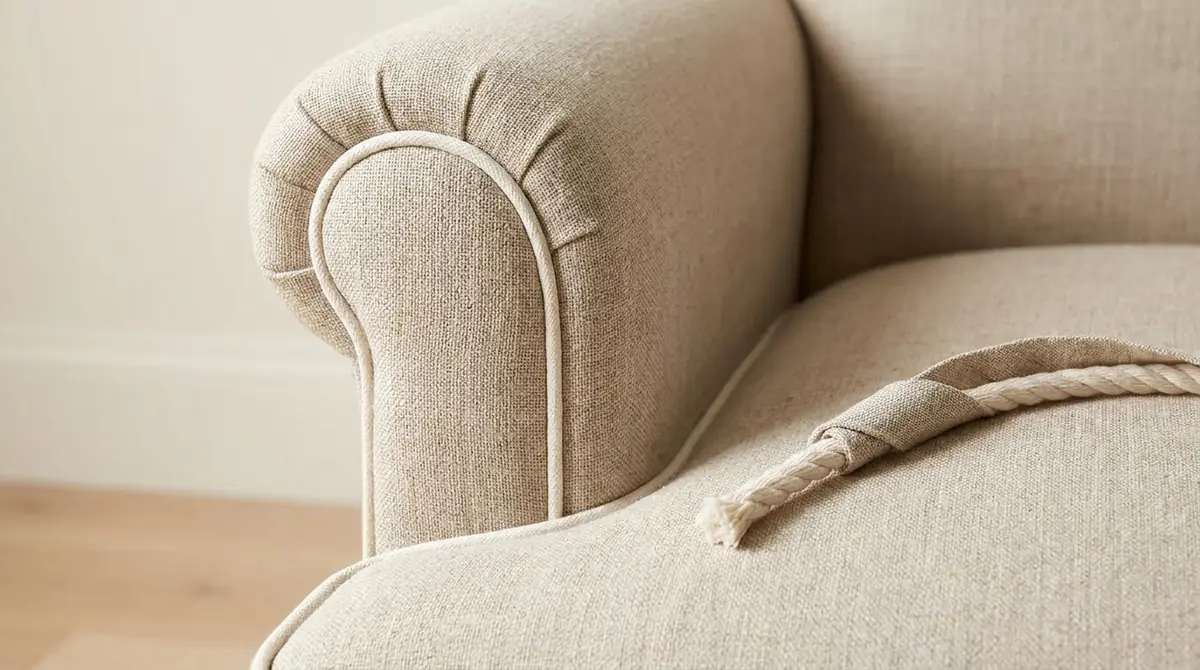
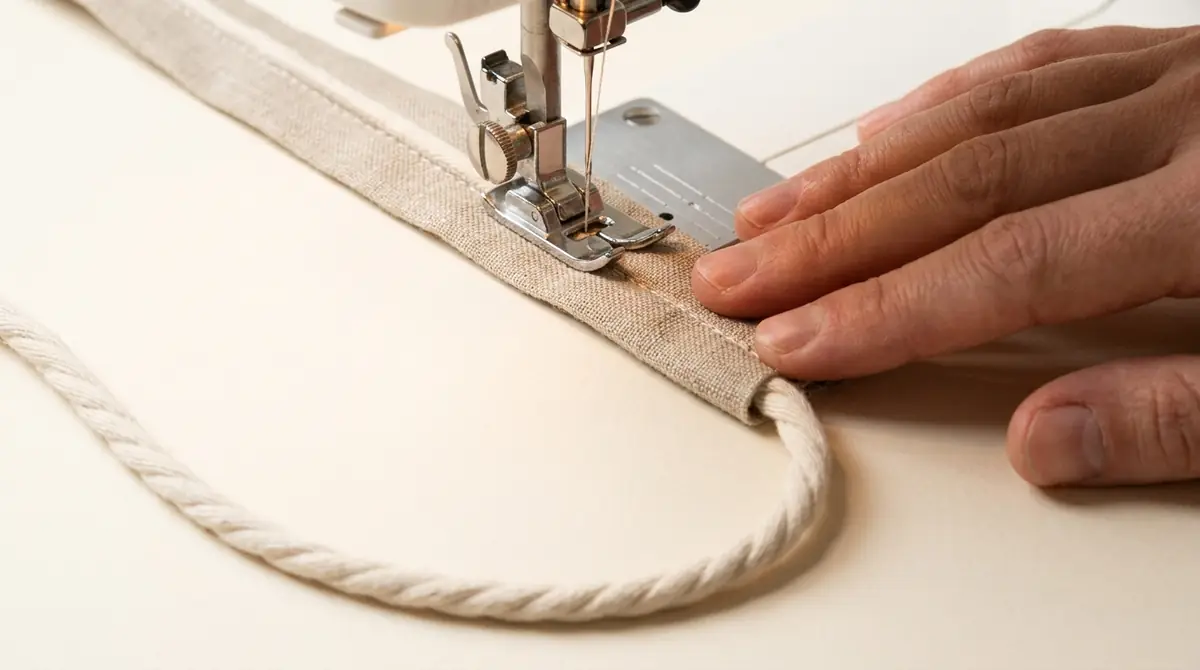
Piping cord is the plain filler core that sits inside a piped seam. You wrap it in a bias strip of your own fabric, run it through a zipper or piping foot, and it becomes the raised edge on a cushion, a sofa arm or a jacket seam. We twist that core here in Jaipur, on the same frames we've run since 1991.
How the cord is built, and why the twist is soft
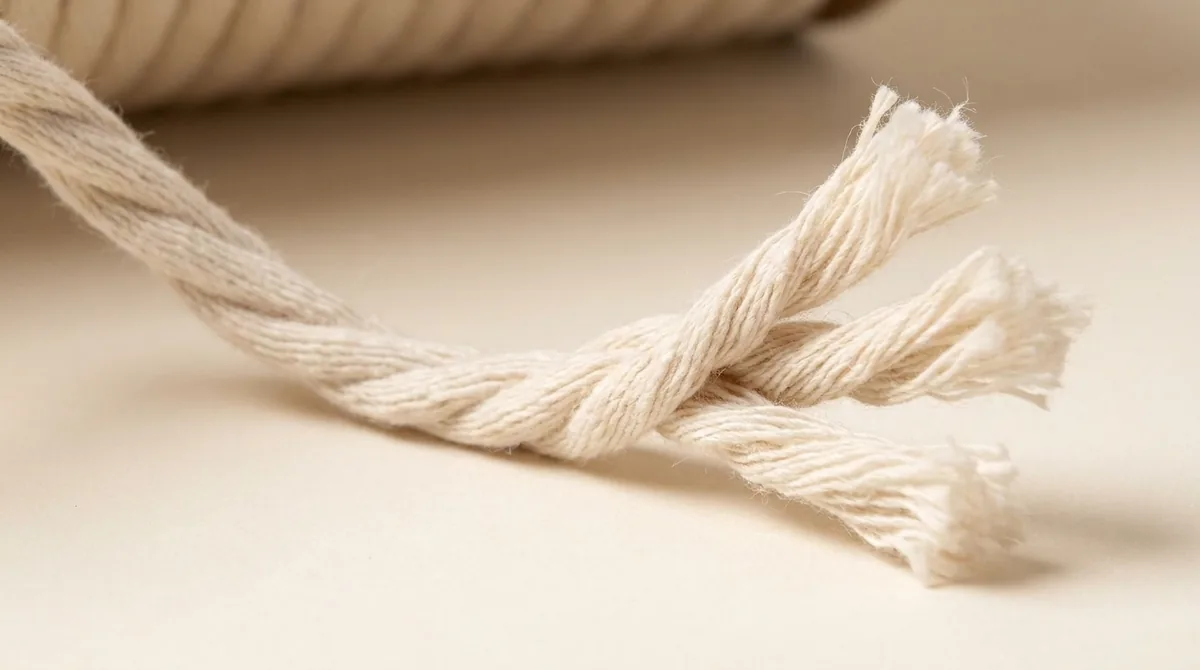
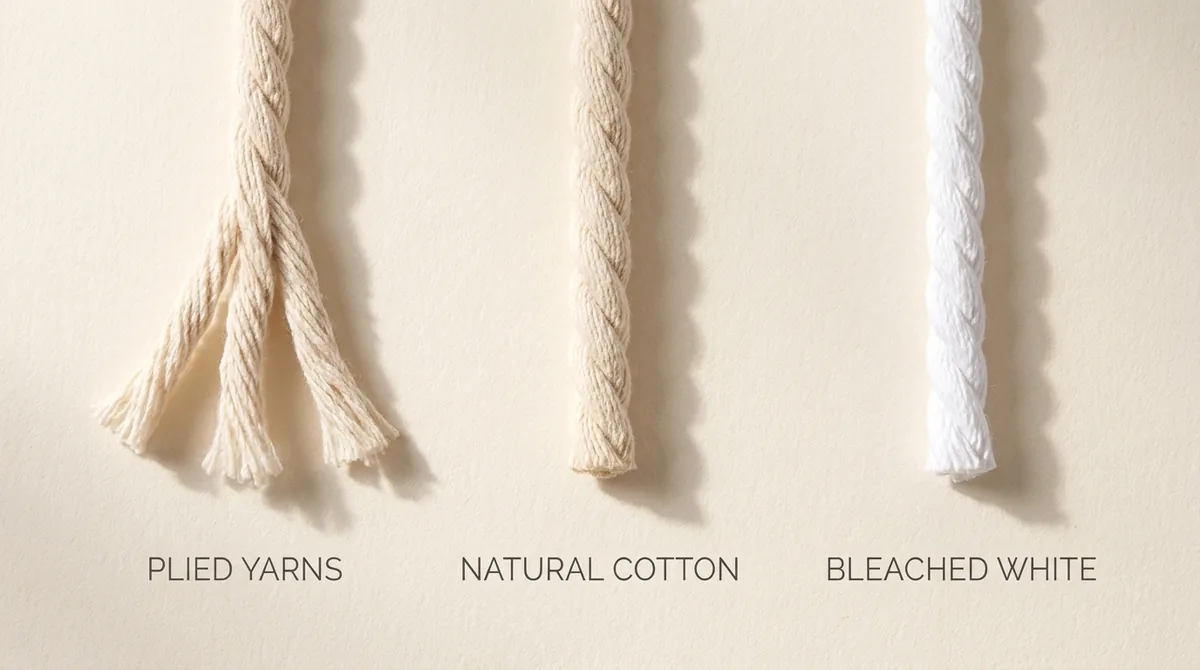
Natural undyed cord is cotton, plied and then twisted on our own frames into a round, even cord — no core, no filler, no coating. Bleached white is a different fibre, and so is a dyed shade: both run in spun polyester finished to look and feel like cotton, which is what holds a level, repeatable colour. At bulk volumes other fibres can be run to your specification. What separates a good piping cord from a bad one is how hard that twist is set.
We run it soft on purpose. A hard-twisted cord stays stubbornly round, so when you fold your bias strip over it and push it under a zipper foot, the seam sits proud and lumpy and the stitch line wanders off the cord. A soft-twist cord flattens slightly under the foot, lets the needle run tight against it, and gives you that crisp continuous ridge along the edge. It also turns a corner without kinking, which is the difference between a clean mitred cushion corner and one you have to unpick.
Because the natural undyed cord is cotton it will take a little shrinkage on the first wash, the same as the fabric around it. Buyers making washable covers usually ask us to pre-shrink the cord so it moves with the cover instead of puckering it, and that's a step we do here rather than send out.
This is bare filler cord — the naked core, sold by the metre for you to cover in your own fabric. It is not pre-covered welting or flanged piping with a fabric tape already attached. And it is not the same product as a decorative twisted furnishing cord: piping cord is meant to be hidden, so it's made plain and even rather than lustrous. In the American trade the same bare cord is called welt cord or welting cord — that is this product, not the covered welt itself, so quote it under whichever name your paperwork uses.
Piping Cord Sizes, Colours and Put-Up
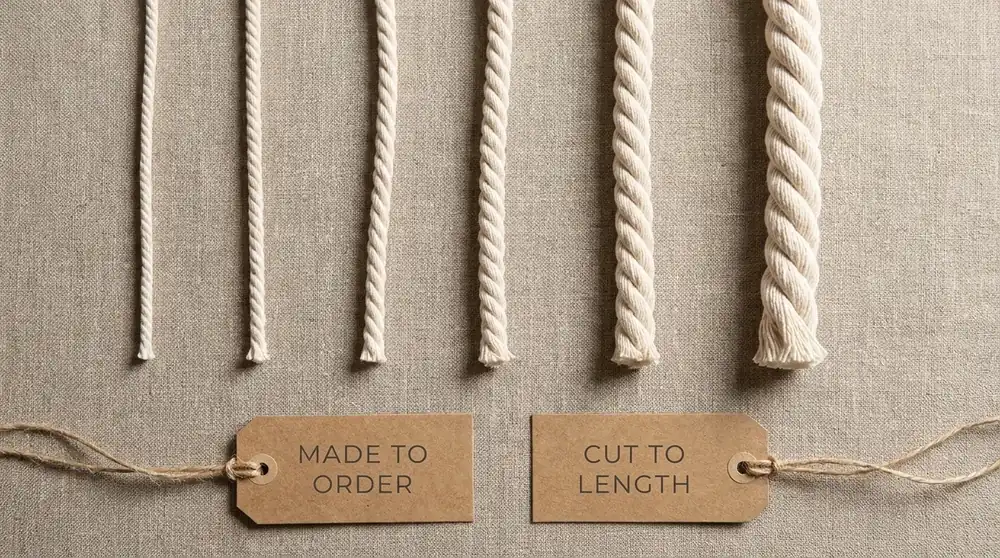
The fine end, 2mm to 4mm (3mm is about 1/8"), is the piping cord for sewing apparel and light soft furnishing — shirt and jacket seams, cushion edges, lampshade trim, bag piping. From 5mm to 8mm — roughly 3/16", 1/4" and 5/16" — is upholstery piping cord territory: sofa and chair welting, headboards, box cushions, outdoor seating and heavy drapery edges. If your spec sits between two of our standard diameters, say so; the frames are set per run, so an in-between size is a setting change rather than a special product.
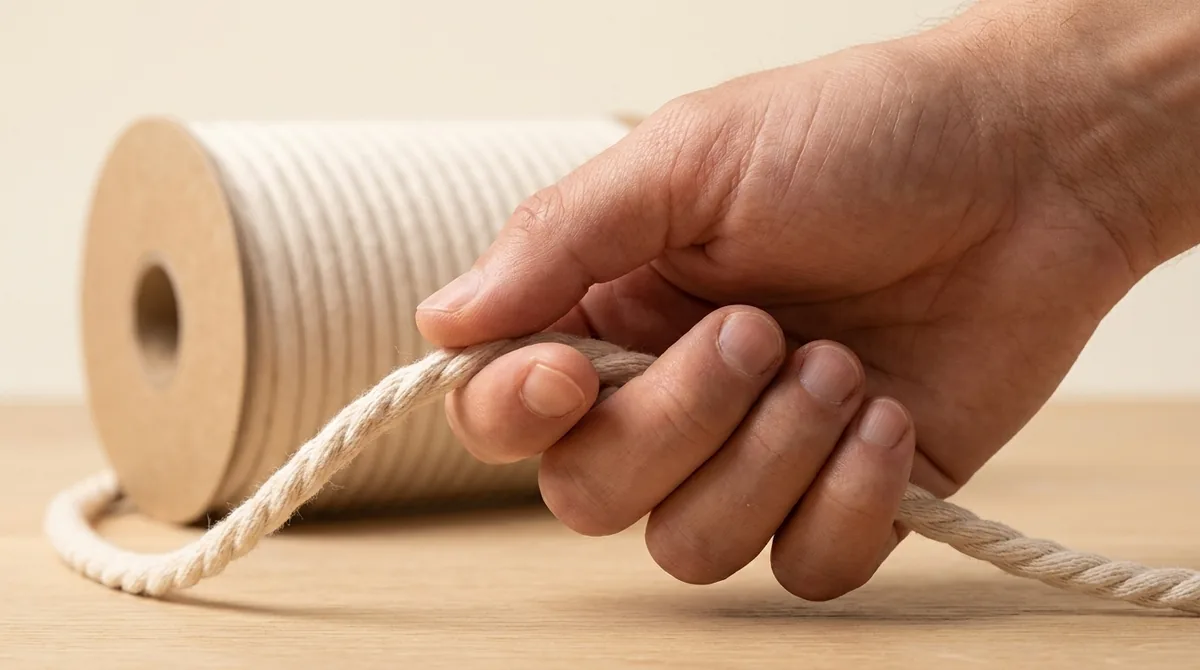
Cord goes out wound on cones for a machine feed, in continuous hanks for hand work, or cut and coiled to a fixed length for kits. Tell us how the cord is consumed at your end — cone weight, hank length, the tolerance you can live with — and we'll wind to that.
Order one diameter up from what looks right on paper. Once the bias fabric wraps around it, the finished piping reads noticeably thinner than the bare cord you measured.
How wholesale buying works with us
Send the spec, not just the product name. Diameter in mm, natural or bleached or a shade reference, whether the finished item gets washed, and what you're piping. If you don't know the diameter, post us 30cm of the cord you buy now and we'll measure and match it.
Trial order from 1,000 m (about 1,094 yd) per SKU. A SKU is one diameter in one finish, so a second diameter is a second 1,000 m. Take one, sew it into an actual sample with your own fabric and your own foot, and check the twist behaves before you commit to anything.
Confirm the finish. Natural, bleached or a lab-dipped shade, and tell us then whether you want the cord pre-shrunk. Both are decided before bulk starts, not after.
Fix the put-up and the port. Cones, hanks or cut lengths, cartoned for export. Give us the destination port and we'll say plainly whether air or sea makes sense at your volume.
Quotes come back within one working day.
What Do Buyers Use Cotton Piping Cord For?
Upholstery is the biggest single use. Sofa and armchair welting, box cushions, headboards, ottomans, banquette seating and dining chair seats all use covered piping along the seams — partly because it looks finished, mostly because the cord protects the seam from wearing through at the edge.
Soft furnishings come next: scatter cushions, bolsters, pelmets, tie-backs, roman blind edges, bed valances and lampshade trim.
In apparel and accessories the finer 2mm to 4mm cords go into jacket and coat seams, corsetry and structured bodices, handbag and luggage piping, shoe and sandal edging, and pet collars and beds. Beyond sewing, the same cord is used as a drawstring core, as filler in quilted and trapunto work, and as a bulking cord in embroidery and machine-corded techniques. If a job needs a plain, even core that behaves under a presser foot, this is the product.
Dispatch and freight
Ex-works Jaipur — about 2 to 6 days by surface across India. Freight is to your account, by your transporter or ours. Export orders are quoted separately with air and sea options.
Cotton Piping Cord, 2–8mm — Specifications
Material
Natural undyed: cotton, ring-spun and plied in-house before twisting. Bleached white and dyed shades: spun polyester, finished to look and feel like cotton. Other fibres to your specification at bulk volumes
Construction
Soft-twist twisted cord off our own twisting frames, plain and even, no core or coating
Product type
Bare filler cord for you to cover in your own fabric; not pre-covered or flanged welting
Sizes
Roughly 2mm to 8mm diameter; in-between diameters made to order
Natural undyed greige as standard, in cotton; bleached white and dyed shades matched in-house to your swatch or Pantone reference in spun polyester
MOQ
1,000 m per SKU, shade and size
Put-up
Wound on cones, continuous hanks, or cut and coiled to a fixed length, cartoned for export
Optional finishing
Pre-shrinking for washable covers; colour-coded shades for multi-diameter workrooms
Lead time
Quote within one working day; 7-14 days air or 25-40 days sea after approval
Origin
Jaipur, India
Frequently asked questions
Is this piping cord already covered in fabric?
No. What we ship is the bare filler cord — the naked core, sold by the metre. You wrap it in your own bias-cut fabric and sew it into the seam. We don't supply pre-covered welting or flanged piping with a tape already attached, because almost every buyer on this line wants the piping to match a fabric we've never seen. If you also need the bias strip to cover it with, we make bias tape as a separate line.
What diameter of piping cord should I order?
For apparel, cushions, lampshades and light soft furnishing, 2mm to 4mm is the usual range — 3mm is about 1/8". For upholstery welting — sofas, chairs, headboards, box cushions — most workrooms sit between 5mm and 8mm, roughly 3/16" to 5/16". Remember the finished piping reads thinner than the bare cord once the fabric wraps it, so if you're between two sizes take the larger. Send us 30cm of what you buy now and we'll measure it and match.
Will the cord shrink when the finished cover is washed?
The natural undyed cord is cotton, so it will take some shrinkage on the first wash, the same as the fabric around it. If the cover is going to be washed, ask us to pre-shrink the cord and we'll do it here before it's wound — that way the cord and the cover move together instead of the seam puckering. Tell us at spec stage rather than after bulk, since it changes the run.
Can you dye piping cord to a specific colour?
Yes, and we dye it here rather than sending it out. One thing to be clear about first: natural undyed cord is cotton, while bleached white and every dyed shade run in spun polyester finished to look and feel like cotton, because that is what takes a level shade and repeats it batch to batch. Most orders go natural or bleached white anyway because the cord is hidden, but where it shows — or where a workroom wants each diameter in a different shade so the floor can tell them apart — we match against a physical swatch or a Pantone reference. A lab dip goes to you for approval before bulk runs, and other fibres can be run to your specification at bulk volumes.
What is the minimum order, and how does it ship from India?
Trial orders start at 1,000 m, about 1,094 yd, per SKU — one diameter in one finish, so a second diameter or a second shade carries its own 1,000 m. One SKU is enough to sew a real sample with your own fabric and your own foot before committing, and several diameters in one shipment is fine at the minimum for each. Bulk is quoted per diameter and shade. Most US buyers air-freight the trial in 7 to 14 days and then move to sea at 25 to 40 days, since the cord is light but bulky and air freight stops making sense at volume. Give us the destination port and target arrival date and we'll work backwards from it.
What does piping cord cost wholesale?
₹3-10 per metre ex-works Jaipur. Diameter sets the band — 2 mm at the floor, 8 mm at the top — and pre-shrunk cord for washable covers is quoted a step above raw. Upholstery workshops usually fix a rate on one diameter and draw against it.
Do you supply piping dori for sofa and cushion covers?
Piping dori is exactly this cotton piping cord — roughly 2 mm to 8 mm, the soft core upholsterers and tailors sew inside a fabric fold to make piping on sofas, cushions and garments. Each diameter is its own SKU at 1,000 metres, twisted in our own Jaipur factory.