Home › Cords & Ropes › Jute Thread & Twine — Heavy 3-Ply, Twisted in Jaipur
Jute Thread & Twine — Heavy 3-Ply, Twisted in Jaipur
✓ Specs last checked: 2026-09-02
We twist heavy 3-ply jute garden twine — natural golden or vat-dyed green, wound into garden-centre balls and refill dispensers at our Jaipur factory. Trial orders start at 1,000 metres (about 1,094 yards) per SKU. We have been twisting cordage in Jaipur since 1991 and ship worldwide.
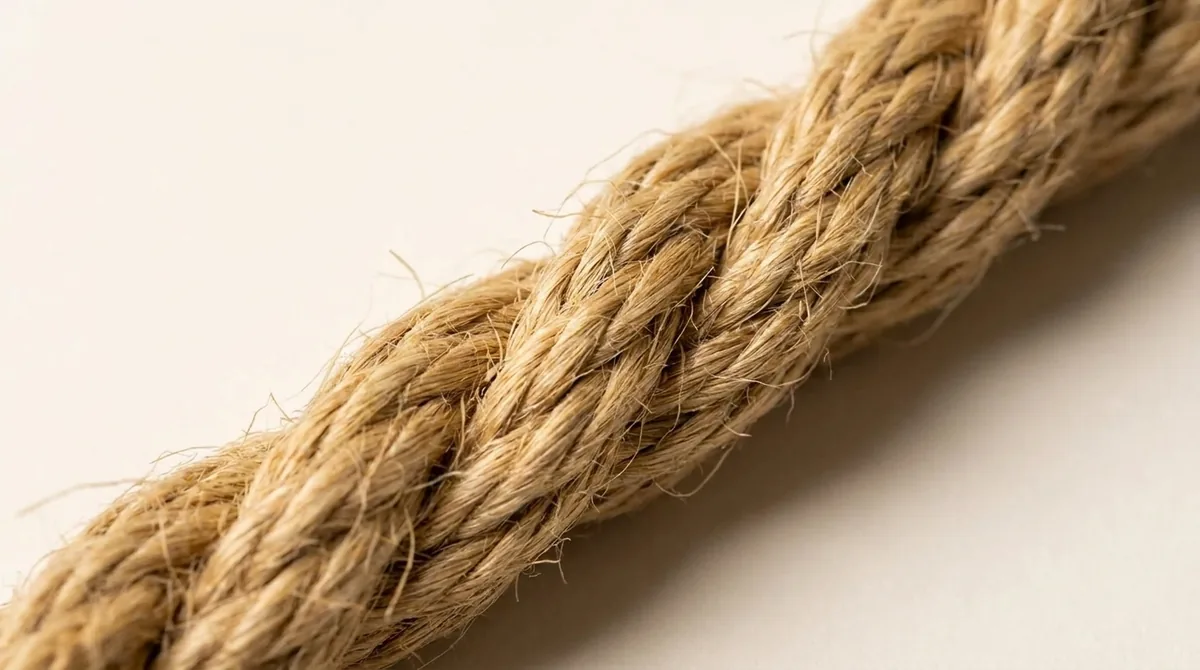
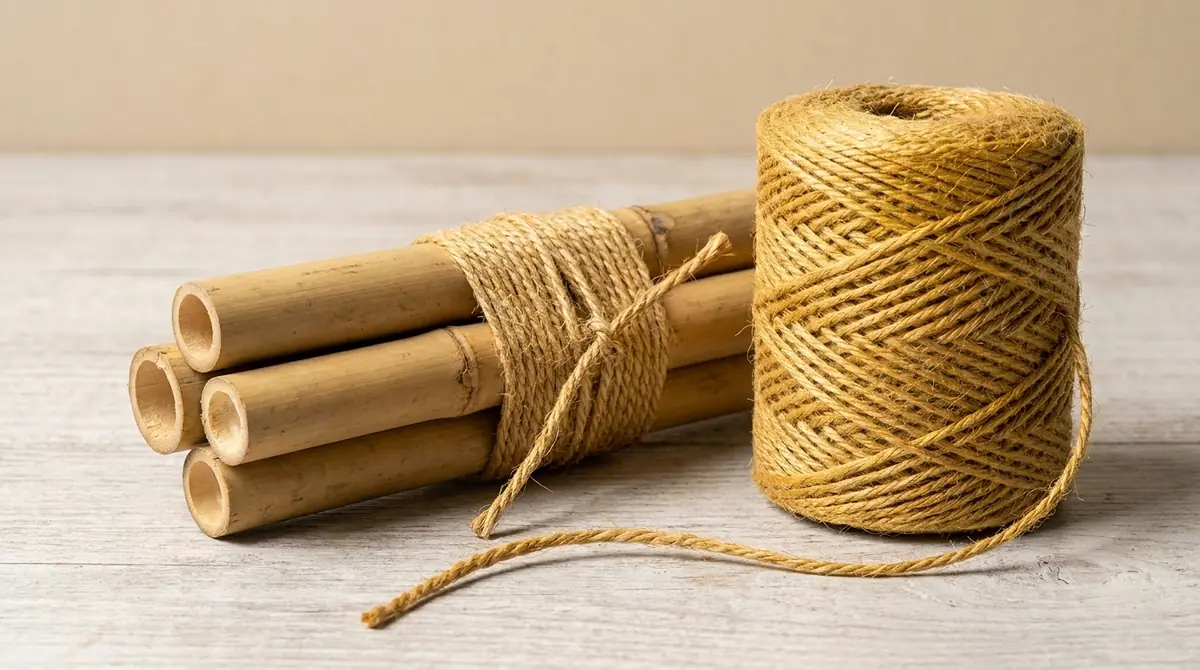
Garden twine is the thicker, tougher end of the jute twine family — the same fibre and the same twisting frames we use for craft twine, run to a heavier 3-ply so it takes the pull of a tomato tie, a cane bundle or a row of runner beans without parting halfway through the season.
We twist, dye and wind it ourselves in Jaipur. The ply, the diameter, the ball length and the dispenser format are all things we can set to your specification rather than things you have to accept off a stock list.
How Our Garden Twine Is Made — Heavy 3-Ply Jute
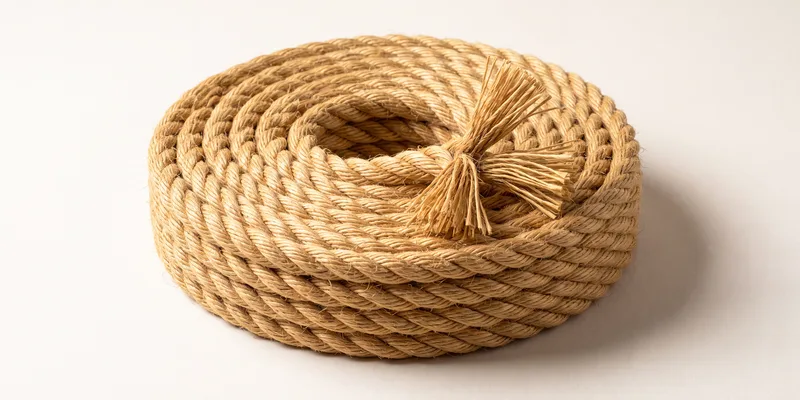
It begins as jute yarn, spun from the long bast fibres of the jute plant. We feed that yarn onto the rope-twisting frames and twist it into a 3-ply, running a heavier yarn count and a firmer twist than we use on the craft twine line. The result is a rounder, denser cord that keeps its shape coming off the ball and does not go floppy once it has been out in a bed for a few weeks.
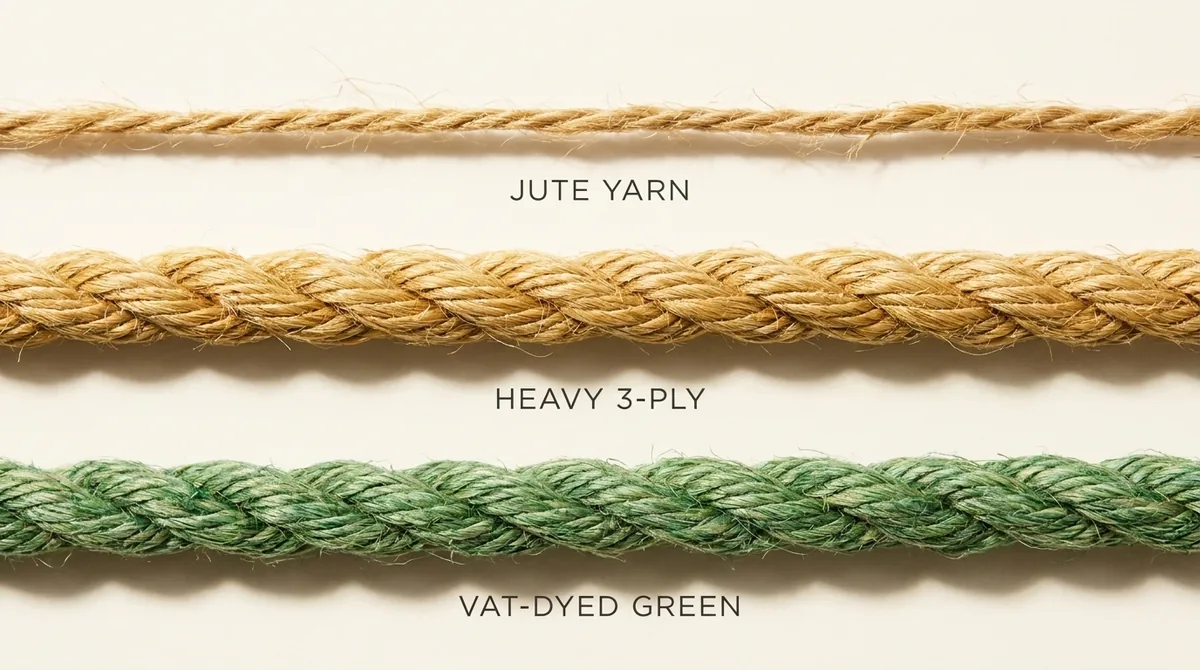
Colour is either left alone or taken into the vat dye house. Because jute is a natural fibre and takes dye unevenly, green comes out with a heathered, slightly mottled character rather than a flat paint colour. That is the nature of the fibre, not a fault in the batch. There is no difference in strength between the two: the dyeing changes the look, not the ply, the twist or the way the twine behaves on a cane.
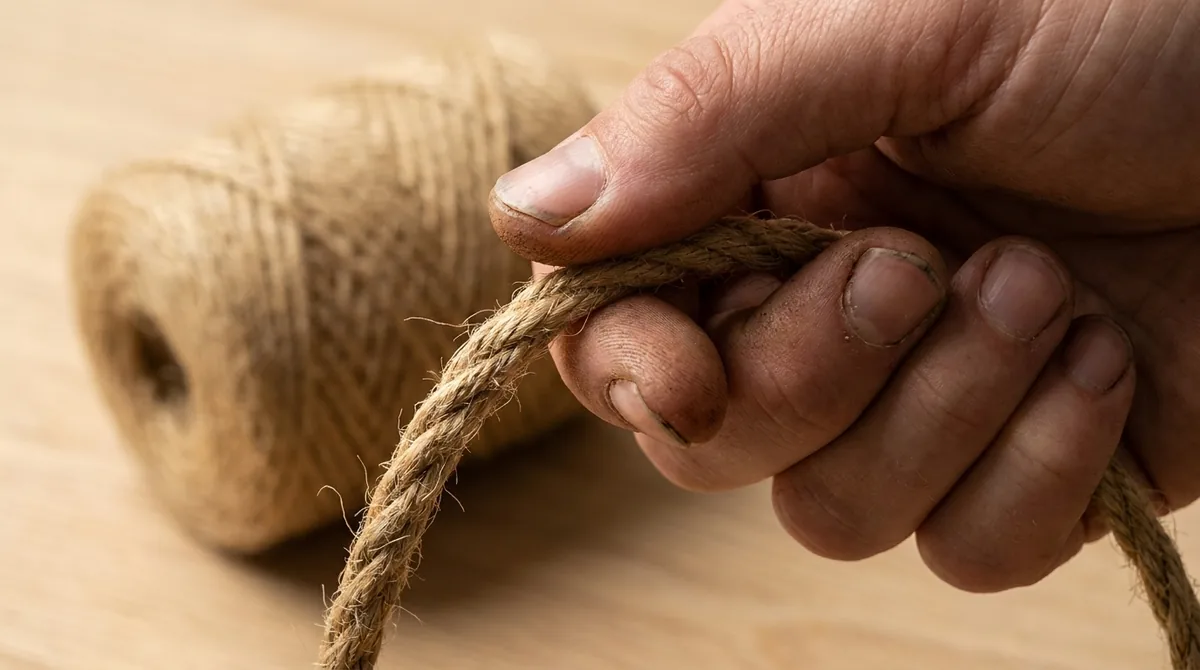
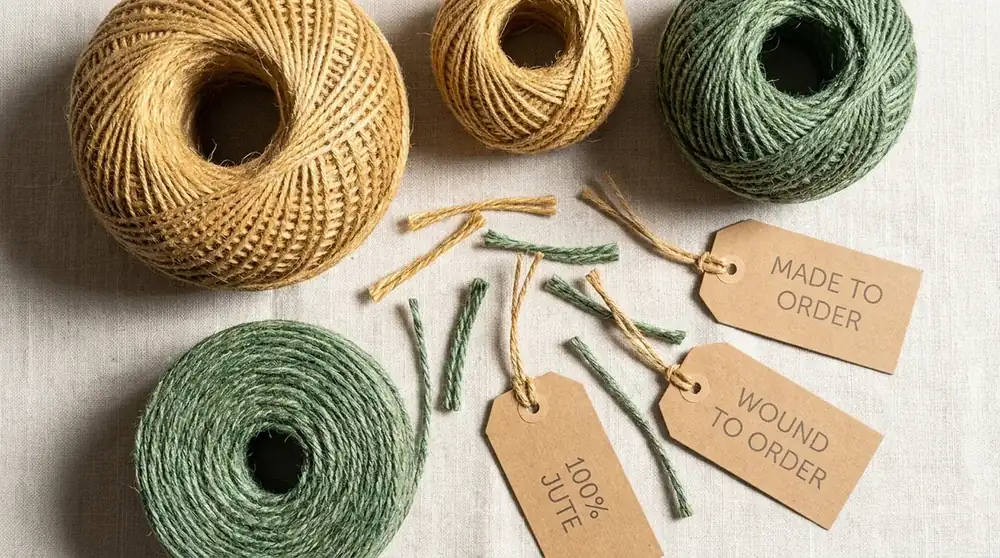
Garden twine is pulled one-handed by someone who is already holding a cane, so it has to feed from the centre without collapsing into a tangle. We wind balls that pull cleanly and, where the buyer wants it, wind to a core and weight that drops straight into a dispenser tin or box.
How wholesale buying works here
The sequence is simple: pick your diameter, pick natural or green, pick the put-up, and start from 1,000 metres — about 1,094 yards — per SKU. A SKU here means one combination of those three things — natural in a 150 metre ball and natural in a 300 metre dispenser refill are two SKUs, because the winder is set differently for each.
Tell us the end use and the shelf — a photo of your current display or the competing product tells us more than a written spec
Agree diameter, colour and put-up — this is where nearly all of the back-and-forth happens
Trial run from 1,000 metres per SKU — twisted and wound on the same frames that will run your bulk order, not a lookalike sample
Season order at your volume — same twist setting, same shade batch reference, same ball weight
Air freight runs roughly 7-14 days to the US and 8-12 days to the UK; sea freight runs roughly 25-40 days to the US and 22-30 days to the UK. Twine is light for its bulk, so a first trial usually goes by air and the season's stock goes by sea.
What Do Commercial Growers Use Garden Twine For?
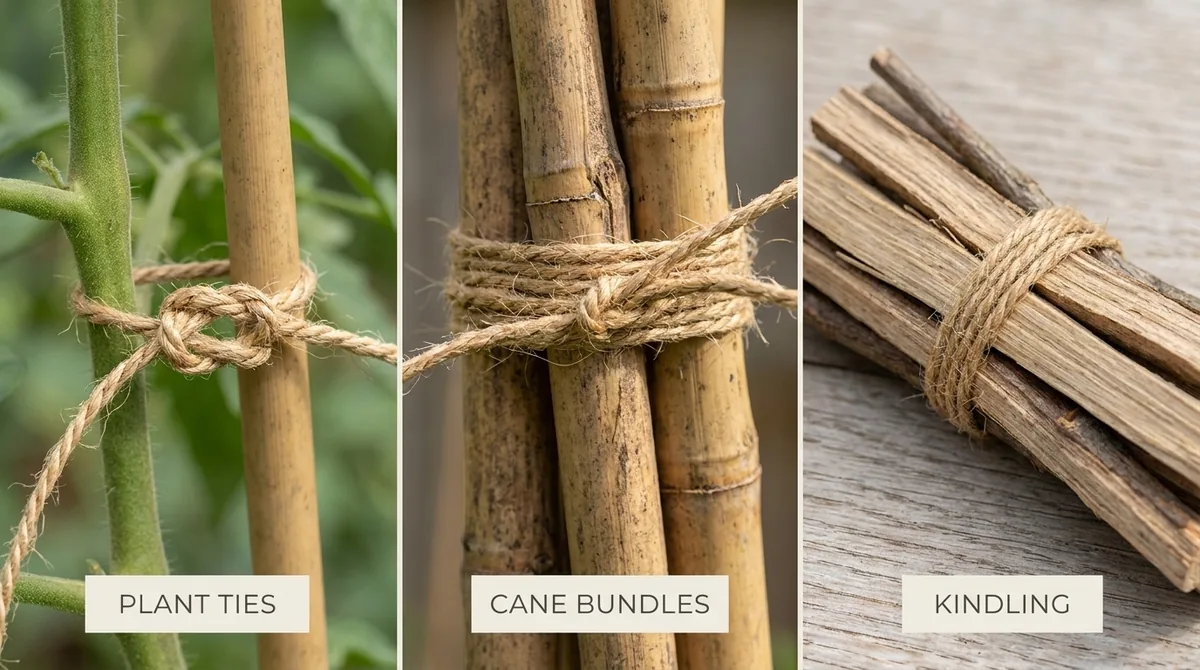
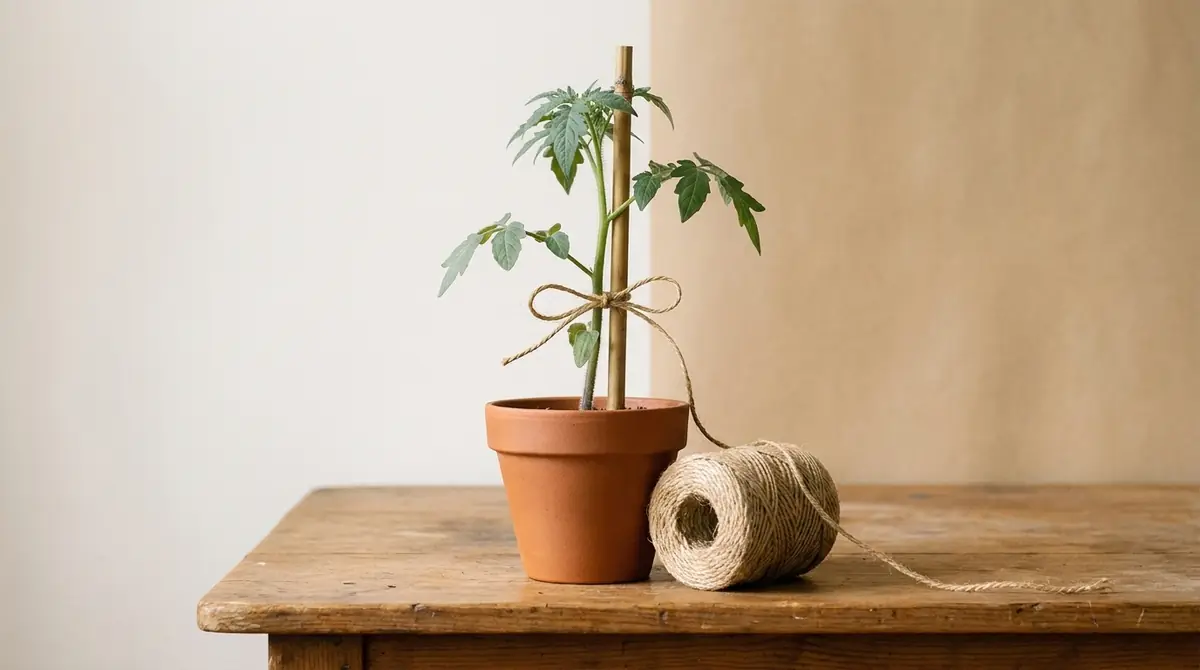
Plant support and training is the core of it — tying tomatoes, peppers and climbing beans to canes and wires, training vines along a wall, bundling canes into a wigwam, staking young trees. The twine is cut, used and left to rot down with the plant waste at the end of the season, which is why growers buy jute instead of a plastic tie.
Beyond the garden, the same 3-ply gets bought for general estate and smallholding work — bundling kindling, tying fleece and netting, temporary marking out. Anywhere a compostable tie beats a cable tie.
Jute is a natural fibre and loses a significant part of its strength once it is soaked. Heavy 3-ply garden twine is made for tying, training, bundling and staking — not for lifting, hauling, towing or anything that carries weight above the ground. If your application is load-bearing, ask us about a synthetic cord instead and we will point you to the right one.
Also sold as heavy jute twine or garden string
Buyers ask for this heavy 3-ply by several names — heavy jute twine, jute thread, garden string, horticultural twine. Quote it under whichever name your paperwork uses. If you need a lighter 2-ply jute twine for packaging, tagging or craft work, that is a different line — see our jute rope page.
Dispatch and freight
Ex-works Jaipur — about 2 to 6 days by surface across India. Freight is to your account, by your transporter or ours. Export orders are quoted separately with air and sea options.
Jute Thread & Twine — Specifications
Material
100% natural jute fibre, no synthetic blend
Construction
1- to 4-ply to order — the garden standard is the heavy 3-ply, twisted on rope-twisting frames
Sizes
Approx. 3mm to 5mm depending on yarn count
Imperial equivalents
3mm ≈ 1/8", 5mm ≈ 3/16"; 1,000 m ≈ 1,094 yd
Colours
Natural golden; vat-dyed green in-house
MOQ
1,000 m per SKU, shade and size
Put-up
Garden-centre balls and dispenser refills, 1,000 metres (1,094 yards) upwards
Packing
Balls or refills packed in export cartons
Lead time
7-14 days air / 25-40 days sea to the US; 8-12 days air / 22-30 days sea to the UK
Origin
Made in Jaipur, India — twisted, dyed and wound in-house
Frequently asked questions
How is garden twine different from ordinary jute twine?
It is the same fibre off the same twisting frames, run heavier. Garden twine is a firm 3-ply at roughly 3mm to 5mm — about 1/8" to 3/16" — twisted tighter so it holds a knot under tension on a cane or wire. Craft and gift twine is typically a softer 2-ply around 2mm, made to knot small and flat. If you sell into both trades they are genuinely two different lines, not one product relabelled.
Can you wind to our dispenser or peg-hook format?
Yes, and it is worth sorting at quote stage rather than after the first order. Send us the internal dimensions of the tin or box, the core diameter and the ball weight you are working to, and we set the winder to match so the new stock drops straight into your existing display or dispenser without you changing packaging.
Does the green dye come out the same shade on every order?
Close, but not identical to the metre. Jute is a natural fibre with its own variation, so vat-dyed green lands as a heathered, slightly mottled shade rather than a flat one, and batches move a little. We keep a shade batch reference against your order and match to it on repeats. If shelf consistency is critical for you, order the season in one batch rather than in parts.
What is the minimum order, and can I test more than one version?
Trial orders start at 1,000 metres per SKU, where a SKU is one combination of diameter, colour and put-up. It counts per SKU rather than per order, so natural and green in both a ball and a dispenser refill is four SKUs and 4,000 metres. Most first orders prove one version on the shelf before widening the range.
What does jute garden twine cost?
₹3-8 per metre ex-works Jaipur. The 2-ply natural sits at the floor; heavy 3-ply and dyed green toward the top. Balls and dispenser refills carry the same rate — the put-up changes the packing, not the price band.
How long does jute garden twine last outdoors?
It is designed to see out a growing season and then break down, which is the point of it. Left tied on a cane through a normal spring and summer it holds; through a wet winter it weakens and eventually rots into the soil, so it composts with the plant waste instead of being picked out of it. If you need a tie that survives several years outdoors, jute is the wrong material and we would steer you to a synthetic.
Do you make jute sutli for garden and packing use?
Jute sutli is the trade name for this heavy garden twine — a firm 3-ply at roughly 3 mm to 5 mm, twisted in Jaipur for tying plants, canes and parcels. Natural or vat-dyed green, on balls and dispenser refills, minimum 1,000 metres per SKU.