Home › Cords & Ropes › Danish Cord for Chair-Seat Weaving, Twisted in Jaipur
Danish Cord for Chair-Seat Weaving, Twisted in Jaipur
✓ Specs last checked: 2026-09-02
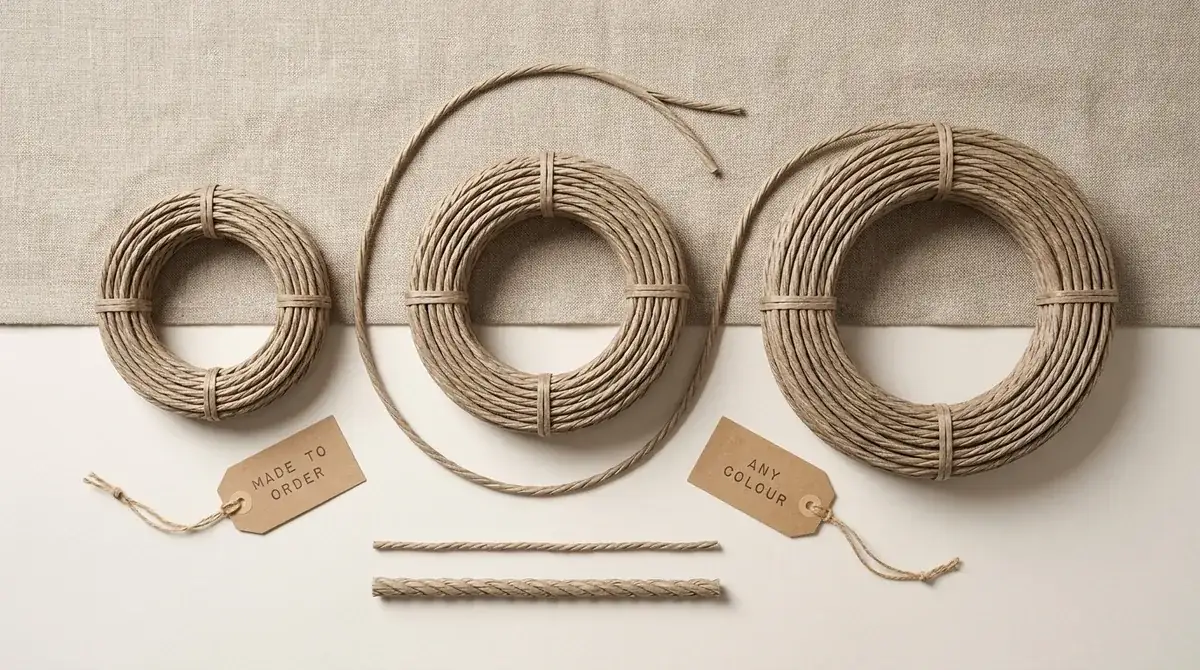
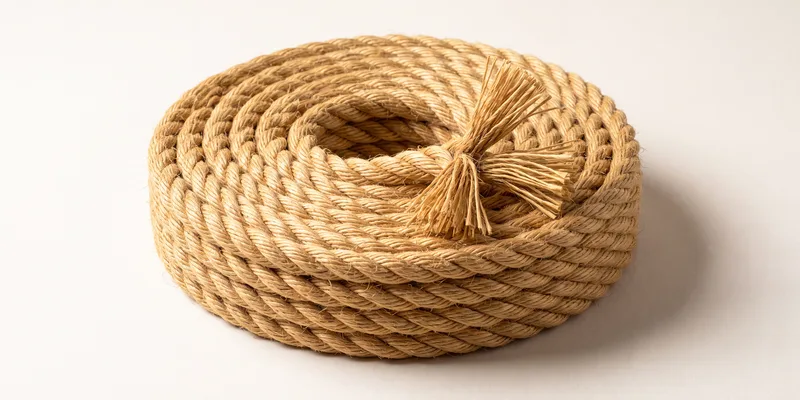
We twist Danish cord on our own rope line as a 3-ply cord in 2mm to 3mm, laced or unlaced, and coil-wind it into 1kg hanks — about 2.2 lb — so a seat weaver can work straight off the coil. Cotton is what we run today on the natural undyed cord, while bleached white and dyed shades run in spun polyester finished to look and feel like cotton. Kraft paper Danish cord is made to order on the same line rather than held in stock, so a paper order starts with a sample run before bulk. Trial orders begin at 1,000 m (about 1,094 yd) and quotes come back within one working day.
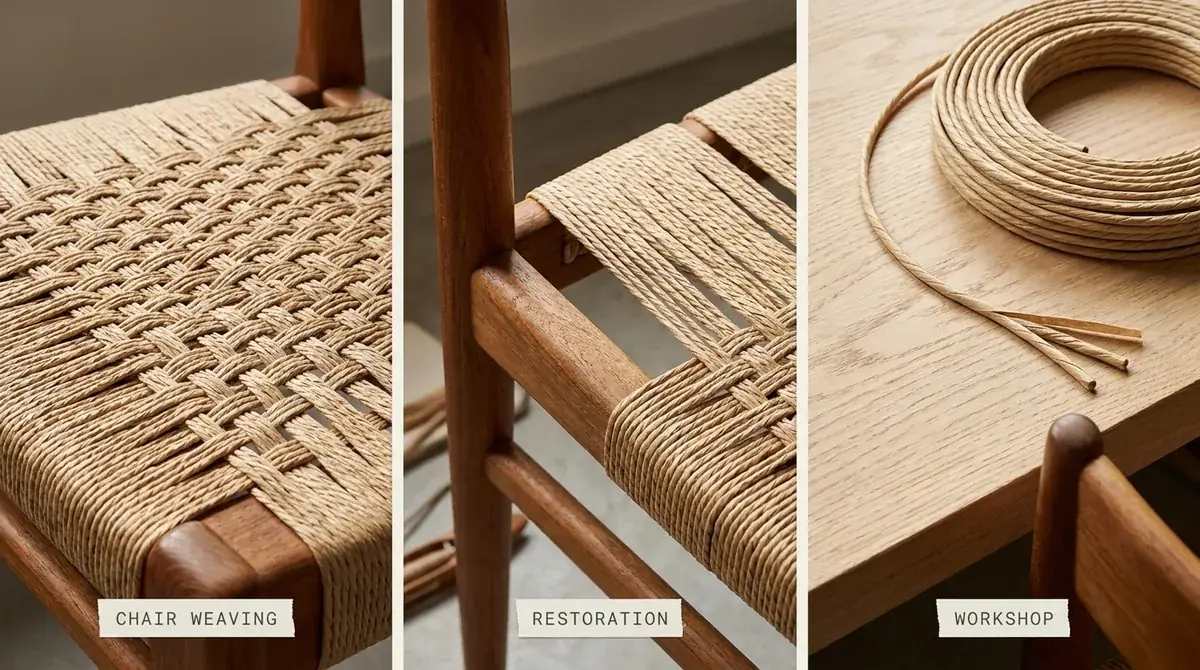
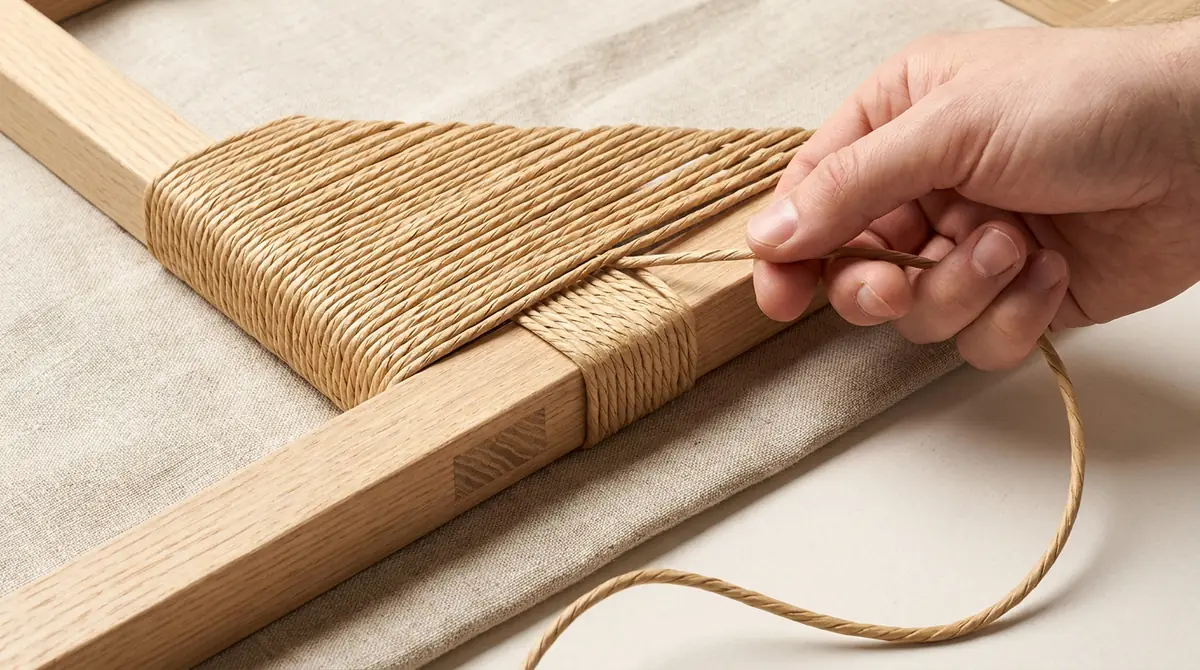
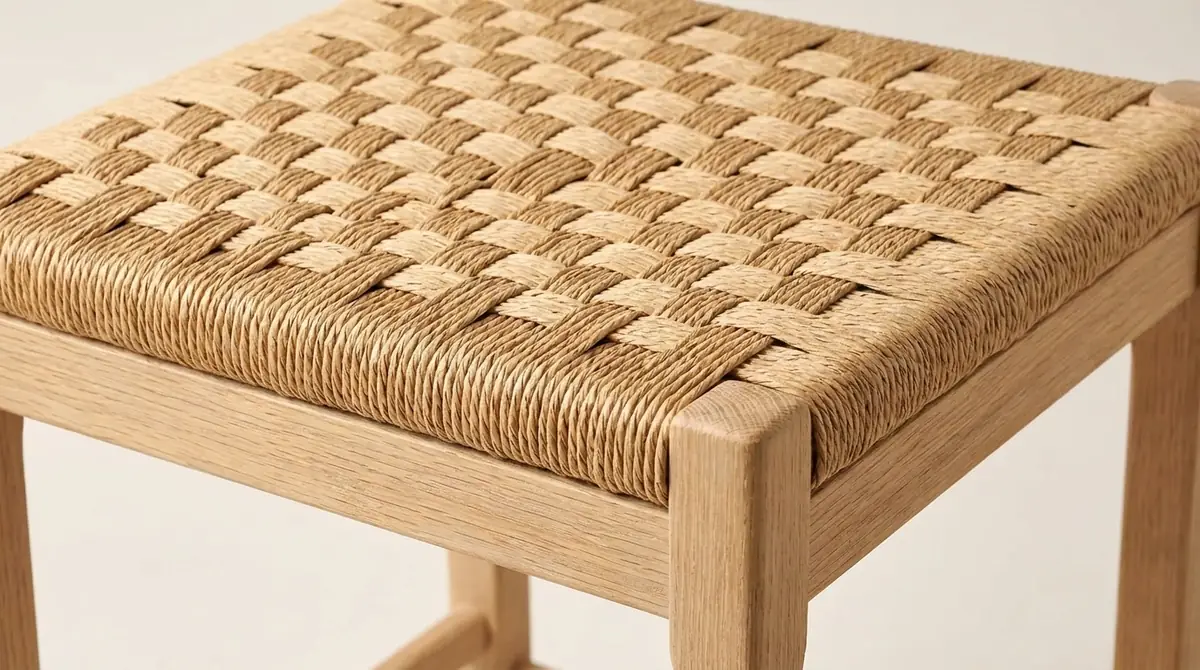
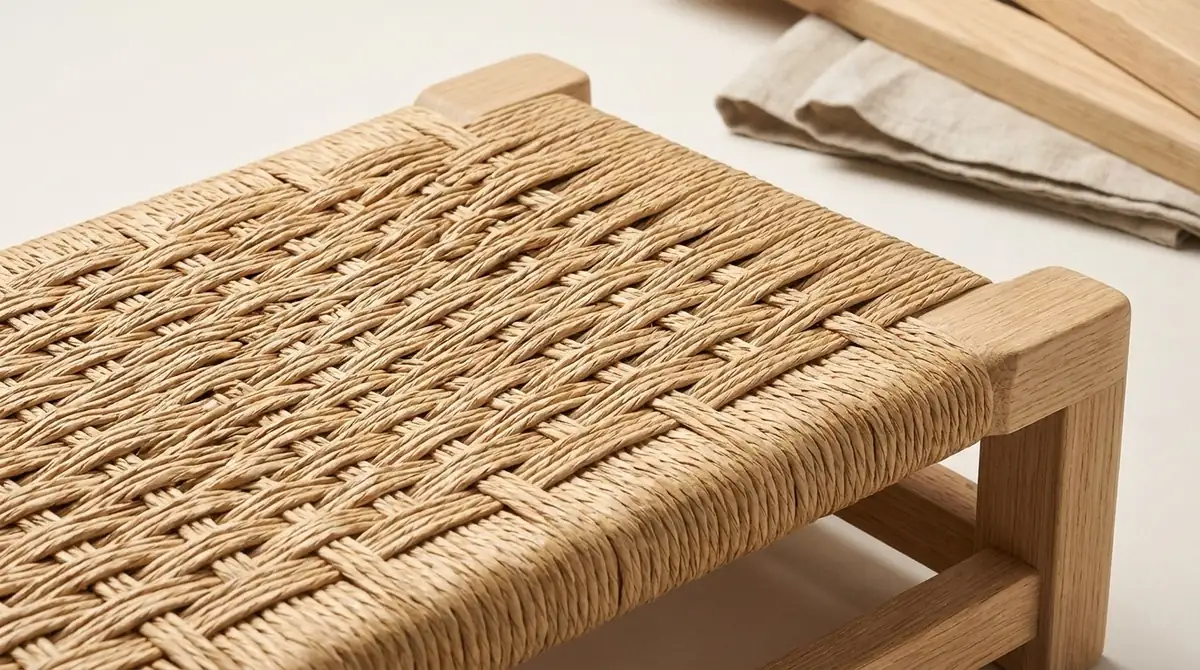
Danish cord is the twisted cord woven across the frame of a mid-century Danish chair seat — wrapped around L-nails, pulled taut in a warp and weft, and left to carry the weight of whoever sits on it.
How the cord is built, and what we can honestly supply
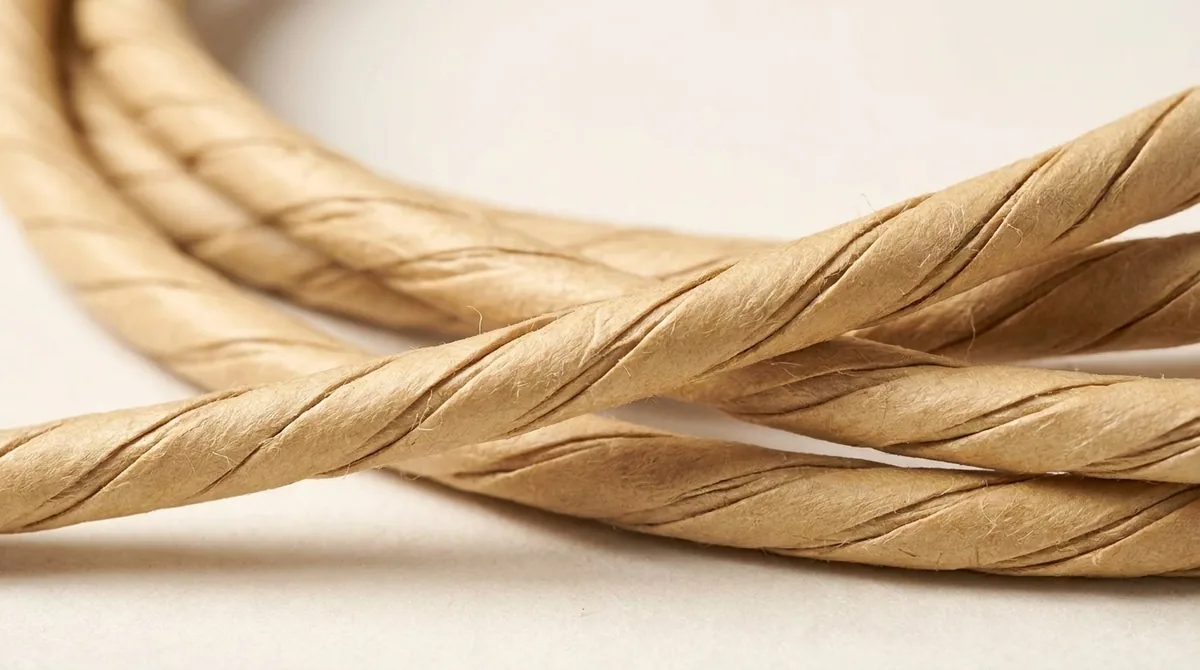
Danish cord is a 3-ply twisted cord — three strands twisted together on a rope frame into a firm, round, even cord that holds tension without stretching out of shape once it's woven. We twist ours on the same rope line we've run in Jaipur since 1991, in 2mm to 3mm, which is the working range seat weaving sits in.
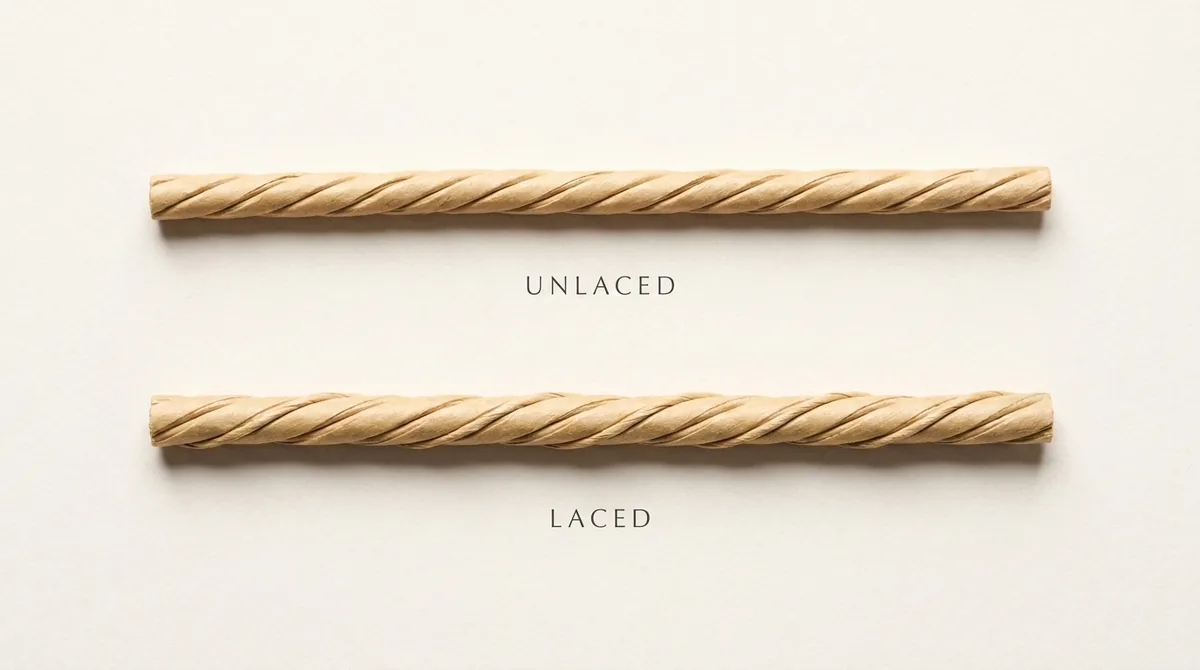
It comes in two looks. Unlaced is the plain 3-ply twist: smooth, uniform, and the one most restorers reach for first. Laced carries a finer strand run into the groove of the twist, which gives the woven seat a visible texture and a slightly ridged surface. Neither is stronger than the other — it's an appearance choice, and it should match whatever is already on the chair if you're replacing one seat out of a set.
On material: cotton is what we run today on the natural undyed cord, and bleached white and dyed shades run in spun polyester finished to look and feel like cotton. Cotton Danish cord feels softer in the hand than paper and ships on a normal lead time. Kraft paper Danish cord — the traditional material — is not a stock SKU here. Our rope line can twist paper, and we will run it to order, but it starts with a sample run against your reference cord rather than a pull from a shelf. If you need paper, tell us up front and send a length of what you use now; we'll come back with a sample and a realistic timeline before anyone commits to bulk.
Sizes, colour and how it's coiled
We twist Danish cord at 2mm to 3mm, so the thick end is about 1/8". Seat weaving is unforgiving about diameter — a cord even slightly too thick throws the row count off across the width of the frame, and one too thin leaves the weave loose and the seat sagging within a season. If you're matching an existing chair, measure the old cord or post us 30cm of it and we'll match rather than guess.
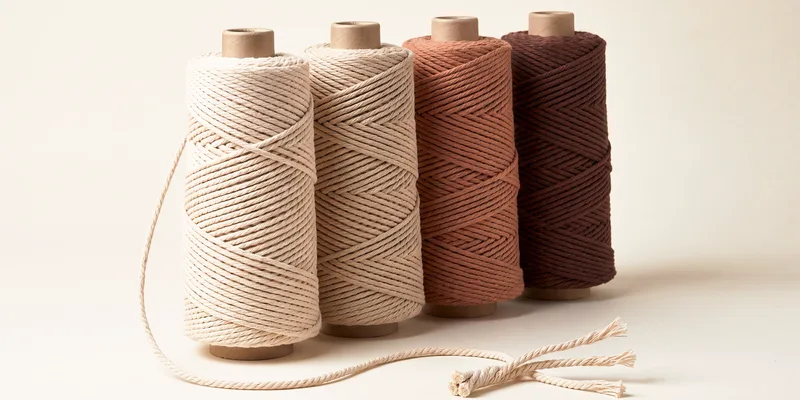
Cotton cord goes out natural undyed as standard, which is the closest match to the warm greige tone of traditional paper cord. A bleached white is also standard. Bleached white is a different fibre from the natural, and so is a dyed shade: both run in spun polyester finished to look and feel like cotton, matched here in Jaipur against a physical swatch or a Pantone reference, with a lab dip out for approval before any bulk run. Other fibres can be run to your specification at bulk volumes. Paper cord, when we run it, is supplied in its own natural kraft shade.
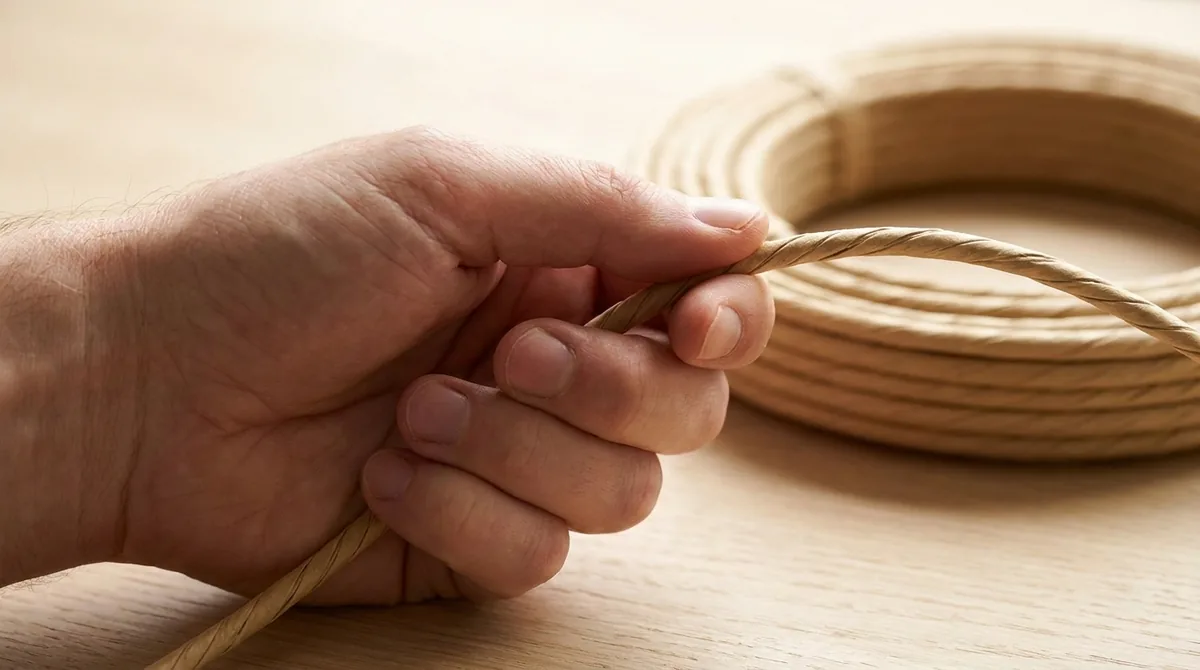
Put-up is coil-wound 1kg hanks, about 2.2 lb each. The coil pays out from the centre without tangling as you wrap around the L-nails, and it's a weight one person can handle on a bench. Tell us how many seats a hank has to cover in your shop and we'll wind to a size that suits the job.
If you're replacing one seat in a matched set, order laced or unlaced to match the chairs you're keeping — the two weave up looking noticeably different side by side.
How wholesale buying works with us
Send the spec, not just the product name. Diameter in mm, laced or unlaced, cotton or paper, natural or a shade reference, and hank weight. If you're matching an existing chair, 30cm of the old cord tells us more than a paragraph.
Trial order from 1,000 m. Weave one seat with it, take it to tension, and see how the cord behaves before you order for a workshop.
Confirm the material route. Cotton runs on normal lead time. Paper is a made-to-order development run — we sample first, agree the result, then schedule bulk.
Fix the put-up and the port. 1kg coil-wound hanks as standard, cartoned for export. Give us the destination port and we'll say plainly whether air or sea makes sense at your volume.
Dispatch and freight
Ex-works Jaipur — about 2 to 6 days by surface across India. Freight is to your account, by your transporter or ours. Export orders are quoted separately with air and sea options.
Danish Cord for Chair-Seat Weaving, Twisted in Jaipur — Specifications
Material
Natural undyed cord: cotton, twisted in-house as the current running stock. Bleached white and dyed shades: spun polyester, finished to look and feel like cotton. Other fibres to your specification at bulk volumes. Kraft paper twisted to order on the same line, not held as stock
Construction
3-ply cord twisted on our own rope line; laced or unlaced
Sizes
2mm to 3mm diameter, the working range for chair-seat weaving
Imperial equivalents
3mm ≈ 1/8"; 1kg hank ≈ 2.2 lb; 1,000 m ≈ 1,094 yd
Colours
Natural undyed as standard, in cotton; bleached white and dyed shades matched in-house to your swatch or Pantone reference in spun polyester; paper supplied in natural kraft
MOQ
1,000 m per SKU, shade and size
Put-up
Coil-wound 1kg (about 2.2 lb) hanks that pay out from the centre; other hank weights wound to request, cartoned for export
Sampling
Physical sample against your reference cord before bulk; lab dip on any dyed shade
Lead time
Quote within one working day on cotton; paper quoted after a sample run
Origin
Jaipur, India
Frequently asked questions
Do you supply paper Danish cord or only cotton?
Cotton is what we run as standing production, and it ships on a normal lead time. Kraft paper Danish cord — laced and unlaced — we twist to order on the same rope line, but it is not a stock item, so a paper order starts with a sample run against a length of your current cord and an agreed timeline before bulk is scheduled. We say that plainly rather than take the order and explain later. If your restoration work must be traditional paper, send us your reference cord first.
What is the difference between laced and unlaced Danish cord?
Unlaced is the plain 3-ply twist — smooth and uniform, and the more common choice for restoration. Laced has a finer strand run into the groove of the twist, which gives the finished seat a visible ridged texture. It is an appearance difference, not a strength one. If you're reweaving one chair out of a matched set, order whichever the surviving chairs already use, because the two look clearly different woven up side by side.
What diameter should I order for a chair seat?
We twist 2mm to 3mm, which is the range seat weaving works in. Diameter matters more here than on most cords: too thick and the row count no longer fits across the frame, too thin and the seat goes slack. If you are matching an existing chair, measure the old cord across the twist, or post us 30cm of it and we'll match it rather than work from a description.
How is it wound, and can I get a different hank size?
Standard put-up is coil-wound 1kg hanks, about 2.2 lb each, that pay out from the centre, so the cord feeds cleanly while you wrap around the L-nails instead of tangling on the bench. We can wind other hank weights — tell us how many seats one hank needs to cover in your shop and we'll wind to that instead of to our default. Everything is cartoned for export.
What is the minimum order and how does it ship to the US?
Trial orders start at 1,000 m, about 1,094 yd, kept small deliberately so you can weave a real seat and take it to tension before ordering for a workshop. Bulk is quoted per material, diameter and shade. Most US buyers air-freight the trial in 7 to 14 days and then move to sea at 25 to 40 days, since coiled cord is light but bulky and air freight stops making sense at volume. Give us the destination port and a target arrival date and we'll work backwards from it.
What does Danish cord cost?
₹6-18 per metre ex-works Jaipur. Laced and unlaced price differently — the twist density is not the same job — and the 1 kg centre-feed hanks are included in the rate. For a chair-seat workshop buying through the year, we hold the quoted rate on reorders.