Home › Cords & Ropes › Rattail Cord — Round-Braided Satin Cord, Factory-Direct from Jaipur
Rattail Cord — Round-Braided Satin Cord, Factory-Direct from Jaipur
✓ Specs last checked: 2026-09-02
Saras Udyog braids rattail cord on its own machines in Jaipur, India — 1mm, 2mm and 3mm round satin cord in rayon or polyester filament, piece-dyed for the high gloss the product is bought for, heat-sealed and tipped at the ends, and wound onto spools. Trial orders start at 1,000 meters per shade, so you can test a full colour card before committing to a season, and we ship worldwide.
Rattail is a round-braided satin cord, made end to end on our own floor in Jaipur since 1991 — braiding, dyeing, sealing, spooling.
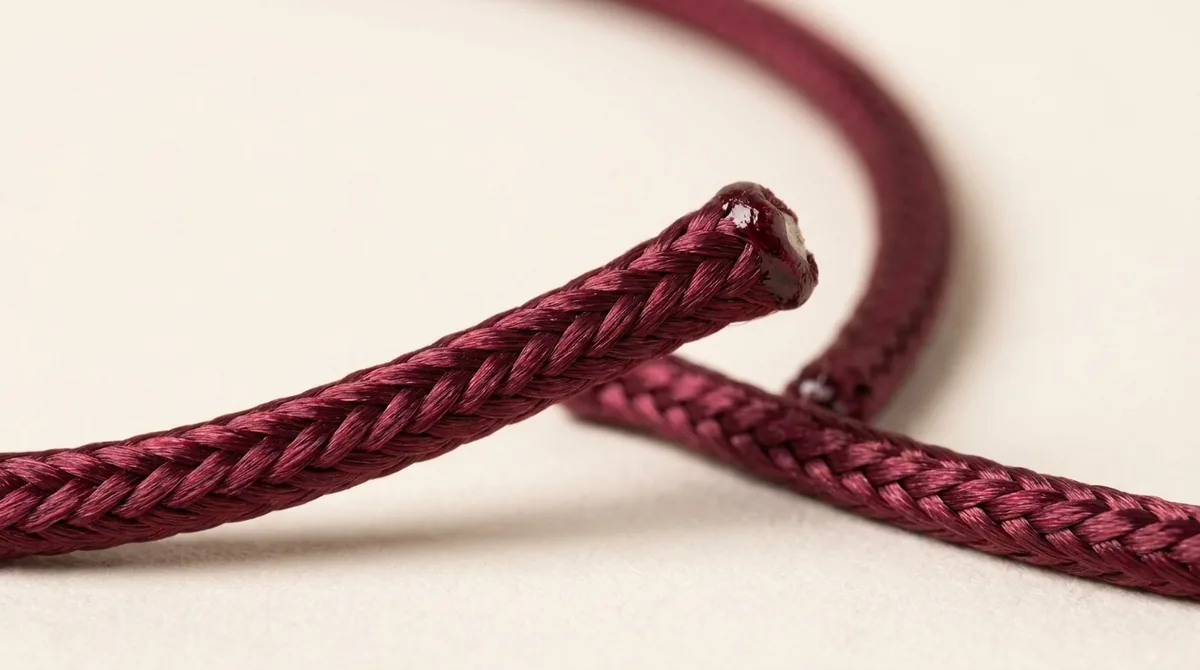
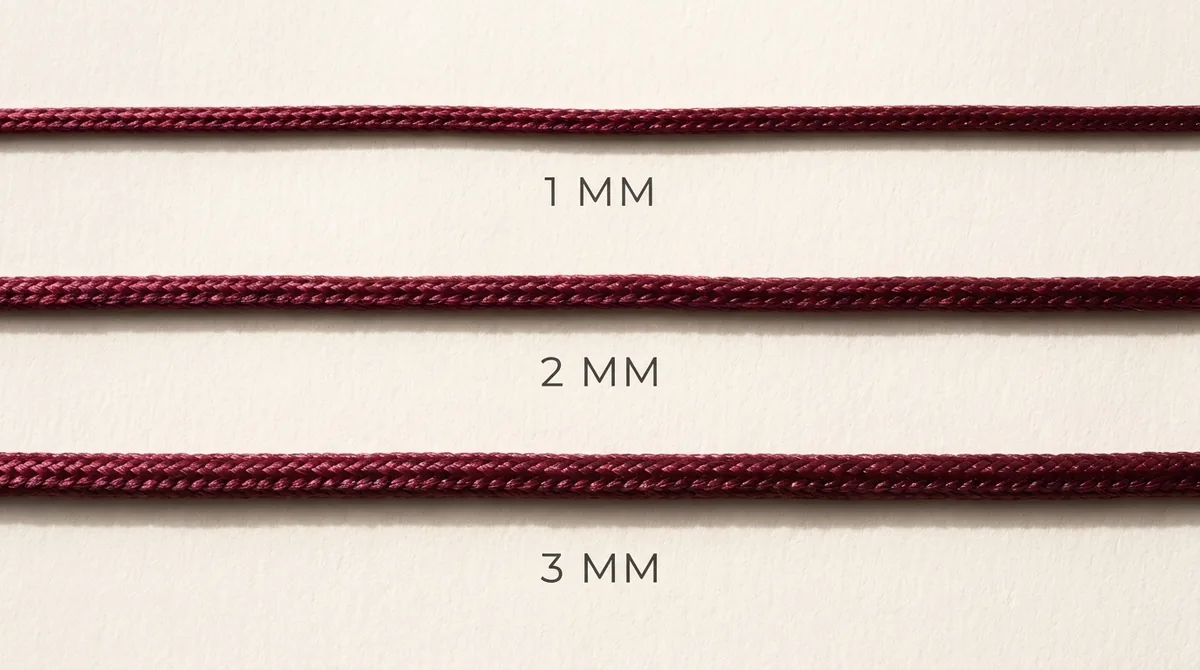
Sizes are 1mm, 2mm and 3mm, braided from rayon or polyester filament and piece-dyed after braiding so the shine sits on the finished cord rather than being lost in the structure. Ends are heat-sealed and tipped so they do not fray in transit or on the shelf.
How rattail cord is built, and what the sizes are for
Rattail comes off our braiding machines as a round tubular braid of continuous filament yarn. There is no twist stored in it and no plies to separate, so the cord stays round under a knot instead of flattening, and a cut end does not open up into loose strands.
We braid it in two filament types. Rayon gives the deeper, softer shine and a fluid drape that hangs well on a necklace; polyester is harder-wearing, holds colour more stubbornly against light and handling, and is the safer choice for anything that will sit on a rack for months or get worn daily.
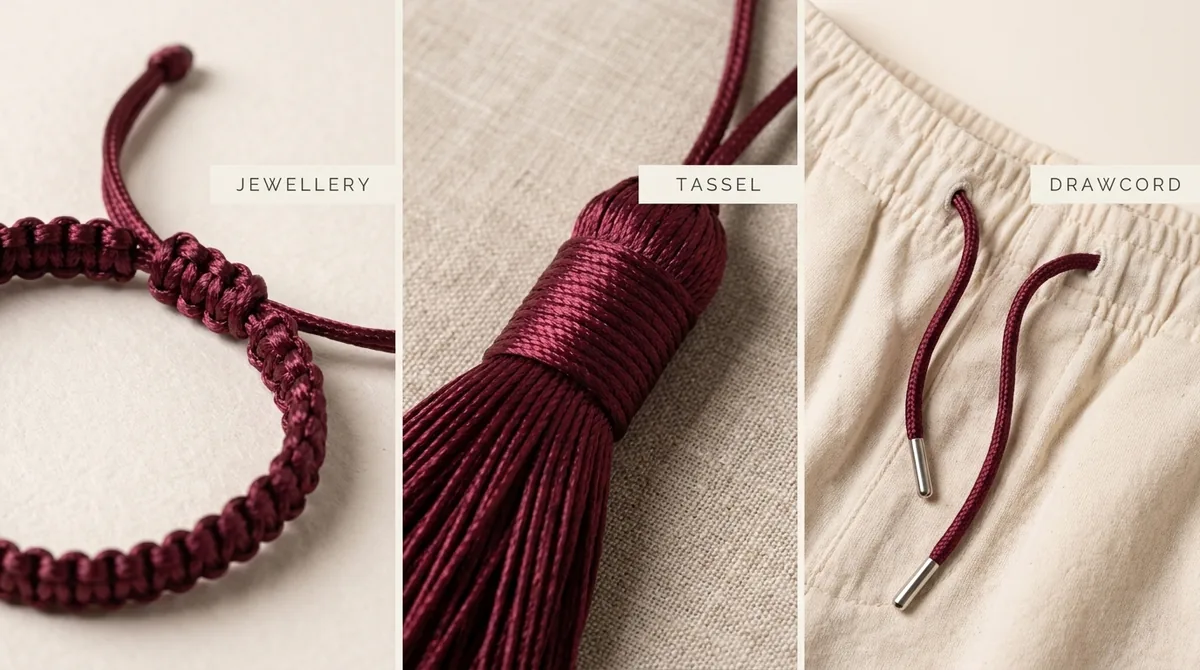
2mm — the volume size; necklace cord, macrame micro-work, card and packaging trim
3mm — chunkier braiding, bag and garment drawcords, decorative trim, favour and gift ties
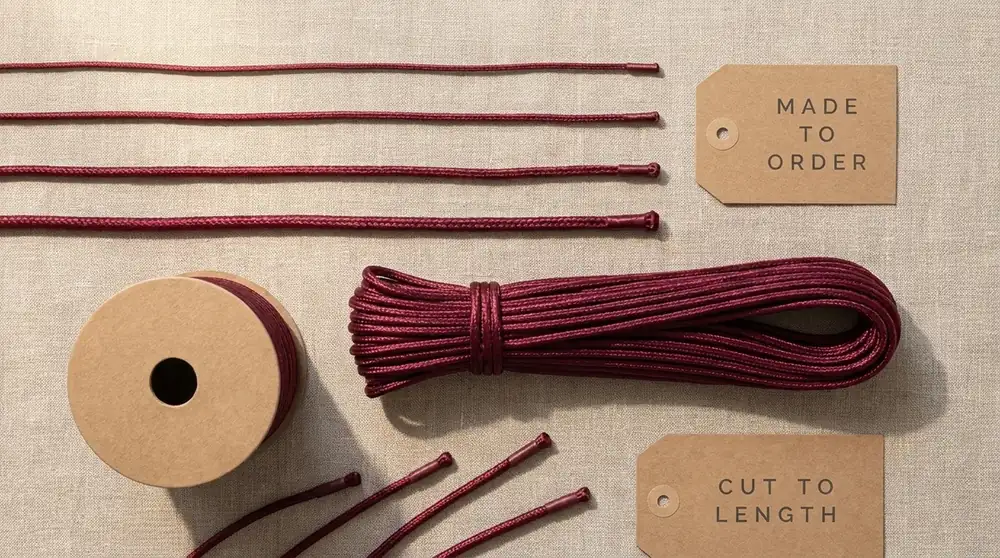
Every cut end is heat-sealed, and we tip the ends on our own tipping machine where the buyer wants a finished aglet rather than a fused end — useful if the cord is going straight into hoodie drawcords, gift bags or a retail hank with a clean presentation.
How Wholesale Rattail Cord Buying Works
We run the machines, so a change of filament, an off-card colour, a different spool length or a tipped end instead of a fused one is a production instruction rather than a request travelling up a chain of intermediaries.
You send sizes, filament type, shades and rough quantities. We come back with a quotation, normally within one working day. If shades are being matched, lab dips go out first and wait for your approval. Once approved, the order goes into production and ships by air courier or sea freight depending on volume and how soon you need it on the shelf.
Trial orders start at 1,000 meters per shade. Mixed orders across sizes, filaments and shades within a single shipment are normal for us.
Dispatch and freight
Ex-works Jaipur — about 2 to 6 days by surface across India. Freight is to your account, by your transporter or ours. Export orders are quoted separately with air and sea options.
Rattail Cord — Specifications
Material
Rayon or polyester continuous filament
Construction
Round braided satin cord; heat-sealed ends, tipping available
Sizes
1mm, 2mm, 3mm (3mm ≈ 1/8 inch)
Finish
High-gloss satin surface from piece dyeing after braiding
Colours
Piece-dyed in-house; custom shade matching against a submitted swatch
MOQ
1,000 m per SKU, shade and size
Put-up
Spool-wound; hanks and cut-and-tipped lengths on request
Packing
Poly-wrapped spools packed in export cartons
Lead time
Quotation within one working day; shipping 7-10 days air, 25-40 days sea
Origin
Jaipur, India — braided, dyed, sealed and spooled in our own factory
Frequently asked questions
What is the difference between rattail cord and satin cord?
In trade practice they are the same product under two names. Rattail is most often understood to mean the 2mm size specifically, with 1mm sometimes called mousetail and 3mm called bugtail. We braid all three and will quote against whichever name you use, so long as you confirm the diameter in millimetres on the order.
Should I stock rayon or polyester rattail?
Rayon has the deeper shine and softer drape, which is why it is preferred for finished jewellery where the cord is part of the look. Polyester is tougher, holds its colour better against light and repeated handling, and is the more sensible choice for stock that sits on a retail rack for a long time or for anything worn daily. Many of our buyers stock rayon in the 1mm and 2mm jewellery sizes and polyester in 3mm for drawcords and packaging.
Can you match a colour I am already selling?
Yes. Send a physical cutting of the cord or a reference shade with your enquiry. Because we piece-dye in our own dye house in Jaipur, we match to the swatch and send a lab dip for approval before the bulk lot is dyed. Once you approve that dip it becomes the standing reference for repeat orders of that shade.
What is the minimum order, and can I mix sizes and colours?
Trial orders start at 1,000 meters (approx. 1,094 yards) per shade, and mixing is normal — you can combine 1mm, 2mm and 3mm, rayon and polyester, and as many shades as you want inside one order. The minimum is set per shade precisely because rattail sells on colour range, so a shop can trial thirty colours before choosing what to reorder in depth.
What does rattail cord cost?
₹3-8 per metre ex-works Jaipur. The common 2 mm sits mid-band; 1 mm fine work runs at the top because the braid is slower, not cheaper. Stock shades price below custom-matched ones.
How is it wound and packed, and can you supply cut lengths with tipped ends?
Standard put-up is spool-wound, poly-wrapped and packed into export cartons; hanks are available if that suits your shelf presentation better. We also run a tipping machine, so cut-and-tipped lengths for drawcords, gift bags or pre-packed jewellery kits can be produced to your length specification instead of you cutting and finishing them yourself.