Home › Cords & Ropes › Crochet Thread & Cord — 3 mm and 5 mm, Braided in Jaipur
Crochet Thread & Cord — 3 mm and 5 mm, Braided in Jaipur
✓ Specs last checked: 2026-09-02
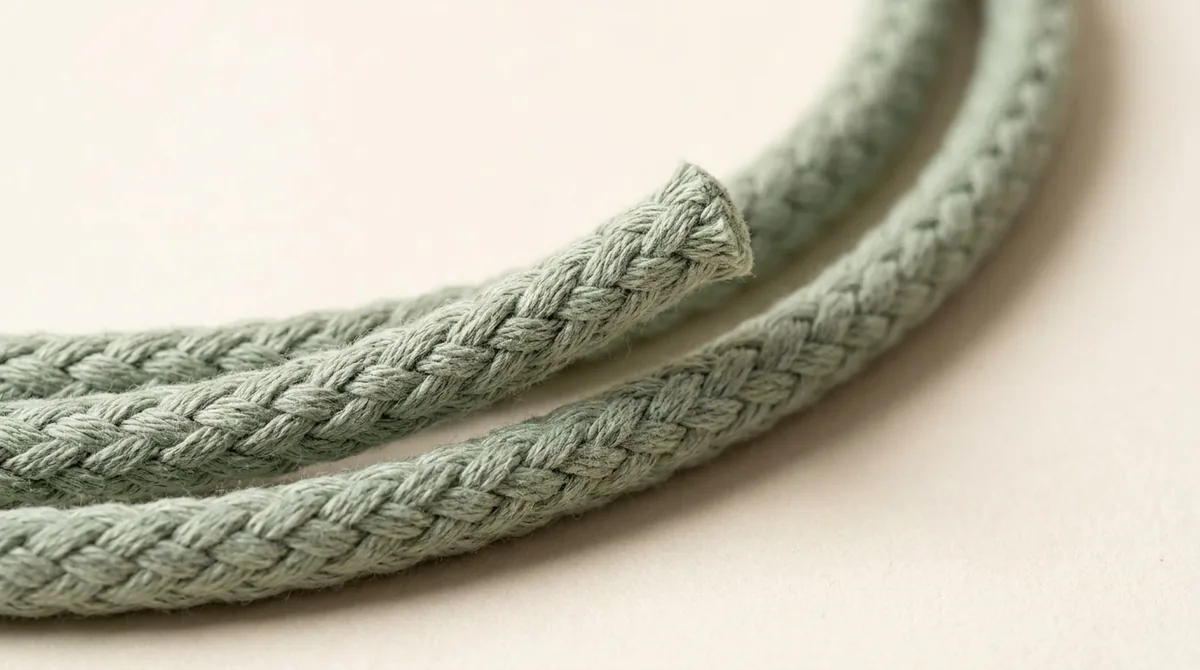
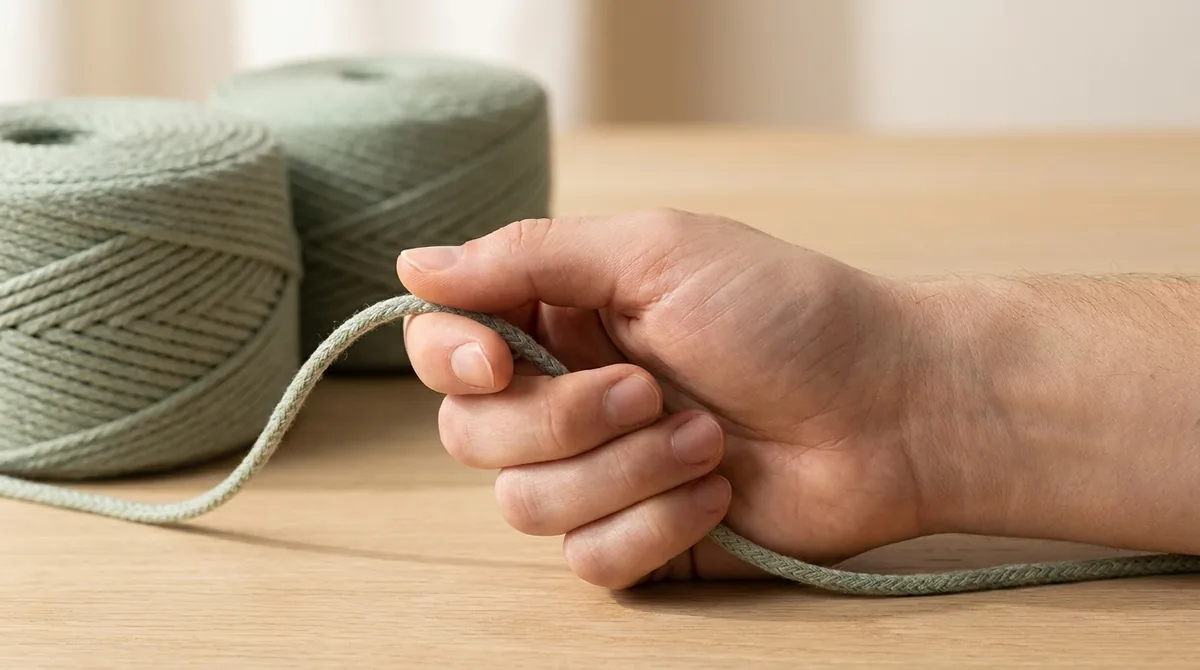
Saras Udyog braids crochet cord at its own factory in Jaipur, India and winds it into shop-ready 100 g to 250 g cakes in 3mm and 5mm. The natural, undyed cord is cotton; every dyed shade is spun polyester, finished to look and handle like cotton — matte, soft, no synthetic sheen. Because the cord is braided rather than twisted, it holds a round profile on the hook and will not split or unravel when cut. Trial orders start at 1,000 metres per shade, so a buyer can test a full colour card before committing to a season.
We have been running twisting and braiding machines in Jaipur since 1991. Crochet cord is braided in 3mm and 5mm, dyed in our own dye house, wound into continuous 100 g to 250 g cakes. The natural, undyed cord is cotton; the dyed shades are spun polyester, finished matte and soft so they look and handle like cotton. Braiding, dyeing, winding and packing all happen under one roof.
Orders start at 1,000 metres per shade, and each further shade carries the same 1,000 again. Prove one shade on your own hooks before you commit a season's worth; for the colour card itself, ask us for samples rather than ordering against it.
How the cord is built, and why braided rather than twisted
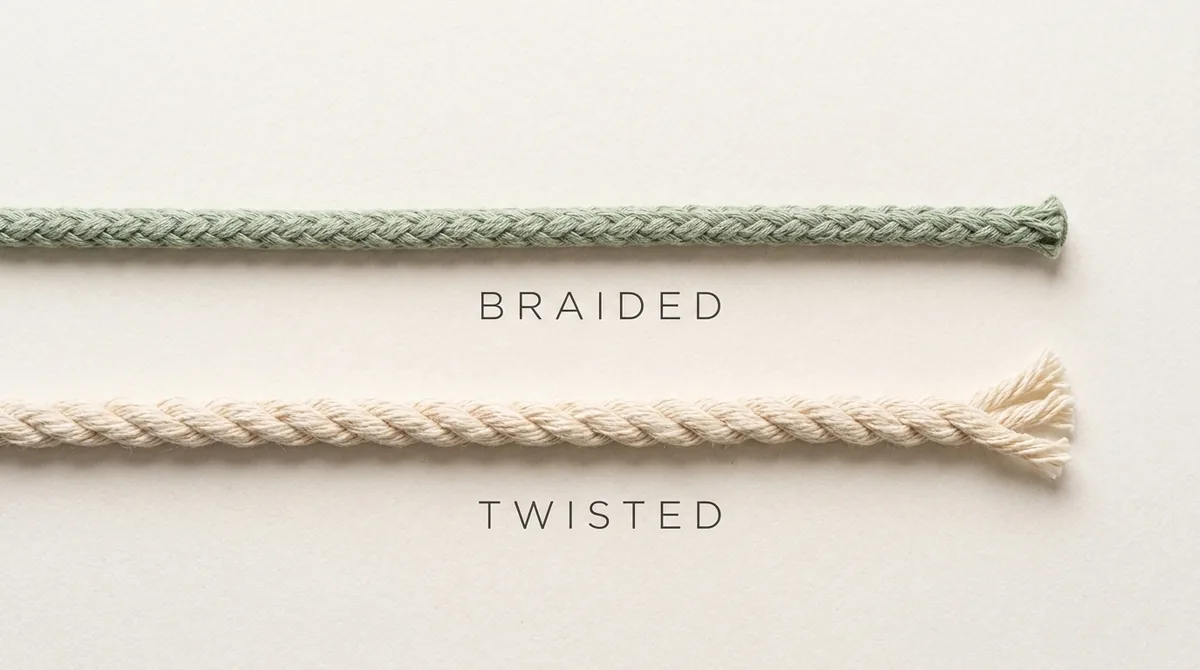
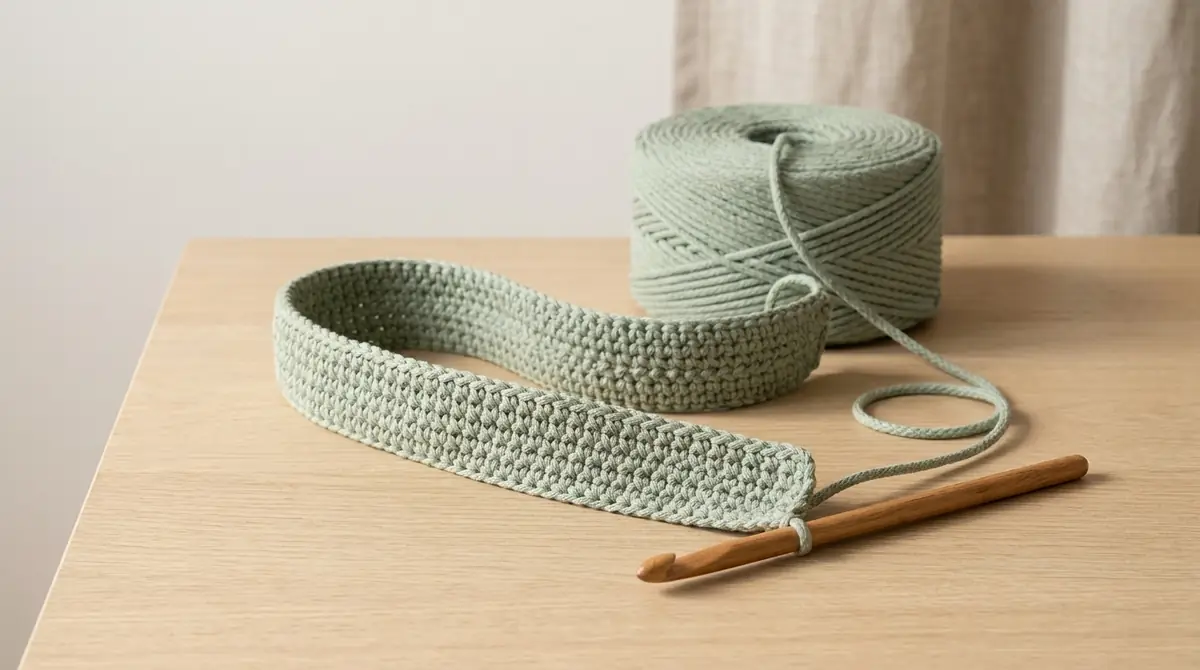
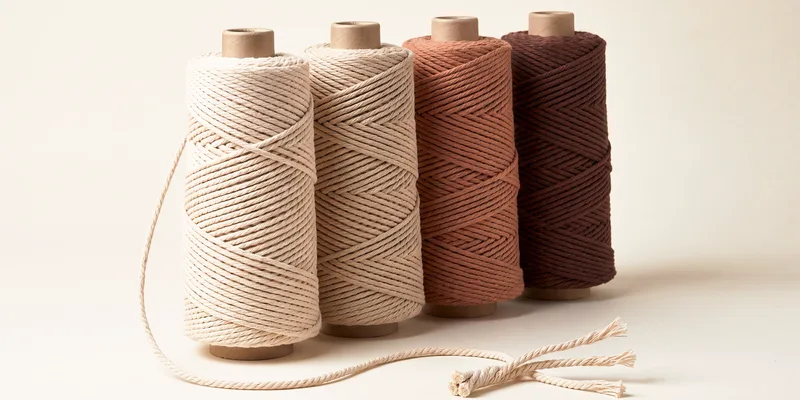
Crochet cord comes off our braiding machines as a tubular braid — the yarns interlace around the outside of the cord instead of being spun together into plies. That one difference is what separates it from macrame cord. A twisted 3-ply cord wants to open up when a hook is pushed through it; a braided cord does not, because there is no stored twist waiting to release.
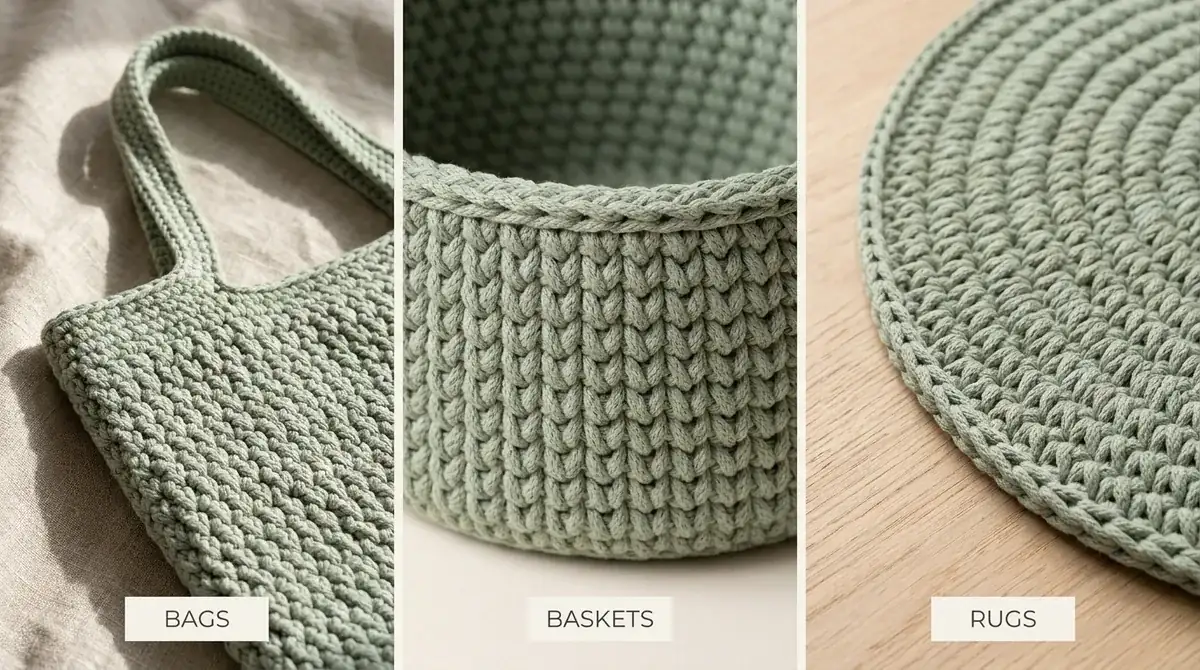
In practice that means cleaner stitch definition, no split plies snagging the hook, no fluff building up as you work, and cut ends that stay closed. It also means a finished bag or basket keeps its shape after being carried.
3mm — the everyday gauge. Market bags, totes, plant pot covers, smaller baskets. Works with a 4-6mm hook and suits most published patterns.
Braided crochet cord and twisted macrame rope are not interchangeable on the shelf. Twisted rope softens and frays under a hook — fine for knotting and fringe, wrong for stitching. Shelve and label the two separately or you will field returns.
How wholesale buying works for shops and distributors
You send gauges, shades and cake weights with rough quantities. We quote against it. If shade matching is involved, a lab dip goes to you for approval before the bulk lot is dyed. Once approved, the order goes into production and ships air or sea depending on volume and how soon you need it.
Trial orders start at 1,000 metres per shade, and mixed orders across gauges, shades and cake weights are completely normal. A shop taking six colours in 3mm and three in 5mm is a routine order here — there is no requirement to take a full container or a complete shade range.
Two things worth raising in your first email, because they change the quote: whether you want your own printed bands on the cakes, and whether cakes should be pre-banded for retail or supplied loose in polybags. Both are done in-house, and both are cheaper decided upfront than retrofitted later.
Colours, cake weights and retail labelling
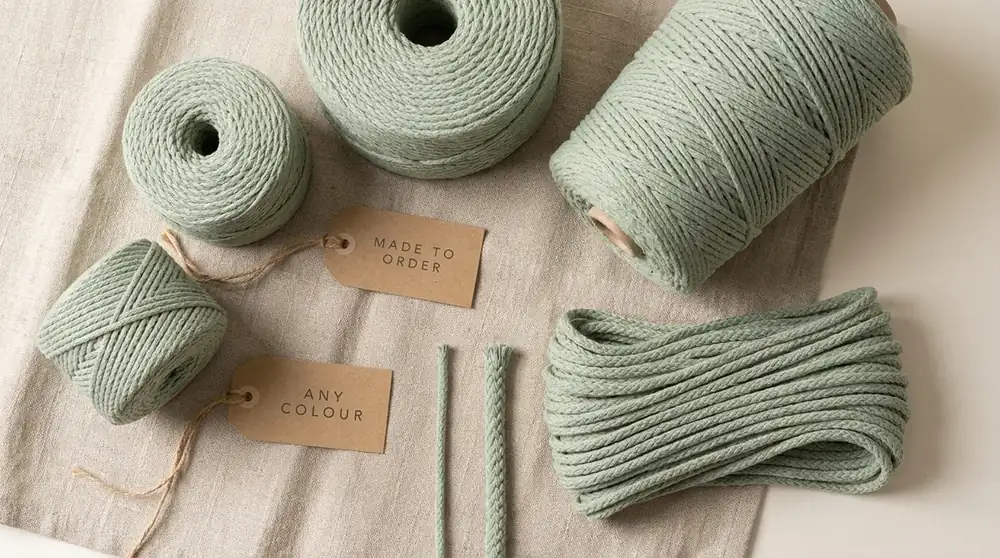
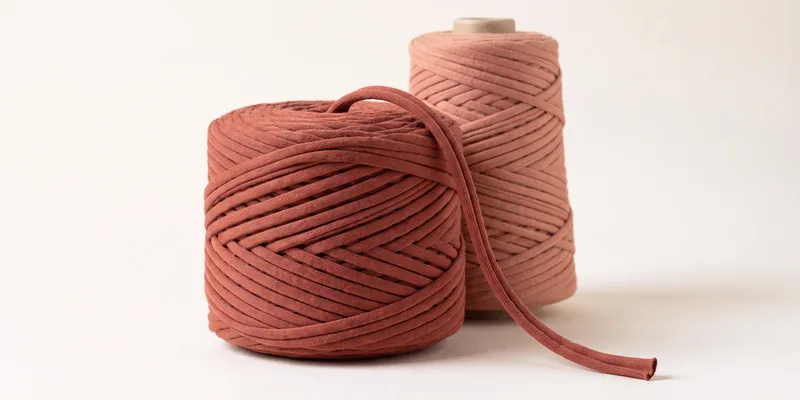
We hold a broad standard shade range dyed in-house — muted earth tones, dusty pastels and saturated brights, all in spun polyester finished to look and feel like cotton, alongside the undyed natural, which is cotton. Custom shades are matched against a physical cutting or reference you send, and a lab dip goes back to you before the batch runs. That approved dip then becomes the reference for every repeat order.
Cake weights run from 100 g up to 250 g. Smaller cakes suit workshop kits; 250 g suits basket and rug projects where a maker does not want to join mid-piece.
Cakes ship plain, banded with your own printed label, or barcoded to your specification. We also supply the same cord on cones and in hanks if part of your range sells by the metre from a rack.
Dispatch and freight
Ex-works Jaipur — about 2 to 6 days by surface across India. Freight is to your account, by your transporter or ours. Export orders are quoted separately with air and sea options.
Crochet Thread & Cord — Specifications
Material
Natural/undyed: cotton. Dyed shades: spun polyester with a cotton-look matte finish and soft cotton hand. Other fibres to your specification at bulk volumes
Construction
Braided (not twisted) — will not split or unravel on the hook
Sizes
3mm (≈1/8 in) and 5mm (≈3/16 in); other gauges braided to order
Colours
Broad standard range dyed in-house; custom shades matched to a submitted swatch
MOQ
1,000 m per SKU, shade and size
Put-up
Continuous cakes from 100 g to 250 g; cones and hanks on request
Labelling
Plain, own-label bands, or barcoded to your specification
Packing
Poly-wrapped cakes packed in export cartons
Origin
Jaipur, India — braided, dyed and wound in our own factory
Lead time
Quotation within one working day; 7-12 days air, 25-35 days sea to the UK
Frequently asked questions
Is your crochet cord cotton?
It depends which one you order, and you choose. The natural, undyed cord is cotton — it needs no dyeing, so cotton is what we braid. Every dyed shade is spun polyester, made to look and feel like cotton: matte surface, soft hand, no synthetic sheen, so it works the same way on the hook and photographs the same way in a listing. We use polyester on the dyed side because it holds colour, repeats shade-for-shade between orders and sheds far less lint into a finished bag or basket. If you need a natural fibre specifically, order the natural. At bulk volumes we can braid other fibres to your specification.
What is the difference between crochet cord and macrame cord?
Construction. Crochet cord is braided, so the yarns interlace around the outside and nothing can untwist. Macrame cord is usually 3-ply twisted, which is ideal for knotting and brushing out into fringe but splits and fluffs when a crochet hook is pushed through it. If the end product is a bag or a basket, you want the braided cord. We make both, but they are not substitutes on the shelf.
What is the minimum order, and can I mix gauges and colours?
Trial orders start at 1,000 metres per shade, and mixing is normal — combine gauges, cake weights and as many shades as you want within one order. The low minimum exists so a shop can test a full colour card before committing to a season's stock. We quote within one working day of receiving your list.
What is the wholesale rate for crochet thread?
₹6-15 per metre ex-works Jaipur. The 3 mm braid sits lower in the band than the 5 mm, and custom-dyed shades price above the stock card because each shade is its own dye lot. Cakes are included in the rate — winding is not an extra.
Can you supply crochet cord under our own labels?
Yes. Cakes ship plain, banded with your printed label, or barcoded to your specification, and the banding is done in-house. Raise it at quote stage rather than after the order is placed, since labelling is cheaper built into the run than added afterwards. You can also send your own printed bands for us to apply.
How long does delivery to the UK take, and who handles customs?
Air freight from our Jaipur factory reaches the UK in 7-12 days; sea freight to Felixstowe or Southampton takes 25-35 days. Colour cards and trial cartons almost always go by air, and sea starts to make sense once you are ordering by the pallet. Import duty and VAT are settled by you or your broker at UK clearance, and we provide the commercial invoice, packing list and shipping documents needed to clear the consignment.
Do you sell crochet ka dhaga for bags and macrame?
Crochet ka dhaga — crochet thread and cord — runs here in 3 mm and 5 mm, braided smooth for bag-making, macrame and knot work. Other gauges are braided to order; the minimum is 1,000 metres per SKU, dyed in our own house.