Home › Cords & Ropes › Waxed Cotton Cord and Waxed Thread — Waxed in Our Jaipur Factory
Waxed Cotton Cord and Waxed Thread — Waxed in Our Jaipur Factory
✓ Specs last checked: 2026-09-02
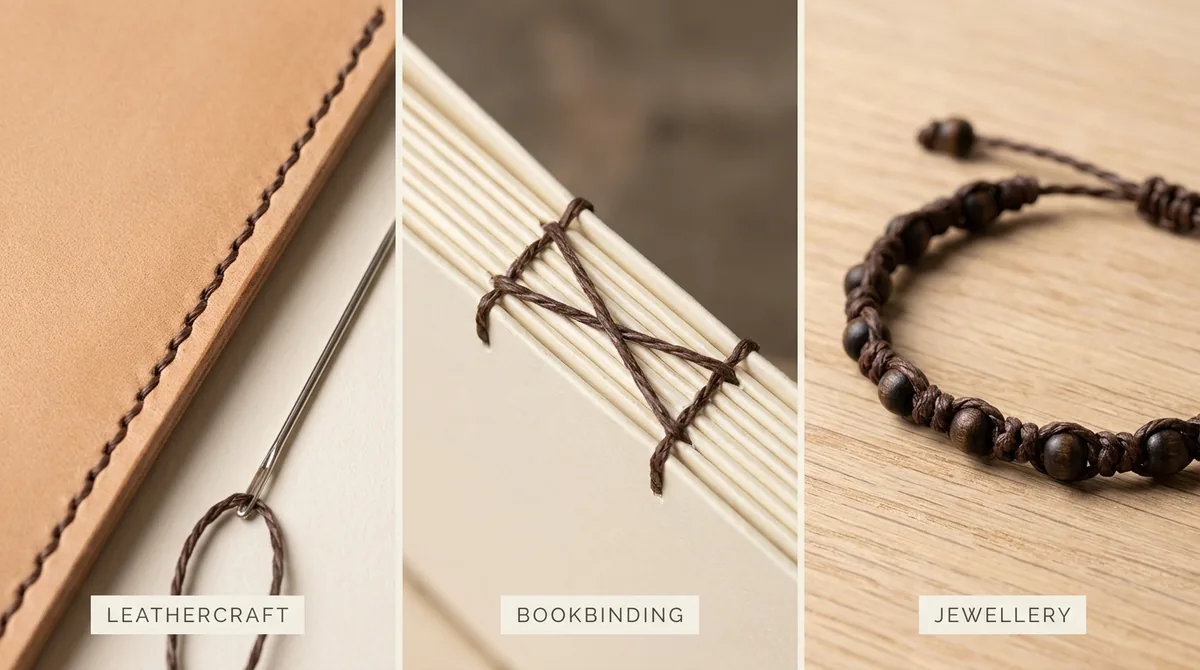
Saras Udyog twists, dyes and waxes cord on its own machines in Jaipur, India — 0.5mm, 0.8mm, 1mm, 1.5mm and 2mm round cord for leathercraft, bookbinding and jewellery, dyed in-house and given a firm wax finish that holds a knot instead of slipping. The natural, undyed cord is cotton; every dyed shade is spun polyester, finished to look and handle like cotton — matte, soft, no synthetic sheen. Standard put-up for US buyers is the 100 yd spool, and trial orders start at 1,000 meters per shade so a shop can test a full colour card before committing. We ship worldwide.
Waxed cord is one of the products we make end to end on our own floor — yarn in at one end, twisted cord, dyed shade, wax finish and wound spools out at the other. The natural, undyed cord is cotton; the dyed shades are spun polyester, finished matte and soft so they look and handle like cotton. We have been running twisting machines in Jaipur since 1991.
Sizes run 0.5mm to 2mm. The cord is dyed before waxing so the shade sits in the fibre rather than in the coating, then waxed to the firmness the buyer asks for — a harder finish for leather stitching and knotting work, a softer one for jewellery where the cord has to drape. Standard put-up is the 100 yd spool.
How the cord is built, and where the wax finish comes from
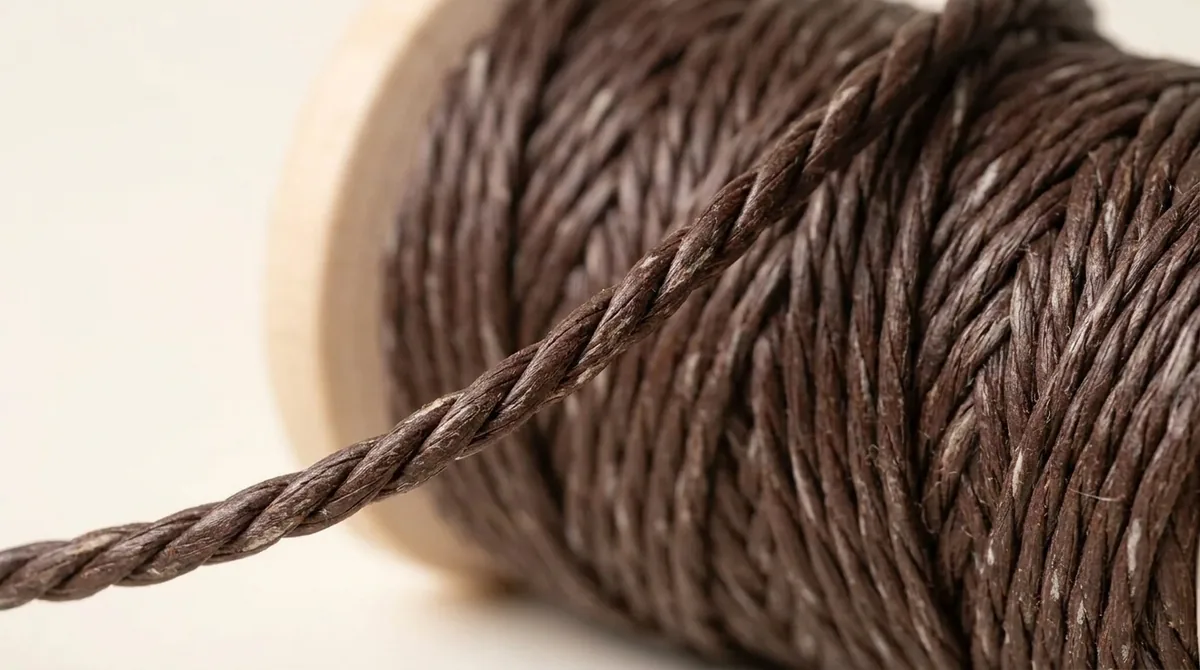
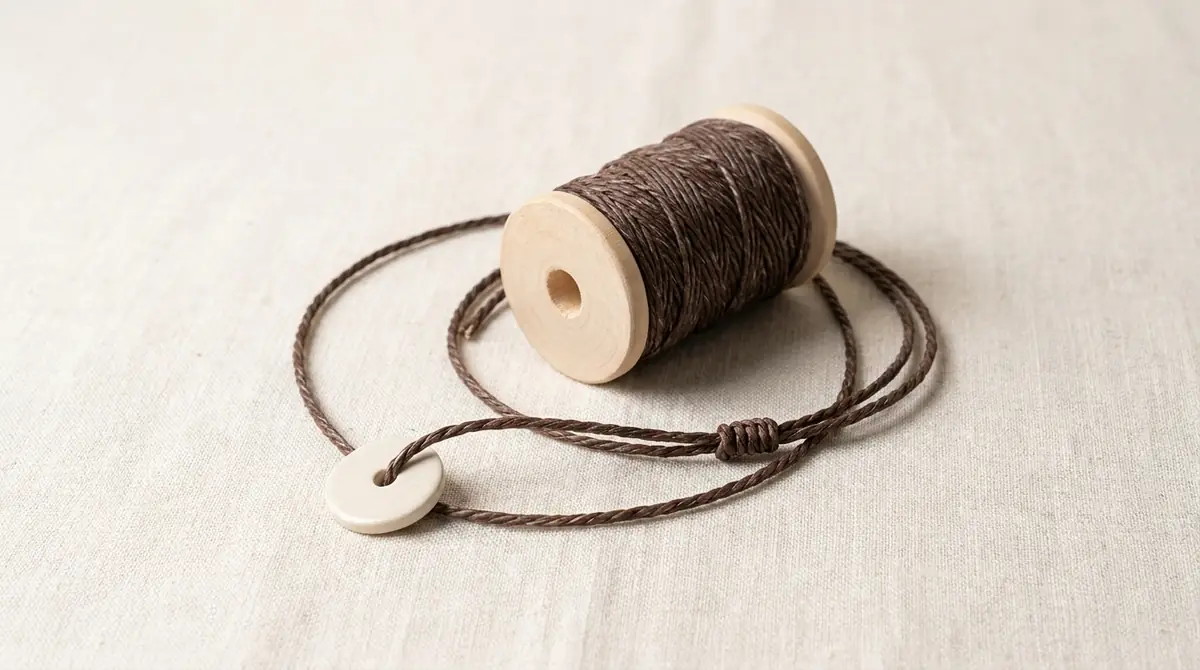
The base is spun yarn — cotton for the natural, undyed cord, spun polyester finished to a matte, cotton-like hand for the dyed shades — twisted into a round cord on our own twisting machines. Ply and twist level are chosen for the diameter: the fine 0.5mm and 0.8mm sizes are twisted tight so they stay round and thin enough to pass through a bead hole or a stitching awl mark, while 1.5mm and 2mm carry more body for braiding, lacing and heavier knot work. Because it is twisted rather than braided, the cord has a little grip to it even before waxing.
Dyeing happens before waxing, in our own dye house in the same building. Send a physical cutting with your enquiry and we match to it and send a lab dip for approval before the bulk lot is dyed; that approved dip becomes the standing reference for reorders.
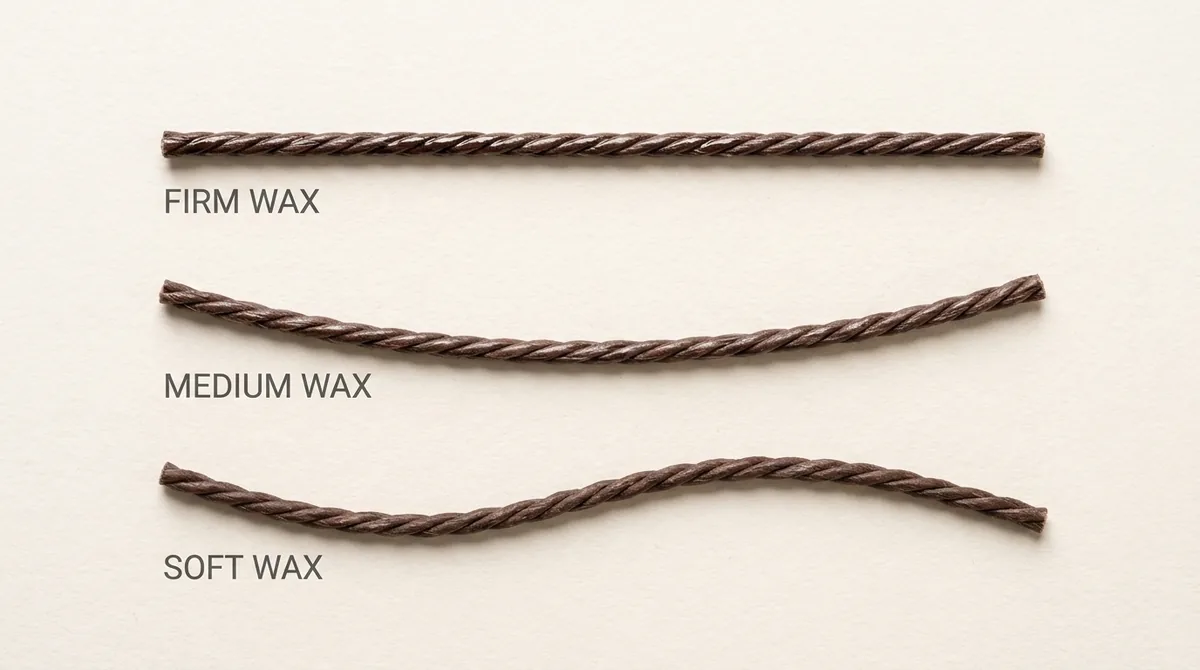
Wax is applied to the dyed cord and then cured, and the firmness is a specification rather than a fixed property:
Firm wax — the standard for leathercraft and knotting. Holds a knot under tension, keeps a saddle stitch seated, and lets a cut end be rolled to a point for threading.
Medium wax — the general-purpose finish; enough tack for macrame and jewellery knots while still draping on a necklace.
Soft wax — for shibori, bookbinding and hand-sewing where the cord has to pull through a material repeatedly without dragging.
How wholesale buying works
We run the twisting, the dye house, the waxing and the winding, so wax firmness, an off-card shade, a spool length in yards instead of meters, or a bulk cone instead of a retail spool are production instructions rather than requests passed up a chain of middlemen.
Send sizes, wax firmness, shades and rough quantities. A quotation normally comes back within one working day. If shades are being matched, lab dips go out and wait for your approval before anything is dyed in bulk. On approval the order goes into production and ships by air courier or by sea depending on volume and how quickly you need it on the shelf.
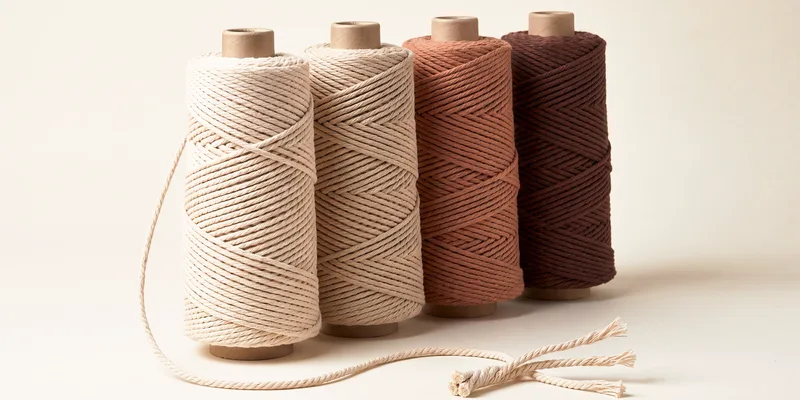
Trial orders start at 1,000 meters per shade. Mixing sizes, wax firmness levels and shades inside a single shipment is normal for us. For the US market the standard retail put-up is the 100 yd spool; bulk cones and 50 yd or 25 yd spools are available.
Wax softens in heat. Sea containers crossing the equator in summer can run hot, so cartons should not be stacked against a container wall, and buyers stocking for a holiday season are better off booking sea freight early rather than shipping in the hottest months.
Dispatch and freight
Ex-works Jaipur — about 2 to 6 days by surface across India. Freight is to your account, by your transporter or ours. Export orders are quoted separately with air and sea options.
Waxed Cotton Cord and Waxed Thread — Specifications
Material
Natural/undyed: cotton yarn. Dyed shades: spun polyester yarn with a cotton-look matte finish and soft cotton hand. Dyed then wax-finished; other fibres to your specification at bulk volumes
Construction
Twisted round cord; wax applied after dyeing and cured
Sizes
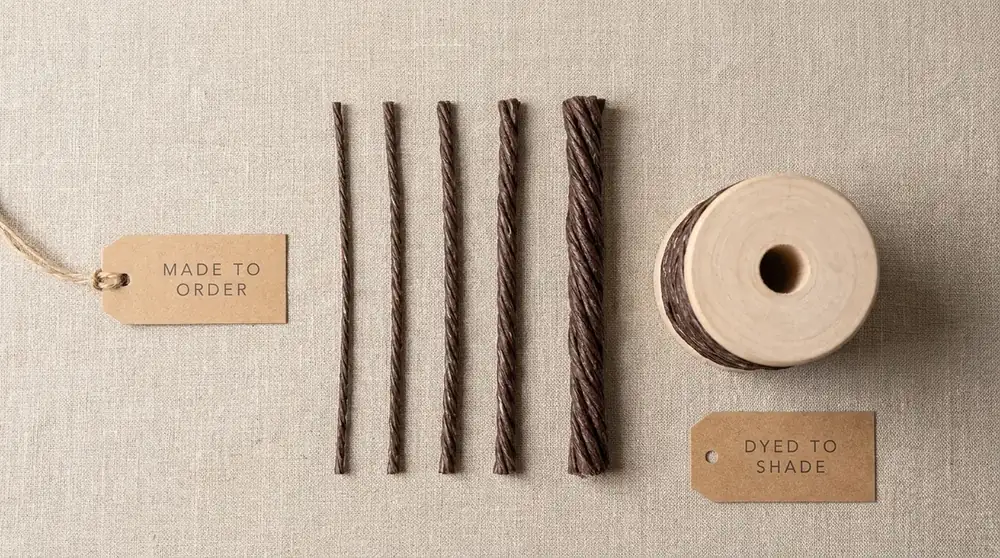
0.5mm, 0.8mm, 1mm, 1.5mm, 2mm; intermediate diameters to order
Wax finish
Firm, medium or soft — specified by the buyer at order stage
Colours
Piece-dyed in-house; custom shade matching against a submitted cutting
Colourfastness
Dyed before waxing, so the shade sits in the cord rather than in the wax coating; we send a lab dip so you can rub-test against your own leather before approving bulk
MOQ
1,000 m per SKU, shade and size
Put-up
100 yd spools as standard for the US market; 50 yd and 25 yd spools, hanks and bulk cones on request
Packing
Poly-wrapped spools packed in export cartons
Lead time
Quote within one working day; 7-10 days air or 25-40 days sea after shade approval
Origin
Jaipur, India — twisted, dyed, waxed and wound in our own factory
Frequently asked questions
Is your waxed cotton cord cotton?
It depends which one you order, and you choose. The natural, undyed cord is cotton — it needs no dyeing, so cotton is what we twist. Every dyed shade is spun polyester, made to look and feel like cotton: matte surface, soft hand, no synthetic sheen under the wax. We use polyester on the dyed side because it holds colour and repeats shade-for-shade between orders, which matters on a product that sells as a colour card. If you need a natural fibre specifically, order the natural. At bulk volumes we can twist other fibres to your specification.
Will the colour rub off onto leather or onto the wearer's skin?
That is the single most common question we get on this product, and it comes down to the order of operations. We dye the cord first in our own dye house and apply the wax afterwards, so the shade sits inside the cord rather than being carried in the coating. Cord that is waxed with pigment mixed into the wax is the kind that crocks colour onto pale leather. If you have had that problem with a previous supplier, send us a piece of it and we will match the shade and send a lab dip so you can rub-test it yourself before approving bulk.
How firm is the wax, and can I specify it?
Yes, wax firmness is specified at order stage rather than fixed. Firm is the standard for leathercraft and knotting — it holds a knot under tension and lets you roll a cut end to a point for threading. Medium suits general jewellery and macrame where the cord still has to drape. Soft is for bookbinding and hand-sewing where the cord is pulled through material repeatedly. If you are unsure, tell us what the cord is being used for and we will send samples in two firmness levels.
What sizes do you make, and can you match a cord I already sell?
Standard diameters are 0.5mm, 0.8mm, 1mm, 1.5mm and 2mm. Because we run the twisting machines ourselves, intermediate diameters can be twisted to order — send a length of the cord you are currently buying and we will match diameter, twist and wax firmness as closely as the construction allows, then send a sample spool for comparison before you commit.
Do you wind to yards, and what is the standard spool for the US?
The 100 yd spool is our standard put-up for the US market, since American retail and craft buyers work in yards. We also wind 50 yd and 25 yd spools for smaller retail price points, hanks where that suits your presentation, and bulk cones for buyers who rewind or cut in their own facility. Tell us the put-up you want at enquiry stage and it is quoted that way.
What is the minimum order, and can I mix sizes and colours?
Trial orders start at 1,000 meters per shade, and mixing is normal — you can combine diameters, wax firmness levels and as many shades as you like inside one order. The minimum is set per shade because this product sells on colour range, so a leather or bead shop can trial a wide card across two sizes and then reorder in depth only on what actually moves.
What is the price of waxed cotton cord?
₹2-5 per metre ex-works Jaipur. The fine 0.5-1 mm jewellery gauges sit at the bottom; 2 mm and heavier wax loadings at the top. The wax finish is applied in-house, so the rate is the same across stock shades.
Do you make wax dori for jewellery and leather craft?
Wax dori — waxed cotton cord — is exactly this line: 0.5, 0.8, 1, 1.5 and 2 mm, the cord jewellery makers and leather-craft units knot and stitch with. Each diameter-and-shade is its own SKU at 1,000 metres, waxed and wound in Jaipur.